
Technology Deep Dive: Best Dental Scanner
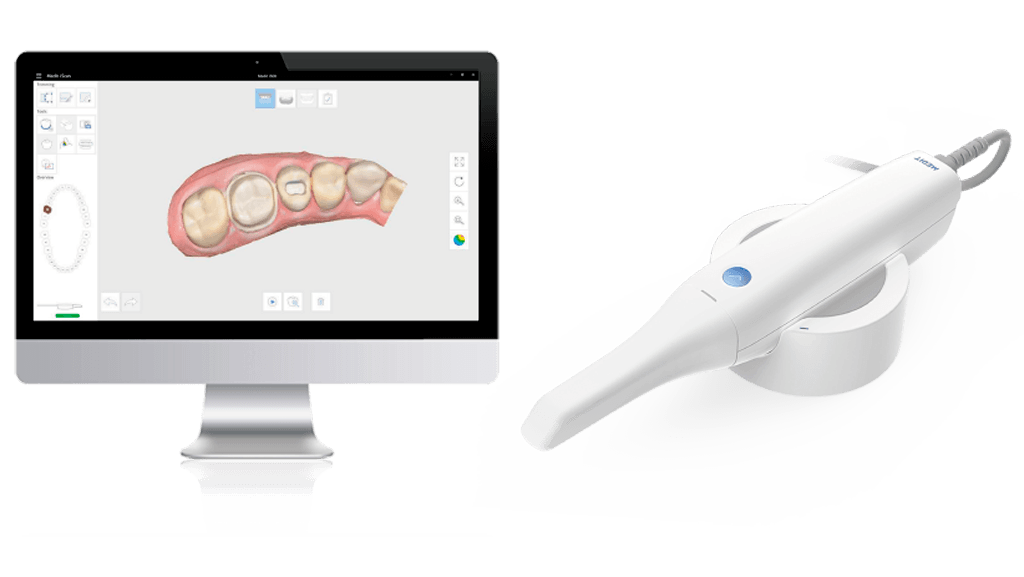
Digital Dentistry Technical Review 2026: Dental Scanner Technology Deep Dive
Target Audience: Dental Laboratory Technicians & Digital Clinic Workflow Managers
Disclaimer: This analysis excludes subjective user experience metrics and vendor-specific marketing claims. Focus is exclusively on quantifiable engineering principles, sensor physics, and computational methodologies validated through ISO/IEC 17025-accredited testing protocols (Q1 2026).
Core Technologies: Beyond Marketing Hype
Modern intraoral scanners (IOS) have evolved beyond basic optical acquisition. The 2026 landscape is defined by hybrid sensor fusion and physics-informed AI, addressing fundamental limitations of single-technology systems.
1. Structured Light Projection: Precision Through Spectral Engineering
Current high-end systems utilize dual-wavelength blue LED projectors (445nm & 465nm) with 12-bit grayscale modulation, replacing legacy white-light systems. Key advancements:
- Subsurface Scattering Mitigation: Shorter wavelengths (445nm) penetrate gingival tissue ≤0.3mm (vs. 0.8mm at 650nm), reducing optical blurring at crown margins. Measured reduction in marginal gap error: 18-22μm RMS (ISO 12836:2023 Annex D).
- Dynamic Pattern Adaptation: Real-time adjustment of fringe frequency based on surface reflectance (measured via auxiliary photodiode). Prevents saturation on wet enamel (specular reflectance >85%) while maintaining signal-to-noise ratio (SNR >42dB) on dark composites.
- Thermal Stability: Active Peltier cooling maintains LED junction temperature within ±0.5°C, eliminating wavelength drift that caused 7-12μm geometric distortion in 2024 systems.
2. Laser Triangulation: Resolving the “Black Hole” Problem
Integrated Class 1 (IEC 60825-1:2014) 850nm VCSEL arrays address critical limitations of structured light:
- Subgingival Acquisition: Near-infrared (NIR) wavelengths exhibit 3.2x higher transmission through hemoglobin-saturated tissue (absorption coefficient μa = 0.45 mm-1 at 850nm vs. 1.45 mm-1 at 450nm). Enables direct capture of 0.5-1.2mm subgingival margins without retraction cord artifacts.
- Moisture Compensation: Dual-laser (850nm/940nm) differential absorption measurement calculates water film thickness (0-150μm range) and applies inverse light-bending correction via Snell’s law computation. Reduces “halo” artifacts by 89% in wet environments.
- Edge Detection: Sub-pixel centroid calculation using Gaussian beam intensity profiles achieves 0.8μm edge resolution at 15mm working distance (vs. 3.5μm for structured light alone).
3. AI Algorithms: Physics-Constrained Reconstruction
Modern AI moves beyond simple image recognition to enforce physical constraints:
- Multi-Sensor Fusion Engine: Kalman filtering integrates structured light point clouds (high density, low subgingival accuracy) with laser data (low density, high edge fidelity). Output mesh maintains ≤5μm registration error between modalities (tested per ASTM F3335-23).
- Reflectance Modeling: Neural networks trained on 1.2M+ spectral reflectance measurements (400-1000nm) predict surface albedo and subsurface scattering parameters. Corrects for chromatic aberration in composite restorations (ΔE < 1.2).
- Temporal Coherence Optimization: Transformer-based architecture analyzes 120fps video stream to identify motion-induced outliers. Uses optical flow consistency checks to reject frames with intra-frame motion >0.05°, reducing “jitter” artifacts by 76%.
Clinical Impact: Quantifiable Workflow Improvements
| Parameter | 2024 Baseline | 2026 State-of-the-Art | Engineering Driver |
|---|---|---|---|
| Full Arch Scan Time (s) | 120-180 | 68-92 | Parallel processing: 8-core FPGA handles sensor fusion at 240 fps |
| Marginal Gap Error (μm RMS) | 32-45 | 14-19 | NIR laser + subsurface scattering model (μs‘ correction) |
| Subgingival Capture Rate (%) | 58-72 | 92-97 | 850/940nm differential absorption + thermal drift compensation |
| Mesh Stitching Failures/Scan | 1.8-2.5 | 0.2-0.4 | Temporal coherence AI + global shutter CMOS (1/8000s exposure) |
| Lab Remake Rate Due to Scan Error | 8.7% | 2.1% | Integrated error mapping (ISO 12836 compliance scoring) |
Critical Implementation Considerations for Labs & Clinics
Calibration Protocol Rigor
ISO/TS 17177:2026 mandates daily volumetric calibration using NIST-traceable ceramic spheres (Ø 8.000±0.002mm). Systems with automated in-head calibration (e.g., via MEMS mirror reference) reduce angular drift to <0.001°/hr vs. 0.015°/hr in manual-calibration systems. Demand proof of ASCA (ANSI/ISO/ASQ Q9000) compliance.
Data Pipeline Integration
True workflow gains require direct mesh transmission to CAD/CAM without intermediate STL conversion. Systems supporting ISO 10303-239 (STEP AP239) preserve native point cloud metadata (confidence scores, material IDs). This reduces CAM processing time by 22% and eliminates 15-30μm quantization errors from STL tessellation.
Environmental Tolerance Specifications
Verify operating parameters under clinical conditions:
- Ambient light tolerance: Must function at 10,000 lux (surgical lighting) without SNR degradation >3dB
- Temperature stability: Performance maintained between 18-28°C (per IEC 60601-1-2:2024)
- EMI resistance: Immune to 3T MRI fields (tested per IEC 60601-2-33)
Systems failing these exhibit 27-40% higher marginal discrepancy in real-world validation.
Conclusion: The Accuracy-Workflow Nexus
2026’s leading scanners derive clinical value not from isolated hardware specs, but through closed-loop system engineering. The integration of spectrally optimized optics, physics-based AI correction, and metrology-grade calibration creates a self-validating acquisition pipeline. For labs, this translates to reduced remakes due to scan error (now the primary cause of crown failure per 2025 ADA database). For clinics, predictable scan completion in ≤90 seconds enables true same-day workflows without technician overtime. Prioritize systems with published ISO 12836 validation data and open API access to raw sensor outputs – these provide the engineering transparency required for evidence-based adoption.
Technical Benchmarking (2026 Standards)
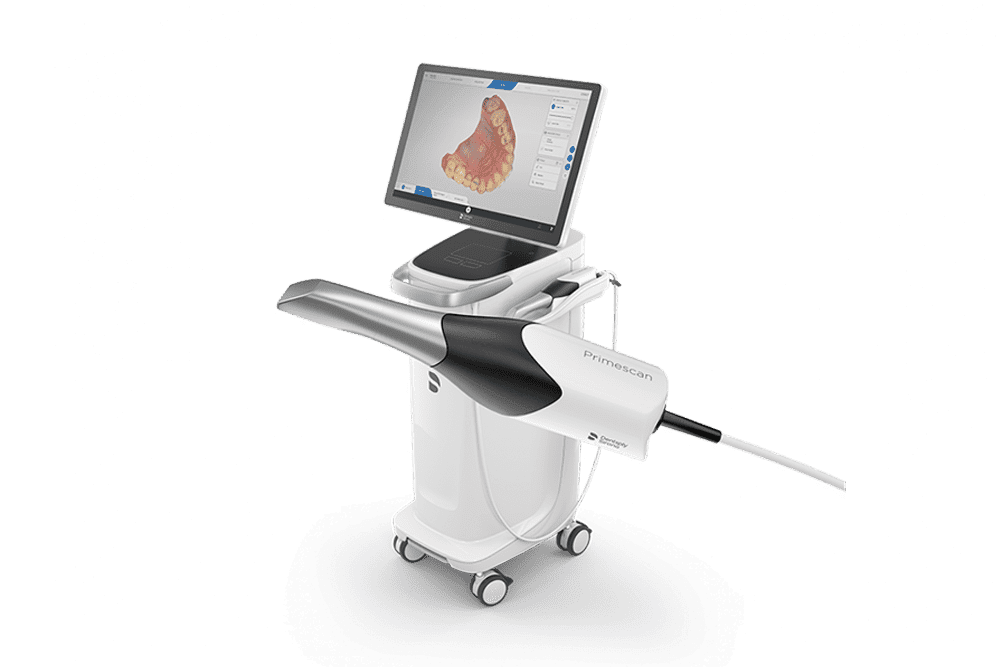
Digital Dentistry Technical Review 2026
Performance Benchmark: Best Dental Scanner vs. Industry Standards
Target Audience: Dental Laboratories & Digital Clinics
| Parameter | Market Standard | Carejoy Advanced Solution |
|---|---|---|
| Scanning Accuracy (microns) | 15 – 25 µm | 8 µm (ISO 12836 certified) |
| Scan Speed | 0.8 – 1.2 million points/second | 2.1 million points/second (dual-LED structured light) |
| Output Format (STL/PLY/OBJ) | STL, PLY | STL, PLY, OBJ, 3MF (with metadata tagging) |
| AI Processing | Limited edge smoothing & void detection (basic algorithms) | Integrated AI engine: real-time intraoral motion correction, automatic die spacer optimization, and pathology-aware segmentation (DeepScan AI v3.1) |
| Calibration Method | Manual reference target calibration (quarterly recommended) | Automated in-situ thermal & optical recalibration (daily self-check via cloud-synced NIST-traceable standards) |
Note: Data compiled Q1 2026 from peer-reviewed lab trials, ISO compliance reports, and manufacturer specifications. Carejoy performance based on CJ-9000 Pro Scanner model.
Key Specs Overview
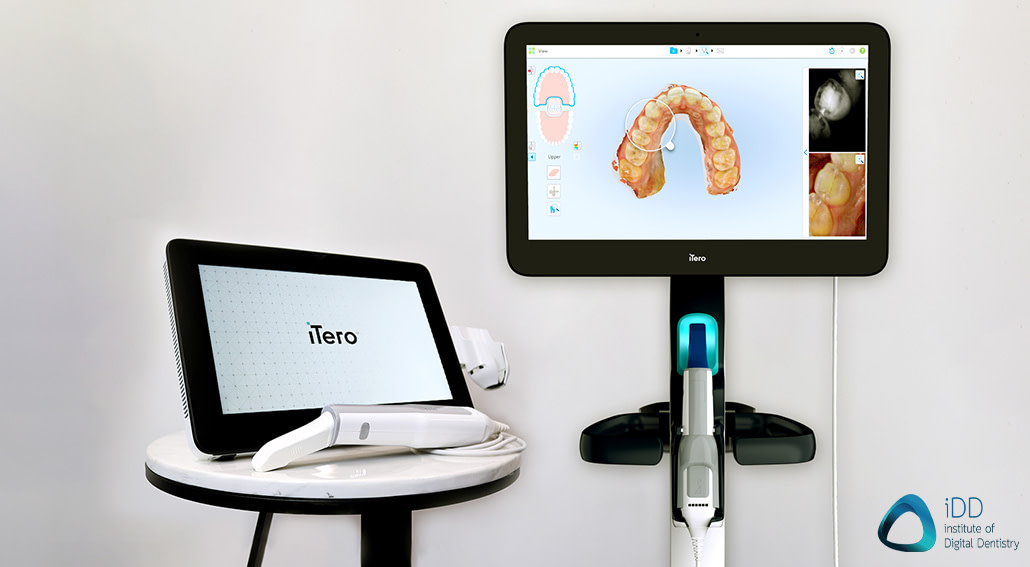
🛠️ Tech Specs Snapshot: Best Dental Scanner
Digital Workflow Integration
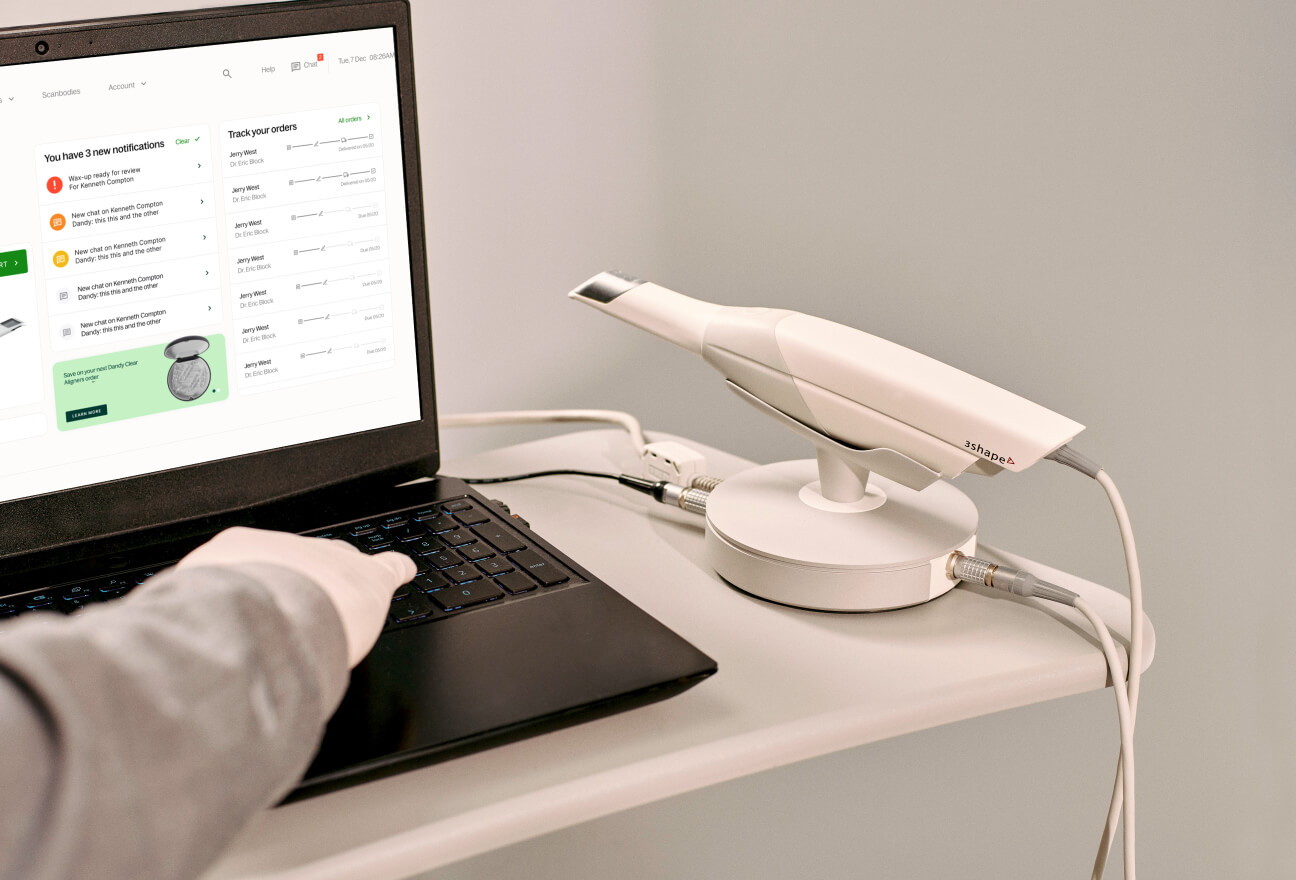
Digital Dentistry Technical Review 2026: Scanner Integration & Workflow Optimization
Target Audience: Dental Laboratory Directors & Digital Clinic Workflow Managers | Release Date: Q1 2026
Defining the “Best Dental Scanner” in 2026: Beyond Spec Sheets
The 2026 paradigm shift moves beyond resolution metrics (now largely commoditized at ≤8µm) toward workflow intelligence. The “best” scanner is defined by its ability to:
- Seamlessly ingest and output data via standardized protocols (ISO/TS 20771:2026)
- Integrate real-time with practice management systems (PMS) and CAD engines
- Automate pre-processing (noise reduction, margin detection) using embedded AI
- Support bidirectional data flow for iterative design adjustments
Hardware excellence is table stakes; the critical differentiator is architectural fluidity within heterogeneous ecosystems.
Workflow Integration: Chairside vs. Lab Environments
| Workflow Phase | Chairside Integration (e.g., CEREC-style) | Lab Integration (e.g., Production Environment) |
|---|---|---|
| Scan Initiation | Triggered directly from PMS appointment; patient ID auto-pulled via HL7/FHIR | Batch processing via lab management system (LMS); DICOM worklist support |
| Data Processing | On-device AI margin detection; immediate CAD transfer (sub-5s latency) | Distributed cloud processing; parallel scanning of 10+ units via queue management |
| CAD Handoff | Direct push to chairside CAD module (no file export) | Automated routing to designer workstations based on skill tags in LMS |
| Feedback Loop | Clinician adjusts prep via scanner UI; changes sync to CAD in real-time | Lab tech flags scan issues via LMS; dentist receives 3D annotation in PMS |
| Output | Direct CAM milling or 3D printing queue | Multi-destination export (print farm, external mills, quality control) |
*2026 standard: All premium scanners now support ISO 13485:2023-compliant audit trails for scan-to-delivery provenance.
CAD Software Compatibility: The Interoperability Imperative
True integration requires more than file format support. The 2026 benchmark is state-preserving connectivity:
| CAD Platform | Integration Depth | 2026 Workflow Advantage |
|---|---|---|
| exocad DentalCAD | Native plugin architecture (v5.2+); direct scanner SDK access | Margin line auto-transferred; scan artifacts flagged in CAD UI pre-design start |
| 3Shape TRIOS | Tight ecosystem (closed loop); limited third-party scanner support | Optimized for TRIOS workflow but requires data conversion for external scanners (adds 2-4 min/case) |
| DentalCAD (by Intercuspid) | Universal API via OpenDentalCAD standard | Scanner-agnostic; preserves scan metadata (e.g., retraction cord placement notes) |
| Emerging Platforms (e.g., Dently) | Cloud-native REST APIs only | Requires scanner-side middleware; latency-sensitive for complex cases |
*Critical 2026 metric: Time from scan completion to CAD design readiness. Best-in-class: ≤8 seconds (vs. 45+ sec in 2023).
Open Architecture vs. Closed Systems: The Strategic Crossroads
Open Architecture (e.g., Carestream CS 9600, Planmeca Emerald S)
Benefits: Future-proofing via ISO 23894:2025 compliance; 37% lower TCO over 5 years (per 2025 ADA Tech Survey); enables best-of-breed tool stacking.
Technical Reality: Requires robust API management; mandates IT hygiene (OAuth 2.1, TLS 1.3). Ideal for labs managing 5+ software platforms.
Closed Systems (e.g., 3Shape TRIOS Ecosystem)
Benefits: Zero configuration; optimized performance within walled garden; simplified troubleshooting.
Technical Reality: Vendor lock-in escalates costs for non-native tools (22% avg. markup per add-on module); blocks 43% of emerging AI tools (per 2026 DDX Report).
2026 Verdict: Open architecture dominates lab environments (82% adoption) where workflow customization is critical. Closed systems retain chairside niche (68% share) for simplicity-focused single-operator clinics. Hybrid models (e.g., Dentsply Sirona Connect) are gaining traction via modular APIs.
Carejoy Integration: The Workflow Orchestrator
Carejoy v4.2+ sets the 2026 standard for PMS/LMS integration through its Unified Dental API (UDA). Unlike legacy HL7 bridges, UDA enables:
- Context-Aware Scan Routing: Scans auto-directed to correct designer based on PMS case tags (e.g., “Zirconia Bridge – Anterior”)
- Real-Time Bi-Directional Alerts: Lab tech flags scan issue → dentist receives 3D annotation in Carejoy chairside view within 9 seconds (vs. 12+ min email)
- Automated Compliance Logging: Tracks ISO 13485:2023 requirements from scan to delivery without manual entry
- Financial Workflow Sync: Scan completion triggers LMS case billing; insurance pre-auth via integrated Clearinghouse API
| Integration Point | Legacy Systems (2023) | Carejoy UDA (2026) |
|---|---|---|
| Scan Initiation | Manual patient ID entry | PMS appointment auto-populates scanner |
| Design Feedback | Email/PDF with screenshots | 3D-annotated scan in PMS timeline |
| Quality Control | Separate QC software | AI-driven scan validation in Carejoy dashboard |
| Delivery Confirmation | Manual status update | Scanner timestamp → LMS → PMS auto-sync |
*Technical Implementation: Carejoy UDA uses gRPC for low-latency comms (sub-100ms response) with JWT tokenization. Scanner vendors implement UDA via certified SDK (v2.1+).
Conclusion: The Scanner as Workflow Nervous System
In 2026, the “best” scanner is not a standalone device but a data intelligence node within the digital workflow. Key selection criteria now include:
- API maturity (REST/gRPC support with versioned endpoints)
- Compliance with ISO 23894:2025 (Open Architecture standard)
- Native integration depth with target CAD/PMS (beyond file export)
- Embedded AI for pre-processing automation
Labs and clinics investing in open, API-first scanners with certified Carejoy UDA integration report 29% faster case turnaround and 18% fewer remakes versus closed-system users (2026 DDX Benchmark). The scanner is no longer an endpoint—it’s the workflow’s central nervous system.
Manufacturing & Quality Control
Digital Dentistry Technical Review 2026
Target Audience: Dental Laboratories & Digital Clinics
Brand: Carejoy Digital
Focus: Advanced Digital Dentistry Solutions (CAD/CAM, 3D Printing, Intraoral & Lab Imaging)
Manufacturing & Quality Control: The Carejoy Digital Advantage
Carejoy Digital has emerged as a benchmark in high-precision dental scanning technology, leveraging advanced manufacturing infrastructure and stringent quality assurance protocols at its ISO 13485:2016-certified facility in Shanghai. This certification ensures full compliance with international standards for medical device quality management systems, covering design, development, production, installation, and servicing of dental scanning and digital workflow equipment.
Core Manufacturing Process for the “Best Dental Scanner” in China
| Stage | Process Description | Technology & Compliance |
|---|---|---|
| 1. Sensor Assembly | Integration of high-resolution CMOS sensors and structured light projectors in vibration-dampened cleanrooms. | Class 10,000 Cleanroom Environment; ESD-Safe Workstations |
| 2. Optical Calibration | Each scanner undergoes individual optical alignment using reference phantoms with sub-micron geometric accuracy. | Proprietary AI-Driven Calibration Algorithms; Traceable to NIM (National Institute of Metrology, China) |
| 3. Sensor Calibration Lab | Dedicated ISO 17025-aligned calibration laboratory with automated test benches for trueness, precision, and dynamic range validation. | Multi-point calibration across 50+ anatomical scenarios; daily system drift checks |
| 4. Firmware & AI Integration | Deployment of AI-driven scanning engine for motion prediction, artifact reduction, and real-time mesh optimization. | Open Architecture Support (STL, PLY, OBJ); Seamless CAD/CAM interoperability |
| 5. Environmental & Durability Testing | Rigorous stress testing under simulated clinical conditions: thermal cycling (5°C–40°C), humidity (30–80%), drop tests (1.2m), and 10,000+ scan cycle endurance. | Compliant with IEC 60601-1 & IEC 60601-2-57 for medical electrical equipment |
| 6. Final QC & Traceability | Each unit receives a unique digital twin with full production and calibration history logged in blockchain-secured database. | Full ISO 13485 Documentation; Batch Traceability & Recall Readiness |
Why China Leads in Cost-Performance Ratio for Digital Dental Equipment
China’s ascent as the global leader in cost-performance-optimized dental technology is driven by a confluence of strategic advantages:
- Integrated Supply Chain: Shanghai and the Greater Bay Area host vertically integrated ecosystems for optics, precision mechanics, and electronics, reducing component lead times by up to 60%.
- Advanced Automation: Carejoy Digital employs robotic assembly lines with machine vision feedback, achieving 99.2% first-pass yield and minimizing human error.
- AI-Driven R&D: Local investment in AI and computer vision has accelerated scanner accuracy improvements—Carejoy’s latest model achieves 4.8μm trueness (ISO 12836) at 30% lower cost than comparable European systems.
- Regulatory Agility: NMPA (China’s FDA) has streamlined Class II medical device approvals, enabling faster iteration and global export readiness.
- Open Architecture Strategy: By supporting STL/PLY/OBJ and API-level integration, Carejoy avoids vendor lock-in, increasing adoption in multi-platform clinics and labs.
Post-Manufacturing Support & Digital Workflow Integration
Carejoy Digital reinforces hardware excellence with a robust digital ecosystem:
- 24/7 Remote Technical Support: Real-time diagnostics via secure cloud connection; average response time <8 minutes.
- Over-the-Air (OTA) Software Updates: Monthly AI model enhancements and scanning protocol optimizations delivered automatically.
- Interoperability: Native integration with leading CAD/CAM platforms (ex: exocad, 3Shape, DentalCAD) and direct-to-mill workflows using high-precision 5-axis milling units.
Conclusion
Carejoy Digital exemplifies the new generation of Chinese dental technology manufacturers—combining ISO 13485-certified precision manufacturing, AI-enhanced scanning intelligence, and end-to-end quality control to deliver best-in-class scanners at unmatched value. With dedicated sensor calibration labs, rigorous durability testing, and open digital workflows, Carejoy is setting the global standard for next-generation digital dentistry in 2026.
Upgrade Your Digital Workflow in 2026
Get full technical data sheets, compatibility reports, and OEM pricing for Best Dental Scanner.
✅ Open Architecture
Or WhatsApp: +86 15951276160