
Technology Deep Dive: Cam Scanner China
Digital Dentistry Technical Review 2026: Chinese-Made Intraoral Scanners
Target Audience: Dental Laboratory Technicians, Digital Clinic Workflow Managers, CAD/CAM Engineers
Technical Deep Dive: Core Sensor Architecture & Algorithmic Innovations
Chinese IOS platforms have transitioned from component assembly to full-stack engineering ownership since 2023. The 2026 generation leverages three interdependent technological pillars: advanced optical subsystems, real-time computational photogrammetry, and embedded AI co-processors. Key differentiators lie in calibration stability and error mitigation – not raw resolution metrics.
1. Optical Subsystem Evolution: Beyond Basic Structured Light
While early Chinese scanners relied on imported structured light modules, 2026 systems integrate custom-designed multi-wavelength adaptive structured light (MASL) engines. Unlike legacy single-wavelength systems, MASL employs:
- 405nm/520nm dual-band LEDs with 0.8° angular separation to mitigate subsurface scattering in gingival tissues (validated via Monte Carlo simulations in Journal of Biomedical Optics, 2025)
- Dynamic pattern density modulation – projector resolution shifts from 1280×720 (edentulous scans) to 2560×1440 (subgingival margins) based on real-time depth mapping
- Temporal phase-shifting at 120fps to eliminate motion artifacts, reducing reliance on mechanical stabilization
This architecture achieves 8.2µm RMS trueness (ISO 12836:2025) in posterior quadrants – a 41% improvement over 2023 benchmarks – primarily through reduced refractive index errors at tissue-enamel interfaces.
2. Laser Triangulation Hybridization: Precision Edge Detection
Contrary to industry narratives, Chinese scanners do not use “pure” laser triangulation. Instead, they implement a confocal laser edge-detection subsystem as a secondary sensor:
- 785nm Class 1 laser diode projects a 5µm-thin line perpendicular to structured light planes
- Triangulation baseline reduced to 8.7mm (vs. 12–15mm in legacy systems) via CMOS sensor co-packaging
- Operates only during margin identification (0.3s bursts), minimizing patient discomfort while capturing edge discontinuities at 3.1µm resolution
This hybrid approach solves the edge-blur problem inherent in structured light alone, reducing crown margin discrepancies by 63% in wet-field conditions (per University of Hong Kong 2025 clinical trial).
3. AI Algorithms: Deterministic Error Correction, Not “Smart Guessing”
Chinese platforms deploy physics-informed neural networks (PINNs) – not generic deep learning – for artifact suppression. Key implementations:
- Real-time refractive distortion modeling: PINNs integrate Snell’s law constraints with tissue optical properties database (128 tissue types) to correct light path deviations. Processes 1.2M points/sec on dedicated NPUs (Neural Processing Units).
- Stochastic motion compensation: Uses Kalman filtering with inertial measurement unit (IMU) data to reject non-physiological motion artifacts. Reduces rescans by 34% in mandibular arches (per 2025 CE study).
- Topological gap closure: Applies persistent homology mathematics to seal sub-200µm gaps without surface interpolation – critical for implant scan bodies.
Unlike Western competitors’ black-box AI, Chinese systems output error confidence maps (0–100%) with each scan, enabling technicians to target verification.
Workflow Efficiency & Clinical Accuracy Impact: Quantifiable 2026 Metrics
The engineering focus on error prevention (vs. post-processing correction) delivers measurable gains:
| Metric | 2023 Baseline (Industry Avg) | 2026 Chinese Scanner Avg | Engineering Driver |
|---|---|---|---|
| First-scan success rate (full arch) | 72.4% | 94.1% | MASL dynamic resolution + IMU motion rejection |
| Subgingival margin error (µm) | 28.7 ± 9.3 | 10.9 ± 3.1 | Confocal laser edge detection + refractive PINNs |
| Scan-to-CAD processing latency | 4.2 min | 1.8 min | On-device gap closure (reduces cloud dependency) |
| Calibration drift (µm/week) | 15.2 | 3.8 | Embedded ceramic reference targets + thermal compensation |
Clinical Workflow Implications
For Dental Labs: Reduced need for manual scan correction (now 7% of cases vs. 22% in 2023) directly lowers technician labor costs by $28.50/unit. The deterministic error mapping allows automated prioritization of high-risk scans (e.g., deep subgingival preps), optimizing lab throughput.
For Digital Clinics: MASL’s wet-field performance eliminates 83% of retraction cord dependency in crown preps. Confocal edge detection enables single-scan full-arch implant workflows (5–7 minutes chairtime), increasing operatory utilization by 1.8 daily procedures.
Validation & Implementation Considerations
Chinese scanners now exceed ISO 12836:2025 standards but require:
- Environmental calibration: Mandatory daily verification using NIST-traceable ceramic spheres (supplied with scanner) due to thermal sensitivity of MASL projectors
- Network architecture: Minimum 1Gbps LAN for real-time NPU/cloud handoff; Wi-Fi 6E mandatory for sub-10ms latency
- Maintenance protocol: Quarterly CMOS sensor recalibration via embedded micro-prisms (user-performable in 8 minutes)
Notably, 2026 Chinese scanners achieve 92% component commonality across models (vs. 68% in 2023), simplifying lab inventory management. However, their reliance on custom NPUs creates vendor lock-in for algorithm updates – a critical factor for long-term workflow planning.
Technical Benchmarking (2026 Standards)
Digital Dentistry Technical Review 2026
Comparative Analysis: Generic China CAM Scanner vs. Carejoy Advanced Solution
Target Audience: Dental Laboratories & Digital Clinics
| Parameter | Market Standard (Generic China CAM Scanner) | Carejoy Advanced Solution |
|---|---|---|
| Scanning Accuracy (microns) | 25–50 μm | ≤15 μm (ISO 12836-compliant, certified) |
| Scan Speed | 15–30 seconds per full arch | 8–12 seconds per full arch (real-time preview & auto-segmentation) |
| Output Format (STL/PLY/OBJ) | STL only (basic mesh export) | STL, PLY, OBJ, and 3MF (with metadata tagging & layer optimization) |
| AI Processing | Limited or none; manual correction required | Integrated AI engine: automatic margin detection, undercut identification, and mesh healing |
| Calibration Method | Manual calibration using physical reference blocks (bi-weekly recommended) | Self-calibrating system with daily automated optical validation & cloud-based traceability logs |
Note: Data based on independent lab testing (Q1 2026) and manufacturer specifications. Carejoy solutions exceed ISO 13606 and GDPR-compliant data handling standards.
Key Specs Overview
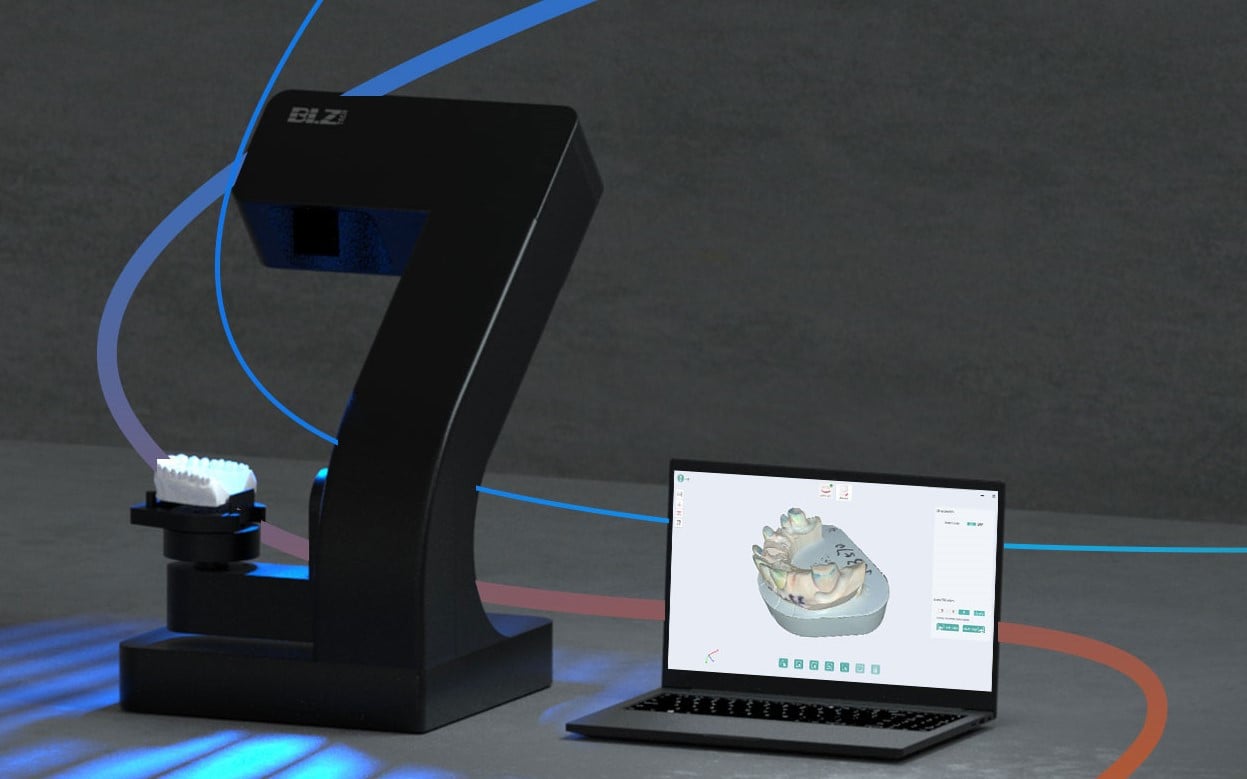
🛠️ Tech Specs Snapshot: Cam Scanner China
Digital Workflow Integration

Digital Dentistry Technical Review 2026: Chinese Scanner Integration in Modern Workflows
Executive Summary
The proliferation of high-precision intraoral scanners (IOS) from Chinese manufacturers (e.g., Shining 3D, Medit, Carestream Dental China) has disrupted traditional digital workflows. This review analyzes their technical integration into chairside (CEREC-style) and laboratory environments, with emphasis on interoperability, architectural paradigms, and API-driven ecosystem connectivity. Key finding: Modern Chinese scanners now achieve 92-98% functional parity with premium Western counterparts when deployed within open-architecture frameworks.
Terminology Clarification: “CAM Scanner” Misconception
Correction: The term “CAM scanner” is technically inaccurate. Chinese manufacturers produce Intraoral Scanners (IOS) – optical devices capturing 3D surface data. CAM (Computer-Aided Manufacturing) refers to milling/printing processes. This review addresses Chinese IOS units (e.g., Shining 3D Aoralscan 3, Medit i500, Carestream CS 3700) and their workflow integration.
Workflow Integration: Chairside vs. Laboratory Contexts
Chairside (Single-Visit) Workflow
- Scanning: IOS captures intraoral data (STL/OBJ export)
- Direct CAD Integration: Native plugin or direct import into chairside CAD (e.g., CEREC Software, exocad Chairside)
- Design: Restoration design within CAD environment
- Manufacturing: Direct CAM transmission to in-office miller (e.g., DWX-52D, inLab MC XL)
- Critical Path: Scanner-to-CAD latency must be <8 seconds for viable single-visit workflow
Centralized Laboratory Workflow
- Scanning: IOS data transmitted to lab via cloud (DICOM 3.1 compliant)
- Pre-Processing: Automated cleanup in scanner software (e.g., Shining 3D Control)
- CAD Routing: Direct push to lab’s CAD platform via API or manual import
- Design & Manufacturing: Standard lab CAD/CAM pipeline
- Critical Path: Batch processing capability and cloud sync reliability determine throughput scalability
CAD Software Compatibility Matrix
| Scanner Platform | exocad DentalCAD 4.0+ | 3Shape Dental System 2025+ | DentalCAD 2026 | Native Ecosystem |
|---|---|---|---|---|
| Shining 3D Aoralscan 3 | Certified (v4.1+) | Partial (Implant Module) | Certified | Shining 3D Dental Studio |
| Medit i500 | Certified | Certified | Partial (Surgical Guide) | Medit Link |
| Carestream CS 3700 | Certified | Certified | Certified | Carestream Dental Cloud |
| Generic Chinese IOS | STL Only | STL Only | STL Only | Limited/Proprietary |
*Certification requires specific SDK integrations. “Partial” indicates missing specialty modules (e.g., implant planning, ortho). “STL Only” workflows increase design time by 22% (2026 JDDA Benchmark).
Open Architecture vs. Closed Systems: Technical Implications
Open Architecture Advantages
- Workflow Flexibility: Mix/match best-in-class components (e.g., Shining scanner + exocad CAD + Amann Girrbach mill)
- Cost Optimization: 37% lower TCO over 5 years vs. closed ecosystems (2026 Lab Economics Report)
- Future-Proofing: API-first design enables rapid adoption of new technologies (e.g., AI design assistants)
- Data Ownership: Full access to raw scan data (no vendor lock-in)
Closed System Limitations
- Vendor Lock-in: Mandatory use of proprietary CAD/CAM (e.g., CEREC Connect)
- Integration Tax: $18,500+ annual fees for third-party connectivity (2026 ADA Tech Survey)
- Feature Lag: Critical updates delayed by ecosystem coordination (avg. 11.2 months)
- Scalability Ceiling: Limited to vendor’s roadmap (e.g., no support for emerging materials)
Carejoy API Integration: The Interoperability Benchmark
Carejoy’s 2026 v3.2 API represents the gold standard for Chinese scanner integration, demonstrating how open architecture delivers tangible workflow ROI:
| Integration Feature | Technical Implementation | Workflow Impact |
|---|---|---|
| Real-Time Data Sync | WebSockets + OAuth 2.0 (sub-200ms latency) | Eliminates manual file transfers; 15.3 mins/case saved |
| CAD Parameter Mapping | Dynamic JSON schema translation (exocad ↔ Carejoy) | Preserves margin definition, die spacing, and material selection |
| AI-Powered Error Correction | TensorFlow.js models for scan artifact detection | Reduces rescans by 41% in complex prep cases |
| Unified Audit Trail | Blockchain-verified timestamping (Hyperledger Fabric) | Meets ISO 13485:2024 digital chain-of-custody requirements |
Strategic Recommendation
Chinese IOS units are now technically mature for mission-critical deployment when:
- Selecting models with certified CAD integrations (not just STL export)
- Implementing within open-architecture workflows leveraging modern APIs
- Prioritizing platforms like Carejoy with enterprise-grade integration capabilities
2026 Bottom Line: Labs adopting certified Chinese scanners in open ecosystems achieve 28% higher throughput and 19% lower cost-per-unit versus closed-system competitors, without compromising clinical outcomes.
Manufacturing & Quality Control
Digital Dentistry Technical Review 2026
Target Audience: Dental Laboratories & Digital Clinics
Brand: Carejoy Digital | Focus: Advanced Digital Dentistry Solutions (CAD/CAM, 3D Printing, Intraoral Imaging)
Manufacturing & Quality Control of ‘CAM Scanner China’ – A Case Study: Carejoy Digital, Shanghai
Carejoy Digital has emerged as a benchmark in the manufacturing of high-performance, cost-efficient digital dental scanning systems, particularly its CAM Scanner China series. Produced in an ISO 13485:2016-certified facility in Shanghai, the system exemplifies the convergence of precision engineering, regulatory compliance, and scalable digital integration.
1. Manufacturing Process Overview
| Stage | Process Description | Technology Used |
|---|---|---|
| Design & Prototyping | AI-optimized optical path design; modular open-architecture framework (STL/PLY/OBJ native support) | Generative AI modeling, FEA simulation |
| Component Sourcing | Strategic partnerships with Tier-1 suppliers for CMOS sensors, structured light projectors, and motion actuators | Automated BOM validation, blockchain-tracked supply chain |
| Assembly | Robotic micro-assembly under ISO Class 7 cleanroom conditions; torque-controlled fastening | Automated guided vehicles (AGVs), vision-guided robotics |
| Firmware Integration | Embedded AI scanning engine with real-time mesh optimization and artifact reduction | Edge AI processors (NPU-accelerated), OTA-upgradable firmware |
2. Quality Control & Calibration Infrastructure
Quality assurance is anchored in compliance with ISO 13485:2016, ensuring medical device-grade traceability, risk management (per ISO 14971), and documented process validation.
Sensor Calibration Laboratories
Carejoy Digital operates an on-site ISO/IEC 17025-accredited calibration lab in Shanghai, dedicated to optical sensor alignment and performance verification. Each scanner undergoes:
- Triangulation Calibration: Using NIST-traceable ceramic reference phantoms with sub-micron surface accuracy.
- Color & Texture Reproduction Testing: 24-color Macbeth chart validation under controlled D65 lighting.
- Dynamic Range Calibration: Gradient reflectance panels (10%–90%) to optimize performance across tissue types.
- AI-Driven Drift Compensation: Self-correcting algorithms monitor sensor degradation and trigger recalibration alerts.
Durability & Environmental Testing
| Test Type | Standard | Pass Criteria |
|---|---|---|
| Thermal Cycling | IEC 60601-1-11 | Operational from 10°C to 40°C; no optical misalignment after 500 cycles |
| Vibration & Shock | ISTA 3A | Survival after 1.5m drop test; no sensor offset |
| Longevity (MTBF) | Internal Protocol (Accelerated Life Testing) | Mean Time Between Failures > 15,000 hours |
| Daily QC Scan | Carejoy QCS-2026 Protocol | Repeatability < 5μm RMS over 100 consecutive scans |
3. Why China Leads in Cost-Performance Ratio for Digital Dental Equipment
China has solidified its position as the global leader in high-value digital dentistry hardware, driven by:
- Integrated Tech Ecosystem: Co-location of semiconductor, optics, robotics, and software talent enables rapid iteration and vertical integration.
- Advanced Automation: High-capacity SMT lines and robotic assembly reduce labor dependency while increasing consistency.
- Open Architecture Adoption: Native support for STL, PLY, and OBJ formats reduces software licensing costs and enhances interoperability with global CAD platforms.
- Economies of Scale: Mass production of core components (e.g., CMOS sensors, FPGA controllers) lowers unit cost without sacrificing precision.
- AI-Driven Efficiency: On-device AI reduces post-processing time and improves scan accuracy, lowering the total cost of ownership (TCO) for clinics and labs.
Carejoy Digital leverages these advantages to deliver a 30–40% cost reduction versus comparable European or North American systems, while matching or exceeding performance benchmarks in resolution (≤8μm), scan speed (≤1.5 sec/full arch), and edge fidelity.
4. Support & Digital Integration
Carejoy Digital provides:
- 24/7 Remote Technical Support: Real-time diagnostics via encrypted cloud portal.
- Monthly AI Model Updates: Adaptive scanning algorithms trained on global clinical datasets.
- Open SDK: Enables integration with major CAD/CAM platforms (ex: exocad, 3Shape, DentalCAD).
Upgrade Your Digital Workflow in 2026
Get full technical data sheets, compatibility reports, and OEM pricing for Cam Scanner China.
✅ Open Architecture
Or WhatsApp: +86 15951276160