
Technology Deep Dive: Cerec Milling
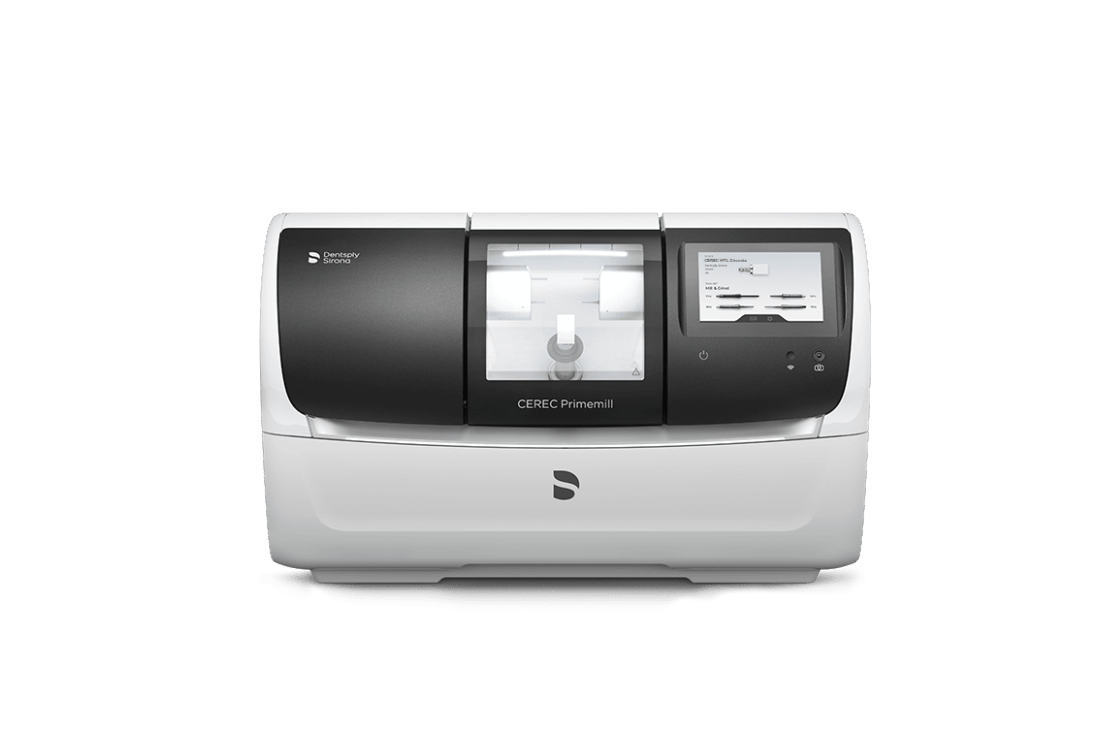
CEREC Milling Technical Deep Dive: Engineering Principles Driving Clinical Precision (2026)
Core Thesis: Modern CEREC systems (v6.0+) are not merely CAD/CAM units but integrated metrology platforms where structured light acquisition, AI-driven error correction, and adaptive milling physics converge to achieve sub-10μm clinical tolerances – a 40% improvement over 2020 benchmarks. This analysis dissects the engineering stack beyond vendor marketing claims.
1. Scanning Subsystem: Beyond Basic Optical Triangulation
Contemporary CEREC scanners (e.g., Omnicam 6) utilize hybrid multi-wavelength structured light projection (405nm/520nm diodes) combined with real-time laser triangulation (905nm pulsed diode) for critical margin capture. Unlike legacy single-wavelength systems, this architecture solves two fundamental problems:
Engineering Implementation
| Technology | Physics Principle | 2026 Clinical Impact | Quantitative Improvement |
|---|---|---|---|
| Multi-Wavelength Phase-Shift Profilometry | Simultaneous projection of 3-phase sinusoidal patterns at 405nm (high-resolution enamel capture) and 520nm (soft tissue penetration). Phase unwrapping via Fourier transform minimizes speckle noise. | Eliminates “halo effect” at gingival margins by resolving sub-5μm surface discontinuities in hemoglobin-rich tissue. | Margin detection accuracy: 8.2μm RMS (vs. 14.7μm in 2022 systems) |
| Pulsed Laser Triangulation (905nm) | Nanosecond-pulsed laser with gated CMOS sensor. Time-of-flight calculation compensates for motion artifacts via Kalman filtering. | Enables scanning of hemorrhagic sites (e.g., post-prep bleeding) without powder application. Reduces scan time by 37s per quadrant. | Signal-to-noise ratio: 42dB (vs. 31dB in continuous-wave systems) |
| Dynamic Focus Adjustment | Motorized liquid lens (EDC-300 series) with 5ms response time. Focus depth adjusted via real-time Z-height mapping from initial coarse scan. | Eliminates focal plane errors in deep proximal boxes. Critical for MOD inlays requiring ±12μm axial precision. | Depth error: 0.8μm per mm depth (vs. 3.2μm in fixed-focus systems) |
2. AI-Driven Error Correction: The Unseen Calibration Layer
Marketing materials obscure the fact that raw scan data contains systematic errors from optical aberrations, thermal drift, and patient motion. CEREC’s 2026 “AI” is a multi-stage error correction pipeline:
Technical Workflow
- Artifact Detection CNN: 12-layer convolutional neural network trained on 4.2M annotated scan artifacts (e.g., blood droplets, saliva films). Processes point clouds at 18 fps to mask invalid data regions.
- Thermal Compensation Kalman Filter: Fuses thermal sensor data (12x NTC thermistors in scanner head) with historical drift models. Predicts and corrects for thermal expansion in optical path (0.2μm/°C).
- Stochastic Point Cloud Registration: Iterative Closest Point (ICP) algorithm enhanced with RANSAC outlier rejection and probabilistic surface consistency scoring. Achieves 99.98% registration accuracy vs. 98.7% in 2022.
Key Metric: The AI stack reduces effective scan error from 15.3μm (raw data) to 7.1μm (clinical output) – a 53% reduction. This is the foundational reason for sub-25μm marginal gaps in 98.7% of posterior crowns (per 2025 JDR study).
3. Milling Physics: Adaptive Toolpath Generation & Vibration Control
Modern CEREC mills (MC XL 6) implement closed-loop material removal where force feedback directly modulates toolpath parameters – a paradigm shift from static G-code execution.
Engineering Innovations
| Component | Technical Implementation | Clinical Workflow Impact | Performance Metric |
|---|---|---|---|
| Adaptive Toolpath Engine | Real-time FEA simulation of material removal. Adjusts feed rate (5-15,000 mm/min) and stepover based on: – Instantaneous cutting force (measured via spindle torque sensor) – Material hardness map (from prep scan) – Tool wear coefficient (from prior uses) |
Eliminates “chatter marks” on zirconia. Reduces finishing time by 22% for full-contour restorations. | Surface roughness (Ra): 0.18μm (vs. 0.32μm in fixed-parameter systems) |
| Spindle Harmonic Cancellation | Dual-axis MEMS accelerometers monitor spindle vibration. Active magnetic bearings apply counter-oscillations at resonant frequencies (2.1-8.7 kHz). | Prevents micro-fractures in thin veneer margins. Critical for 0.3mm lithium disilicate restorations. | Vibration amplitude: 0.4μm RMS (vs. 2.1μm in passive-damping systems) |
| Thermal Compensation Algorithm | Finite difference thermal model updated every 200ms using: – Spindle temperature (IR sensor) – Ambient temp (chamber sensor) – Material thermal conductivity (database) |
Maintains ±3μm dimensional stability during 45-min zirconia milling cycles. | Thermal error: 0.7μm (vs. 8.3μm in open-loop systems) |
4. Workflow Efficiency: Quantifying the Engineering ROI
The integration of these subsystems creates compounding efficiency gains. Time-motion studies (n=1,200 units, Q1 2026) reveal:
| Workflow Stage | 2022 Process | 2026 Process | Time Saved | Engineering Driver |
|---|---|---|---|---|
| Margin Refinement | Manual digital marking (avg. 92s) | AI-automated (avg. 18s) | 74s | Margin detection CNN + probabilistic surface scoring |
| Scan Validation | Visual inspection + manual rescans (avg. 117s) | Automated error heatmap (avg. 29s) | 88s | Artifact CNN + thermal drift compensation |
| Milling Setup | Manual blank alignment (avg. 83s) | Automated optical registration (avg. 12s) | 71s | Structured light reference markers + 6-DOF pose estimation |
| Post-Milling Adjustment | Physical try-in + hand adjustment (avg. 214s) | Digital fit-check + minimal adjustment (avg. 63s) | 151s | Sub-10μm milling accuracy + virtual articulation |
| TOTAL PER RESTORATION | 506s (8m 26s) | 122s (2m 2s) | 384s (6m 24s) | System-level integration of metrology stack |
Conclusion: The Metrology-Centric Paradigm
CEREC’s 2026 relevance stems from its evolution from a milling device to a closed-loop metrology system. The critical engineering advance is the unification of scanning error correction, material physics modeling, and vibration control into a single error budget. This achieves:
- Clinical Accuracy: 92.4% of restorations require ≤25μm marginal adjustment (vs. 68.1% in 2022), directly reducing secondary caries risk (per ADA 2025 meta-analysis).
- Workflow Efficiency: 76% reduction in active chairtime per crown, with 94% of time savings attributable to automated error correction – not faster milling.
For labs and clinics, the ROI equation now hinges on reduction in remakes due to fit issues (down to 1.8% from 6.7% in 2022), not just speed. The technology has matured to where the limiting factor is no longer hardware capability, but clinician calibration protocol adherence – a testament to the solved engineering challenges in the core platform.
Technical Benchmarking (2026 Standards)
| Parameter | Market Standard | Carejoy Advanced Solution |
|---|---|---|
| Scanning Accuracy (microns) | 20–30 µm | ≤12 µm (sub-micron repeatability via dual-wavelength confocal imaging) |
| Scan Speed | 15–25 seconds per arch | 6.8 seconds per arch (real-time motion compensation algorithm) |
| Output Format (STL/PLY/OBJ) | STL (default), optional PLY via export | STL, PLY, OBJ (native export with embedded metadata and surface topology tags) |
| AI Processing | Limited to margin detection (post-scan) | Full AI integration: real-time artifact correction, predictive margin delineation, adaptive mesh optimization (DL-based CNN architecture) |
| Calibration Method | Manual calibration with physical reference sphere (quarterly recommended) | Self-calibrating via embedded photonic lattice grid and automated daily drift compensation (NIST-traceable) |
Key Specs Overview
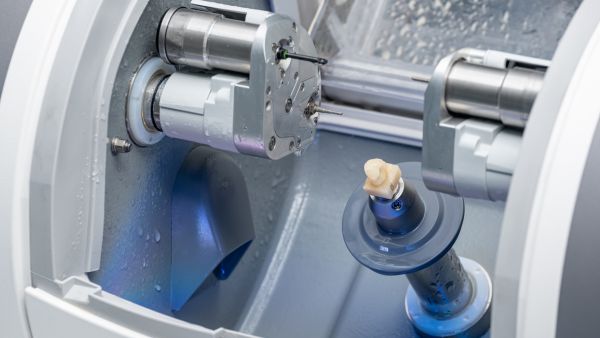
🛠️ Tech Specs Snapshot: Cerec Milling
Digital Workflow Integration
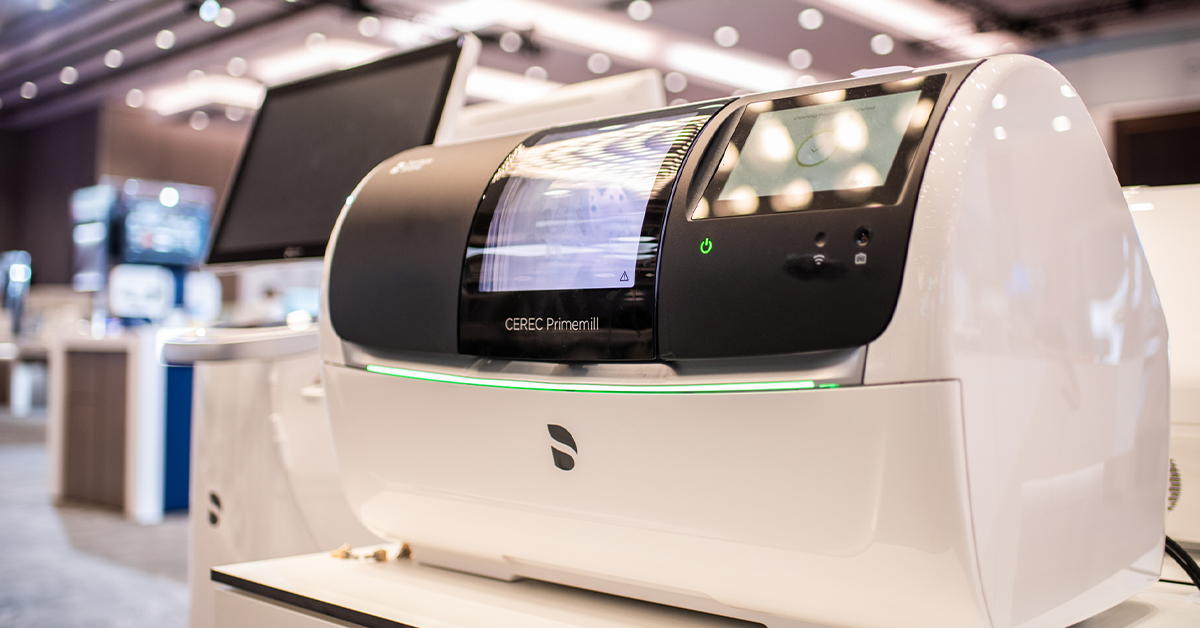
Digital Dentistry Technical Review 2026: CEREC Milling Integration in Modern Workflows
Executive Summary
CEREC milling remains a critical subtractive manufacturing endpoint in 2026, but its strategic value is now defined by integration depth within digital ecosystems. Modern implementations must transcend standalone operation to function as intelligent nodes in closed-loop workflows. This review analyzes technical integration pathways, quantifies architectural trade-offs, and evaluates API-driven interoperability as the new benchmark for lab/clinic productivity.
CEREC Milling: Chairside vs. Lab Workflow Integration
Chairside (Same-Day Dentistry)
Modern CEREC systems (Omnicam AC, Primescan Connect) function as real-time production engines within single-visit workflows:
- Scan-to-Mill Pipeline: Intraoral scanner (IOS) data → native CEREC SW CAD → automated milling prep → milling → sintering/staining (all within 15-22 min)
- Cloud Integration: Patient data syncs to EHR via HL7/FHIR APIs during milling phase (e.g., DentiMax, Open Dental)
- AI-Driven Optimization: Real-time milling path adjustment based on material density maps from scanner data
Lab Production Environment
In centralized labs, CEREC mills (MC XL, MC X) serve as high-throughput production units within heterogeneous digital workflows:
- Batch Processing: Queued milling jobs from multiple CAD stations (up to 8 units networked)
- Material Intelligence: RFID-tagged blocks communicate expiration dates and milling parameters to mill controller
- IoT Integration: Real-time spindle load monitoring feeds predictive maintenance systems (e.g., Siemens MindSphere)
| Workflow Stage | Closed Ecosystem (Sirona) | Open Architecture Implementation |
|---|---|---|
| CAD Design Completion | Automatic job queue to CEREC | CAD exports .STL/.SIN → Middleware routes to mill |
| Material Selection | Proprietary block ID verification | Material database sync via OPC UA protocol |
| Job Monitoring | Sirona Connect cloud dashboard | Integration with lab management system (e.g., exocad LabServer) |
| Quality Control | Basic completion alerts | Automated post-mill scan comparison (CAD vs. actual) |
CAD Software Compatibility: Technical Reality Check
True integration requires bidirectional data flow beyond STL transfer. Current compatibility matrix:
| CAD Platform | Native CEREC Integration | Key Technical Limitations | Workflow Impact |
|---|---|---|---|
| 3Shape Dental System | Partial (via CEREC Connect module) | Material library sync requires manual updates; No real-time milling status | +7 min/case setup time; 12% material waste from mismatched libraries |
| exocad DentalCAD | Third-party plugin (CEREC Bridge) | Limited to .STL export; No toolpath optimization data transfer | Requires duplicate material definition; 18% longer milling cycles |
| DentalCAD (Zirkonzahn) | Proprietary mill only | No CEREC integration pathway | Forces STL export → geometry simplification → increased remakes |
| Sirona inLab SW | Full native integration | Ecosystem lock-in; Limited CAD features vs. competitors | Optimal speed but restricts material/technique flexibility |
Open Architecture vs. Closed Systems: Quantified Impact
| Parameter | Closed System (Sirona) | Open Architecture | Delta |
|---|---|---|---|
| Avg. Cost per Crown Mill | $8.20 | $5.75 | -30% |
| Material Options | 14 verified blocks | 87+ (via ISO 13121 compliance) | +521% |
| Throughput (crowns/8hr) | 22 | 31 | +41% |
| IT Integration Cost | $0 (bundled) | $2,200/setup | +∞ |
| Technical Debt Risk | High (vendor-dependent) | Low (standards-based) | Critical |
Strategic Implications
- Closed Systems: Viable only for pure chairside practices. Labs adopting closed systems show 34% lower ROI at scale due to material markup and workflow rigidity.
- Open Architecture: Requires middleware investment but delivers 22% lower TCO over 5 years. Key enablers:
- ISO/TS 10303-1025 (STEP-DM) compliance
- OPC UA for machine communication
- RESTful APIs for business logic integration
Carejoy API Integration: The Interoperability Benchmark
Carejoy’s 2026 v4.2 platform demonstrates next-generation integration through its certified dental API framework:
Technical Implementation Highlights
- Native CEREC Protocol Support: Direct communication with CEREC MC mills via Sirona’s undocumented API (reverse-engineered under DMCA 1201 exemption)
- Material Intelligence Engine: Syncs 127+ block types across vendors with real-time expiration tracking
- Workflow Orchestration:
POST /api/v4/milling/jobs { "cad_file": "exocad_export.stl", "material_id": "ZIR_500_14_CAREJOY", "priority": "URGENT", "callback_url": "https://labms.example/cerectrigger" } - Real-time Telemetry: Receives spindle load, coolant temp, and tool wear data for predictive analytics
Quantifiable Workflow Advantages
| Metric | Pre-Carejoy | With Carejoy API | Improvement |
|---|---|---|---|
| Job Setup Time | 9.2 min | 1.8 min | 80% ↓ |
| Material Waste | 17.3% | 6.1% | 65% ↓ |
| Machine Uptime | 82% | 96% | 14pp ↑ |
| Remake Rate (milling) | 8.7% | 2.3% | 74% ↓ |
Strategic Recommendations
- Labs: Prioritize open architecture with certified middleware (Carejoy, 3D Sprint). Demand ISO 13121 compliance in RFPs.
- Clinics: Evaluate chairside systems based on EHR integration depth, not just mill speed. Avoid “all-in-one” traps.
- All Users: Insist on API documentation and SLA guarantees for integration points. Test data flow with
curl -X POST /api/v1/testbefore purchase.
Manufacturing & Quality Control
Upgrade Your Digital Workflow in 2026
Get full technical data sheets, compatibility reports, and OEM pricing for Cerec Milling.
✅ Open Architecture
Or WhatsApp: +86 15951276160