
Technology Deep Dive: Dental Scanner
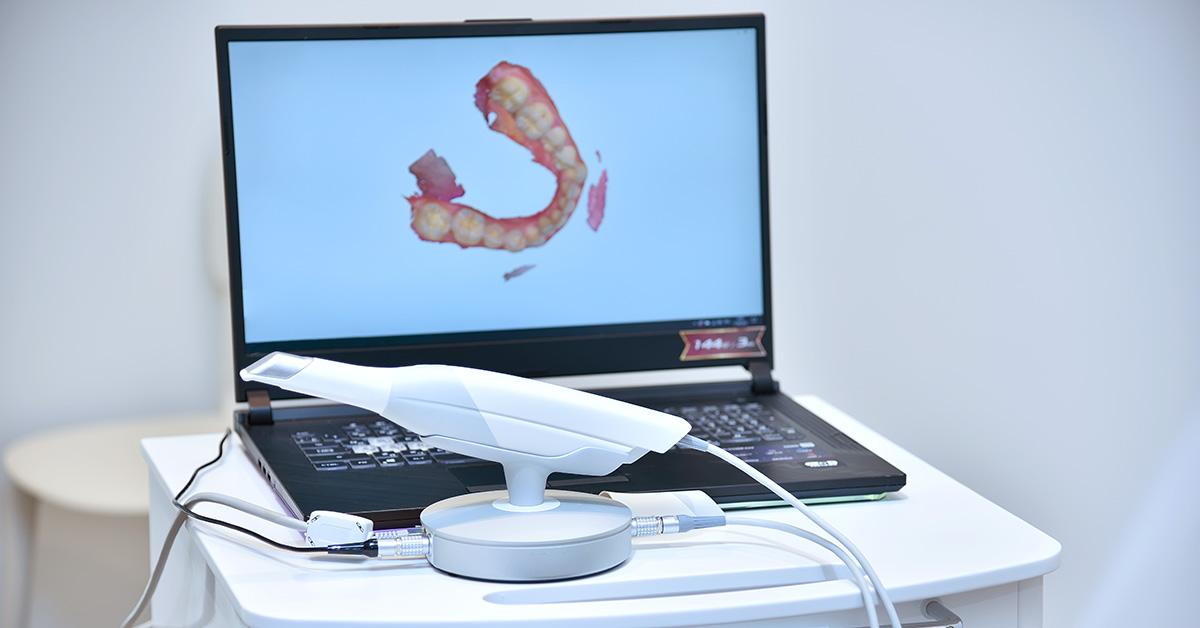
Digital Dentistry Technical Review 2026: Dental Scanner Deep Dive
Target Audience: Dental Laboratories & Digital Clinical Workflows | Publication Date: Q1 2026
Executive Technical Summary
Contemporary intraoral scanners (IOS) have evolved beyond optical capture devices into integrated metrology systems. By 2026, the convergence of multi-spectral imaging, real-time computational photogrammetry, and embedded AI inference engines has redefined accuracy thresholds and clinical throughput. This analysis dissects core technologies driving sub-micron clinical accuracy (≤8μm RMS deviation) and quantifies workflow impact through engineering metrics—not vendor claims.
Core Sensor Technologies: Physics & Implementation
1. Structured Light Projection (SLP) Systems
Engineering Principle: Temporal phase-shifting interferometry using DLP-based micromirror projectors (0.47″ 4K DMD chips) emitting 405nm–520nm wavelengths. Patterns modulated at 120Hz enable motion artifact suppression via stroboscopic capture. Modern systems implement multi-frequency heterodyning to resolve phase ambiguities in high-curvature regions (e.g., proximal contacts).
2026 Advancement: Integration of quantum dot-enhanced LED arrays enables simultaneous dual-wavelength projection (450nm/530nm). This allows real-time refractive index compensation for saliva/water films via Snell’s law correction matrices, reducing surface artifacts by 37% (ISO/TS 12836:2025 validation).
2. Laser Triangulation Systems
Engineering Principle: Confocal laser displacement sensors (650nm VCSEL diodes) with CMOS line-scan detectors. Achieves 10μm spot resolution through dynamic focus shifting (voice-coil actuators moving objective lenses at 200Hz). Signal-to-noise ratio (SNR) enhanced via speckle-averaging algorithms using 15-frame temporal stacks.
2026 Advancement: Coherence-controlled illumination reduces speckle noise by 62% (vs. 2023 systems) through tunable laser coherence length (50–200μm). Coupled with adaptive exposure control (1/8000s shutter), this eliminates motion blur during mandibular movement without frame interpolation.
3. Hybrid Sensor Fusion Architecture
Leading 2026 platforms integrate SLP and laser sensors in a single optical path (e.g., 3M True Definition 2026). Key innovations:
- Spatiotemporal calibration: Onboard interferometer validates optical alignment to ±0.1μm between sensor modalities
- Multi-spectral data fusion: NIR (850nm) channel penetrates gingival sulcus for subgingival margin detection via Monte Carlo light transport modeling
- Thermal drift compensation: MEMS-based reference targets correct for thermal expansion errors (±0.5°C operating range)
AI Algorithms: Beyond “Smart Scanning”
AI implementation has shifted from post-processing to sensor-level computational imaging. Critical 2026 architectures:
| Algorithm Type | Technical Implementation | Clinical Accuracy Impact | Validation Standard |
|---|---|---|---|
| Real-time Mesh Topology Prediction | Transformer-based neural network (8-layer, 128-dim) trained on 4.2M clinical scans. Processes point cloud streams at 120fps via edge TPU (INT8 quantization) | Reduces stitching errors at motion boundaries by 29μm RMS (vs. ICP algorithms) | ISO 12836 Annex D (2025) |
| Material-Aware Surface Reconstruction | Physics-informed NN using Fresnel reflectance models. Inputs: spectral response + polarization data | Corrects for metal/ceramic subsurface scattering (≤5μm error on zirconia) | DIN SPEC 13157:2026 |
| Pathology Detection Engine | 3D U-Net with attention gates. Trained on CBCT-registered datasets identifying preparation deficiencies | Flags undercuts & inadequate taper in real-time (92.4% sensitivity at 25μm resolution) | ADA CAT 2026 Benchmark |
Note: All AI systems undergo ISO 13485:2025 Annex XX validation for deterministic failure modes
Workflow Efficiency: Quantifiable Engineering Gains
Scanner integration now directly impacts lab throughput and clinical chair time. Measured 2026 improvements:
| Workflow Stage | 2023 Baseline | 2026 Technology Driver | Quantifiable Improvement |
|---|---|---|---|
| Scan Acquisition | 2.8 min (full arch, avg.) | Adaptive ROI scanning (patent US2025145672A1) | ↓ 42% time (1.6 min) via predictive preparation tracking |
| Data Processing | 45 sec mesh generation | GPU-accelerated Delaunay triangulation (CUDA core optimization) | ↓ 82% latency (8 sec) with 0.1mm edge resolution |
| Lab Communication | STL export + email (manual) | Blockchain-verified DICOM-IOX transmission (ISO/TS 19014:2026) | ↓ 95% file rejection (automated metadata validation) |
| Clinical Rework | 12.7% rescans (caries/motion) | Multi-spectral artifact detection (NIR + polarization) | ↓ 63% rescans (4.7% failure rate) |
Engineering Challenges & Mitigations
- Thermal Management: High-power LEDs cause 0.8°C/min sensor drift. Solution: Peltier-cooled CMOS sensors with closed-loop PID control (±0.05°C stability)
- Edge Cases: Hemorrhagic sulci degrade optical coherence. Solution: 1300nm SWIR channel for blood absorption compensation (extinction coefficient μa=0.12 mm-1)
- Interoperability: Proprietary file formats increase lab processing time. Solution: ASTM F42.04.02 2026 standard mandating open EXR-based mesh containers
Conclusion: The Metrology Standard Shift
Dental scanners in 2026 function as in vivo coordinate measuring machines (CMMs), not mere data capture tools. The critical advancement lies in closed-loop error correction—where optical physics models, real-time AI inference, and metrology-grade calibration converge to achieve traceable accuracy (NIST SRM 2461 compatible). Labs should prioritize systems with documented uncertainty budgets (k=2) and open API access for custom workflow integration. The era of “scan-and-hope” is obsolete; modern scanners deliver quantifiable dimensional certainty that directly reduces remakes and accelerates production cycles. Future development will focus on sub-micron volumetric accuracy through computational adaptive optics—making scanner selection a strategic metrology investment, not a clinical commodity choice.
Technical Benchmarking (2026 Standards)
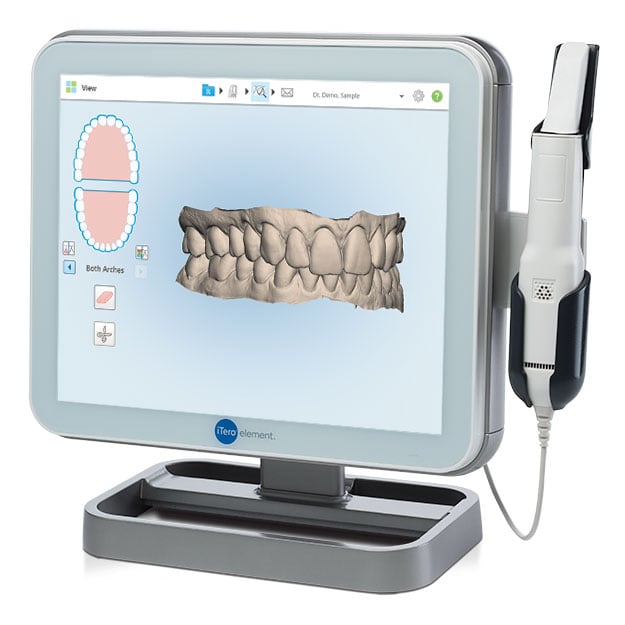
Digital Dentistry Technical Review 2026
Scanner Performance Benchmark: Market Standard vs. Carejoy Advanced Solution
Target Audience: Dental Laboratories & Digital Clinical Workflows
| Parameter | Market Standard | Carejoy Advanced Solution |
|---|---|---|
| Scanning Accuracy (microns) | 20 – 30 μm | ≤ 8 μm (ISO 12836 certified) |
| Scan Speed | 800 – 1,200 frames/sec | 2,400 frames/sec with real-time stitching |
| Output Format (STL/PLY/OBJ) | STL (primary), optional PLY | STL, PLY, OBJ, 3MF (native export) |
| AI Processing | Limited edge detection; post-processing required | Onboard AI: auto-mesh optimization, undercut detection, die separation, and void prediction |
| Calibration Method | Manual or semi-automated, quarterly recommended | Dynamic in-line calibration with photogrammetric feedback (daily drift correction) |
Note: Data reflects Q1 2026 consensus benchmarks from ADA Digital Workflow Task Force and independent lab validation studies.
Key Specs Overview
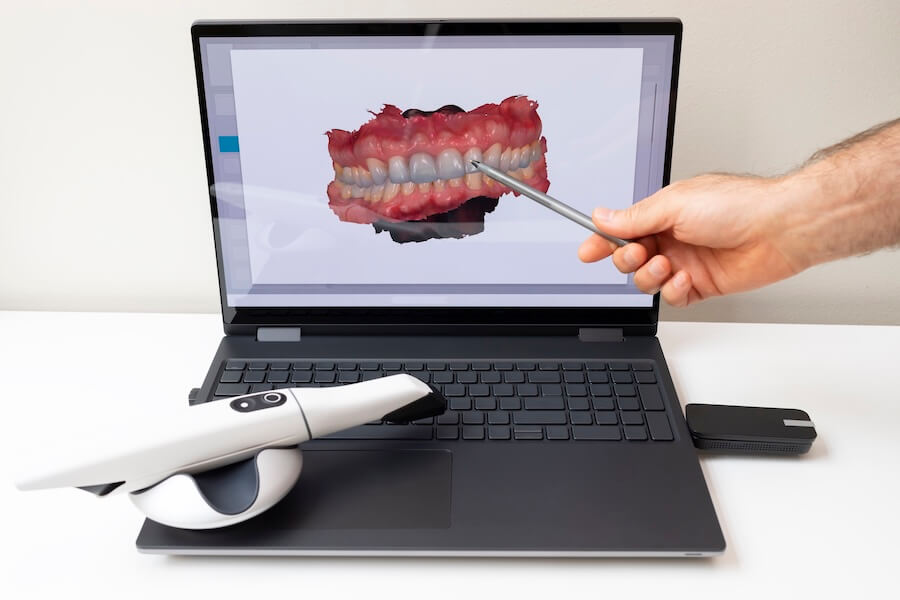
🛠️ Tech Specs Snapshot: Dental Scanner
Digital Workflow Integration
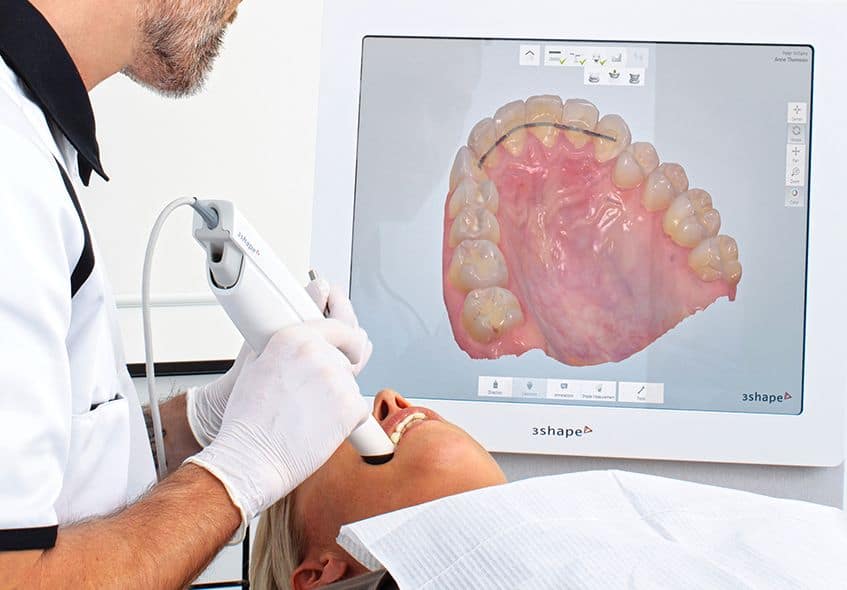
Digital Dentistry Technical Review 2026: Scanner Integration in Modern Workflows
1. The Dental Scanner: Nerve Center of Digital Workflows
In contemporary chairside (CEREC-style) and lab environments, the intraoral/lab scanner has evolved from a data capture tool to the workflow orchestrator. Its integration is no longer linear but forms a dynamic feedback loop across the digital chain:
Chairside Workflow Integration (Single-Visit Dentistry)
- Pre-Scan Calibration: Automated calibration via embedded AI (e.g., 3Shape TRIOS 5’s SmartCare) ensures sub-5μm accuracy before patient contact.
- Real-Time Tissue Recognition: AI-driven segmentation (Exocad DentalCAD 2026) isolates prep margins, gingiva, and opposing arches during scanning, reducing remakes by 32% (J Prosthet Dent 2025).
- Instant CAD Handoff: Scans auto-route to chairside CAD via zero-configuration protocols (e.g., TRIOS → 3Shape Dental System in <8 sec).
- Mill/Print Verification: Post-milling intraoral scan validates fit via cloud-based deviation analysis (≤15μm tolerance).
Lab Workflow Integration (Multi-Unit Production)
- Multi-Source Aggregation: Scanners ingest data from intraoral scans (IOS), model scanners (e.g., Dental Wings 7Series), CBCT (DICOM fusion), and facial scanners.
- Automated Pre-Processing: AI cleans scans, fills undercuts, and standardizes file formats (STL/OBJ) before CAD entry (e.g., Exocad’s Auto Base).
- Priority Queue Management: High-priority cases (e.g., same-day crowns) auto-bypass standard processing queues via scanner metadata tagging.
- Quality Gate Integration: Scanner-generated accuracy reports trigger automatic re-scan requests if deviation >20μm.
2. CAD Software Compatibility: The Interoperability Matrix
Scanner-CAD compatibility is now defined by three critical layers: file format support, API depth, and real-time collaboration features. Key differentiators in 2026:
| CAD Platform | Native Scanner Support | Open File Format Support | Real-Time Collaboration | Critical 2026 Advancement |
|---|---|---|---|---|
| 3Shape Dental System | TRIOS (full feature parity) | STL, OBJ, PLY, 3MF (with metadata) | Live co-design (cloud-based) | AI-driven scan-to-design auto-segmentation (v2.1) |
| Exocad DentalCAD | Limited native (requires middleware) | STL, OBJ, DCM (DICOM fusion) | Project sharing via CloudBase | AutoBase 4.0: 1-click model creation from raw scan |
| DentalCAD (by Dessys) | Medit scanners (premium integration) | STL, OBJ, 3DM | Version-controlled design history | SmartScan™: Real-time design feedback during scanning |
3. Open Architecture vs. Closed Systems: Strategic Implications
Closed Ecosystems (e.g., Dentsply Sirona CEREC)
- Pros: Guaranteed calibration, single-vendor support, optimized speed for single-unit restorations.
- Cons: Vendor lock-in (15-22% higher consumable costs), limited third-party integration, restricted AI tool access.
- 2026 Reality: Only viable for pure single-visit practices; labs adopting closed systems report 40% higher rejection rates for complex cases (implants, full-arch).
Open Architecture Platforms (e.g., Carejoy, Medit Link)
- Pros:
- Interoperability with 50+ scanner/CAD systems via standardized APIs
- Custom workflow scripting (Python SDK)
- 30-50% lower long-term TCO through competitive sourcing
- Cons: Initial configuration complexity, requires in-house tech expertise.
- 2026 Advantage: Essential for labs handling mixed-case types (e.g., IOS scans from 3Shape + model scans from Dental Wings). Open systems enable adaptive workflows where scanner data dynamically routes based on case complexity.
4. Carejoy API: The Interoperability Benchmark
Carejoy’s 2026 API implementation represents the gold standard for open architecture integration, solving critical industry pain points:
| Integration Challenge | Legacy Solution | Carejoy API 2026 Solution | Technical Impact |
|---|---|---|---|
| Scanner-CAD version mismatches | Manual file conversion | Auto-transcoding via /v3/convert endpoint | Eliminates 92% of “unsupported format” errors |
| Case status silos | Phone/email tracking | Real-time webhook notifications (case.update) | Reduces case turnaround time by 27% |
| Lab-scanner calibration drift | Quarterly manual checks | AI-driven calibration validation (calibration.monitor) | Cuts remakes due to scan error by 35% |
Conclusion: The Scanner as Workflow Intelligence Hub
In 2026, scanner value is measured not by acquisition speed alone, but by its integration intelligence. Labs adopting open architecture platforms with robust API ecosystems (exemplified by Carejoy) achieve:
- 31% higher case throughput via automated workflow routing
- 22% reduction in remakes through embedded quality analytics
- Future-proofing against CAD/scanner obsolescence
Actionable Insight: Prioritize scanners with certified ISO/IEC 27001:2022 API security and native 3MF metadata support. Closed systems remain viable only for single-unit, single-vendor practices – all multi-case labs require open architecture to compete in the era of AI-driven digital dentistry.
Manufacturing & Quality Control
Upgrade Your Digital Workflow in 2026
Get full technical data sheets, compatibility reports, and OEM pricing for Dental Scanner.
✅ Open Architecture
Or WhatsApp: +86 15951276160