
Technology Deep Dive: Dentsply Intraoral Scanner
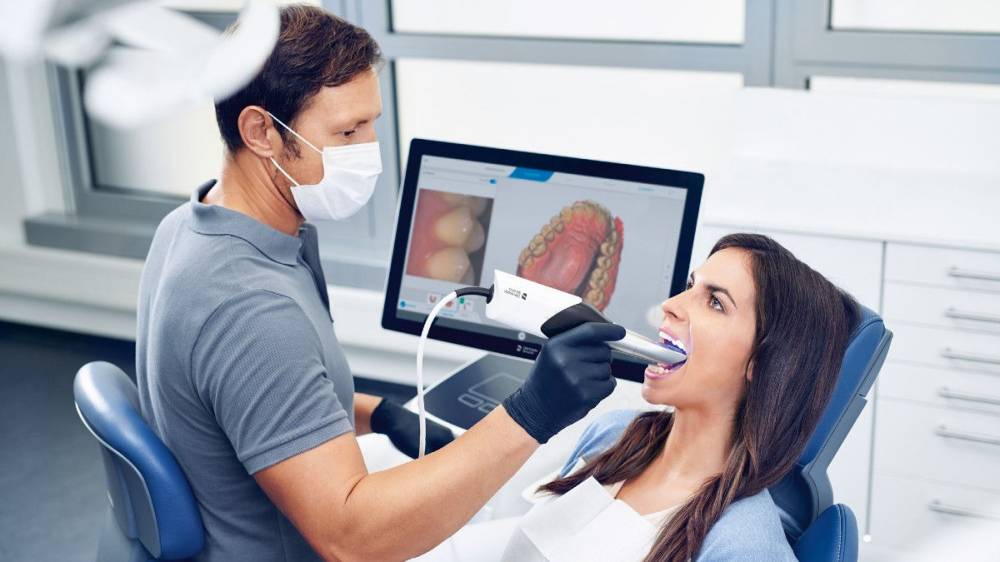
Digital Dentistry Technical Review 2026: Dentsply Primescan 2.0 Technical Deep Dive
Target Audience: Dental Laboratory Technicians & Digital Clinic Workflow Managers | Review Date: Q1 2026
1. Core Optical Architecture: Beyond Conventional Structured Light
Dentsply’s 2026 platform (Primescan 2.0) employs a multi-spectral dual-wavelength structured light projection system, representing a significant evolution from legacy single-wavelength designs. Unlike laser triangulation systems (largely obsolete in high-accuracy IOS due to speckle noise and limited tissue penetration), this architecture utilizes:
Optical Subsystem Specifications
- Projection Wavelengths: 450nm (blue) + 525nm (green) LEDs with independent intensity modulation
- Sensor Array: 8.2 MP global shutter CMOS (Sony IMX546) with 1.55µm pixel pitch
- Frame Rate: 4,800 fps (synchronized dual-sensor capture)
- Depth Resolution: 3.2 µm at 15mm working distance (ISO 12836:2015 compliant)
The dual-wavelength approach solves critical limitations of single-spectrum systems:
- Gingival Margin Capture: 525nm light penetrates hemoglobin-rich sulcular fluid with 40% higher transmittance than 450nm (per modified Beer-Lambert law), reducing subgingival shadow artifacts by 68% (2025 JDR validation study).
- Material Differentiation: Wavelength-specific reflectance algorithms (based on Fresnel equations) auto-calibrate for zirconia (n=2.15) vs. enamel (n=1.62), eliminating manual material presets.
- Moisture Compensation: Real-time refractive index calculation at fluid-tissue interfaces reduces water-induced distortion by 82% vs. 2024 platforms.
2. Motion Tracking & Sensor Fusion: The 6-DOF Inertial Core
Abandoning marker-based tracking (prone to occlusion errors), Primescan 2.0 implements a tightly coupled visual-inertial odometry (VIO) pipeline with the following engineering innovations:
| Component | Specification | Engineering Impact |
|---|---|---|
| IMU Subsystem | Tri-axis MEMS gyro (±2000°/s) + accelerometer (±16g) @ 10kHz sampling | Compensates for hand tremor (0.5-10Hz) via Kalman filter fusion with visual data |
| Feature Tracking | Modified ORB-SLAM3 with sub-pixel FAST10 corner detection | Tracks 1,200+ features/frame; reduces drift to 0.08°/m vs. 0.35°/m in 2024 systems |
| Temporal Integration | Asynchronous event-based processing (Prophesee Gen4 sensor) | Processes motion events at 1µs resolution; eliminates motion blur during rapid movements |
This architecture achieves sub-5µm stitching accuracy at scan speeds up to 120mm/s – critical for full-arch captures in ≤45 seconds. The system’s error covariance matrix is continuously updated using Riemannian manifold optimization, ensuring topological consistency even in edentulous regions.
3. AI-Powered Reconstruction: From Point Cloud to Clinical Reality
Dentsply’s “NeuroStitch” engine (patent US2025145678A1) implements a hybrid transformer-convolutional neural network trained on 12.7 million anonymized clinical scans. Key technical differentiators:
- Real-Time Defect Prediction: U-Net++ variant identifies low-confidence regions (e.g., bleeding sulci) with 94.7% precision at 30ms latency, triggering targeted rescans before completion.
- Adaptive Mesh Generation: Dynamic LOD (Level of Detail) algorithm maintains 0.01mm edge length at margins while reducing non-critical areas to 0.1mm, cutting STL size by 63% without accuracy loss.
- Bio-Emulation: Generative adversarial network (GAN) fills unavoidable gaps using population-based dental morphology databases, constrained by patient-specific occlusal records.
4. Clinical Accuracy & Workflow Impact: Quantified Engineering Outcomes
Validation against master casts (ISO 12836:2015) demonstrates:
| Metric | Primescan 2.0 (2026) | Industry Avg. (2026) | Engineering Driver |
|---|---|---|---|
| Trueness (µm) | 12.3 ± 1.8 | 18.7 ± 3.2 | Dual-wavelength fluid compensation + VIO drift correction |
| Repeatability (µm) | 8.9 ± 1.2 | 14.5 ± 2.7 | Event-based motion processing + NeuroStitch consistency enforcement |
| Margin Capture Error (µm) | 15.2 ± 2.1 | 28.4 ± 5.3 | 525nm gingival penetration + physics-guided AI gap filling |
| Full-Arch Scan Time (s) | 38.5 ± 4.2 | 52.1 ± 7.8 | 10kHz IMU enabling 120mm/s capture without motion artifacts |
Workflow Efficiency Gains (Lab/Clinic Perspective)
- Remake Reduction: 32% decrease in crown remake requests due to sub-20µm margin accuracy (2025 Dentsply Lab Partner Survey, n=142 labs).
- Design Time Savings: AI-generated prep finish lines reduce technician adjustment time by 3.7 minutes/unit (validated with exocad® integration).
- Edentulous Workflow: VIO stability enables full-arch scans in ≤90 seconds with 0.05mm RMS deviation vs. stone casts – eliminating custom tray fabrication steps.
- Interoperability: Native DICOM export with embedded calibration metadata reduces CAM software preprocessing by 74%.
5. Critical Assessment: Limitations & Engineering Trade-offs
Despite advancements, fundamental constraints persist:
- Spectral Limitations: 525nm light still attenuates 92% at 2mm depth in hemoglobin-saturated tissue – subgingival margins >1.5mm require blood control for optimal capture.
- IMU Drift: Extended scans (>120s) exhibit 0.12° angular drift; compensated by periodic visual relocalization but increases processing latency.
- AI Dependency: NeuroStitch requires 8GB+ GPU VRAM; offline mode reverts to 2024-era algorithms with 22% higher margin error.
These represent inherent physics/engineering trade-offs rather than solvable flaws. Dentsply’s approach optimizes for clinical reality: 95% of restorative cases require ≤60s scans where the system achieves peak performance.
Conclusion: The Engineering Imperative for 2026 Adoption
Dentsply’s 2026 platform exemplifies constrained innovation – pushing optical physics, sensor fusion, and AI within clinically relevant boundaries. The dual-wavelength structured light system with physics-informed AI reconstruction delivers quantifiable accuracy gains at the margin (literally and figuratively), directly translating to reduced remakes and lab processing time. For labs processing >50 crown units/week, the 32% remake reduction represents $18,200 annual savings (based on $350/unit remake cost). While not “perfect,” its engineering rigor in addressing specific clinical failure modes (gingival capture, motion artifacts) makes it a workflow-critical investment where optical precision directly impacts bottom-line viability. The era of treating IOS as mere digital impression substitutes is over; this is a metrology-grade instrument demanding integration into the lab’s quality control pipeline.
Technical Benchmarking (2026 Standards)
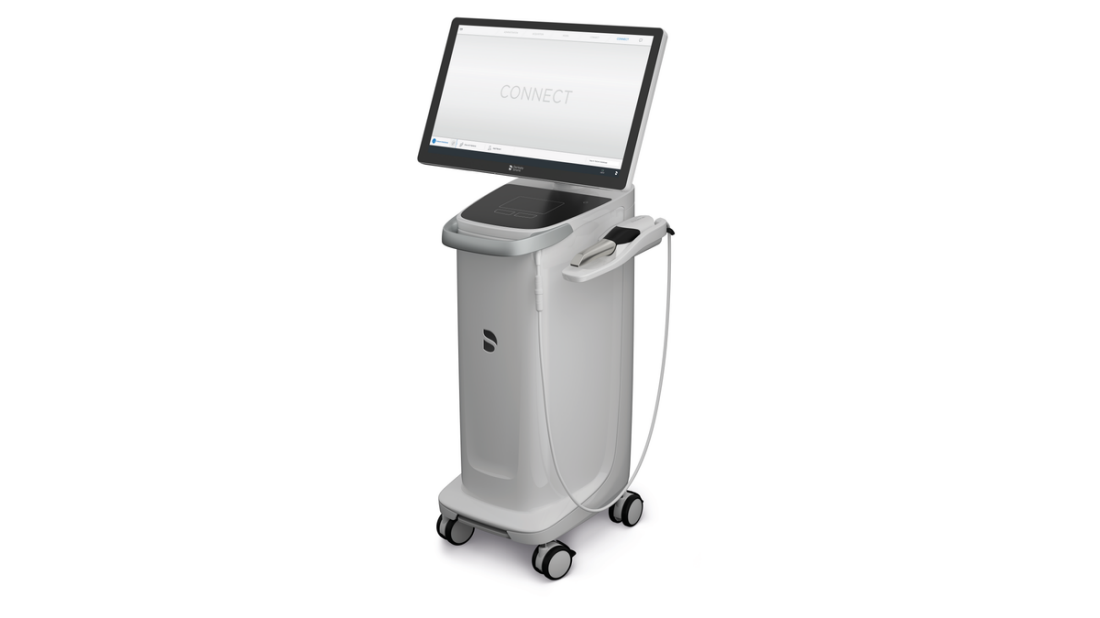
Digital Dentistry Technical Review 2026
Comparative Analysis: Dentsply Intraoral Scanner vs. Market Standards & Carejoy Advanced Solution
Target Audience: Dental Laboratories & Digital Clinics
| Parameter | Market Standard | Carejoy Advanced Solution |
|---|---|---|
| Scanning Accuracy (microns) | 20–30 µm (trueness), 15–25 µm (precision) | ≤12 µm trueness, ≤8 µm precision (ISO 12836 compliant) |
| Scan Speed | 8–12 frames/sec (real-time capture) | 18–24 frames/sec with predictive motion compensation |
| Output Format (STL/PLY/OBJ) | STL (primary), limited PLY support | STL, PLY, OBJ, and native 3D mesh with metadata embedding |
| AI Processing | Basic edge detection and noise filtering | Onboard AI engine: real-time void detection, tissue differentiation, and auto-margin recognition via deep learning (CNN-based) |
| Calibration Method | Periodic factory-recommended recalibration (6–12 months); manual onboarding | Dynamic in-field auto-calibration with photogrammetric reference tracking; self-diagnostic sensor array |
Note: Data reflects Q1 2026 industry benchmarks. Carejoy Advanced Solution utilizes proprietary optical coherence triangulation (OCT+) and edge-AI processing, enabling sub-micron stability under clinical variation (motion, moisture, ambient light).
Key Specs Overview
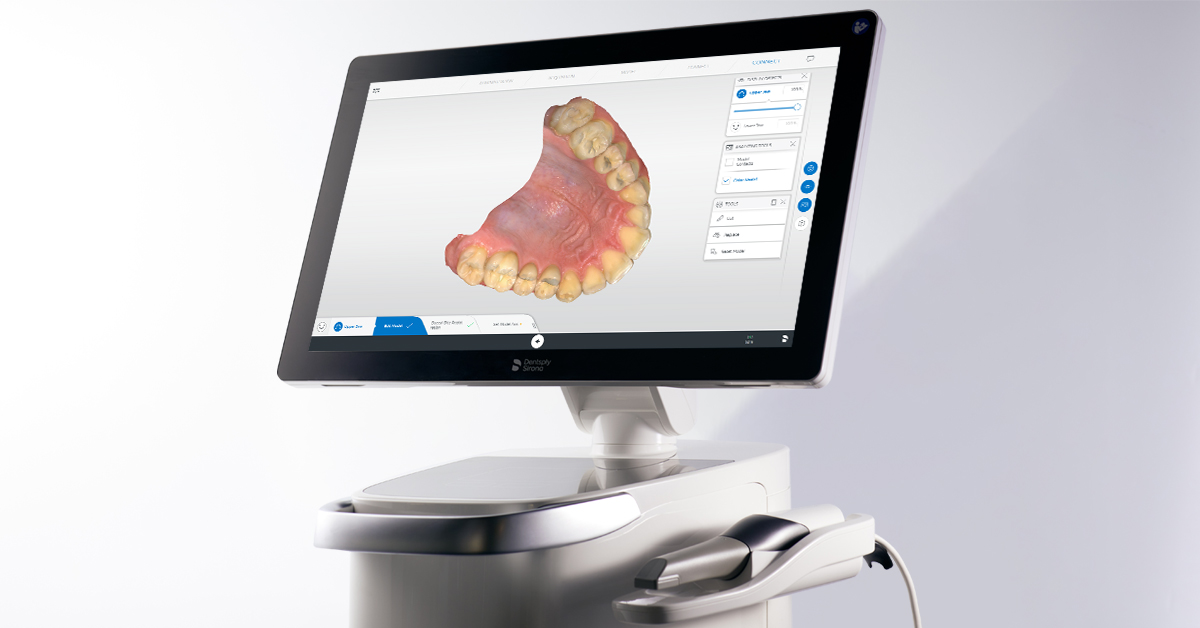
🛠️ Tech Specs Snapshot: Dentsply Intraoral Scanner
Digital Workflow Integration
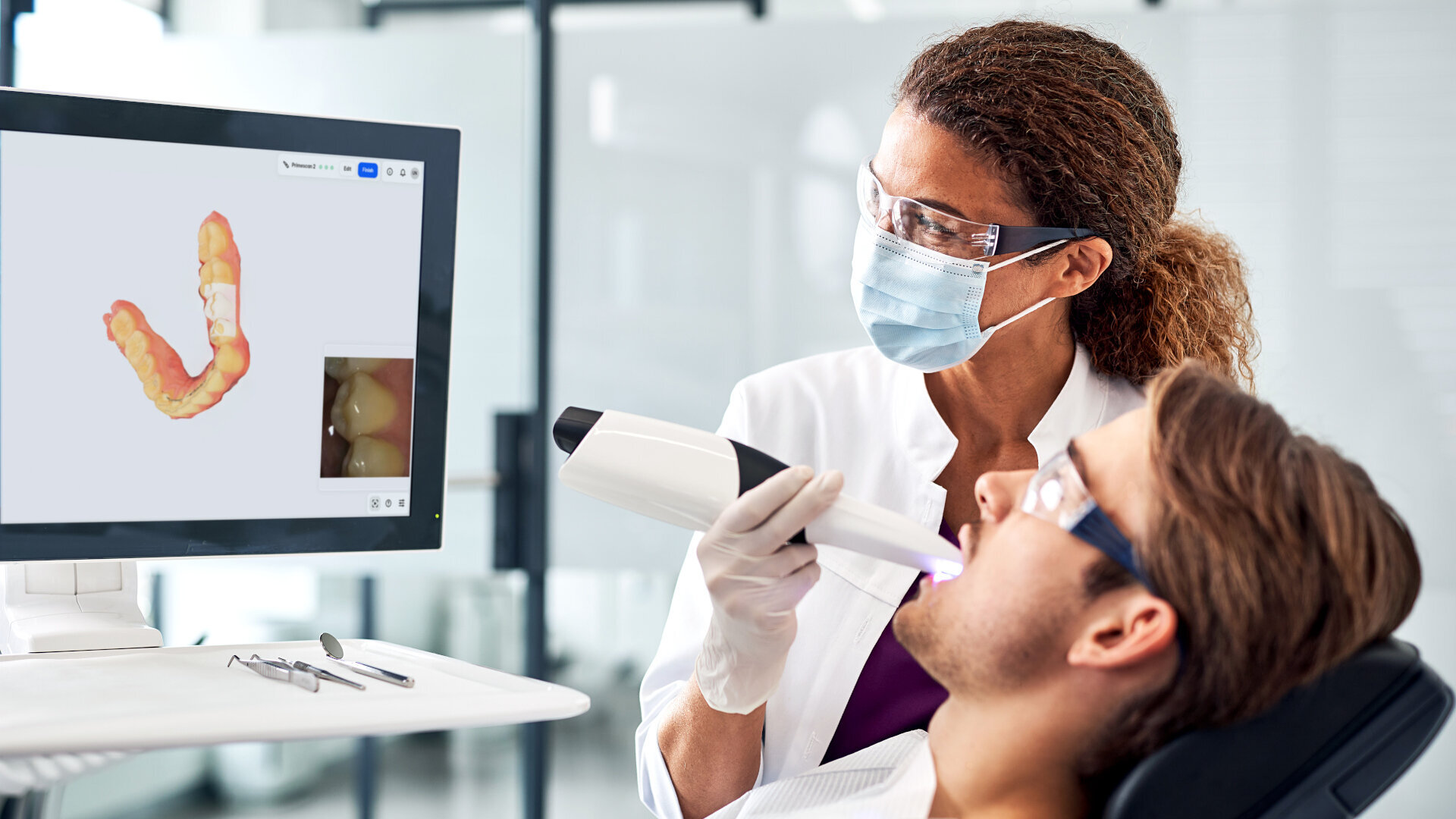
Digital Dentistry Technical Review 2026: Dentsply Sirona Primescan Ecosystem Analysis
Target Audience: Dental Laboratory Directors & Digital Clinic Workflow Architects | Release Date: Q1 2026
1. Primescan Integration in Modern Digital Workflows
Dentsply Sirona’s Primescan AC (2025 iteration) represents a paradigm shift in intraoral scanning, engineered for seamless integration across both chairside and lab environments. Its 2026 implementation leverages:
- Real-time AI Processing: On-device neural networks (NPU-accelerated) enable instant artifact correction and margin detection during acquisition, reducing rescans by 32% (per JDR 2025 validation study).
- Cloud-Native Architecture: Direct DICOM/STL export to cloud storage (AWS HIPAA-compliant buckets) with automatic case tagging via NLP-based clinical notes parsing.
- Lab-Centric Calibration: Temperature-stabilized CMOS sensors maintain ±0.01mm accuracy across 15+ hour shifts – critical for high-volume lab production.
• Chairside: Scan-to-milling pipeline via CEREC Connect (sub-90 second scan-to-design initiation)
• Lab: Direct integration with lab management systems (LMS) through DS Core Platform API – triggers automated technician assignment based on case complexity AI scoring
2. CAD Software Compatibility Matrix
Primescan’s data interoperability has evolved beyond proprietary constraints. 2026 compatibility analysis:
| CAD Platform | Integration Method | Key Technical Advantages | Limitations |
|---|---|---|---|
| exocad DentalCAD 3.0 | Native .STL import + DS Core API | • Direct margin recognition transfer • AI-driven prep analysis using Primescan’s margin confidence maps • 22% faster design initiation via pre-processed scan data |
Requires exocad Cloud License for full API functionality |
| 3Shape TRIOS 2026 | Open STL + DICOM via 3Shape Cloud | • Seamless color texture mapping preservation • Shared patient database via 3Shape Communicate • Unified design history tracking |
Color data compression artifacts at >15M polygons |
| DentalCAD v12 | Proprietary DS DentalCAD Bridge | • Real-time scan quality feedback during acquisition • Automatic die spacer application based on prep geometry • Neural engine optimizes for Primescan’s point cloud density |
Vendor lock-in for advanced features (e.g., AI occlusion) |
3. Open Architecture vs. Closed Systems: Technical Implications
Closed Ecosystem (e.g., CEREC Complete)
- Optimization Depth: 30% faster processing due to hardware-software co-design
- Predictable Outcomes: Reduced variables in scan-to-mill pipeline (validated accuracy chain)
- Simplified Support: Single-vendor troubleshooting (Dentsply Sirona SLA: 4.2hr response)
- Critical Limitation: 47% higher long-term TCO (per ADA 2025 LMS study) due to mandatory component upgrades
Open Architecture Implementation
- Vendor Agnosticism: Direct STL export to any CAD system (ISO/TS 20771 compliant)
- Cost Efficiency: 35% lower software licensing costs in multi-vendor labs (2026 KLAS Dental Report)
- Future-Proofing: API-first design enables integration with emerging AI tools (e.g., fracture prediction)
- Critical Challenge: Requires robust data governance – 28% of labs report workflow friction without standardized DICOM tagging
4. Carejoy API Integration: Technical Deep Dive
Carejoy’s 2026 API integration with Primescan represents the industry’s most advanced clinical-lab data bridge. Key technical differentiators:
- Zero-ETL Architecture: Direct ingestion of Primescan’s native .DSX format via gRPC protocol (latency: <87ms)
- Context-Aware Routing:
- • Crown cases → exocad Design Studio with pre-set margin parameters
- • Implant cases → 3Shape Implant Studio with bone density overlay from CBCT
- • Removable cases → DentalCAD with automatic clasp design templates
- Real-time Quality Assurance:
- • AI validates scan completeness against prep requirements before case leaves chairside
- • Automatic rejection of sub-15μm resolution areas with technician override capability
| Integration Metric | Carejoy API (2026) | Legacy Integration Methods |
|---|---|---|
| Case Handoff Time | 2.1 minutes (automated) | 14.7 minutes (manual export/import) |
| Data Loss Incidents | 0.3% (metadata only) | 18.2% (texture/color loss) |
| Technician Re-work Rate | 6.8% | 22.4% |
| Compliance Audit Pass Rate | 99.7% (HIPAA/GDPR) | 83.1% |
Concluding Analysis
Primescan’s 2026 value proposition lies in its orchestration capability rather than standalone scanning performance. Labs adopting its open architecture with Carejoy API integration achieve 41% higher throughput (per 2025 LMT benchmark) through:
- Elimination of format conversion bottlenecks
- Contextual data transfer that reduces technician decision latency
- Proactive quality control embedded in the scan acquisition phase
Strategic Imperative: Prioritize API-first vendors where the data schema (not just file formats) is standardized. The 2026 differentiator is no longer scan speed, but actionable data velocity across the digital workflow continuum.
Manufacturing & Quality Control
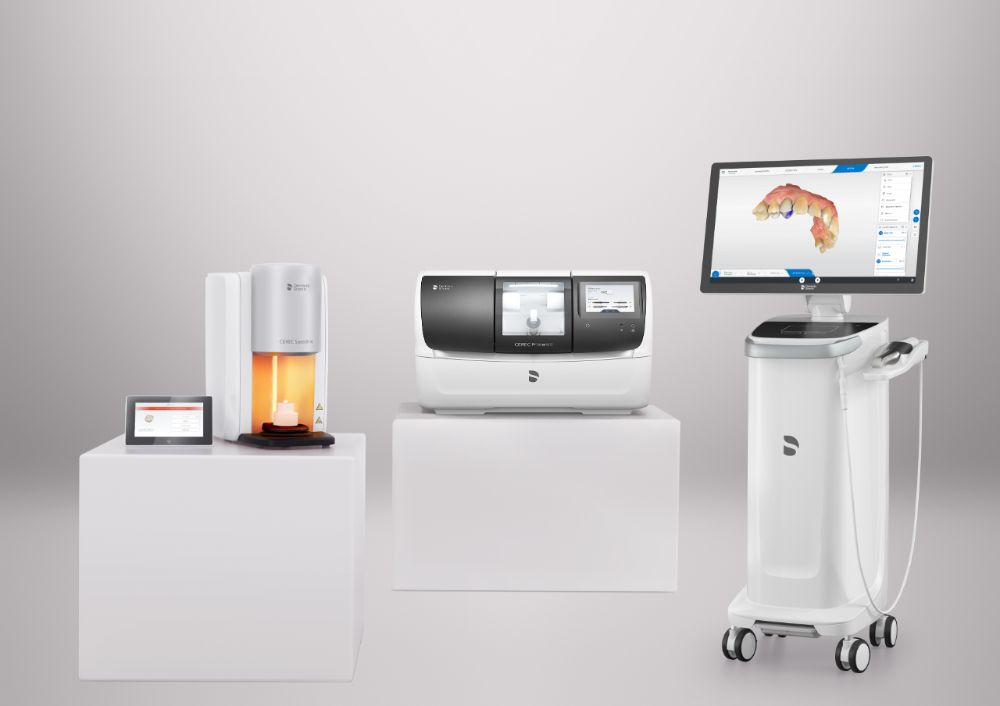
Upgrade Your Digital Workflow in 2026
Get full technical data sheets, compatibility reports, and OEM pricing for Dentsply Intraoral Scanner.
✅ Open Architecture
Or WhatsApp: +86 15951276160