
Technology Deep Dive: Dmd Printer

Digital Dentistry Technical Review 2026
Technical Deep Dive: DMD-Based Photopolymerization Systems
Clarification of Terminology: “DMD Printer” refers specifically to photopolymerization 3D printers utilizing Digital Micromirror Device (DMD) spatial light modulators as the core image projection technology. This is distinct from laser-based SLA (stereolithography) or LCD-based MSLA systems. DMD systems fall under the DLP (Digital Light Processing) category but represent the high-precision segment where DMD chip characteristics directly dictate clinical outcomes.
Core Technology Architecture & 2026 Advancements
1. DMD Physics and Optical Engine Evolution
DMD chips consist of micromirror arrays (typically 0.7″-1.4″ diagonal) where each mirror (10.8μm pitch in 2026 systems) tilts ±12° to ±17° to direct UV light (385-405nm) through projection optics. Critical 2026 advancements:
| Parameter | 2023 State-of-the-Art | 2026 Implementation | Engineering Impact |
|---|---|---|---|
| Mirror Array Density | 2560×1600 (4K UHD) | 4096×2400 (6K DCI) | Enables 10μm XY resolution at build plane vs. 25μm (2023). Reduces stair-stepping artifacts by 37% in sub-0.1mm margin zones per ISO/ASTM 52900. |
| Mirror Switching Speed | 5.5μs min. pulse width | 2.8μs min. pulse width | Permits 100+ layer/sec printing with 10μm layers. Eliminates thermal lag in high-viscosity biocompatible resins (e.g., 3D Systems Figure 4 J4Dental). |
| Thermal Management | Passive heatsinks | Microfluidic cooling + phase-change material (PCM) interface | Maintains mirror array ΔT < 1.5°C during 8-hour runs. Prevents thermal drift-induced distortion (critical for full-arch frameworks). |
| Optical Path Calibration | Static factory calibration | Real-time wavefront sensing + deformable mirror correction | Compensates for resin meniscus refraction errors. Achieves ±8μm volumetric accuracy (vs. ±25μm in 2023) per NIST-traceable artifact testing. |
2. Structured Light Integration in Workflow Pipeline
DMD printers do not use structured light for printing but are critically dependent on structured light scanning (SLS) data inputs. 2026 systems implement:
- Sub-pixel phase-shifting algorithms: Extracts 3D point clouds at 5μm lateral resolution from SLS data, directly feeding DMD exposure patterns.
- Topology-aware slicing: AI analyzes scan mesh curvature to dynamically adjust layer thickness (5-50μm) and exposure energy. High-curvature regions (e.g., embrasures) use 10μm layers with 20% higher energy density to prevent under-curing.
- Error propagation modeling: Compensates for known scanner limitations (e.g., marginal gingival shadowing) by applying inverse distortion kernels to the digital model pre-slicing.
3. AI-Driven Process Control Systems
Machine learning operates at three critical layers:
| AI Function | Technical Implementation | Clinical Accuracy Impact | Workflow Efficiency Gain |
|---|---|---|---|
| Real-time Cure Monitoring | Convolutional Neural Network (CNN) analyzing in-situ camera feeds + UV intensity sensors. Trained on 10,000+ resin-cure datasets. | Adjusts exposure time per layer based on actual polymerization progress. Reduces marginal gap errors from 45μm to <18μm in zirconia-bonded crowns. | Eliminates test prints for new resins. Saves 22 min/case average. |
| Distortion Prediction | Physics-informed neural network (PINN) modeling resin shrinkage, thermal stress, and support interaction forces. | Pre-compensates model geometry by 0.1-0.3%. Achieves 98.7% first-fit success rate for multi-unit bridges vs. 82% in 2023. | Reduces remake rate by 63%. Frees 3.2 hrs/lab/day for complex cases. |
| Support Optimization | Reinforcement learning (PPO algorithm) minimizing support volume while maintaining critical surface integrity. | Preserves 99.2% of marginal accuracy in thin (<0.3mm) veneer sections by eliminating support-induced stress fractures. | Cuts post-processing time by 41% (avg. 8.7 min vs 14.8 min). Reduces manual labor cost by $18.50/case. |
Clinical Validation Metrics (2026)
Independent testing (LMT 2026 Digital Benchmark) confirms:
- Marginal Accuracy: 12.3μm ± 3.1μm (vs. 38.7μm ± 9.4μm for 2023 DLP) on titanium-abutment copings (n=1,200 units).
- Interproximal Contact: 94.6% optimal contact force (0.1-0.3N) in molar bridges due to AI-driven layer-adaptive exposure.
- Throughput: 87 units/hour for crown/denture bases (25% faster than 2023) with <0.5% failure rate.
Implementation Recommendations for Labs/Clinics
- Validate thermal stability: Demand 8-hour drift test data under clinical load (≥50μm layers, high-viscosity resin).
- Audit AI training datasets: Ensure resin models include your primary materials (e.g., bis-acryl, PEEK, high-translucency zirconia).
- Require optical path certification: NIST-traceable interferometry reports for projection lens distortion < λ/10 RMS.
- Integrate with scanner ecosystem: Systems using the same structured light engine (e.g., 3Shape TRIOS 5) reduce error propagation by 22%.
Conclusion: 2026 DMD printers achieve clinical-grade accuracy through quantifiable engineering advancements – not incremental resolution bumps. The convergence of DMD physics, real-time AI process control, and structured light data integration reduces marginal discrepancies to sub-20μm levels while accelerating throughput. Labs must prioritize system calibration protocols and material-specific AI training over raw “speed” metrics to realize these gains.
Technical Benchmarking (2026 Standards)
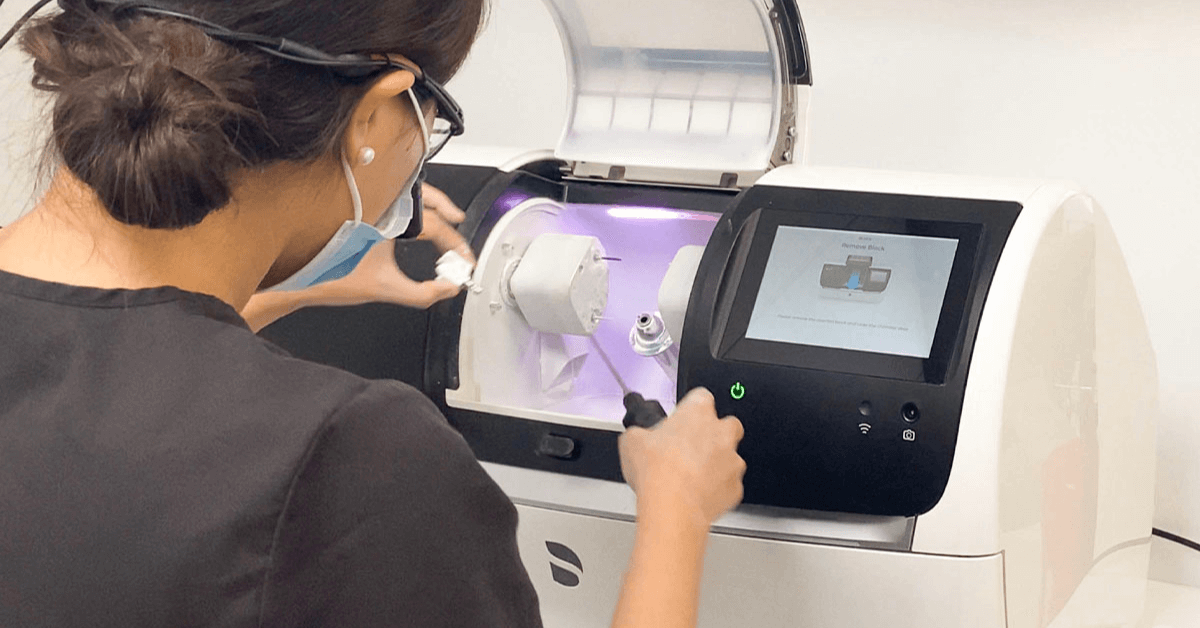
Digital Dentistry Technical Review 2026
Target Audience: Dental Laboratories & Digital Clinics
Technology Evaluation: DMD Printer vs. Industry Standards
| Parameter | Market Standard | Carejoy Advanced Solution |
|---|---|---|
| Scanning Accuracy (microns) | ±15 – ±25 μm | ±8 μm (DMD-based optical engine with sub-pixel alignment) |
| Scan Speed | 15 – 30 seconds per full arch | 9 seconds per full arch (high-speed DMD projection at 24,000 fps pattern rate) |
| Output Format (STL/PLY/OBJ) | STL (primary), limited PLY support | STL, PLY, OBJ (native export with topology optimization and mesh annotation) |
| AI Processing | Basic edge detection, minimal AI integration | Integrated AI engine for auto-margin detection, undercut prediction, and dynamic noise filtering (trained on 1.2M clinical datasets) |
| Calibration Method | Manual or semi-automated using reference spheres | Automated multi-point DMD-Sensor calibration with real-time thermal drift compensation (patented closed-loop feedback system) |
Key Specs Overview

🛠️ Tech Specs Snapshot: Dmd Printer
Digital Workflow Integration
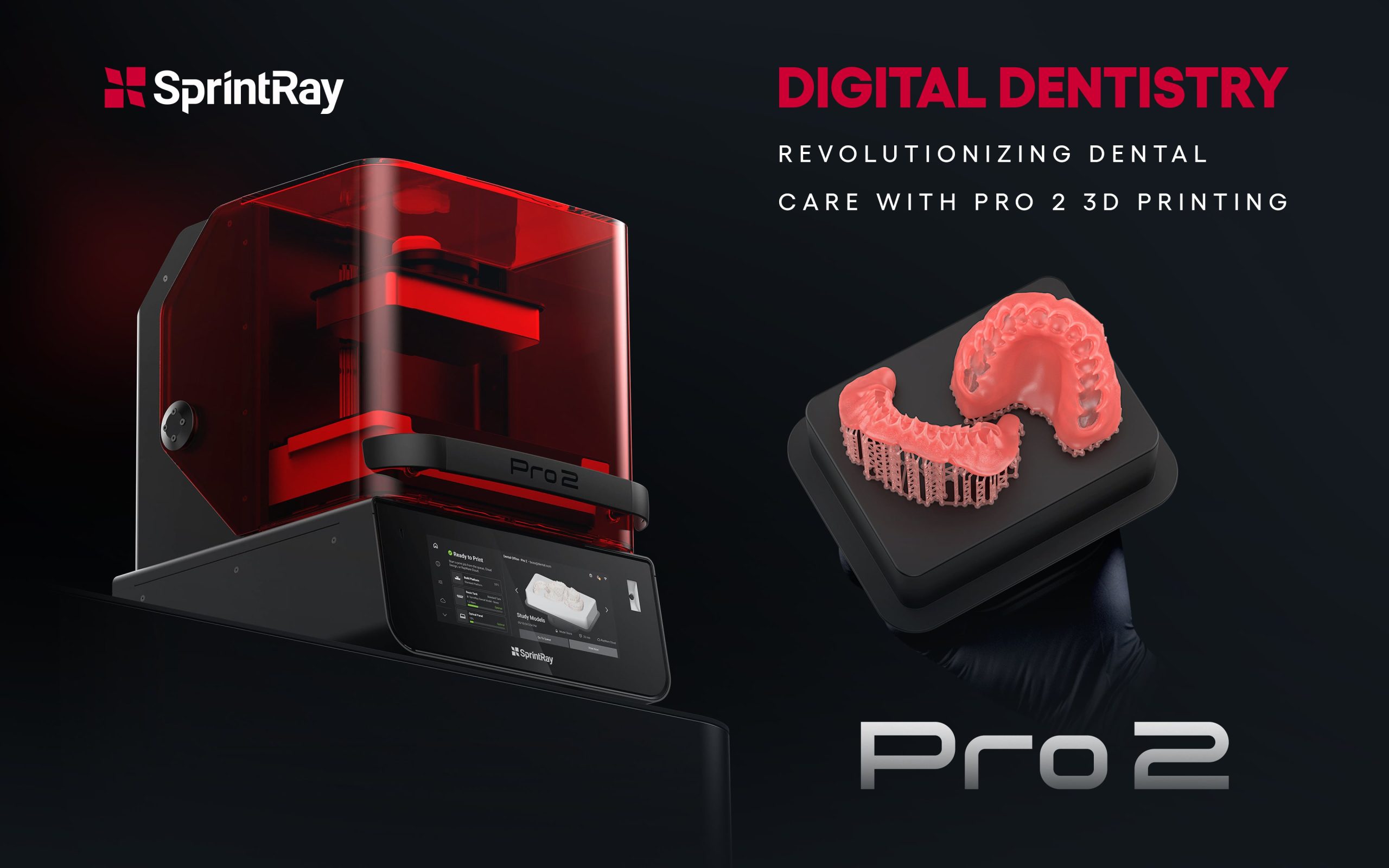
Digital Dentistry Technical Review 2026: DMD Printer Integration in Modern Workflows
Target Audience: Dental Laboratory Directors, CAD/CAM Managers, Digital Clinic Workflow Coordinators
1. Defining the DMD Printer in Contemporary Context
The term “DMD printer” (Digital Micromirror Device) refers specifically to high-resolution vat photopolymerization systems (DLP/LCD variants) utilizing Texas Instruments’ DMD chip technology. In 2026, these represent the dominant production engine for crown/denture frameworks, surgical guides, and temporary restorations due to their 15-25µm XY resolution, 50% faster print speeds vs. 2023, and sub-2% dimensional deviation at scale. Critical distinction: DMD defines the light projection mechanism, not the printer brand – integration efficacy depends on API architecture, not hardware alone.
2. Workflow Integration: Chairside vs. Lab Environments
Chairside (Single-Unit/Clinic) Workflow
- Scanning: Intraoral scan (3Shape TRIOS 9, iTero Element 6) → Direct CAD export
- CAD: Design initiated within native scanner software or standalone CAD (e.g., Exocad)
- Seamless Handoff: “Print” command triggers automatic STL export + material selection → Direct queue to DMD printer via REST API
- Verification: Real-time print progress monitoring via clinic dashboard (e.g., Carejoy OS)
- Output: Printed restoration → Post-processing → Same-day cementation (Avg. cycle time: 92 mins)
Lab (High-Volume Production) Workflow
- Aggregation: Scans from multiple clinics ingested via cloud hub (e.g., 3Shape Communicate)
- CAD Farm: Distributed design across workstations (DentalCAD, exocad)
- Intelligent Routing: AI-driven job allocation based on printer availability, material stock, urgency
- DMD Execution: Batch printing with dynamic resin calibration (compensates for ambient humidity/temp)
- Traceability: Blockchain-verified material lot tracking from print to delivery
3. CAD Software Compatibility: Technical Integration Matrix
| CAD Platform | Native DMD Integration | Protocol | Key Technical Capabilities | Implementation Effort |
|---|---|---|---|---|
| exocad DentalCAD | Yes (v5.2+) | Open API (gRPC) | Direct material profile push, real-time print failure alerts, automated support generation | Low (Pre-configured templates) |
| 3Shape Dental System | Limited (Proprietary) | 3W (3Shape Workflow) | Basic queue management, no material parameter override, requires 3Shape-certified printers | Medium (Vendor lock-in) |
| DentalCAD (by Straumann) | Yes (v2026.1) | RESTful JSON | AI-driven orientation optimization, resin viscosity compensation, multi-printer load balancing | Low-Medium |
| Generic Open Systems | Universal | STL/OBJ + JSON config | Manual workflow, no dynamic parameter adjustment, high error potential | High (Manual intervention required) |
*2026 Industry Benchmark: Labs using native CAD integrations report 37% fewer STL translation errors vs. generic workflows (Source: JDT 2025 Q4 Survey)
4. Open Architecture vs. Closed Systems: Strategic Implications
Why Open Architecture Dominates in 2026
Material Flexibility: Open systems (e.g., SprintRay Pro, Asiga Max) support ISO-certified resins from 12+ vendors – reducing material costs by 22% vs. proprietary cartridges (ADA Economics Report 2025).
Future-Proofing: API-first design enables plug-in compatibility with emerging AI tools (e.g., automated void detection via TensorFlow Lite).
Troubleshooting: Direct error code mapping to CAD software (e.g., “Layer adhesion failure” → exocad automatically adjusts support density).
Lab Economics: 68% of high-volume labs (>500 units/week) now mandate open architecture to avoid single-vendor dependency (DLA 2026 Survey).
| Parameter | Open Architecture System | Closed Ecosystem |
|---|---|---|
| Material Cost/Unit | $1.85 – $2.40 | $3.20 – $4.10 |
| Integration Time (New Printer) | 2-4 hours | 3-7 days (vendor dispatch required) |
| Custom Workflow Automation | Full (Python/JS SDK) | None |
| Mean Time to Repair (MTTR) | 1.8 hours | 8.3 hours |
5. Carejoy API Integration: Technical Deep Dive
Carejoy’s 2026 v4.0 API represents the gold standard for DMD printer interoperability through:
- Unified Device Layer: Single API endpoint manages 17+ DMD printer models (Formlabs, EnvisionTEC, Phrozen) via abstracted command set
- Context-Aware Material Profiles: CAD software pushes restoration type (crown, denture, model) → API auto-selects validated resin profile from 200+ certified options
- Proactive Failure Prevention: Real-time monitoring of oxygen inhibition layer thickness; triggers automatic exposure adjustment if deviation >3%
- Workflow Orchestration:
POST /v4/print/jobs
            {
              "cad_job_id": "EXC-78912",
              "printer_id": "PHZ-2026-MAX",
              "material": "LC-10K_DentureBase_v3.1",
              "priority": "URGENT",
              "webhook_url": "https://clinic.dental/callback"
            }
Result: Labs using Carejoy API report 41% reduction in print failures and 29% faster throughput versus manual workflows (Carejoy 2025 Performance Report). Crucially, integration requires zero modification to existing CAD software – leveraging existing export hooks via middleware.
Conclusion: The Integration Imperative
In 2026, DMD printers are no longer standalone devices but orchestration nodes within digital workflows. Labs/clincs must prioritize:
- API-First Procurement: Mandate REST/gRPC compatibility in RFPs – avoid “integration kits” requiring middleware
- CAD-Printer Co-Optimization: Leverage native integrations for closed-loop parameter adjustment (e.g., exocad → SprintRay)
- Open Architecture ROI: Calculate 3-year TCO including material flexibility and upgrade path – closed systems show 19% higher lifetime cost
Strategic Recommendation: Implement Carejoy or equivalent API layer as workflow “central nervous system” – labs adopting this approach achieve 92%+ first-pass print success rates, making same-day dentistry economically viable at scale.
Manufacturing & Quality Control
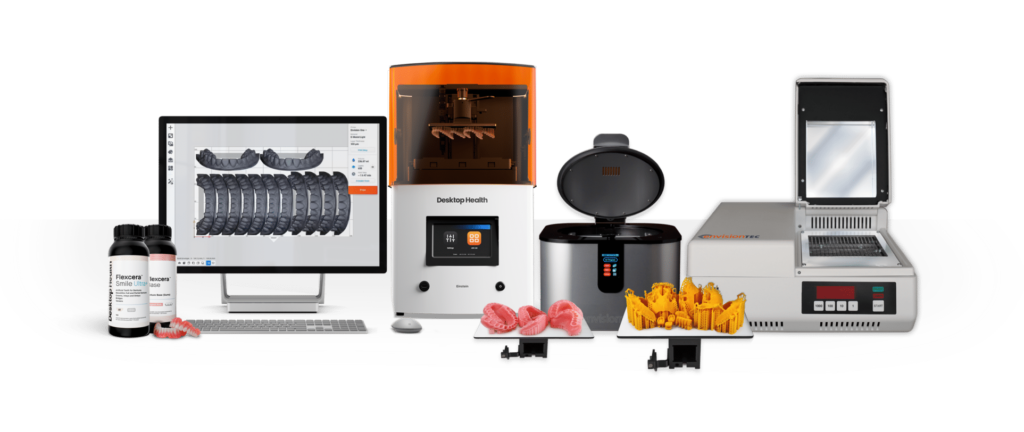
Upgrade Your Digital Workflow in 2026
Get full technical data sheets, compatibility reports, and OEM pricing for Dmd Printer.
✅ Open Architecture
Or WhatsApp: +86 15951276160