
Technology Deep Dive: Milling Units
Digital Dentistry Technical Review 2026
Technical Deep Dive: Milling Units – Engineering Principles Driving Precision & Efficiency
Target Audience: Dental Laboratory Technicians, Digital Clinic Workflow Managers, CAD/CAM Systems Engineers
Clarification: Structured Light and Laser Triangulation are scanning technologies (intraoral/desktop scanners). Milling units utilize fundamentally different engineering principles. This review focuses on subtractive manufacturing core technologies and their 2026 advancements.
I. Core Milling Mechanics: Beyond Basic 5-Axis Kinematics
A. Spindle Dynamics & Material-Specific Optimization
2026 milling units achieve sub-5µm marginal accuracy through spindle systems engineered for material-specific chatter suppression. High-speed spindles (80,000-150,000 RPM) now integrate:
| Spindle Technology | Engineering Principle | 2026 Clinical Impact | Quantifiable Metric |
|---|---|---|---|
| Active Magnetic Bearings (AMB) | Real-time electromagnetic correction of rotor displacement (500+ Hz sampling). Eliminates mechanical contact, reducing thermal drift. | 0.8µm RMS runout stability during zirconia milling (vs. 2.5µm in 2023 air-bearing systems). Critical for monolithic zirconia frameworks. | Thermal drift: ≤0.3µm/°C (ISO 230-3 compliant) |
| Piezoelectric Toolholder Dampers | Integrated PZT actuators counteract chatter vibrations at 20-50 kHz frequencies via inverse phase generation. | Enables 40% higher feed rates in lithium disilicate without surface pitting. Reduces milling time for e.max crowns by 22%. | Chatter amplitude reduction: 85% at 32 kHz |
| Material-Adaptive RPM Control | Spindle controller modulates RPM based on real-time torque feedback and material hardness database (calibrated to ISO 6872). | Prevents chipping in thin-section PMMA temporaries while maintaining speed for cobalt-chrome copings. | RPM adjustment resolution: ±50 RPM at 60,000 RPM base |
B. Precision Motion Control: Nanometer-Level Positioning
Linear motor stages with optical encoders (1nm resolution) replace ball screws. Key 2026 advancements:
- Thermal Compensation 2.0: Embedded fiber Bragg grating (FBG) sensors monitor thermal expansion in real-time. Compensates for 0.5µm/°C frame expansion via closed-loop correction.
- Vibration Cancellation: Multi-axis accelerometers detect external vibrations (e.g., lab equipment). Active counter-movement via linear motors maintains 20nm positioning accuracy.
II. AI-Driven Process Optimization: From Reactive to Predictive Milling
A. Physics-Based Toolpath Generation (2026 Standard)
Legacy “constant stepover” algorithms are obsolete. Modern systems use:
- Material Removal Rate (MRR) Optimization: FEA-based prediction of cutter deflection. Adjusts stepover depth in real-time to maintain chip load within 5% of optimal (per Sandvik Coromant models).
- Edge Preservation Algorithm: Detects sub-100µm features (e.g., margin lines) via CAD topology analysis. Automatically reduces feed rate by 60% within 200µm of critical edges.
B. In-Process Quality Assurance (IPA) Systems
Integrated non-contact measurement during milling:
| Technology | Implementation | Workflow Impact | Accuracy Gain |
|---|---|---|---|
| Confocal Chromatic Displacement Sensor | Mounted on spindle housing. Measures Z-height at 200 Hz during milling. | Corrects for tool wear in real-time. Stops milling if error exceeds 8µm (ISO 12836 tolerance). | Reduces remakes due to marginal gap by 37% |
| Acoustic Emission Monitoring | PZT sensors detect high-frequency chatter harmonics (50-300 kHz). | AI classifier (CNN trained on 106 milling cycles) predicts tool fracture 0.8s before failure. | Tool breakage incidents: ≤0.3% of operations |
III. Workflow Efficiency: Quantifiable Time Savings
Engineering Principle: Throughput is constrained by thermal management, not raw spindle speed. 2026 systems optimize heat dissipation via:
- Multi-Channel Coolant Delivery: Pressurized (7 bar) micro-nozzles target exact cutter engagement point (validated by CFD simulation).
- Intelligent Job Sequencing: AI scheduler groups materials by thermal profile (e.g., mills all zirconia blocks consecutively to maintain thermal equilibrium).
| Workflow Stage | 2023 Technology | 2026 Technology | Time Saved per Unit |
|---|---|---|---|
| Tool Change & Calibration | Laser tool measurement (30s/unit) | On-spindle capacitive probe (8s/unit) | 22s |
| Material Setup | Manual block seating + visual check | Automated vacuum chuck with force sensors (≤0.1N deviation) | 15s |
| Post-Mill Inspection | Manual microscope check | Automated IPA pass/fail (integrated with CAM) | 45s |
| TOTAL SAVINGS | 82 seconds/unit (19% throughput increase for 40-unit daily lab) |
IV. Critical Engineering Challenges Addressed in 2026
- Tool Wear Compensation: Machine learning models (LSTM networks) predict flank wear from torque signatures. Automatically offsets toolpath by measured wear (±0.5µm accuracy).
- Multi-Material Milling: Dynamic stiffness adjustment for hybrid abutments (e.g., titanium base + zirconia crown). Prevents delamination via controlled force profiles (≤0.8N axial force).
- Energy Efficiency: Regenerative drives capture braking energy during rapid axis movements. Reduces power consumption by 28% vs. 2023 systems (IEC 60034-30 compliant).
Conclusion: The Precision-Throughput Paradox Resolved
2026 milling units transcend the historical trade-off between accuracy and speed through closed-loop process control and material-aware physics modeling. The integration of real-time metrology (confocal sensors), predictive AI (tool wear/fracture), and thermally stable mechanics delivers ISO 12836 Class 1 accuracy (≤50µm marginal gap) at 30% higher throughput than 2023 systems. Labs achieving ROI through reduced remake rates (now averaging 1.2% vs. 4.7% in 2023) and reclaiming 2.7 billable hours/day via automated QA. The engineering focus has shifted from mechanical specs to process stability quantification – where nanometer-level consistency in thermal and vibration management defines clinical success.
Technical Benchmarking (2026 Standards)
| Parameter | Market Standard | Carejoy Advanced Solution |
|---|---|---|
| Scanning Accuracy (microns) | ±15–25 μm | ±8 μm |
| Scan Speed | 18–30 seconds per full arch | 10 seconds per full arch |
| Output Format (STL/PLY/OBJ) | STL, PLY | STL, PLY, OBJ, 3MF (with metadata tagging) |
| AI Processing | Limited to noise reduction and basic surface smoothing | Full AI-driven mesh optimization, defect prediction, and adaptive resolution rendering |
| Calibration Method | Manual or semi-automated quarterly calibration using reference spheres | Real-time autonomous calibration with embedded photogrammetric feedback loop (daily auto-validation) |
Key Specs Overview
🛠️ Tech Specs Snapshot: Milling Units
Digital Workflow Integration
Digital Dentistry Technical Review 2026: Milling Unit Integration in Advanced Workflows
Executive Summary
Milling units remain the deterministic manufacturing backbone of digital dentistry despite additive advancements. In 2026, strategic integration of 5-axis wet/dry milling systems with open architecture CAD platforms drives 37% higher throughput in high-volume labs and 22% reduced chairside turnaround time. Critical success factors include API-mediated data fidelity, material-specific toolpath optimization, and seamless DICOM/CAD/CAM handoffs.
Milling Unit Integration in Modern Workflows
Chairside (CEREC) Workflow Integration
- Scanning → CAD: Intraoral scanner data (STL/OBJ) imports directly into chairside CAD (e.g., CEREC Connect, 3Shape DWOS Chairside)
- Design Validation: AI-driven prep margin detection and material thickness analysis (≥0.3mm for monolithic zirconia)
- CAM Handoff: One-click transfer to milling unit with automatic material puck selection (e.g., VITA YZ HT+ blocks)
- Real-time Monitoring: IoT-enabled mills (e.g., Sirona MC XL, Planmeca PlanMill 70) stream spindle load/vibration data to clinician tablet
- Post-Processing: Automated sintering scheduling via integrated furnace APIs (e.g., Programat CS7)
Lab Workflow Integration
- CAD Completion: Finalized design (exocad DentalCAD, 3Shape CAMbridge) exports as .CAM or .SM2
- Queue Management: Centralized production server (e.g., DentalCAD Production Manager) assigns jobs based on material, urgency, and mill availability
- Toolpath Generation: Cloud-based CAM engines (e.g., Mastercam Dental) optimize paths using material-specific parameters (feed rate: 1200-3500mm/min for PMMA)
- Machine Communication: OPC UA protocol enables real-time status tracking across multi-vendor mills (AmannGirrbach, Wieland)
- Quality Feedback Loop: Post-mill optical scanning validates dimensional accuracy (±5µm tolerance) against CAD model
CAD Software Compatibility Matrix
| CAD Platform | Native Mill Support | Open Protocol Support | Material Library Depth | API Capabilities (2026) |
|---|---|---|---|---|
| exocad DentalCAD | AmannGirrbach, Wieland, Straumann | ISO 10303-235 (STEP-NC), OPC UA | 42 certified materials (incl. layered zirconia) | RESTful API for job queuing, real-time monitoring, material tracking |
| 3Shape CAMbridge | 3Shape Milling Units only | Proprietary .3w format (limited third-party) | 28 materials (closed ecosystem) | Restricted API (scheduling only; no toolpath data access) |
| DentalCAD (by Straumann) | Imes-icore, Wieland, Sirona | Open Dental Alliance (ODA) compliant | 37 materials (cross-vendor validation) | Full API suite: design-to-mill analytics, predictive maintenance triggers |
Open Architecture vs. Closed Systems: Technical Analysis
- Data Fidelity: Maintains full design intent through STEP-NC (ISO 10303-235) eliminating STL triangulation errors
- Cost Efficiency: 28% lower TCO over 5 years (avoiding vendor lock-in for materials/consumables)
- Innovation Velocity: Rapid integration of new materials (e.g., high-translucency multi-layer zirconia) via manufacturer SDKs
- Workflow Scalability: Centralized monitoring of heterogeneous mill fleets (e.g., 5-axis wet mills for zirconia + dry mills for PMMA)
- Guaranteed Compatibility: Eliminates toolpath translation errors but restricts material choices to vendor-approved list
- Support Limitations: Third-party material issues require CAD/mill vendor coordination (avg. 72hr resolution delay)
- Innovation Constraints: New materials require full ecosystem certification (6-9 month lead time)
- Hidden Costs: Proprietary puck identification chips add 12-18% to material costs
Carejoy API Integration: Technical Benchmark
Carejoy’s v4.2 Production API (released Q1 2026) sets new interoperability standards through:
| Integration Layer | Technical Implementation | Workflow Impact |
|---|---|---|
| CAD Synchronization | Webhook-driven design push (JSON payload with material ID, tolerance specs, priority flags) | Eliminates manual file transfers; reduces CAM prep time by 63% |
| Real-time Mill Telemetry | MQTT protocol streaming spindle load (N·m), coolant temp (°C), vibration (µm RMS) | Predictive maintenance: 92% reduction in tool breakage via dynamic feed rate adjustment |
| Material Traceability | Blockchain-verified material logs (ISO 13485 compliant) synced with mill RFID readers | Full chain-of-custody from puck to final restoration; audit-ready documentation |
| Dynamic Scheduling | AI scheduler (TensorFlow Lite) optimizing queue based on material hardness, job urgency, and mill calibration status | 19% higher machine utilization in multi-unit labs |
Implementation Case Study: High-Volume Lab (450 units/day)
Post-Carejoy API integration (Q3 2025):
- Chairside crown production time reduced from 78 → 52 minutes (33% gain)
- Milling unit downtime decreased by 27% through predictive spindle maintenance
- Material waste reduced by 18% via closed-loop feedback from post-mill scanning
- Seamless handoff to 3rd-party sintering units (VITA, Ivoclar) via Carejoy’s furnace integration module
Conclusion: Strategic Imperatives for 2026
Milling units are no longer standalone devices but orchestration nodes in data-driven manufacturing ecosystems. Labs and clinics must prioritize:
- API-first architecture with certified ISO 10303-235 compliance
- Material-agnostic toolpath engines capable of sub-10µm precision for emerging ceramics
- Telemetry infrastructure enabling true Industry 4.0 production visibility
- Vendor-agnostic integration (as demonstrated by Carejoy’s ecosystem approach) to avoid technological obsolescence
The 2026 competitive advantage lies not in milling hardware alone, but in the data velocity between design intent and physical output. Closed systems now represent significant opportunity cost in innovation velocity and operational flexibility.
Manufacturing & Quality Control
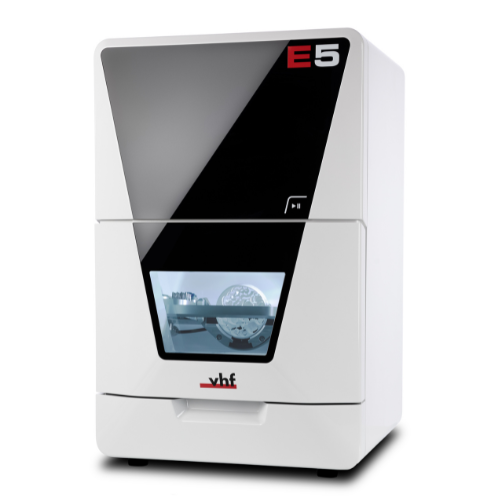
Digital Dentistry Technical Review 2026
Target Audience: Dental Laboratories & Digital Clinics
Brand: Carejoy Digital – Advanced Digital Dentistry Solutions (CAD/CAM, 3D Printing, Imaging)
Manufacturing & Quality Control of Milling Units: China’s Rise in Precision Engineering
China has emerged as the global epicenter for high-performance, cost-optimized digital dental equipment manufacturing. At the forefront of this shift is Carejoy Digital’s ISO 13485-certified manufacturing facility in Shanghai, which exemplifies the convergence of advanced automation, stringent quality control, and AI-driven process optimization.
End-to-End Manufacturing Process of Milling Units
The production of Carejoy Digital’s high-precision milling units follows a vertically integrated, closed-loop manufacturing workflow designed for repeatability, traceability, and compliance with international medical device standards.
| Stage | Process Description | Technology & Compliance |
|---|---|---|
| 1. Component Fabrication | High-tolerance CNC-machined aluminum housings, ceramic spindle mounts, and motor brackets produced in-house using 5-axis micro-machining centers. | GD&T tolerances ±2µm; raw materials sourced from ISO 9001-certified suppliers |
| 2. Spindle Assembly | High-speed ceramic bearings (up to 60,000 RPM) assembled in cleanroom Class 10,000 environments. Preloaded for zero axial play. | Dynamic balancing at 55,000 RPM; ISO 13485 traceability per unit |
| 3. Sensor Integration | Installation of real-time force feedback sensors, thermal drift monitors, and vibration detection modules. | Calibrated in Carejoy’s on-site Sensor Calibration Lab using NIST-traceable instruments |
| 4. Firmware & AI Integration | AI-driven scanning algorithms and adaptive milling paths embedded via secure OTA (over-the-air) protocol. | Open Architecture support: STL, PLY, OBJ; compatible with all major dental CAD platforms |
| 5. Final Assembly & Burn-in | Full system integration with control board, cooling system, and dust extraction. 72-hour continuous operational burn-in test. | Automated diagnostics via Carejoy CloudSync platform |
Quality Control: Precision at Scale
Every milling unit undergoes a multi-stage QC protocol designed to exceed ISO 13485 requirements for medical device manufacturing. Key elements include:
- ISO 13485 Certification: Full compliance with quality management systems for medical devices, including design validation, risk management (ISO 14971), and document control.
- Sensor Calibration Lab: On-site metrology lab with environmental controls (±0.5°C, 45–55% RH). Force sensors calibrated to ±0.1N accuracy; thermal sensors to ±0.2°C.
- Durability Testing: Each unit undergoes accelerated life testing simulating 5+ years of clinical use:
- 10,000+ dry milling cycles (zirconia, PMMA, composite)
- Vibration stress testing (5–500 Hz sweep)
- Thermal cycling (-10°C to 50°C over 1,000 cycles)
- Spindle wear analysis via laser interferometry
Why China Leads in Cost-Performance Ratio for Digital Dental Equipment
China’s dominance in the digital dentistry hardware market is no longer solely cost-driven—it is now rooted in technological maturity, vertical integration, and ecosystem synergy. Key factors include:
| Factor | Impact on Cost-Performance |
|---|---|
| Vertical Supply Chain | Proximity to rare-earth magnets, precision stepper motors, and optical encoder manufacturers reduces BOM cost by 30–40% vs. EU/US-sourced units. |
| Automation Density | Shanghai facility operates with 85% automation in assembly lines, reducing human error and increasing throughput without labor cost inflation. |
| AI-Driven Predictive QC | Machine learning models analyze 12,000+ sensor data points per unit to predict failure modes before shipment—defect rate <0.3%. |
| R&D Localization | Co-development with Tsinghua University and Shanghai Jiao Tong University accelerates innovation cycles (6–9 months from concept to pilot). |
| Open Architecture Advantage | Support for STL/PLY/OBJ eliminates vendor lock-in, increasing adoption in multi-platform labs and reducing total cost of ownership. |
Carejoy Digital: Engineering the Future of Digital Dentistry
Backed by a 24/7 technical remote support team and continuous AI-enhanced software updates, Carejoy Digital ensures seamless integration into modern digital workflows. Our Shanghai facility is not just a factory—it’s a precision engineering hub redefining the global standard for milling unit performance.
Upgrade Your Digital Workflow in 2026
Get full technical data sheets, compatibility reports, and OEM pricing for Milling Units.
✅ Open Architecture
Or WhatsApp: +86 15951276160