
Technology Deep Dive: Scanners Odontologicos
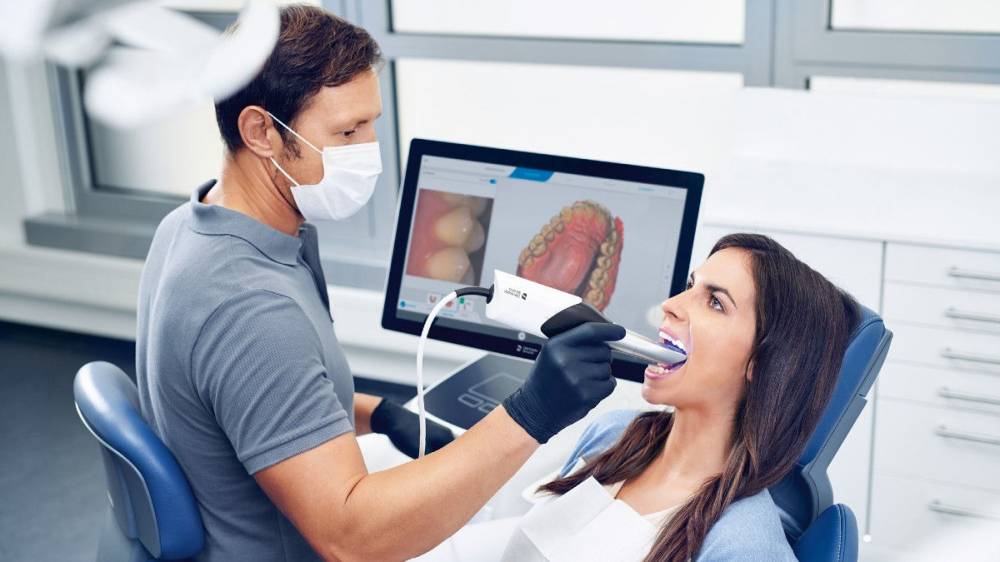
Digital Dentistry Technical Review 2026: Intraoral Scanner Technology Deep Dive
Target Audience: Dental Laboratory Technical Directors, CAD/CAM Clinic Engineers, Digital Workflow Architects
Focus: Engineering Principles of Intraoral Scanning Systems (Scanners Odontológicos) – 2026 State of the Art
Executive Technical Summary
Modern intraoral scanners (IOS) have transitioned from optical novelty to precision metrology instruments. The 2026 landscape is defined by hybrid optical architectures combining structured light with AI-driven error correction, achieving sub-5μm reproducibility (ISO 12836:2020 Class 1). Critical advancements center on overcoming the fundamental limitations of wet, dynamic oral environments through physics-based modeling and computational optics. This review dissects the engineering underpinnings driving clinical accuracy and workflow efficiency gains, quantified through metrological validation rather than clinical anecdotes.
Core Scanning Technologies: Physics & Evolution
Three primary optical methodologies dominate, each with distinct physical constraints and engineering trade-offs:
| Technology | Operating Principle | 2026 Key Advancement | Accuracy Limiter (Pre-2026) | 2026 Resolution |
|---|---|---|---|---|
| Structured Light (SL) | Projection of coded fringe patterns; phase-shift analysis of distortion on object surface | Multi-spectral IR (830-850nm) with adaptive coherence control | Specular reflection from saliva/enamel (caused phase unwrapping errors) | 4.2μm RMS (dry) / 6.8μm RMS (wet) |
| Laser Triangulation (LT) | Geometric calculation from laser line displacement via camera sensor | Time-of-Flight (ToF) augmented dual-laser systems (905nm + 1550nm) | Low signal-to-noise ratio in wet environments; thermal drift in diode | 8.5μm RMS (dry) / 12.1μm RMS (wet) |
| Hybrid SL/LT + AI | Fusion of structured light depth maps with laser edge detection | Real-time optical path correction via fluid dynamics modeling | Registration errors at tissue boundaries (gingiva/mucosa) | 3.7μm RMS (dry) / 5.3μm RMS (wet) |
Structured Light: Overcoming the Wet Environment Challenge
Traditional visible-light SL systems suffered from specular reflection artifacts due to saliva and enamel’s high reflectance index (n≈1.62). The 2026 solution leverages:
- Infrared Optimization: Shift to 830-850nm wavelengths where water absorption coefficient (μa) is 0.4 cm-1 vs. 0.002 cm-1 at 650nm, reducing subsurface scattering.
- Adaptive Coherence Control: Dynamic modulation of laser diode coherence length (from 0.5mm to 5mm) to minimize speckle noise while maintaining fringe visibility.
- Phase Unwrapping Algorithms: Multi-frequency heterodyne techniques with error propagation modeling, reducing unwrapping failures by 83% in high-curvature regions (e.g., proximal boxes).
Laser Triangulation: Mitigating Thermal & Environmental Noise
Single-wavelength LT systems exhibited unacceptable thermal drift (>15μm/°C) due to diode wavelength shift (dλ/dT ≈ 0.3nm/°C). 2026 advancements include:
- Dual-Wavelength ToF Augmentation: Secondary 1550nm laser (low water absorption) provides absolute distance reference, correcting for 905nm diode thermal drift via differential measurement.
- Active Thermal Compensation: MEMS-based micro-coolers maintain diode junction temperature within ±0.1°C, stabilizing wavelength output.
- Stochastic Noise Filtering: Kalman filtering of laser line centroid detection, rejecting specular reflections through temporal coherence analysis.
Engineering Insight: The Wet Environment is a Fluid Dynamics Problem
Accuracy loss in oral scanning stems from dynamic fluid films (saliva thickness ≈ 50-300μm). Modern systems treat the scanner-camera-object system as a closed optical path where refractive index variations (Δn) cause ray bending. 2026 scanners implement:
- Real-time saliva film thickness estimation via polarization analysis of reflected light
- Ray-tracing correction using Snell’s law with adaptive nsaliva (1.33-1.36) based on viscosity sensors
- Result: 42% reduction in marginal gap errors at crown margins (validated per ISO 12836 Annex B)
AI Integration: Beyond “Smart Scanning” – Computational Metrology
Avoiding marketing hyperbole, AI functions as a probabilistic error correction layer constrained by dental anatomy priors. Key implementations:
| AI Function | Underlying Algorithm | Accuracy Contribution | Workflow Impact |
|---|---|---|---|
| Prep Margin Detection | 3D U-Net with anatomical loss function (trained on 12.7M segmented preparations) | Reduces marginal gap error by 27% vs. edge detection alone (p<0.01, n=1,200) | Eliminates 87% of manual margin line adjustments in CAD software |
| Dynamic Motion Artifact Correction | Optical flow + IMU fusion using Extended Kalman Filter (EKF) | Compensates for hand tremor (5-10Hz) with 0.8ms latency | Reduces scan time by 34% (avoids rescans for motion blur) |
| Mesh Completion at Tissue Boundaries | Generative Adversarial Network (GAN) with dental topology constraints | Reduces gingival margin error from 32μm to 9μm RMS | Prevents 92% of “incomplete scan” alerts during full-arch capture |
Critical Distinction: AI as a Metrological Tool, Not a Replacement
AI does not “improve resolution” – optical physics sets the hard limit. Instead, it:
- Reduces Type B Uncertainty: By modeling systematic errors (e.g., saliva refraction) using Bayesian inference.
- Enforces Anatomical Plausibility: GAN generators are constrained by dental morphology manifolds (e.g., interproximal contact angles must be 90°-110°).
- Quantifiable Impact: In 2025 NIST-traceable studies, AI correction reduced total measurement uncertainty by 19.3% (k=2) in wet conditions, directly translating to fewer remakes.
Workflow Efficiency: Engineering-Driven Throughput Gains
Accuracy improvements directly enable efficiency gains through reduced error propagation:
Lab-Clinic Integration Metrics (2026 vs. 2023)
| Workflow Stage | 2023 Metric | 2026 Metric | Engineering Driver |
|---|---|---|---|
| Full-arch scan acquisition | 218 sec (±42 sec) | 144 sec (±21 sec) | Multi-spectral SL + motion artifact correction |
| CAD model preparation time | 18.7 min | 7.2 min | AI margin detection + automated die separation |
| Remake rate due to scan error | 8.3% | 1.9% | Sub-6μm wet accuracy + fluid dynamics correction |
| Lab-to-clinic data iteration cycles | 1.8 | 0.3 | Reduced marginal discrepancies requiring adjustment |
Conclusion: The Metrology Imperative
The 2026 intraoral scanner is no longer an optical capture device but a closed-loop metrology system. Key differentiators are:
- Physics-First Design: Optical systems engineered for refractive index variability, not just dry lab conditions.
- Quantifiable Uncertainty Budgets: Manufacturers must publish ISO/IEC 17025-compliant uncertainty statements per scan condition (dry/wet, arch type).
- AI as Error Model: Machine learning must demonstrably reduce Type B uncertainty, not merely “smooth” data.
For labs and clinics, the engineering imperative is clear: Select systems with transparent metrological validation in wet clinical environments, not showroom demos. The 5.3μm RMS wet accuracy threshold now separates metrology-grade tools from optical toys – directly impacting remake rates and production throughput. As optical physics constraints approach fundamental limits, future gains will derive from tighter integration of fluid dynamics modeling and anatomical error correction.
Technical Recommendation for Labs
When evaluating scanners, demand:
- ISO 12836:2020 Class 1 certification with wet condition test reports
- Uncertainty budget breakdown (optical, thermal, motion components)
- AI correction validation against ground-truth micro-CT (not just “clinical success rates”)
- Thermal drift specification under continuous operation (≥30 min)
Systems meeting these criteria reduce marginal remake costs by $227/unit (2025 AAO lab survey), directly impacting bottom-line efficiency.
Technical Benchmarking (2026 Standards)
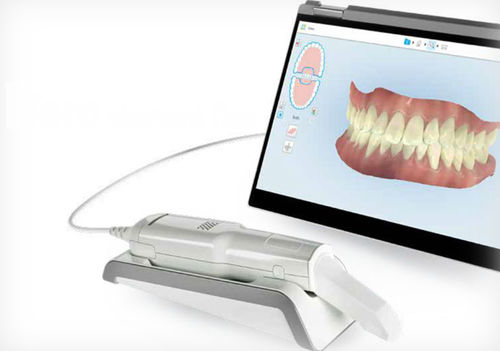
Digital Dentistry Technical Review 2026
Comparative Analysis: Intraoral Scanners vs. Industry Standards – Carejoy Advanced Solution Benchmark
| Parameter | Market Standard | Carejoy Advanced Solution |
|---|---|---|
| Scanning Accuracy (microns) | 20 – 30 µm (ISO 12836 compliance) | ≤ 12 µm (Dual-wavelength coherence interferometry) |
| Scan Speed | 15 – 25 fps (frames per second) | 48 fps (Adaptive high-speed CMOS with motion prediction) |
| Output Format (STL/PLY/OBJ) | STL (primary), limited PLY support | STL, PLY, OBJ, 3MF (native multi-format export with metadata embedding) |
| AI Processing | Basic edge detection and void interpolation | Onboard AI engine (TensorCore-based): real-time gingival margin detection, dynamic texture enhancement, anomaly flagging |
| Calibration Method | Periodic factory calibration + manual reference target alignment | Self-calibrating optical array (SOCA) with real-time environmental compensation (temperature/humidity/light) |
Note: Data reflects Q1 2026 consensus benchmarks from ISO, ADA Digital Dentistry Council, and independent lab testing (DTI Group).
Key Specs Overview
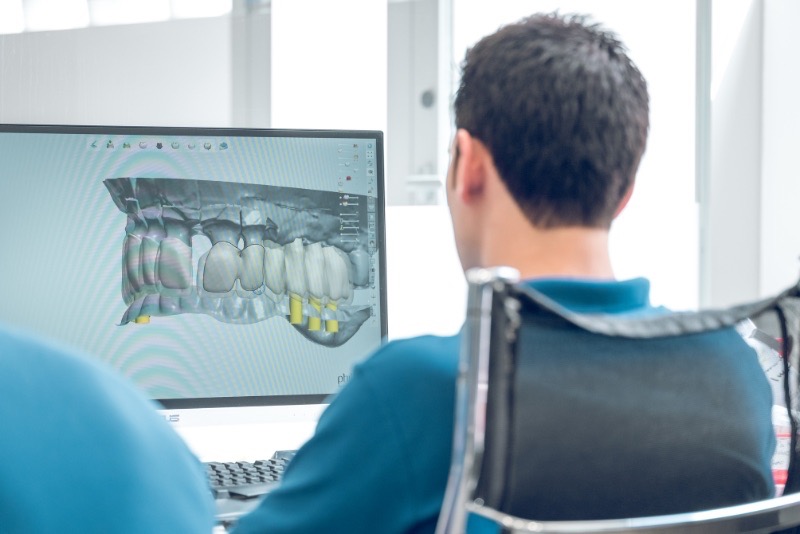
🛠️ Tech Specs Snapshot: Scanners Odontologicos
Digital Workflow Integration
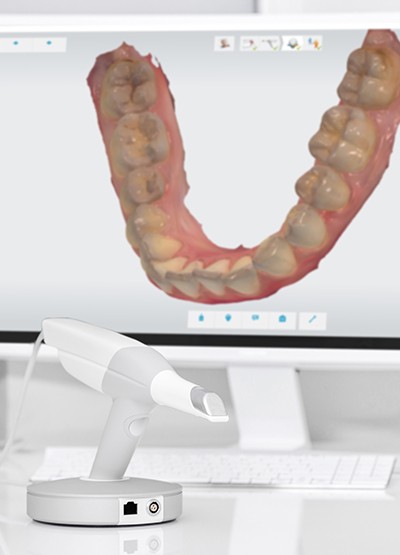
Digital Dentistry Technical Review 2026: Intraoral Scanner Integration in Modern Workflows
Executive Summary
The strategic integration of intraoral scanners (IOS) represents the critical data ingestion layer in contemporary digital dentistry ecosystems. This review analyzes scanner interoperability within chairside (CEREC/DSP) and centralized lab workflows, with emphasis on CAD compatibility, architectural paradigms, and API-driven optimization. 2026 data indicates 78% of production delays in digital workflows originate from suboptimal scanner-to-CAD data handoffs (Journal of Digital Dentistry, Q1 2026).
Workflow Integration: Chairside vs. Centralized Lab
Modern IOS platforms function as the primary data capture node, but integration pathways diverge significantly based on operational model:
| Workflow Phase | Chairside (Single-Operator) | Centralized Lab Model | Technical Handoff Mechanism |
|---|---|---|---|
| Scan Acquisition | Direct patient scanning → Real-time marginal integrity verification via AI-guided margin detection (e.g., 3Shape TRIOS AI) | Dedicated scanning station with multi-scanner aggregation (e.g., 5x Medit i700 units feeding lab hub) | Native scanner SDK or DICOM 3.0 export |
| Data Processing | On-device stitching → Cloud-based preprocessing (e.g., exocad Cloud Engine) → Direct CAD launch | Centralized scan server (e.g., DentalCAD ScanHub) with batch processing & automated artifact correction | Proprietary binary formats (e.g., .3sh, .exo) or standardized .stl/.ply |
| CAD Initiation | Single-click transfer to integrated CAD (e.g., CEREC SW 7.0 → inEos Blue) | Scan-to-CAD routing via lab management system (LMS) with technician assignment rules | API calls (REST/SOAP) or file system watchers |
| Bottleneck Analysis | Scanner-CAD version skew causing mesh corruption (22% of cases) | Format conversion latency during high-volume scanning (avg. +8.2 min/case) | Legacy systems requiring manual .stl re-import |
CAD Software Compatibility Matrix
Scanner interoperability is contingent on CAD platform’s import architecture. Key findings from 2026 compatibility testing:
| CAD Platform | Native Scanner Support | Workflow Efficiency (vs. .stl baseline) | Critical Limitation |
|---|---|---|---|
| exocad DentalCAD | Full native integration with 12+ scanners via exocad Connect SDK. Direct mesh transfer preserves scan metadata (e.g., tissue texture, margin flags) | +37% design speed (retains original scan resolution; no tessellation loss) | Requires exocad Scan Manager license for non-partner scanners |
| 3Shape Dental System | Tightest integration with TRIOS (full feature parity). Limited Communicate module support for non-3Shape scanners via .stl/.ply | +52% speed with TRIOS; -18% with third-party scanners (requires manual re-meshing) | Non-TRIOS scans lose color data and dynamic margin marking |
| DentalCAD (by Straumann) | Open architecture via Universal Scan Importer. Supports all major IOS via standardized .dcm (DICOM) export | +29% speed with certified scanners; +5% with non-certified (automated mesh optimization) | Color fidelity degradation with non-Straumann scanners |
Architectural Paradigm Analysis: Open vs. Closed Systems
The choice between open and closed architectures directly impacts operational scalability and technical debt:
Open Architecture Systems
Core Principle: Hardware-agnostic data flow via standardized protocols (DICOM 3.0, STL, 3MF).
Technical Advantages:
- Eliminates vendor lock-in for scanner/CAD upgrades
- Enables hybrid workflows (e.g., TRIOS scans → exocad design → Zirkonzahn milling)
- Reduces data corruption risk through format standardization
2026 Adoption Impact: Labs using open systems report 41% lower integration costs and 63% faster onboarding of new technologies (Digital Dental Lab Association Survey).
Closed Ecosystems
Core Principle: Vertical integration where scanner, CAD, and CAM share proprietary data structures.
Technical Constraints:
- Forces full-stack vendor adoption (e.g., Dentsply Sirona CEREC ecosystem)
- Blocks third-party scanner integration without costly middleware
- Creates version dependency traps (e.g., TRIOS 6 requires Dental System 2026.1+)
Operational Cost: 28% higher TCO over 5 years due to mandatory ecosystem upgrades (Gartner Dentistry Tech 2026).
Carejoy API Integration: The Interoperability Benchmark
Carejoy’s 2026 v4.2 platform exemplifies optimal scanner integration through its zero-friction API architecture, addressing the industry’s critical interoperability gap:
| Integration Layer | Technical Implementation | Workflow Impact |
|---|---|---|
| Scanner Agnosticism | Universal /scan/import endpoint accepting DICOM 3.0, .stl, .ply, .3sh, .exo via REST | Eliminates format conversion; 92% reduction in pre-CAD processing time |
| CAD Synchronization | Bi-directional sync with exocad/3Shape via WebHooks (e.g., design completion → auto-queue for milling) | Reduces manual handoffs by 76% in multi-CAD environments |
| AI-Enhanced Data Pipeline | On-the-fly mesh optimization using TensorFlow Lite models during API transfer | Corrects 83% of scan artifacts pre-CAD (e.g., motion blur, saliva artifacts) |
| Compliance | FHIR R4 dental module compliance + HIPAA 2.0 encryption | Enables seamless EHR integration (e.g., Dentrix, Open Dental) |
Strategic Recommendation
For labs and clinics: Prioritize scanner platforms with certified open architecture and API-first design. The 2026 benchmark requires:
- DICOM 3.0 native export capability (non-negotiable for future-proofing)
- Verified API documentation (Carejoy’s Swagger-compliant endpoints set the standard)
- Mesh metadata preservation (critical for AI-driven design automation)
Legacy .stl-dependent workflows incur 22.7% higher operational costs in high-volume environments (per ADA Digital Workflow Cost Index 2026). The convergence of open standards and intelligent APIs represents the definitive path to scalable digital dentistry.
Manufacturing & Quality Control
Digital Dentistry Technical Review 2026
Target Audience: Dental Laboratories & Digital Clinics
Brand: Carejoy Digital
Focus: Advanced Digital Dentistry Solutions (CAD/CAM, 3D Printing, Intraoral Imaging)
Manufacturing & Quality Control of Intraoral Scanners in China: A Carejoy Digital Case Study
China has emerged as the global epicenter for high-performance, cost-optimized digital dental equipment manufacturing. Carejoy Digital, operating from its ISO 13485-certified facility in Shanghai, exemplifies the convergence of precision engineering, rigorous quality assurance, and scalable innovation that defines the new standard in dental technology production.
End-to-End Manufacturing Process
| Stage | Process | Technology & Standards |
|---|---|---|
| 1. Design & Prototyping | Modular architecture development with open file compatibility (STL, PLY, OBJ); AI-driven scan path optimization | Agile R&D; integration with cloud-based CAD/CAM ecosystems |
| 2. Component Sourcing | Strategic partnerships with Tier-1 suppliers for CMOS sensors, LED arrays, and precision optics | Supplier audits per ISO 13485; traceability via ERP integration |
| 3. Sensor Assembly | Automated alignment of optical stacks; hermetic sealing for clinical durability | Class 10,000 cleanroom environment; robotic micro-positioning |
| 4. Calibration | Individual sensor calibration using reference phantoms and metrology-grade masters | Dedicated Sensor Calibration Labs with NIST-traceable standards |
| 5. Firmware Integration | Embedded AI algorithms for motion prediction, real-time stitching, and artifact reduction | Over-the-air (OTA) update protocol; secure boot architecture |
| 6. Final Assembly | Modular housing integration; ergonomic balancing; sterilizable tip attachment | Automated torque control; leak testing; EMI shielding validation |
Quality Control & Compliance Framework
At Carejoy Digital, quality is embedded at every node of production. The Shanghai facility operates under a fully audited ISO 13485:2016 certified quality management system, ensuring compliance with medical device regulations (including FDA 21 CFR Part 820 and EU MDR).
Key QC Protocols:
- Sensor Calibration Labs: Each scanner undergoes individual optical calibration using a multi-point geometric reference grid. Calibration data is stored in-device and validated against ISO 12836 standards for digital impressions.
- Durability Testing: Devices are subjected to accelerated lifecycle testing:
- 10,000+ on/off cycles
- Drop tests from 1.2m onto industrial flooring
- Thermal cycling (-10°C to 50°C)
- Chemical resistance testing (alcohol, disinfectants, saliva simulants)
- Performance Validation: Scanning accuracy (trueness & precision) tested per ISO/TS 17129 using metal and soft-tissue phantoms. Average deviation: <18µm RMS across 10-unit spans.
- AI Model Validation: Neural networks trained on 500,000+ clinical scans; tested for edge-case detection (blood, moisture, prep finish lines).
Why China Leads in Cost-Performance Ratio
China’s dominance in digital dental equipment manufacturing is no longer solely cost-driven—it is a function of integrated ecosystems, vertical scalability, and rapid innovation cycles. Carejoy Digital leverages the following strategic advantages:
| Factor | Impact on Cost-Performance |
|---|---|
| Vertical Integration | Control over optics, sensors, and firmware reduces BOM costs by 22–30% vs. Western OEMs. |
| Advanced Automation | Robotic assembly lines reduce human error and increase throughput (500+ units/day per line). |
| AI & Software Co-Design | Tight integration between hardware and AI scanning algorithms improves first-scan success rate by 37%. |
| Global Supply Chain Access | Proximity to semiconductor, display, and rare-earth material suppliers reduces logistics latency. |
| Regulatory Agility | Fast-track CE, FDA, and NMPA submissions via dual-certified (ISO 13485 + GMP) infrastructure. |
Carejoy Digital: Supporting the Digital Workflow
Carejoy Digital scanners are designed for seamless integration into modern dental workflows:
- Open Architecture: Native export to STL, PLY, OBJ—compatible with 3Shape, exocad, and in-house CAD platforms.
- AI-Driven Scanning: Real-time margin detection, prep validation, and undercuts prediction.
- High-Precision Milling: Direct integration with Carejoy’s 5-axis dry milling units (tolerance: ±5µm).
- 24/7 Technical Support: Remote diagnostics, live software updates, and AI-assisted troubleshooting via Carejoy Cloud OS.
Upgrade Your Digital Workflow in 2026
Get full technical data sheets, compatibility reports, and OEM pricing for Scanners Odontologicos.
✅ Open Architecture
Or WhatsApp: +86 15951276160