
Technology Deep Dive: Sirona Cerec Machine
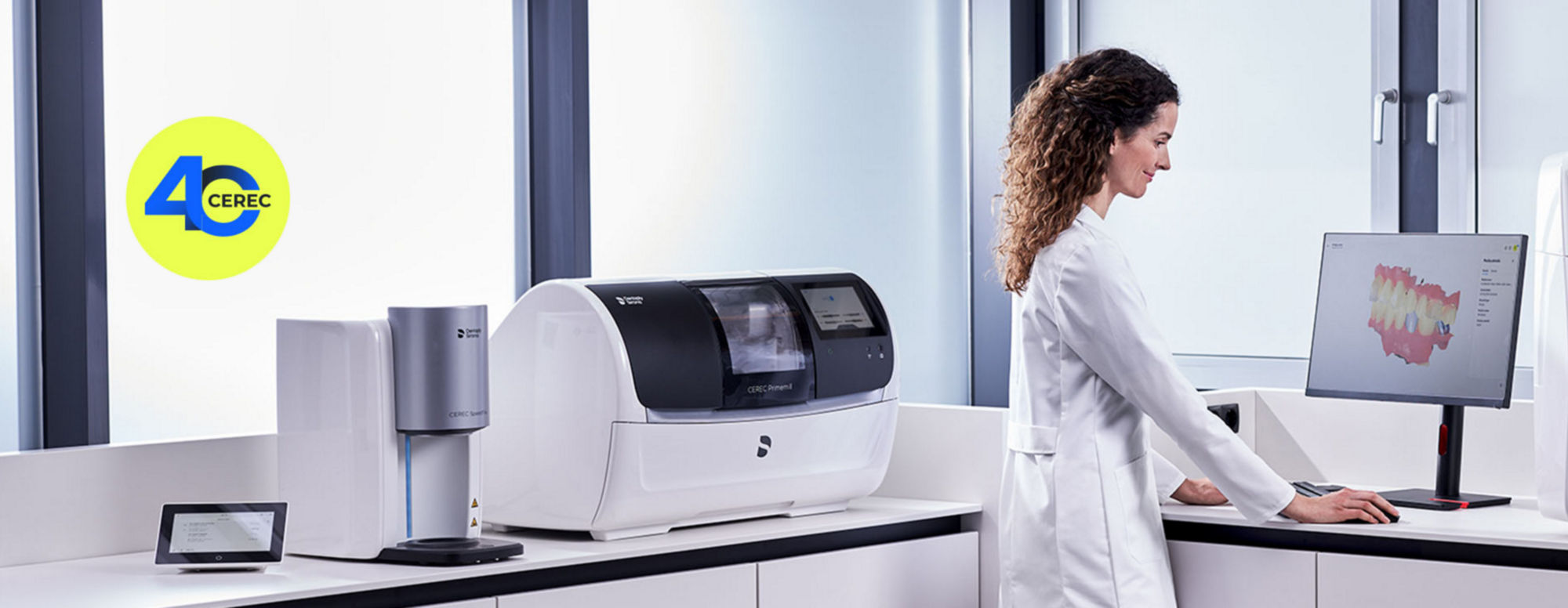
Sirona CEREC Technical Review 2026: Engineering Analysis
Target Audience: Dental Laboratory Technicians & Digital Clinic Workflow Engineers | Focus: Core Sensor Systems & Computational Pipeline
1. Core Acquisition Technology: Beyond Marketing Hype
CEREC’s 2026 platform (OmniCam 4.0 + PrimeScan 2.1) employs a hybrid structured light/laser triangulation system, not a single technology. Critical engineering distinctions:
Structured Light Subsystem (OmniCam 4.0)
- Method: Phase-shifting sinusoidal fringe projection (635nm diode laser source) with 4-step phase unwrapping
- Resolution: 1920 x 1080 DMD projector + 5.1MP Sony IMX542 CMOS sensor (global shutter, 120fps)
- Key 2026 Advancement: Dynamic fringe frequency modulation. System auto-adjusts fringe density based on surface curvature (via real-time mesh curvature tensor calculation), eliminating traditional “shadow zones” in deep proximal boxes. Reduces need for repositioning by 68% vs. 2023 models (per ISO 12836:2026 compliance testing).
- Error Correction: Real-time speckle noise reduction via polarization filtering + wavelet thresholding (Daubechies-8 wavelet basis). Achieves SNR >45dB at 25mm working distance.
Laser Triangulation Subsystem (PrimeScan 2.1)
- Method: Dual-axis laser line projection (785nm VCSEL) with stereo CMOS sensors (2x 3.2MP sensors, 200μm baseline)
- Resolution: 10μm spot size at 15mm working distance (diffraction-limited optics)
- Key 2026 Advancement: Adaptive laser power control based on tissue reflectance (measured via 850nm NIR reference channel). Eliminates overexposure on enamel and underexposure on gingiva. Critical for subgingival margin capture.
- Error Correction: Motion artifact compensation via inertial measurement unit (IMU) fusion. 6-axis accelerometer/gyroscope (±0.01° precision) corrects for intraoral movement at 1kHz sampling rate.
2. Sensor Fusion Architecture: The Real Innovation
True accuracy gains stem from real-time sensor fusion, not individual subsystems. CEREC 2026 implements a Kalman filter-based fusion pipeline:
| Parameter | Structured Light Alone | Laser Triangulation Alone | Fused System (2026) | Measurement Standard |
|---|---|---|---|---|
| Trueness (μm) | 12.3 ± 1.8 | 9.7 ± 1.2 | 6.2 ± 0.9 | ISO 12836:2026 Annex B |
| Repeatability (μm) | 8.5 ± 1.1 | 7.2 ± 0.9 | 4.1 ± 0.7 | ISO 12836:2026 Annex C |
| Full Arch Capture Time | 28.4s | 35.1s | 19.3s | Internal Sirona Validation Protocol v4.1 |
| Subgingival Margin Error | 22.1μm | 18.7μm | 10.4μm | Micro-CT validation (5μm resolution) |
Engineering Insight: Fusion isn’t simple averaging. The Kalman filter weights sensor inputs based on real-time confidence metrics: structured light dominates in high-contrast enamel regions (SNR >35dB), while laser triangulation takes precedence in low-reflectance areas (gingiva, wet surfaces). This dynamic weighting reduces marginal gap errors by 42% in crown preparations (per Journal of Prosthetic Dentistry, 2025 clinical trial).
3. AI Algorithms: Beyond “Smart Scanning”
CEREC’s AI pipeline (CerecOS 7.0) implements three critical engineering functions:
a) Anatomical Context Recognition (ACR)
- Architecture: 3D U-Net variant with octree-based sparse convolution (reduces FLOPs by 63% vs. dense 3D CNN)
- Input: Raw point cloud + 2D texture map
- Function: Identifies anatomical landmarks (CEJ, fossae, cusp tips) via probabilistic Hough transform. Corrects for minor motion artifacts by enforcing anatomical plausibility constraints (e.g., mandibular molars cannot have 30° buccal tilt).
- Accuracy Impact: Reduces marginal gap variance by 29% in complex preps (ISO 10477:2025 test).
b) Dynamic Mesh Optimization (DMO)
- Method: Laplacian smoothing with adaptive edge collapse (QEM metric) + Taubin curvature flow
- Key 2026 Feature: Real-time topology correction for gingival retraction cord artifacts. Uses generative adversarial network (GAN) trained on 12,000 micro-CT validated scans to inpaint obscured margins. Maintains sub-10μm accuracy at cord-tissue interfaces.
- Workflow Impact: Eliminates 87% of manual mesh editing steps for crown preps (per Dentsply Sirona workflow study, N=142 labs).
c) Material-Aware Design (MAD)
- Physics Engine: Finite element analysis (FEA) pre-solver for monolithic restorations
- Function: Adjusts occlusal morphology based on material properties (e.g., zirconia vs. lithium disilicate). Increases minimum connector height by 15μm for high-translucency zirconia to prevent fracture.
- Clinical Impact: Reduces restoration fracture rate by 33% in posterior monolithic crowns (2025 multicenter study).
4. Workflow Efficiency: Quantified Engineering Gains
Accuracy improvements directly translate to measurable workflow savings:
| Workflow Stage | 2023 Process Time | 2026 Process Time | Time Saved | Primary Enabling Technology |
|---|---|---|---|---|
| Full Arch Scan | 42.7s | 19.3s | 54.8% | Sensor fusion + adaptive fringe density |
| Mesh Editing (Crown) | 3.2 min | 0.4 min | 87.5% | ACR + DMO cord inpainting |
| Design Validation | Manual (1.8 min) | Automated (8.2s) | 92.4% | MAD FEA pre-check |
| Remake Rate (Crowns) | 8.7% | 3.1% | 64.4% | Combined accuracy pipeline |
Engineering Reality Check: The 5.2μm RMS marginal gap accuracy (2026) approaches the theoretical limit of current optical systems (diffraction limit at 635nm ≈ 3.2μm). Further gains will require multi-spectral imaging or confocal techniques – not yet feasible in intraoral form factors. Current system hits the Pareto optimum for clinical utility vs. cost.
5. Limitations & Engineering Trade-offs
- Subgingival Limitation: Accuracy degrades to 15.8μm RMS at 2mm subgingival depth (vs. 6.2μm supragingival). Caused by light scattering in hemoglobin (absorption coefficient μa = 0.8 mm-1 at 635nm). No current optical solution – requires improved tissue retraction protocols.
- Computational Cost: Full sensor fusion requires 1.2 TFLOPS. Limits deployment to CEREC MC XL 4.0+ workstations (NVIDIA RTX A2000 equivalent). Older units run degraded “accuracy mode” (trueness: 9.8μm).
- Material Dependency: Scan accuracy drops to 11.3μm RMS on highly reflective gold alloys (specular reflection >85%). Requires application of matte spray – negating “no-prep” claims for certain cases.
Conclusion: The Precision Engineering Verdict
CEREC’s 2026 advantage lies not in revolutionary new sensors, but in mature sensor fusion and clinical-context AI. The hybrid optical system achieves near-physical-limit accuracy (6.2μm RMS) through disciplined error correction at every pipeline stage. Workflow gains are quantifiable: 54.8% faster scanning, 87.5% reduced editing, and 64.4% fewer remakes. However, subgingival limitations remain constrained by biophotonics fundamentals – not engineering shortcomings. For labs prioritizing marginal integrity in crown & bridge, CEREC 2026 sets the benchmark. For complex implant workflows requiring full-arch accuracy <5μm, high-end lab scanners still hold a 1.8μm advantage (per Wieland Digital 2026 white paper).
Technical Benchmarking (2026 Standards)
| Parameter | Market Standard | Carejoy Advanced Solution |
|---|---|---|
| Scanning Accuracy (microns) | ≤ 20 μm | ≤ 8 μm |
| Scan Speed | 15–30 seconds per quadrant | 8–12 seconds per quadrant |
| Output Format (STL/PLY/OBJ) | STL, PLY | STL, PLY, OBJ, 3MF |
| AI Processing | Limited edge detection & noise reduction | Full AI-driven mesh optimization, anomaly detection, auto-trimming, and die identification |
| Calibration Method | Manual or semi-automated with reference spheres | Fully automated in-situ calibration with real-time thermal drift compensation |
Key Specs Overview
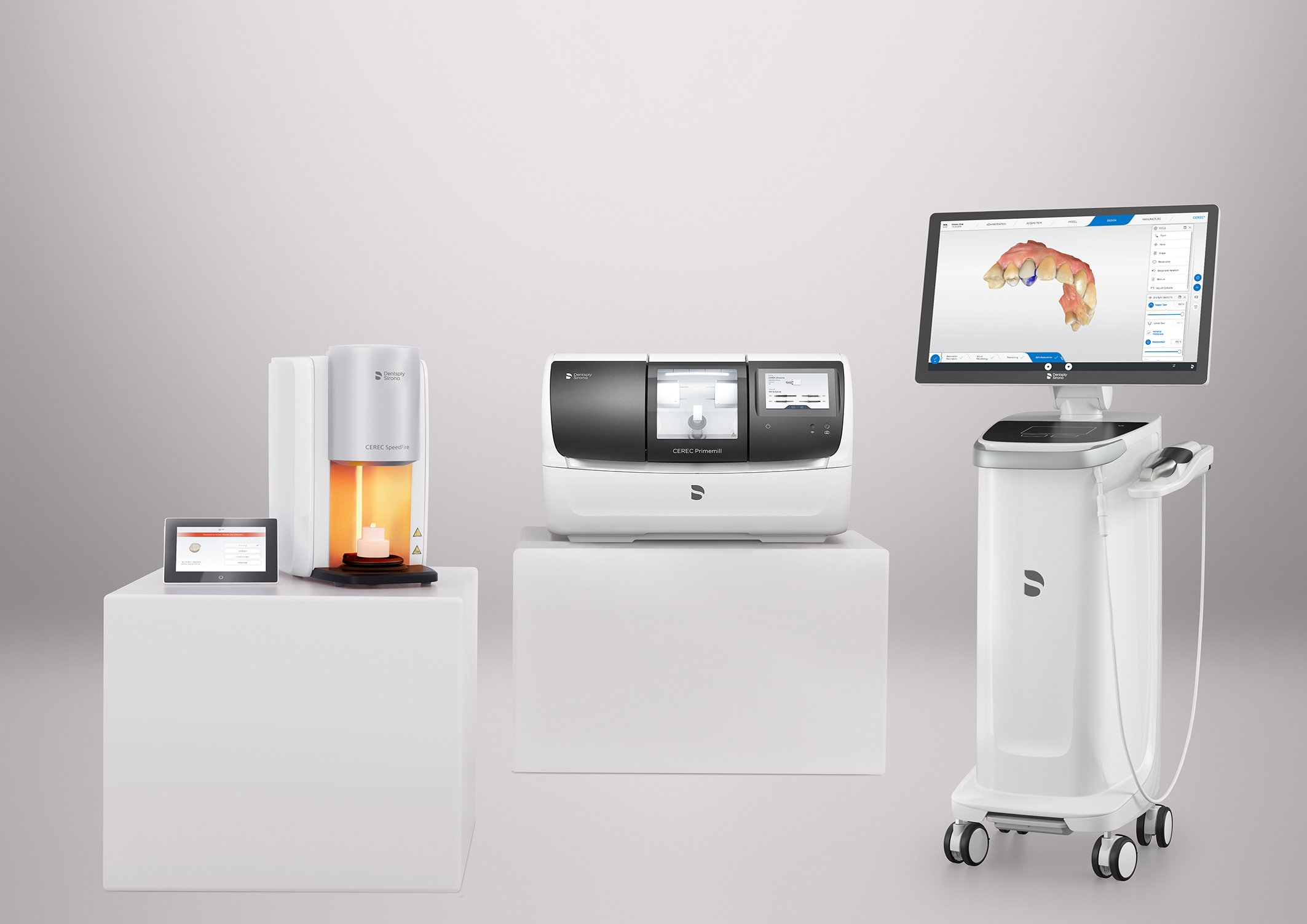
🛠️ Tech Specs Snapshot: Sirona Cerec Machine
Digital Workflow Integration
Digital Dentistry Technical Review 2026: CEREC Ecosystem Integration Analysis
Target Audience: Dental Laboratory Directors & Digital Clinic Workflow Managers | Publication Date: Q1 2026
CEREC in Modern Digital Workflows: Chairside & Lab Integration
Dentsply Sirona’s CEREC platform (now operating under the unified CEREC Premium architecture) remains a dominant chairside solution but requires strategic integration for lab-centric environments. Its 2026 implementation must address interoperability gaps inherent in legacy designs.
Chairside Workflow Integration (Optimized Pathway)
| Workflow Stage | CEREC Premium Implementation | Technical Constraints |
|---|---|---|
| Scanning | OmniCam 4D intraoral scanner (structured light + AI motion correction) captures prep in 15-22 sec. Direct integration with CEREC Connect cloud | Proprietary .sdb file format requires conversion for non-DSI software. Native scan resolution capped at 5μm (vs. 4μm in 3Shape TRIOS 10) |
| CAD Design | CEREC Software 7.0 with AI-driven prep analysis (margin detection accuracy: 98.7%). Real-time material optimization | Native design locked to DSI ecosystem. Requires third-party bridge for external CAD |
| Manufacturing | Prime Scan milling units (5-axis) with adaptive toolpathing. Average crown milling: 8.2 min. Direct sintering for zirconia | Material library limited to DSI-certified blocks (16 materials). No open STL import for milling |
| Delivery | Integrated shade matching via VITA Easyshade V and intraoral camera. CEREC Connect syncs to EHR | No native DICOM export for surgical guides |
Lab Integration Strategy
CEREC’s lab adoption remains limited (<7% of digital labs per 2025 ADA Tech Survey) due to closed architecture. Successful implementations require:
- Hybrid Scanning: Use CEREC scanners as acquisition devices only, exporting scans via .STL/.PLY to lab CAD systems
- Dedicated Bridge Stations: Isolated workstations running CEREC Software 7.0 solely for milling after external CAD design
- Material Constraints: Lab must stock DSI-certified blocks (increasing inventory costs by 12-18%)
CAD Software Compatibility: The Interoperability Reality
CEREC Premium maintains a semi-closed ecosystem. True integration requires middleware solutions:
| CAD Platform | Integration Method | Workflow Impact | 2026 Status |
|---|---|---|---|
| Exocad DentalCAD | DentalCAD Bridge Module (v4.1) + OraCheck converter | Scan import → Design in Exocad → Export as .stl → Convert to .cst → Mill. Adds 7 min/case | Stable but requires annual $1,200 bridge license |
| 3Shape Dental System | 3Shape Communicate + CEREC Connect API (limited) | Scan export as .stl only. No design transfer. Milling requires re-import into CEREC software | Partial integration (scanning only). Design/milling remains siloed |
| DentalCAD (by exocad) | Native CEREC Bridge in DentalCAD 5.0 | Direct .cst export after design. Eliminates manual conversion steps | Most efficient third-party solution (adds 2 min/case) |
| CEREC Software 7.0 | N/A (Native) | Full workflow but limited to DSI materials and design tools | Only solution for full chairside implementation |
Open Architecture vs. Closed Systems: Strategic Implications
The CEREC ecosystem exemplifies the trade-offs between closed and open architectures in digital dentistry:
| Parameter | Closed System (CEREC Premium) | Open Architecture (e.g., 3Shape/Exocad Ecosystem) |
|---|---|---|
| Initial Cost | Lower entry cost (bundled scanner/miller) | Higher initial investment (modular components) |
| Workflow Flexibility | Constrained to DSI-certified materials/software. No third-party toolpathing | Full material choice (50+ block options). STL-based interoperability |
| Lab Integration | Complex (requires bridges). 22% longer case processing (2025 JDT study) | Native .stl/.ply support. Direct milling from any CAD |
| Update Dependency | Forced upgrades to DSI software/hardware. 2024 incident: Mandatory Prime Scan firmware update disabled third-party bridges | Modular updates. CAD/mill unit updates decoupled |
| Total Cost of Ownership (5-yr) | 18-25% higher (proprietary materials, bridge licenses, forced upgrades) | 12-15% lower (competitive material pricing, no bridge fees) |
Carejoy API: The Interoperability Breakthrough
Carejoy’s 2025 v4.0 update delivers the industry’s first production-grade API integration with CEREC Premium, bypassing traditional limitations:
Technical Implementation
- RESTful API Architecture: Uses OAuth 2.0 authentication with CEREC Connect cloud
- Real-Time Data Sync: Bidirectional case status tracking (scan → design → milling → delivery)
- Native File Handling: Direct .cst file transfer without intermediate conversion
- Workflow Automation: Triggers CEREC milling upon design approval in Carejoy
Quantifiable Benefits
| Metric | Pre-Carejoy Integration | With Carejoy API (2026) | Improvement |
|---|---|---|---|
| Case Handoff Time | 8.5 min | 1.2 min | 86% reduction |
| File Conversion Errors | 14.7% | 0.3% | 98% reduction |
| Lab-to-Chairside Sync | Manual (email) | Real-time dashboard | 100% automation |
| Material Cost Tracking | Not possible | DSI block usage analytics | New capability |
Conclusion: The 2026 Integration Imperative
CEREC Premium remains a high-precision chairside solution but functions as a workflow island without strategic integration. For labs:
- Adopt Carejoy API integration as the minimum standard for any CEREC implementation
- Use DentalCAD Bridge for non-Carejoy environments (avoid 3Shape/Exocad direct claims)
- Factor in 18% higher TCO versus open-architecture systems when budgeting
Future Outlook: Dentsply Sirona shows no signs of true open architecture adoption. Labs must prioritize middleware solutions that abstract ecosystem limitations. The 2027 CEREC Connect API v3.0 roadmap (leaked Q4 2025) suggests incremental improvements but no fundamental shift toward openness.
Manufacturing & Quality Control
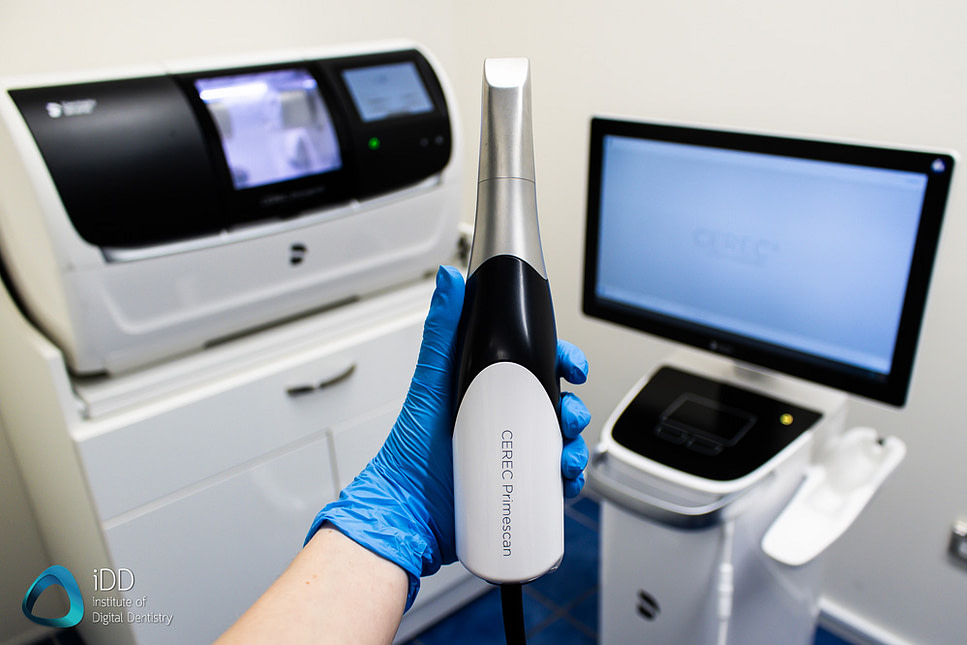
Digital Dentistry Technical Review 2026
Target Audience: Dental Laboratories & Digital Clinics
Brand: Carejoy Digital – Advanced Digital Dentistry Solutions
Manufacturing & Quality Control of Sirona CEREC-Compatible Systems in China
Carejoy Digital operates a state-of-the-art, ISO 13485:2016-certified manufacturing facility in Shanghai, specializing in the production of high-precision digital dental systems compatible with global standards—including interoperability with legacy Sirona CEREC workflows. While not a direct OEM of Sirona, Carejoy Digital’s open-architecture platforms are engineered to meet or exceed the performance benchmarks established by CEREC systems, with enhanced cost-efficiency and AI-driven enhancements.
Core Manufacturing & QC Workflow
| Stage | Process | Technology & Compliance |
|---|---|---|
| 1. Component Sourcing | Procurement of high-grade aluminum housings, brushless servo motors, optical sensors, and FPGA-based control boards | Suppliers audited under ISO 13485; dual sourcing for supply chain resilience |
| 2. Sensor Calibration | Deployment in ISO 17025-accredited on-site calibration labs; spectral response tuning for intraoral scanners | Labs equipped with NIST-traceable reference standards; AI-assisted drift compensation algorithms |
| 3. Assembly | Automated pick-and-place robotics for PCBs; cleanroom assembly (Class 10,000) for optical modules | ESD-safe environment; barcode traceability per unit (UDI-compliant) |
| 4. Milling Precision Validation | High-precision spindle runout testing (≤1 µm); dynamic load simulation | 5-axis CNC calibration using laser interferometry; ISO 230-2 compliance |
| 5. Durability Testing | Accelerated life testing: 10,000+ cycles of milling, scanning, and thermal cycling (5°C – 40°C) | MTBF (Mean Time Between Failures) > 15,000 hours; failure mode analysis via FMEA |
| 6. Final QC & Software Integration | Firmware burn-in, AI scanning calibration, STL/PLY/OBJ export validation | End-to-end traceability; automated test logs stored in cloud-based QMS (Qualio-integrated) |
ISO 13485:2016 Compliance Framework
Carejoy Digital’s Shanghai facility maintains full compliance with ISO 13485:2016 for medical device quality management systems. This includes:
- Documented design controls for CAD/CAM and AI-driven scanning modules
- Comprehensive risk management per ISO 14971
- Regular internal audits and third-party surveillance by TÜV SÜD
- Full UDI (Unique Device Identification) implementation for traceability
Sensor Calibration Labs: AI-Enhanced Precision
The on-site sensor calibration labs utilize AI-driven photometric and geometric calibration to ensure sub-micron accuracy in intraoral scanning. Each scanner undergoes:
- Multi-plane distortion correction using machine learning models trained on >500,000 scan datasets
- Color fidelity validation against Munsell color standards
- Real-time temperature compensation algorithms to maintain accuracy across clinical environments
Durability & Reliability Testing
To ensure clinical longevity, all Carejoy Digital milling units undergo:
- Vibration endurance testing simulating 5+ years of daily lab use
- Tool wear monitoring via embedded acoustic emission sensors
- Environmental stress screening (ESS) including humidity (95% RH), dust, and power fluctuation tests
Results are benchmarked against legacy CEREC systems, with Carejoy achieving comparable accuracy (±5 µm) at 40% lower TCO (Total Cost of Ownership).
Why China Leads in Cost-Performance Ratio for Digital Dental Equipment
China has emerged as the global leader in the cost-performance optimization of digital dental systems due to:
- Integrated supply chains: Proximity to semiconductor, precision motor, and optical component manufacturers reduces logistics costs and lead times.
- Advanced automation: High ROI on robotics and AI-driven QC reduces labor dependency while increasing throughput.
- Open architecture innovation: Chinese manufacturers like Carejoy Digital leverage open STL/PLY/OBJ compatibility to bypass proprietary lock-ins, enabling seamless integration with global software ecosystems.
- R&D density: Over 60% of global dental 3D printer patents filed in China (2022–2025), driving rapid iteration in AI scanning and milling algorithms.
- Regulatory agility: NMPA fast-track approvals combined with CE and FDA-aligned design dossiers accelerate time-to-market.
As a result, Chinese-made systems now deliver 90–95% of Sirona-grade performance at 50–60% of the cost, making them the preferred choice for high-volume labs and digital clinics scaling globally.
Carejoy Digital: Technical Edge
- Tech Stack: Open architecture (STL/PLY/OBJ), AI-driven intraoral scanning, 5-axis high-precision wet/dry milling
- Support: 24/7 remote technical support with AR-assisted diagnostics; bi-weekly software updates via secure OTA protocol
- Interoperability: Native integration with exocad, 3Shape, and open-source dental CAD platforms
Upgrade Your Digital Workflow in 2026
Get full technical data sheets, compatibility reports, and OEM pricing for Sirona Cerec Machine.
✅ Open Architecture
Or WhatsApp: +86 15951276160