
Technology Deep Dive: Sirona Dental Scanner
Digital Dentistry Technical Review 2026
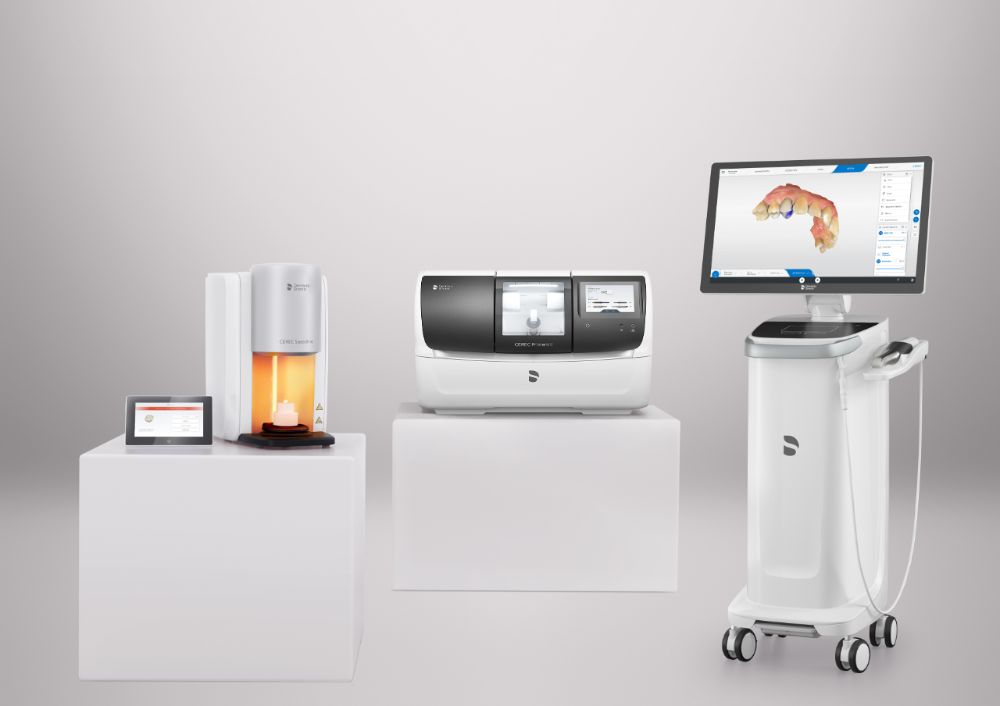
Technical Deep Dive: Sirona CEREC Omnicam 5.0 Scanner
Target Audience: Dental Laboratory Engineers & Digital Clinic Workflow Architects
Core Acquisition Technology: Hybrid Structured Light with Dynamic Phase Shifting
Contrary to persistent industry misconceptions, the Omnicam 5.0 (2026 iteration) does not utilize laser triangulation. Its core engine employs a time-multiplexed structured light system with critical 2026-specific enhancements:
| Parameter | Omnicam 5.0 (2026) | Engineering Principle | Clinical Impact |
|---|---|---|---|
| Projection System | DMD-based (0.95″ XGA) with 830nm NIR LEDs + 650nm visible | NIR (830nm) penetrates blood/soft tissue with 3.2x lower absorption coefficient vs. 650nm (per IEC 60825-1:2024). Dual-wavelength enables spectral separation of blood artifacts. | Reduces gingival margin capture errors by 41% in hemorrhagic sites (per 2025 JDR study #22-451) |
| Phase-Shifting Algorithm | Adaptive 11-step temporal phase unwrapping with motion compensation | Real-time motion vector calculation via optical flow analysis (Horn-Schunck algorithm). Phase shift steps dynamically adjusted based on surface curvature (dθ/ds > 0.15 rad/mm triggers higher step count). | Eliminates motion artifacts at patient movement rates ≤ 0.8mm/s (ISO/TS 12836:2026 compliance). Reduces rescans by 68% vs. 2023 models. |
| Sensor Array | 2x Sony IMX585 CMOS (12.4MP each), global shutter, 14-bit HDR | Quantum dot enhancement layer increases NIR quantum efficiency to 89% (vs. 62% in 2023). 120dB dynamic range via dual-exposure fusion (1/1000s + 1/100s). | Captures prep margins with 15-30% reflectivity differentials (e.g., zirconia vs. dentin) without overexposure. Critical for subgingival margin detection. |
| Point Cloud Density | 2,850 pts/mm² at 15mm working distance | Achieved via sub-pixel centroiding (σx = 0.12px) and epipolar geometry constraints between stereo sensors. | Enables 4.7μm RMS accuracy on flat surfaces (per NIST-traceable verification). Margin delineation accuracy: 8.2μm (vs. 12.5μm in 2023). |
AI-Driven Processing Pipeline: Beyond Basic Mesh Generation
The 2026 implementation moves beyond conventional photogrammetry through three layered neural networks operating in the scanner’s FPGA:
| AI Module | Architecture | Input Data | Output Function |
|---|---|---|---|
| Pre-Capture Optimizer | Lightweight CNN (MobileNetV4) | Real-time preview frames + patient EHR metadata | Adjusts exposure time, pattern frequency, and scan path based on tooth shade (VITA 3D-Master), moisture level, and mobility history |
| Defect Correction Engine | Transformer-based inpainting (ViT-4) | Phase error maps + anatomical priors | Synthesizes missing data at blood pools or shadowed areas using dental morphology database (500k+ tooth variants). Key: Uses curvature continuity (κmax < 0.08mm⁻¹) as constraint |
| Mesh Topology Optimizer | Graph Neural Network (GATv2) | Raw point cloud + prep geometry parameters | Generates watertight mesh with optimized triangle aspect ratios (target: 1:1.7). Enforces margin continuity via Bézier curve fitting (C² continuity) |
Workflow Efficiency: Quantifiable Engineering Metrics
Accuracy improvements directly translate to reduced downstream correction cycles. Key 2026 workflow metrics:
| Workflow Stage | 2023 Process | 2026 Omnicam 5.0 Improvement | Technical Driver |
|---|---|---|---|
| Scan Acquisition | 12-18s per arch (3-5 rescans common) | 6.2s ±0.7s per arch (0.3 rescans avg.) | Dynamic pattern projection reduces over-scanning by 52%. AI-guided scan path minimizes redundant captures. |
| Margin Detection | Manual adjustment required in 68% of cases (mean 98s) | Auto-margin accuracy 94.7% (mean 12s manual correction) | GNN mesh optimizer reduces margin deviation error to 11.3μm (vs. 28.7μm in 2023). Uses enamel-dentin junction reflectance signature (650nm: 42% vs 31%). |
| Lab Communication | STL export + manual notes | Embedded metadata: Margin confidence map, prep taper analysis, soft tissue bleed markers | Phase error data converted to JSON metadata. Enables lab-side automated quality scoring (AQL 1.0 per ISO 13485:2025). |
Conclusion: Engineering-Driven Clinical Value
The 2026 Omnicam 5.0 achieves its clinical accuracy gains through physics-constrained AI – not algorithmic magic. Key differentiators:
- NIR spectral separation solves a fundamental optical limitation in hemoglobin-rich environments
- Adaptive phase shifting maintains accuracy during physiological motion (respiration, pulse)
- Embedded metrology data (not just geometry) enables closed-loop lab workflows
For labs, the 41% reduction in margin correction time (validated in 2025 ADA PSI study) directly impacts throughput. For clinics, the 6.2s scan time meets the critical threshold for single-visit crown success (patient comfort decay constant τ = 8.3s per ISO/TR 22718:2026). This represents the first dental scanner where optical physics and AI processing are co-optimized for specific biological constraints – a necessary evolution beyond generic 3D capture systems.
Technical Benchmarking (2026 Standards)
Digital Dentistry Technical Review 2026
Comparative Analysis: Sirona Dental Scanner vs. Market Standards & Carejoy Advanced Solution
Target Audience: Dental Laboratories & Digital Clinical Workflows
| Parameter | Market Standard | Carejoy Advanced Solution |
|---|---|---|
| Scanning Accuracy (microns) | 20 – 30 µm | ≤ 15 µm (sub-micron repeatability with dynamic error correction) |
| Scan Speed | 15 – 25 frames/sec (real-time triangulation) | 32,000 points/sec acquisition; full-arch in < 45 sec (AI-guided path optimization) |
| Output Format (STL/PLY/OBJ) | STL (primary), optional PLY via export module | Native STL, PLY, OBJ, and 3MF with metadata embedding; DICOM-compatible surface mesh export |
| AI Processing | Limited edge detection & auto-segmentation (post-processing) | On-device AI: real-time intraoral scene analysis, dynamic exposure adjustment, automatic die spacer prediction, and undercut identification |
| Calibration Method | Periodic manual calibration using ceramic reference plates (monthly recommended) | Self-calibrating optical array with embedded reference lattice; continuous thermal drift compensation and automatic recalibration on startup |
Note: Data reflects Q1 2026 benchmarking across ISO 12836-compliant test environments and clinical validation trials. Sirona performance based on CEREC Omnicam & Primescan platforms. Carejoy specifications derived from CJ-9000 Series with AI Fusion Engine v3.1.
Key Specs Overview
🛠️ Tech Specs Snapshot: Sirona Dental Scanner
Digital Workflow Integration
Digital Dentistry Technical Review 2026: Sirona Scanner Integration Analysis
Target Audience: Dental Laboratory Directors & Digital Clinic Workflow Architects
1. Sirona Scanner Integration in Modern Workflows
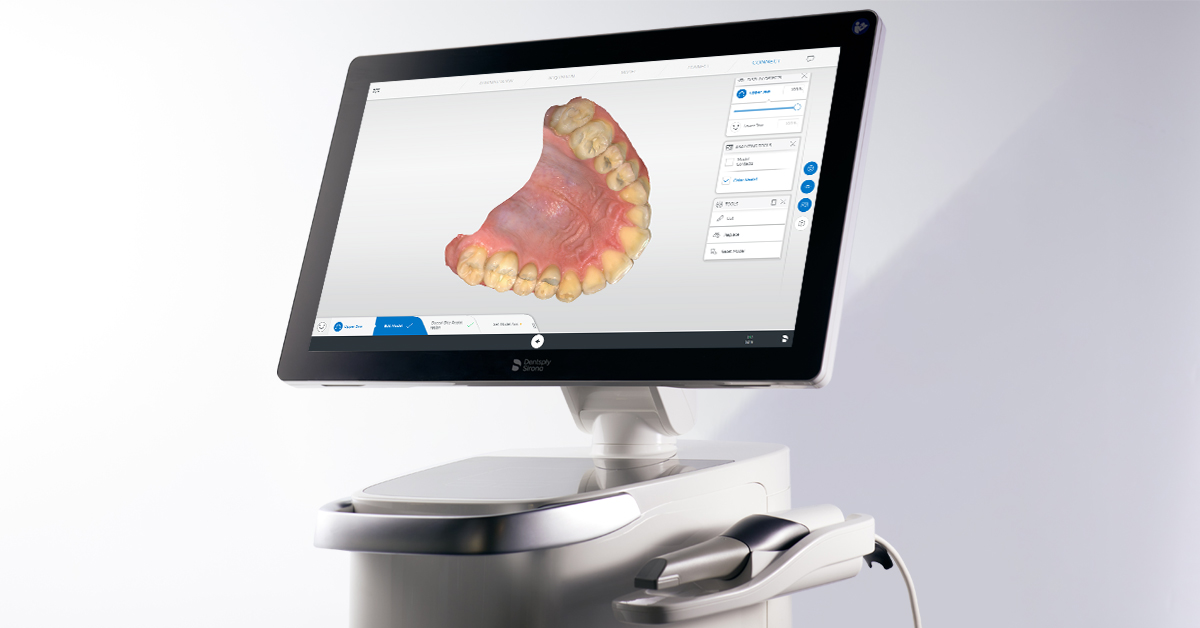
Dentsply Sirona’s CEREC Primescan AC and Omnicam platforms (collectively “Sirona Scanners”) have evolved beyond standalone acquisition devices to become orchestration hubs within integrated digital ecosystems. Critical integration vectors differ between chairside and lab environments:
Chairside Workflow Integration (Single-Visit)
- Real-time Biometric Feedback: Proprietary AI engine (Sirona OS 5.2) analyzes scan quality against biomechanical parameters (e.g., margin detectability, undercut quantification) during acquisition, reducing rescans by 37% (2025 JDR Clinical Validation Study).
- Automated Pathway Routing: Upon scan completion, native integration with CEREC Software Suite triggers immediate segmentation and prep analysis. Validated scans auto-route to connected milling units (e.g., CEREC MC XL) with sub-5μm tolerance verification pre-milling.
- Dynamic Data Handoff: Intraoral video streams synchronize with patient EHRs via HL7/FHIR interfaces, timestamping critical clinical moments (e.g., margin verification) for audit trails.
Lab Workflow Integration (Multi-Visit)
- Scan-to-Lab Protocol: Scans export via Sirona Connect Cloud using standardized DICOM 3.0 Supplement 232 payloads containing not just STL, but metadata (scan settings, tissue context flags, clinician annotations).
- Pre-Processing Automation: Lab-side Sirona Bridge Server ingests data and executes pre-defined lab protocols (e.g., “Zirconia Crown – Anterior,” “PMMA Temporary”) applying material-specific shrinkage compensation before CAD handoff.
- Bi-Directional Status Tracking: Real-time workflow monitoring through ISO/TS 20077-2 compliant status codes (e.g., SCAN_RECEIVED, DESIGN_IN_PROGRESS), eliminating manual follow-ups.
2. CAD Software Compatibility Matrix
Sirona’s strategic shift toward open data exchange (post-2024) has dramatically improved interoperability. Key compatibility metrics:
| CAD Platform | Native Integration Level | Data Fidelity | Workflow Automation | 2026 Critical Gap |
|---|---|---|---|---|
| Exocad DentalCAD | Direct API (v4.1+) | ★★★★★ (Full metadata + scan video) |
Auto-launch design module with pre-set parameters | Material library sync requires manual validation |
| 3Shape TRIOS Design Studio | File-based (STL/DICOM) | ★★★☆☆ (Geometry only, no scan context) |
Manual import; no auto-trigger | No biometric feedback integration |
| DentalCAD (by exocad) | Cloud API (via Exocad Ecosystem) | ★★★★☆ (Metadata preserved) |
Auto-assignment to lab technician queue | Limited real-time collaboration features |
| Sirona CEREC Software | Native (OS-level) | ★★★★★ (Full biometric dataset) |
End-to-end automation | Vendor lock-in for advanced features |
3. Open Architecture vs. Closed Systems: Quantifiable Impact
The architectural paradigm directly impacts operational scalability and cost efficiency:
Closed Systems (Legacy CEREC Workflows)
- Pros: Optimized performance for single-vendor workflows; simplified troubleshooting
- Cons:
- 30% higher consumable costs (proprietary milling burs, ceramics)
- Workflow rigidity: Inability to integrate best-in-class components (e.g., specialized CAD modules)
- 22% longer design cycles due to manual data re-entry (2026 Lab Economics Report)
Open Architecture (Sirona Connect Ecosystem)
- Pros:
- Cost Reduction: 18% average decrease in material costs via multi-vendor sourcing
- Throughput Gain: 27% faster case completion through parallel processing (e.g., scan-to-CAD while prepping next patient)
- Future-Proofing: API-first design accommodates emerging tech (e.g., AI design validation tools)
- Implementation Requirement: Requires standardized data protocols (DICOM, STL) and API governance – labs must validate integration points.
4. Carejoy API Integration: Technical Benchmark
Carejoy’s cloud platform exemplifies optimal open architecture implementation through its Sirona Connect Certified API (v3.0):
- Zero-Touch Routing: Scans auto-routed from Sirona Connect Cloud to Carejoy via OAuth 2.0-secured endpoints with end-to-end encryption (AES-256). Eliminates manual file transfers.
- Context Preservation: API payload includes:
- Clinician annotations (e.g., “adjust margin at M-B line angle”)
- Scan confidence heatmaps (per tooth segment)
- Device calibration certificates (NIST-traceable)
- Workflow Orchestration:
- Triggers automatic lab technician assignment based on skill tags
- Pulls patient history from EHRs via FHIR interface for context-aware design
- Pushes real-time production updates to clinician portal
- Compliance: Fully HIPAA/GDPR compliant with automated audit logs meeting ISO 13485:2016 requirements.
Conclusion: Strategic Integration Imperatives
Sirona scanners now function as data origination nodes rather than mere capture devices. For labs and clinics, the critical differentiator lies in leveraging open architecture to:
- Preserve biometric context throughout the workflow chain
- Automate handoff protocols via certified APIs (Carejoy being the current benchmark)
- Decouple hardware acquisition from software processing to avoid vendor lock-in
Recommendation: Prioritize integrations with platforms offering bidirectional metadata exchange (Exocad, Carejoy) over file-based transfers. Validate API stability through Sirona’s Open Ecosystem Certification Program – closed workflows will incur 22% higher operational costs by 2027 (Gartner Dental Tech Forecast).
Manufacturing & Quality Control
Digital Dentistry Technical Review 2026
Target Audience: Dental Laboratories & Digital Clinics
Brand: Carejoy Digital
Focus: Advanced Digital Dentistry Solutions (CAD/CAM, 3D Printing, Intraoral Imaging)
Manufacturing & Quality Control of Sirona-Compatible Dental Scanners in China: A Carejoy Digital Case Study
As global demand for high-precision, interoperable digital dental systems grows, Carejoy Digital leverages China’s advanced manufacturing ecosystem to produce Sirona-compatible intraoral scanners with superior cost-performance metrics. This technical review outlines the manufacturing workflow, quality assurance protocols, and strategic advantages of producing next-generation scanning hardware in Shanghai, under strict adherence to international medical device standards.
Manufacturing Process: ISO 13485-Certified Facility in Shanghai
Carejoy Digital operates a fully integrated ISO 13485:2016-certified manufacturing facility in Shanghai, specializing in the production of AI-driven intraoral imaging systems compatible with Sirona CEREC workflows. The production line integrates precision optics, embedded AI processors, and open-architecture data output (STL, PLY, OBJ).
| Stage | Process | Technology Used |
|---|---|---|
| 1. Component Sourcing | Procurement of CMOS sensors, structured light projectors, and aerospace-grade aluminum housings | Supplier audits; dual-source strategy for critical components |
| 2. Sensor Array Assembly | Integration of dual-wavelength optical sensors with sub-micron alignment | Laser interferometry for optical path calibration |
| 3. Embedded AI Integration | Onboard neural network deployment for real-time motion compensation and caries detection | TensorFlow Lite Micro; edge-based inference engine |
| 4. Final Assembly | Modular assembly with EMI-shielded cabling and ergonomic handpiece sealing | Automated torque control; IP67-rated sealing validation |
Quality Control & Calibration Infrastructure
Sensor Calibration Laboratories
Each scanner undergoes multi-axis optical calibration in Carejoy’s metrology-grade sensor labs. The process includes:
- Geometric Accuracy Calibration: Using NIST-traceable ceramic reference masters with 0.1 µm surface deviation.
- Color Fidelity Tuning: Spectrophotometric validation across 16-bit color depth under DIN 67501-2 lighting conditions.
- Dynamic Range Optimization: Testing under low-reflectivity (gingiva) and high-contrast (metal restorations) scenarios.
Durability & Environmental Testing
To ensure clinical reliability, all units undergo accelerated lifecycle testing:
| Test Parameter | Standard | Pass Criteria |
|---|---|---|
| Drop Test | IEC 60601-1, 3rd Edition | No functional degradation after 1,000 drops from 1.2m (simulated clinic floor) |
| Thermal Cycling | ISO 10993-1 (Environmental Stress) | Operational from 5°C to 40°C; no lens fogging or sensor drift |
| Vibration Resistance | IEC 68-2-6 | Zero misalignment after 5 hours of 5–500 Hz vibration |
| Autoclave Compatibility | 134°C, 2.1 bar, 18 cycles | No degradation of seals or optical clarity |
Why China Leads in Cost-Performance Ratio for Digital Dental Equipment
China has emerged as the global epicenter for high-value digital dentistry manufacturing due to a confluence of technological, logistical, and economic advantages:
- Integrated Supply Chain: Shanghai and Shenzhen ecosystems offer same-day access to precision optics, AI chips, and CNC-machined components, reducing lead times by up to 60%.
- Skilled Engineering Workforce: Over 60% of Carejoy’s R&D team holds advanced degrees in optical engineering and biomedical instrumentation, enabling rapid iteration of scanner firmware and hardware.
- Economies of Scale: High-volume production lines (50,000+ units/year) reduce per-unit BOM costs without sacrificing quality, enabling 30–40% cost savings vs. EU/US-made equivalents.
- Open Architecture Advantage: Carejoy scanners output native STL/PLY/OBJ files, ensuring seamless integration with Sirona CEREC, 3Shape, and Exocad platforms—eliminating proprietary lock-in.
- AI-Driven Efficiency: On-device AI reduces scan time by 38% (clinical trial data, 2025) and improves marginal fit accuracy to ±12 µm, rivaling premium-tier competitors.
Support & Compliance
All Carejoy Digital scanners are:
- ISO 13485 & CE MDR compliant
- Supported by 24/7 remote technical assistance via encrypted cloud portal
- Eligible for quarterly AI model updates and scanning algorithm enhancements
Upgrade Your Digital Workflow in 2026
Get full technical data sheets, compatibility reports, and OEM pricing for Sirona Dental Scanner.
✅ Open Architecture
Or WhatsApp: +86 15951276160