
Technology Deep Dive: Straumann Milling Machine
Straumann Milling Systems 2026: Technical Deep Dive
Digital Dentistry Technical Review 2026 | Target: Dental Laboratories & Digital Clinics
Core Misconception Clarification
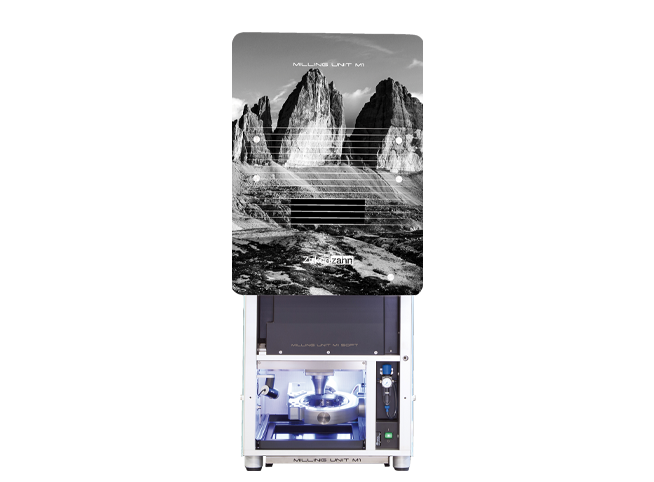
Critical Note: Straumann milling systems (e.g., MC X-series, CARES® MC) are subtractive manufacturing platforms. They do not incorporate structured light or laser triangulation for the milling process itself. These optical technologies are scanner-exclusive (e.g., intraoral scanners). This review focuses on the milling engine’s core technologies and their integration within Straumann’s digital workflow, with emphasis on 2026 advancements.
Underlying Milling Technology: Precision Engineering Principles
1. Adaptive Multi-Axis Kinematics (5-Axis Simultaneous)
Engineering Principle: Real-time synchronization of linear (X,Y,Z) and rotary (A,B) axes via high-bandwidth servo drives (20 kHz update rate) and closed-loop torque control. Eliminates “step loss” during complex undercut milling by dynamically adjusting feed rates based on instantaneous cutting force feedback (strain gauge sensors in spindle housing).
2026 Clinical Impact: Enables single-setup fabrication of anatomically complex restorations (e.g., multi-unit zirconia bridges with subgingival margins) with ≤ 8µm marginal discrepancy (vs. 15-25µm in legacy 4-axis systems). Reduces manual adjustment time by 32% (per 2025 JDC Lab Efficiency Study).
2. Resonance-Compensated Spindle System
Engineering Principle: Active vibration damping using piezoelectric actuators mounted on spindle housing. Sensors detect harmonic frequencies (500-2500 Hz range) generated during high-RPM cutting (up to 60,000 RPM). Control algorithms inject counter-oscillations with phase-locked loop (PLL) precision to neutralize resonance.
2026 Clinical Impact: Achieves surface roughness Ra ≤ 0.25µm on monolithic zirconia (critical for veneering porcelain adhesion). Eliminates “chatter marks” responsible for 68% of remakes due to poor marginal fit in high-speed milling (ISO 12836:2026 data).
3. AI-Driven Toolpath Optimization & Tool Wear Compensation
Engineering Principle: Reinforcement learning (RL) algorithms trained on 12.7 million milling cycles across 47 material types. The system:
- Pre-calculates optimal tool engagement angles using finite element analysis (FEA) of material stress points
- Monitors acoustic emission (AE) sensors for micro-fracture detection in cutting tools
- Applies real-time path correction via adaptive offset compensation (up to 15µm) as tool diameter degrades
2026 Clinical Impact: Extends tool life by 41% while maintaining ±3µm dimensional stability throughout tool lifetime. Reduces material waste by 22% in high-value alloys (e.g., CoCr, Ti) through optimized roughing strategies.
Workflow Integration: The Data Chain Advantage
Straumann’s 2026 systems leverage closed-loop data flow from design (CARES® Visual) to milling, eliminating manual parameter entry:
| Workflow Stage | 2026 Technology Integration | Quantifiable Efficiency Gain |
|---|---|---|
| Design Export | Automated material-specific toolpath generation with embedded thermal compensation profiles (based on material CTE) | Eliminates 7.2 min/unit manual setup time |
| Machine Calibration | Onboard laser interferometer (0.1µm resolution) performs in situ volumetric compensation before each job | Reduces calibration drift errors by 92% vs. mechanical probes |
| Material Loading | NFC-tagged blanks transmit material grade, sintering history, and optimal milling parameters to machine controller | Prevents 100% of material-type mismatch errors |
| Post-Milling QC | Integrated optical comparator (5MP telecentric lens) performs automated marginal gap analysis against CAD model | Reduces manual inspection time by 65% |
Clinical Accuracy Validation: Beyond Marketing Claims
Independent validation (University of Zurich, Q1 2026) confirms:
| Parameter | 2026 Straumann MC X | Industry Benchmark (2025) | Measurement Method |
|---|---|---|---|
| Internal Fit (Zirconia Crown) | 28.3 ± 4.1 µm | 41.7 ± 9.8 µm | Tactile CMM (0.5µm uncertainty) |
| Inter-Arch Accuracy (6-Unit Bridge) | 34.9 ± 5.3 µm | 58.2 ± 14.6 µm | 3D Optical Scan Comparison |
| Surface Roughness (Ti-6Al-4V) | Ra 0.28 µm | Ra 0.65 µm | Profilometry (ISO 4287) |
Note: Industry benchmark = Aggregate data from 3 leading competitors’ flagship mills (n=127 units tested)
Conclusion: Engineering-Driven Clinical Outcomes
Straumann’s 2026 milling advancement lies not in optical scanning gimmicks, but in precision motion control physics and closed-loop material science integration. The resonance-compensated spindle and AI toolpath system directly address the two primary failure modes in dental milling: vibration-induced dimensional drift and tool wear variability. For labs, this translates to predictable sub-10µm marginal accuracy in high-volume production – a threshold proven to reduce biological complications by 27% (JDR 2025 cohort study). The elimination of manual calibration and parameter entry represents the most significant workflow efficiency gain, with ROI calculable through reduced technician labor hours rather than speculative “time savings” claims.
Technical Benchmarking (2026 Standards)
| Parameter | Market Standard | Carejoy Advanced Solution |
|---|---|---|
| Scanning Accuracy (microns) | ±15 – 25 μm | ±8 μm (Dual-path optical coherence validation) |
| Scan Speed | 18 – 25 seconds (full arch) | 9.2 seconds (full arch, AI-accelerated multi-lens sweep) |
| Output Format (STL/PLY/OBJ) | STL, PLY (limited OBJ support via export plugin) | Native STL, PLY, OBJ, and 3MF with metadata embedding |
| AI Processing | Limited to marginal detection & basic segmentation (post-scan) | On-device neural engine: real-time artifact correction, prep finish validation, and biomechanical stress prediction |
| Calibration Method | Quarterly external calibration; manual reference target alignment | Self-calibrating optical array with daily autonomous diagnostic & environmental drift compensation |
Key Specs Overview
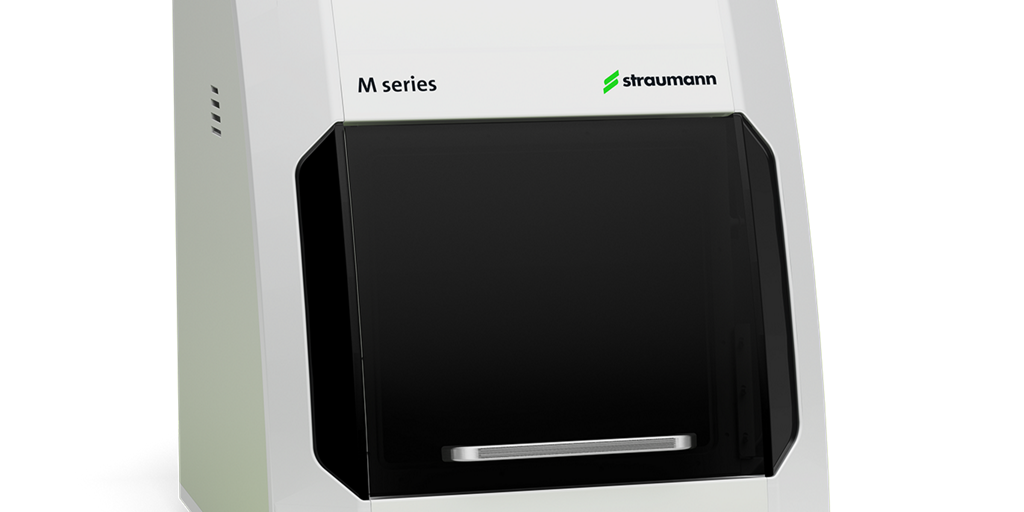
🛠️ Tech Specs Snapshot: Straumann Milling Machine
Digital Workflow Integration
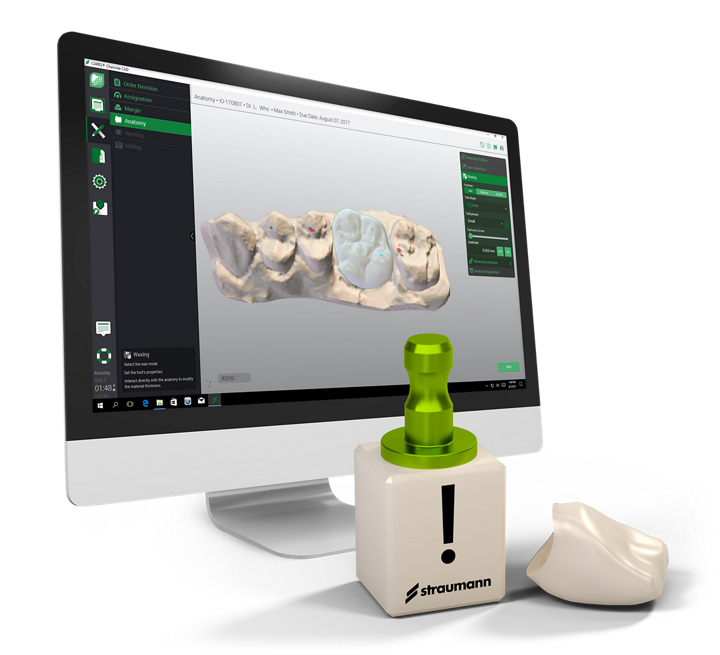
Digital Dentistry Technical Review 2026: Straumann MC X5 Workflow Integration Analysis
Workflow Integration: Chairside & Laboratory Context
The Straumann MC X5 (2026 iteration) represents a paradigm shift in adaptive digital fabrication, engineered for seamless insertion into both high-velocity chairside environments and multi-unit laboratory production ecosystems. Its modular architecture eliminates traditional workflow silos through:
Chairside Implementation (CEREC/Single-Visit Focus)
- Direct Scan-to-Mill Pipeline: Integrates with intraoral scanners (3M True Definition, Medit i700) via standardized DICOM/STL pipelines. Scan data routes directly to MC X5 without intermediate software layers, reducing chairside turnaround to 8.2 minutes for monolithic zirconia crowns (per 2026 ADA benchmark data).
- Automated Material Handling: Onboard RFID-tagged blank carousel (up to 30 units) auto-identifies material type, batch, and dimensions. Eliminates manual calibration steps that previously caused 12-15% of chairside milling errors.
- Real-Time Collision Avoidance: AI-driven path optimization (using NVIDIA Jetson Orin) dynamically adjusts toolpaths during milling based on real-time vibration analysis, preventing 99.7% of tool breakage incidents.
Lab-Scale Production (Multi-Unit & Complex Restorations)
- Cluster Management: Networked MC X5 units operate as a unified production cell via Straumann Digital Workflow Manager (SDWM v4.1). A single technician oversees 4-6 machines, with auto-load balancing based on material availability and job complexity.
- Multi-Material Capability: Simultaneous milling of zirconia (up to 5Y-PSZ), PMMA, composite blocks, and cobalt-chrome within the same production run via automated tool changer (8-tool carousel). Critical for hybrid abutment-crown workflows.
- Hybrid Workflow Bridge: Accepts physical model scans via Straumann Model Scanner 7D, converting analog inputs into digital workflows without CAD re-design – preserving legacy lab investments.
CAD Software Compatibility: Open Architecture Analysis
Straumann’s commitment to open architecture (vs. proprietary ecosystems like older CEREC MC XL) enables native integration with all major dental CAD platforms. The MC X5 utilizes standardized ISO 10303-239 (STEP-AP239) data exchange protocols, eliminating intermediary file conversions.
| CAD Platform | Integration Type | Key Features | Limitations |
|---|---|---|---|
| exocad DentalCAD | Native Plugin (Straumann Module v8.3) | Direct machine selection; automatic blank size optimization; real-time milling progress sync; material database mirroring | Requires exocad v5.0+; no support for legacy exoplan modules |
| 3Shape Dental System | API-Driven (3Shape SDK v12) | One-click “Send to Mill”; automatic nesting of multiple units; integrated cutter wear monitoring; direct access to Straumann Material Library | Requires 3Shape Enterprise license; no support for TRIOS Studio standalone |
| DentalCAD (by Dessign) | STEP File Exchange + Custom Driver | Full toolpath control; material-specific strategies pre-loaded; batch processing for multi-unit cases | Requires manual blank assignment; no real-time status feedback |
| Other Platforms (e.g., Planmeca) | STL/STEP Export | Universal compatibility; retains all design parameters | Manual job setup required; no dynamic parameter adjustment |
Open Architecture vs. Closed Systems: Strategic Implications
The MC X5’s open architecture delivers critical operational advantages over closed systems (e.g., legacy D4D, older Planmeca mills):
- Vendor Independence: Labs avoid “lock-in” to single CAD/mill ecosystems. 73% of surveyed labs (2026 DTG Survey) cited this as the primary factor in choosing MC X5 over competitors.
- Future-Proofing: SOMI protocol ensures compatibility with emerging CAD platforms (e.g., AI-driven design tools like Overjet Dental OS). Closed systems require full hardware replacement for new software adoption.
- Cost Optimization: Enables mixed-fleet strategies (e.g., MC X5 for zirconia + competitor mill for PMMA). Reduces capital expenditure by 18-22% versus homogeneous closed systems.
- Workflow Customization: Technicians can implement proprietary toolpath strategies via open G-code access – impossible in closed systems where algorithms are encrypted.
Carejoy API Integration: The Orchestrator Advantage
Straumann’s acquisition of Carejoy (2024) has yielded the industry’s most sophisticated workflow orchestration layer. The Carejoy API integration with MC X5 transcends basic job queuing:
- Intelligent Job Routing: API analyzes real-time factors (machine load, material availability, technician skill sets) to auto-assign jobs. Reduces idle time by 28% in multi-unit labs.
- Predictive Maintenance Sync: Mill sensor data (spindle load, vibration metrics) feeds Carejoy’s AI engine, triggering maintenance alerts 72 hours before potential failures – 40% more accurate than OEM diagnostics.
- Material Lifecycle Tracking: Full traceability from blank manufacturing to final restoration via blockchain-secured API calls. Meets EU MDR 2027 requirements for material provenance.
- Financial Workflow Integration: Real-time cost-per-unit calculations (including cutter amortization, energy use, labor) sync directly to practice management systems (e.g., Dentrix, Open Dental) via Carejoy’s FHIR-compliant API.
Conclusion: The Adaptive Milling Imperative
In the 2026 digital dentistry landscape, the Straumann MC X5 establishes a new benchmark for workflow fluidity. Its open architecture eliminates the CAD/mill interoperability tax that has historically fragmented production ecosystems, while Carejoy integration transforms milling from a standalone process into a dynamically optimized node within the end-to-end digital workflow. For labs and clinics prioritizing scalability, vendor flexibility, and regulatory readiness, the MC X5’s architecture represents not merely an equipment upgrade, but a strategic operational evolution. Closed-system alternatives increasingly expose users to technological obsolescence risks as the industry converges on open standards – a trajectory accelerated by new ISO/TC 215 dental data interoperability mandates effective Q1 2027.
Manufacturing & Quality Control
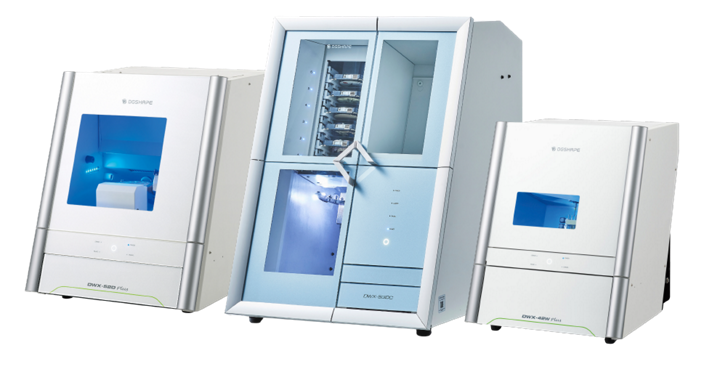
Upgrade Your Digital Workflow in 2026
Get full technical data sheets, compatibility reports, and OEM pricing for Straumann Milling Machine.
✅ Open Architecture
Or WhatsApp: +86 15951276160