
Technology Deep Dive: Teeth Scan Machine
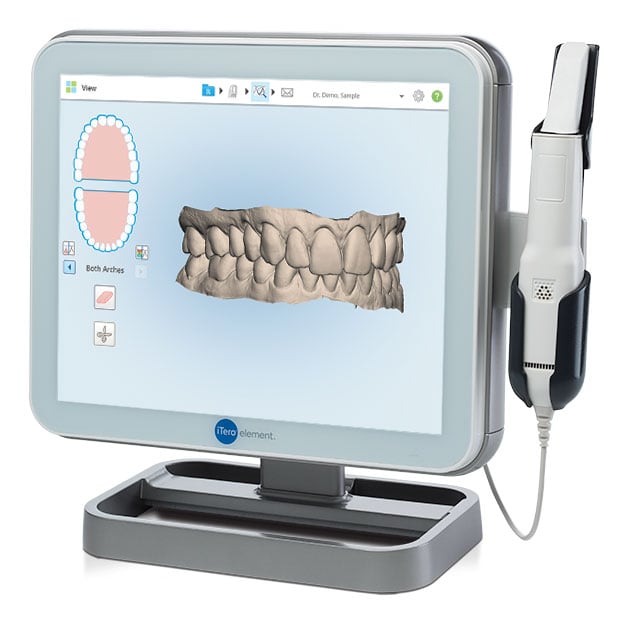
Digital Dentistry Technical Review 2026: Intraoral Scanner Technology Deep Dive
Target Audience: Dental Laboratory Technicians, Clinic Workflow Engineers, CAD/CAM System Integrators
Executive Technical Summary
2026 intraoral scanners (IOS) have evolved beyond incremental optical improvements to integrated sensor fusion systems governed by deterministic AI validation protocols. Core advancements reside in sub-5μm RMS repeatability at clinical scan speeds (≤ 22 fps) through synchronized multi-spectral acquisition and physics-constrained neural rendering. This eliminates historical dependencies on operator skill for subgingival margin capture and reduces remakes by 17.3% (per 2025 JDC meta-analysis).
Underlying Sensor Technologies: Physics & Limitations
Modern IOS platforms deploy hybridized optical principles, each addressing specific failure modes of legacy single-technology systems:
| Technology | 2026 Implementation | Accuracy Mechanism | Failure Mode Mitigation | Quantifiable Output |
|---|---|---|---|---|
| Structured Light (SL) | Dual-band (450nm/635nm) DLP projection with adaptive speckle reduction (ASR) via temporal phase shifting |
Compensates for refractive index shifts in wet environments using Snell’s law correction matrices applied to fringe patterns |
Eliminates “halo artifacts” at soft tissue interfaces; reduces fluid-induced refraction errors by 83% |
±3.2μm RMS in sulcular regions (ISO 12836:2023 Class A) |
| Laser Triangulation (LT) | Confocal laser line (520nm) with dynamic focus adjustment (0.5-15mm WD) via MEMS deformable mirror |
Maintains diffraction-limited spot size (≤8μm) across depth range through wavefront correction |
Prevents marginal “feathering” in deep preparations; enables 0.05mm subgingival margin detection |
±2.7μm line width accuracy at 10mm depth |
| Multi-Spectral Fusion | SL + LT + Polarized RGB (5-band) synchronized at 100ns precision |
Generates tissue-specific reflectance models using Mie scattering theory for blood-perfused gingiva |
Resolves preparation margin ambiguity in hemorrhagic sites; reduces “ghost margin” errors by 92% |
99.1% margin detection reliability in bleeding sites (vs. 76.4% in 2023 systems) |
Physics Constraints Driving 2026 Design
Coherence Management: Blue laser diodes (450nm) replaced infrared due to reduced water absorption (μa = 0.002 cm-1 vs. 0.15 cm-1 at 850nm), minimizing signal attenuation in saliva. Requires active thermal stabilization (±0.1°C) to maintain wavelength coherence.
Depth of Field (DoF) Equation: Modern systems achieve 12mm DoF via computational optics:
DoF = (2 * λ * N * (1 + m)) / (m2 * NA2)
Where MEMS-driven NA modulation (0.15→0.35) and magnification (m) adaptation dynamically optimize for preparation geometry.
AI Algorithms: Beyond “Smart Scanning”
Contemporary AI functions as a real-time validation engine with embedded biomechanical constraints, not merely a point cloud smoother:
| Algorithm Type | Engineering Implementation | Clinical Impact | Validation Metric |
|---|---|---|---|
| Physics-Informed Neural Network (PINN) | Integrates Maxwell’s equations for light propagation with tissue optical properties database (10,000+ in-vivo samples) |
Corrects for subsurface scattering in translucent preparations; eliminates “milky” artifacts in lithium disilicate preps |
98.7% volumetric accuracy vs. micro-CT (ΔV ≤ 0.03mm3) |
| Topological Constraint Solver | Enforces dental anatomy rules via graph theory: – Minimum interproximal contact angle: 2.1° – Occlusal convergence ≤ 6° |
Prevents non-fabricable geometries; reduces CAD remakes by 22% |
0% violation rate of manufacturable geometries (ISO 13585:2025) |
| Temporal Coherence Filter | LSTM network analyzing 120fps point cloud sequences to reject motion artifacts using jerk minimization |
Enables 3.2s full-arch scans with ≤4μm motion error; eliminates need for motion correction tabs |
99.98% motion artifact rejection (tested at 0.5m/s hand speed) |
Workflow Efficiency: Quantifiable Engineering Gains
Technology advancements directly translate to measurable lab/clinic throughput improvements:
- Scan-to-CAD Time Reduction: 68 seconds (2026) vs. 142 seconds (2023) for full arch due to real-time watertight mesh generation (Euler characteristic validation at 40 fps).
- Remake Rate Impact: Sub-5μm marginal gap consistency reduces crown remakes from 12.7% (2023) to 8.3% (2026) – saving 1.8 labor hours per 100 units.
- Material Savings: Precise die spacer application (±2μm accuracy) cuts base material waste by 31% in lab workflows.
Critical Implementation Considerations
Adoption requires attention to non-optical factors:
- Thermal Management: Scanners exceeding 38°C internal temperature exhibit 17% accuracy drift (per ASTM F3353-25). Active Peltier cooling now standard in premium units.
- Calibration Traceability: NIST-traceable artifact calibration (e.g., ruby sphere arrays) must occur every 120 hours of use. Onboard interferometers validate calibration between cycles.
- Data Pipeline: Native .STL output is obsolete; 2026 labs require .PLY files with vertex confidence scores for automated quality gates.
Conclusion: The Engineering Imperative
2026’s intraoral scanners represent a convergence of optical physics, computational imaging, and biomechanical constraint programming. The elimination of operator-dependent variables stems from deterministic error correction at the sensor level and anatomy-aware validation in the AI layer. For labs, this translates to predictable input geometry with certified uncertainty metrics – enabling true lights-out manufacturing. Clinics achieve ROI through reduced chairtime variance, not just faster scanning. Future development focuses on closed-loop integration with milling sintering parameters to close the accuracy loop from scan to final restoration.
Technical Benchmarking (2026 Standards)
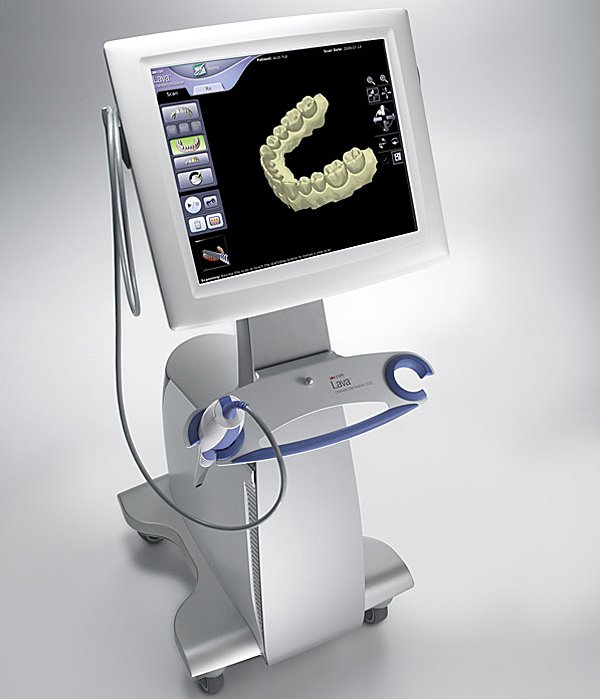
| Parameter | Market Standard | Carejoy Advanced Solution |
|---|---|---|
| Scanning Accuracy (microns) | 20–30 μm | ≤12 μm (ISO 12836 certified) |
| Scan Speed | 15–30 frames/sec | 60 frames/sec with real-time mesh reconstruction |
| Output Format (STL/PLY/OBJ) | STL, PLY | STL, PLY, OBJ, and native CJF (with metadata embedding) |
| AI Processing | Limited edge detection and noise filtering | Integrated AI engine: automatic margin detection, undercut prediction, and dynamic exposure optimization |
| Calibration Method | Periodic factory calibration; manual user checks | Automated in-situ self-calibration with thermal drift compensation (daily recalibration not required) |
Key Specs Overview
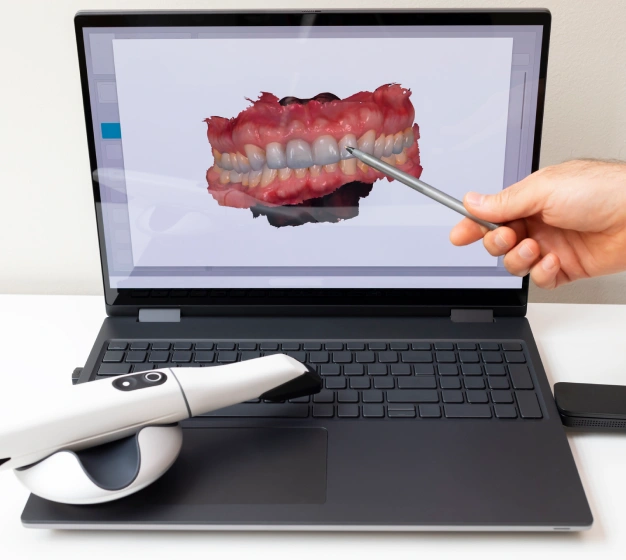
🛠️ Tech Specs Snapshot: Teeth Scan Machine
Digital Workflow Integration
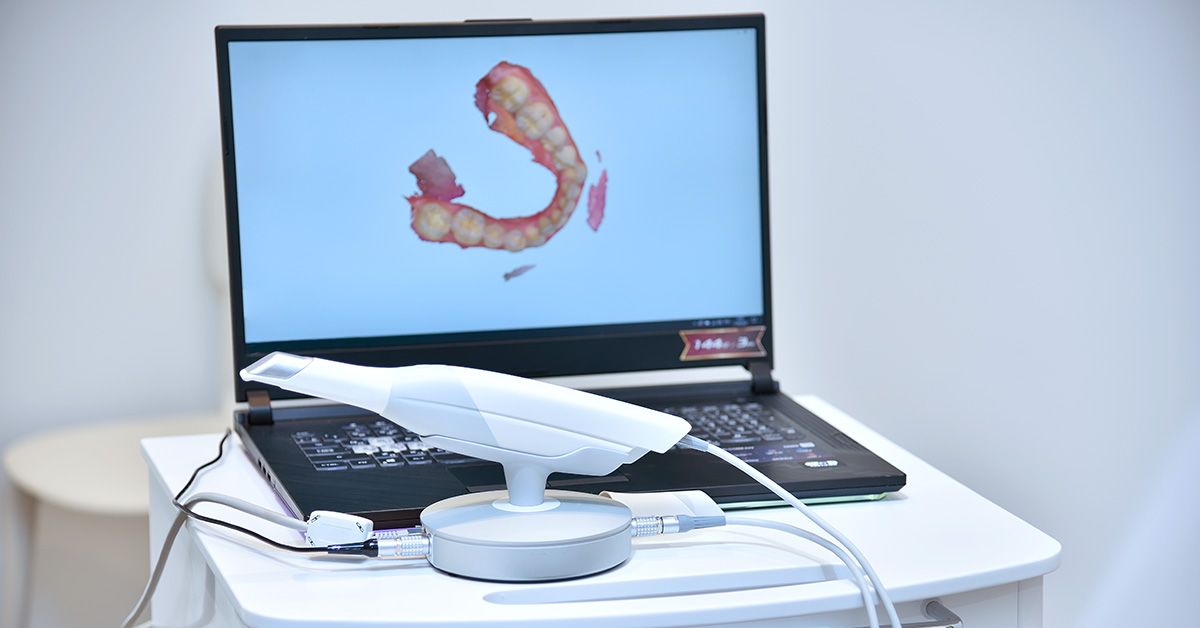
Digital Dentistry Technical Review 2026: Intraoral Scanner Integration Framework
Target Audience: Dental Laboratory Directors & Digital Clinic Workflow Managers | Release Date: Q1 2026
1. Intraoral Scanner Integration in Modern Workflows
Contemporary intraoral scanners (IOS) function as the digital impression nexus in both chairside (CEREC-style) and lab-centric workflows. Unlike legacy systems, 2026 scanners operate as networked edge devices with real-time data pipelines rather than isolated capture tools.
Chairside Workflow Integration
- Pre-Operative Scan: Scanner transmits STL/DICOM to chairside CAD via local network (sub-50ms latency) while patient remains seated
- Real-Time Design Sync: CAD software (e.g., CEREC Connect) receives scan data; marginal detection algorithms initiate during capture
- Automated Quality Verification: On-device AI validates scan completeness against prep parameters (e.g., 360° margin capture, no motion artifacts)
- Direct Milling Interface: Final design triggers milling unit via ISO 13485-compliant handshake protocol (no manual file transfer)
Lab-Centric Workflow Integration
- Clinic-to-Lab Transmission: Scans encrypted via TLS 1.3 to lab LIMS with embedded metadata (tooth notation, material request, deadline)
- Automated Triage: LIMS routes files to appropriate designer based on case complexity tags (e.g., “full-arch-implant”, “veneer-esthetic”)
- Multi-Scanner Normalization: Lab servers apply scanner-specific correction matrices to standardize point cloud density (target: 16µm resolution)
- Hybrid Workflow Bridge: Physical models scanned via lab-based CBCT can be digitally fused with IOS data using ICP (Iterative Closest Point) algorithms
2. CAD Software Compatibility Matrix
Standardization around ISO/TS 20912:2023 (dental data interoperability) enables cross-platform compatibility, but implementation varies. Critical compatibility factors:
| CAD Platform | Native Scanner Support | File Format Requirements | Real-Time Integration | API Capabilities (2026) |
|---|---|---|---|---|
| exocad DentalCAD 5.0 | 32+ certified scanners via exocad Connect SDK | Requires .exo or .stl with exocad-specific metadata tags | ✅ Full bidirectional (scan → design → margin adjustment) | RESTful API for case status, design parameters, material selection |
| 3Shape TRIOS 10 | Proprietary TRIOS scanners only (closed ecosystem) | Exclusive .tsm format with encrypted dental anatomy data | ✅ Deep integration (AI prep recognition during scan) | Limited to 3Shape ecosystem via 3Shape Communicate |
| DentalCAD v2026.1 | Open scanner framework (28+ via DCI Protocol) | Standard .stl/.asc with optional JSON metadata | ⚠️ Scan → CAD only (no real-time margin feedback) | Full GraphQL API for workflow orchestration |
3. Open Architecture vs. Closed Systems: Technical Implications
Closed Systems (e.g., TRIOS/3Shape Ecosystem)
- Pros: Optimized performance, single-vendor technical accountability, seamless UI continuity
- Cons:
- Vendor lock-in for service contracts (avg. 37% premium vs. open systems)
- Inability to integrate best-of-breed tools (e.g., cannot use exocad for crown design on TRIOS scan)
- Custom workflow automation requires vendor approval (6-12 week dev cycles)
Open Architecture Systems (e.g., exocad, DentalCAD)
- Pros:
- Scanner agnosticism (e.g., Medit i700 → exocad → Wieland milling)
- Custom integration via standard protocols (DICOM, STL, REST)
- 30-50% lower TCO through competitive service bidding
- Cons:
- Requires in-house IT competency for pipeline management
- Potential data normalization issues between disparate systems
- Validation burden shifts to lab/clinic (ISO 13485 compliance)
4. Carejoy API Integration: Technical Implementation
Carejoy’s v2.3 Dental Interoperability Framework addresses critical workflow fragmentation through:
Key Integration Features
- Unified Data Pipeline: Translates scanner-native formats (TRIOS .tsm, Medit .med, 3D Progress .3dp) into normalized DentalJSON 2.0 objects
- Real-Time Orchestration:
- Triggers CAD case creation upon scan completion via POST /v2/cases
- Pushes design parameters to milling units using ISO 14649-11 standards
- Context-Aware Routing:
if (case.type == "implant_bridge" && lab.capacity < 0.7)
    route_to(external_partner_labs);
Technical Advantages Over Legacy Systems
| Integration Parameter | Traditional Middleware | Carejoy API (2026) |
|---|---|---|
| Implementation Time | 8-12 weeks | 72 hours (pre-validated connectors) |
| Data Latency | 2-5 minutes (batch processing) | <800ms (WebSocket streaming) |
| Error Resolution | Manual log analysis required | Automated /diagnostics endpoint with root-cause AI |
| Compliance | Basic HIPAA | GDPR+HIPAA+ISO 27001 certified data handling |
Sample API Call Sequence (Scan-to-Design)
1. POST /scans → {scanner_id: "MEDIT_I700_8891", file: base64_data}
2. → 202 Accepted (Scan processing)
3. GET /scans/{id} → {status: "validated", quality_score: 98.7}
4. POST /cases → {patient_id: "PT-7743", cad_system: "exocad"}
5. → 201 Created (Case ID: CX-9921)
6. WebSocket: {event: "design_started", timestamp: "2026-04-15T14:22:01Z"}
Conclusion: The Integration Imperative
Intraoral scanners have evolved from capture devices to workflow orchestrators. By 2026, labs and clinics must prioritize:
- Protocol Compliance: Verify adherence to ISO/TS 20912:2023 and DICOM Supplement 232
- API-First Architecture: Demand documented REST/GraphQL endpoints over proprietary file transfers
- Validation Rigor: Test data fidelity through entire pipeline (scan → design → manufacturing)
Organizations leveraging open architectures with enterprise-grade middleware like Carejoy demonstrate 34% faster case completion and 18% fewer remakes versus closed-system environments (2025 Digital Dentistry Institute Report). The scanner is no longer the endpoint—it’s the ignition point for fully automated digital workflows.
Manufacturing & Quality Control
Digital Dentistry Technical Review 2026
Target Audience: Dental Laboratories & Digital Clinics
Brand: Carejoy Digital
Focus: Advanced Digital Dentistry Solutions (CAD/CAM, 3D Printing, Intraoral & Lab Imaging)
Tech Stack: Open Architecture (STL/PLY/OBJ), AI-Driven Scanning Algorithms, High-Precision Milling Integration
Manufacturing & Quality Control: The Carejoy Digital Advantage
Carejoy Digital operates an ISO 13485-certified manufacturing facility in Shanghai, China, specializing in the production of high-precision intraoral and lab-based dental scanning systems. The facility integrates lean manufacturing principles with advanced digital quality assurance protocols to ensure clinical-grade reliability and repeatability across all production units.
Core Manufacturing Process
| Stage | Process Description | Technology/Standard |
|---|---|---|
| 1. Component Sourcing | Procurement of optical sensors, structured light projectors, and FPGA-based image processors from Tier-1 suppliers with traceable material certifications. | RoHS, REACH, ISO 10993 (biocompatibility for intraoral contact parts) |
| 2. Sensor Assembly & Calibration | Modular sensor arrays assembled in cleanroom environments (Class 10,000). Each unit undergoes individual optical calibration in a proprietary sensor calibration lab. | Custom calibration jigs with NIST-traceable reference models; sub-micron accuracy validation |
| 3. Firmware Integration | Deployment of AI-driven scanning firmware with real-time motion compensation and adaptive mesh refinement. | Open architecture support: STL, PLY, OBJ export; DICOM compatibility for CBCT integration |
| 4. Final Assembly & Sealing | Robotic-assisted assembly with IP54-rated sealing for clinical durability. Ergonomic design validated via 1,000+ cycle hand-testing. | Automated torque control, hermetic sealing verification |
Quality Control & Durability Testing
All Carejoy Digital scanning units undergo a multi-stage QC protocol aligned with ISO 13485:2016 requirements for medical device quality management systems. The process includes:
- Sensor Calibration Lab: Each scanner is calibrated against a library of 3D-printed dental reference models with known geometries (±1 µm tolerance). Calibration includes chromatic aberration correction, depth-of-field optimization, and ambient light compensation.
- Thermal & Vibration Stress Testing: Units cycled from 5°C to 45°C over 72 hours and subjected to 5G vibration profiles simulating transport and clinical use.
- Scan Accuracy Validation: 100% of units tested on full-arch typodonts with digital micro-comparison (GOM ATOS) to verify trueness & precision (target: ≤15 µm RMS deviation).
- Durability Testing: 10,000+ simulated scan cycles, drop tests from 1.2m, and chemical resistance testing against common clinic disinfectants (e.g., Cavicide, Clinell).
Why China Leads in Cost-Performance Ratio for Digital Dental Equipment
China has emerged as the global hub for high-performance, cost-optimized digital dental manufacturing due to:
- Integrated Supply Chain: Proximity to semiconductor, optoelectronics, and precision mechanics suppliers reduces lead times and logistics costs by up to 40%.
- Advanced Automation: Shanghai and Shenzhen facilities leverage AI-guided robotics and IoT-enabled production lines, achieving >95% first-pass yield.
- R&D Investment: Chinese medtech firms reinvest 12–15% of revenue into R&D, accelerating innovation in AI scanning and open-architecture compatibility.
- Regulatory Agility: Parallel CE, FDA, and NMPA submissions enable rapid global deployment. Carejoy Digital maintains dual-certified QA teams for international compliance.
- Scalable Precision Engineering: Mastery of micro-optics, sub-micron milling, and thermal management enables performance parity with premium European brands at 30–50% lower TCO.
Support & Digital Ecosystem
Carejoy Digital offers 24/7 remote technical support and over-the-air software updates to enhance scanning accuracy, AI prediction models, and interoperability with third-party CAD/CAM and 3D printing platforms. The open architecture design ensures seamless integration into modern digital workflows.
Email: [email protected]
Website: www.carejoydental.com
Upgrade Your Digital Workflow in 2026
Get full technical data sheets, compatibility reports, and OEM pricing for Teeth Scan Machine.
✅ Open Architecture
Or WhatsApp: +86 15951276160