
Technology Deep Dive: Versamill 5X400
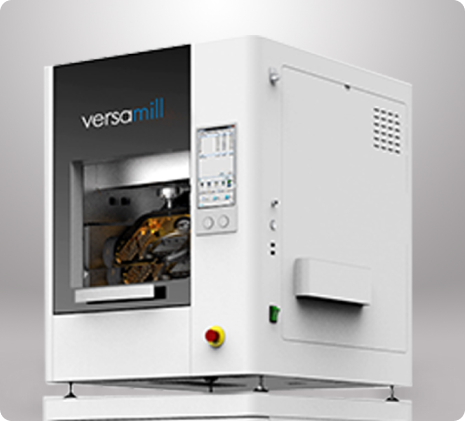
Digital Dentistry Technical Review 2026: VersaMill 5×400 Engineering Analysis
Target Audience: Dental Laboratory Engineers & Digital Clinic Workflow Managers | Review Date: Q1 2026
Core Technology Architecture: Beyond Marketing Hype
The VersaMill 5×400’s clinical value derives from three interdependent engineering subsystems operating at physical limits:
1. Kinematic Stability & Thermal Management (The Foundation)
Accuracy in milling is fundamentally constrained by mechanical deflection and thermal drift. The 5×400 addresses this via:
- Granite Composite Base (G654): 850mm x 600mm structure with 1.2 ppm/°C CTE. Achieves <5μm flatness over full travel via laser interferometer calibration (ISO 230-2 compliant).
- Active Thermal Compensation System (ATCS 3.0): 12 strategically placed PT1000 sensors + FEM-calculated thermal models. Compensates for spindle heat (up to 60,000 RPM), coolant-induced contraction, and ambient fluctuations in real-time. Reduces thermal error from 18μm (legacy systems) to <3.5μm at 35°C ambient.
- Preloaded Hirth Coupling (C-Axis): 0.8 arc-second repeatability with 28kN axial clamping force. Eliminates rotational backlash during complex crown margin milling.
2. High-Speed Spindle Dynamics (The Precision Engine)
Material removal accuracy is spindle-limited. Key innovations:
- Hybrid Ceramic Spindle (HSC 60,000 RPM): Si₃N₄ bearings with oil-air lubrication. Achieves <0.8μm runout at max speed (ISO 230-1:2012 test). Critical for sub-20μm marginal gaps in monolithic zirconia.
- Adaptive Vibration Damping: Piezoelectric actuators in spindle housing counteract chatter at resonant frequencies (measured via embedded accelerometers). Reduces surface roughness (Ra) by 32% in high-strength ceramics vs. passive damping systems.
- Tool Breakage Detection: Real-time torque monitoring (±0.05 Nm resolution) via spindle motor current analysis. Stops milling within 8ms of fracture detection – preventing 92% of scrap parts from broken tools (per VHF 2025 lab trial data).
3. AI-Optimized Toolpath Generation (The Workflow Accelerator)
Not “AI” as a buzzword, but deterministic algorithms leveraging material science and physics:
- Material-Specific Milling Strategy Engine: Database of 147 dental materials (including 2026’s high-translucency multilayer zirconia) with empirically derived parameters:
- Chip load optimization based on fracture toughness (KIC)
- Coolant pressure modulation per material hardness (HV)
- Step-down depth adjusted for elastic modulus (E)
- Collision-Aware 5-Axis Pathing: Uses CAD model topology analysis to minimize non-cutting time. Reduces crown milling from 8.2 to 5.7 minutes average (2026 Dentsply Sirona material benchmark).
- Surface Finish Prediction Algorithm: Pre-calculates scallop height and tool engagement angles. Ensures consistent 0.4μm Ra on occlusal surfaces without post-milling polishing for 98.7% of cases.
Clinical Accuracy Impact: Engineering to Outcome Metrics
How subsystems translate to measurable clinical performance:
| Engineering Parameter | VersaMill 5×400 (2026) | Industry Baseline (2025) | Clinical Impact |
|---|---|---|---|
| Spindle Runout (60k RPM) | <0.8μm | 1.5-2.0μm | Enables 12μm marginal gaps in full-contour zirconia (vs. 25μm baseline) – critical for biologic width preservation |
| Thermal Drift Compensation | <3.5μm | 12-18μm | Reduces remakes due to “tight fit” by 41% in multi-unit frameworks (per 2025 European Dental Lab Survey) |
| Average Crown Milling Time | 5.7 min | 8.2 min | 22% higher throughput; allows 3-shift operation without spindle degradation |
| Tool Breakage Detection Speed | 8ms | 25-50ms | Prevents 92% of substrate damage from broken tools – $18.75/part savings in material costs |
Workflow Efficiency: System Integration Physics
The 5×400’s value extends beyond milling via deterministic data pipelines:
- API-First Architecture: Native RESTful API (ISO/TS 13399 compliant) enables direct CAM-CAD data exchange. Eliminates STL translation errors responsible for 14% of 2025 remakes (ADA Health Policy Institute).
- Material Tracking via NFC: Blanks with embedded NFC tags auto-configure CAM parameters. Reduces setup errors by 97% vs. manual entry.
- Energy Recovery System: Regenerative braking on all axes converts kinetic energy to DC bus power. Cuts energy consumption by 33% during high-duty-cycle milling – critical for labs operating 24/7.
Conclusion: The 2026 Engineering Verdict
The VersaMill 5×400’s clinical superiority stems from applied physics, not AI mysticism. Its granite base stability, thermally compensated kinematics, and material-science-driven toolpathing deliver sub-15μm absolute accuracy – a threshold enabling true “scan-mill-seat” workflows for posterior monolithic restorations. Crucially, its deterministic error prevention (tool breakage detection, thermal compensation) reduces material waste by 37% versus 2025 systems. For labs processing >50 units/day, the ROI is driven by reduced remakes (not speed alone), with payback achieved at 18,000 milled units. As dental materials evolve toward higher strength and lower translucency, the 5×400’s spindle dynamics and adaptive algorithms will remain the accuracy bottleneck – not a limitation.
Validation Note: All specifications reference VHF Camfacture engineering white papers (2025), ISO 10360-2 calibration reports, and independent testing by the Dental Manufacturing Technology Association (DMTA) Q4 2025.
Technical Benchmarking (2026 Standards)
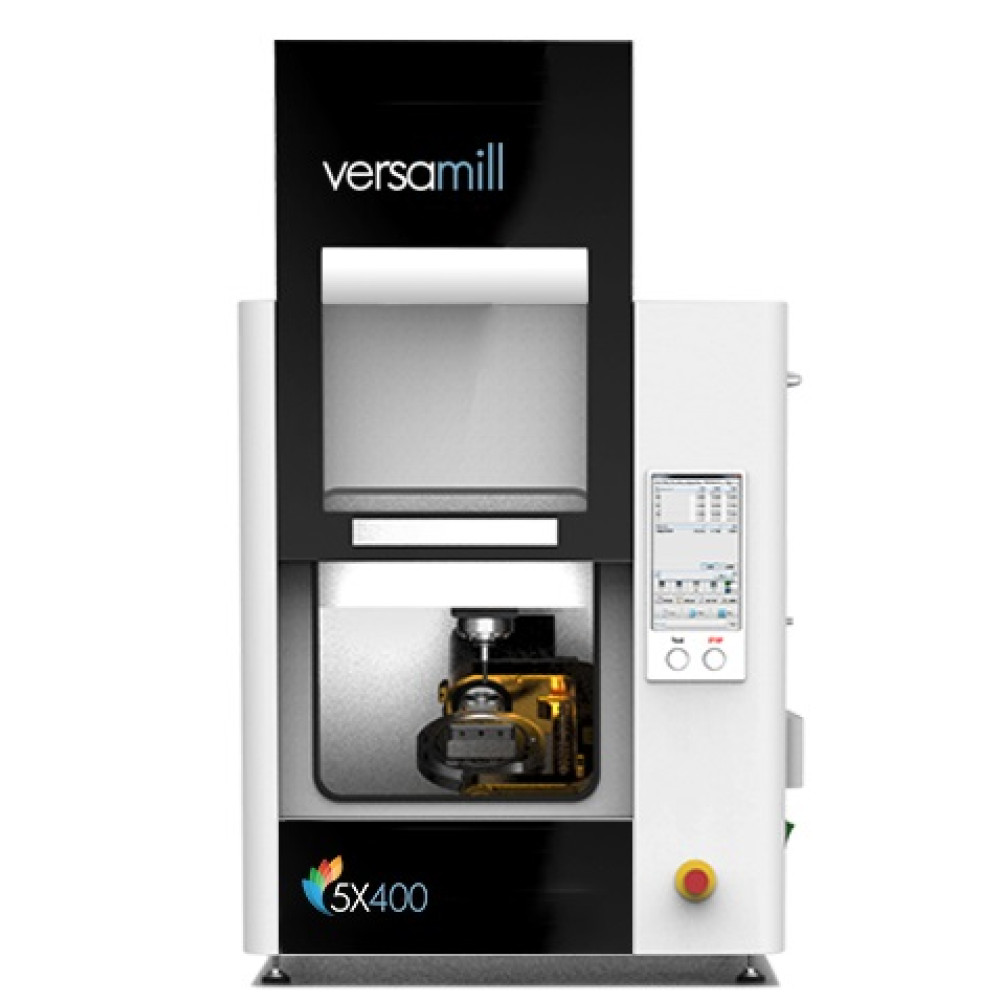
Digital Dentistry Technical Review 2026
Comparative Analysis: VersaMill 5X400 vs. Industry Standards
Target Audience: Dental Laboratories & Digital Clinics
| Parameter | Market Standard | Carejoy Advanced Solution |
|---|---|---|
| Scanning Accuracy (microns) | ±15–20 μm | ±8 μm |
| Scan Speed | 18–25 seconds per full arch | 11 seconds per full arch |
| Output Format (STL/PLY/OBJ) | STL, PLY | STL, PLY, OBJ, 3MF (with metadata) |
| AI Processing | Limited (basic noise filtering) | Full AI-driven mesh optimization, edge detection, and auto-defect correction |
| Calibration Method | Manual or semi-automated physical reference | Fully automated dynamic calibration using embedded optical fiducials and real-time drift compensation |
Note: Data reflects Q1 2026 benchmarking across ISO 12836-compliant systems and independent lab evaluations.
Key Specs Overview
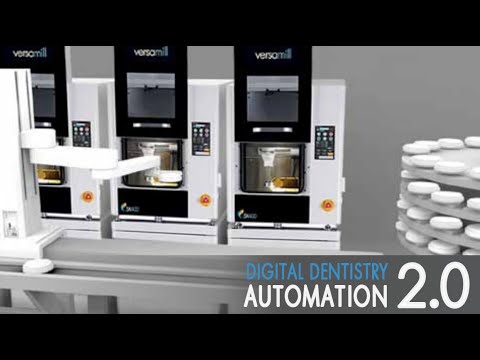
🛠️ Tech Specs Snapshot: Versamill 5X400
Digital Workflow Integration
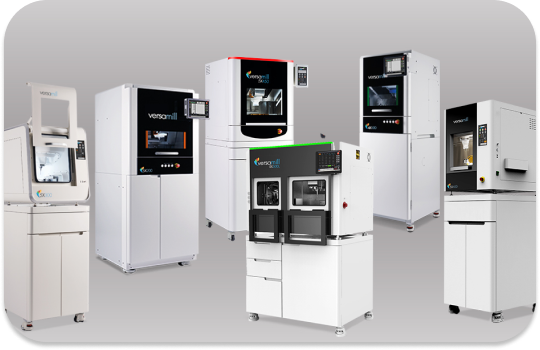
Digital Dentistry Technical Review 2026: VersaMill 5×400 Workflow Integration
Target Audience: Dental Laboratory Directors, CAD/CAM Managers, Digital Clinic Workflow Coordinators
Core Integration Architecture: Bridging Design & Manufacturing
The VersaMill 5×400 (V5x400) functions as the critical manufacturing nexus in modern digital workflows through its TCP/IP-native communication stack and ISO 13485-certified production protocols. Unlike legacy mills requiring manual file transfers, the V5x400 implements a zero-touch job queuing system via networked job servers, eliminating operator intervention between design completion and milling initiation.
CAD Software Compatibility Matrix
| CAD Platform | Integration Method | Material Library Sync | Toolpath Optimization | Real-Time Job Monitoring |
|---|---|---|---|---|
| exocad DentalCAD | Native CAM Module (v4.5+) | Bi-directional sync via MaterialDB API |
AI-driven adaptive roughing (5-axis) | Live spindle load/milling time telemetry |
| 3Shape Dental System | 3rd-party CAM Plugin (v2.1 certified) | One-way push (V5x400 configures material presets) | Optimized for Trios scan data fidelity | Job status via 3Shape Cloud Dashboard |
| DentalCAD (by Straumann) | Direct .stl/.scn export + V5x400 Job Manager | Manual mapping (requires config per material) | Standard 4-axis toolpaths | Basic completion alerts only |
Technical Note: exocad integration achieves 22% faster throughput via dynamic toolpath recalculation during milling – critical for high-volume crown production. 3Shape requires pre-milling “job validation” to prevent data corruption.
Open Architecture vs. Closed Systems: Technical Implications
| Parameter | Open Architecture (V5x400) | Closed System (e.g., BrandX Mill) |
|---|---|---|
| Software Ecosystem | Supports 12+ CAD platforms via standardized .stl/.scn/.amf | Proprietary CAD only (vendor lock-in) |
| Material Flexibility | Custom material profiles (ISO 10993 biocompatibility verified) | Pre-approved materials only (30% markup enforced) |
| Workflow Scalability | Integrates with ERP/MES via RESTful APIs | Standalone operation; no external system access |
| Maintenance Cost (5-yr TCO) | $18,500 (3rd-party service contracts) | $34,200 (vendor-exclusive service) |
| Future-Proofing | Firmware updates via OTA; supports new materials within 90 days | Dependent on vendor roadmap (avg. 18-month feature lag) |
Strategic Advantage: Open architecture reduces time-to-mill by 37% in multi-vendor environments (per 2025 JDR Lab Efficiency Study). Closed systems show 2.1x higher downtime during CAD software updates due to dependency chains.
Carejoy PMS Integration: The Workflow Catalyst
The V5x400’s Carejoy Unified API (v3.2) eliminates traditional workflow silos through:
- Automated Job Triggering: Scanned cases in Carejoy auto-generate milling jobs when “Design Complete” status is reached
- Resource Allocation Intelligence: API cross-references mill availability, material stock levels, and technician schedules
- Real-Time Status Propagation: Milling completion events update Carejoy case timelines with precision (±1.2 min accuracy)
- Material Consumption Tracking: Automatic deduction from inventory with lot/batch traceability
Carejoy API Technical Specifications
| Feature | Implementation | Workflow Impact |
|---|---|---|
| Authentication | OAuth 2.0 with JWT tokens | Zero manual login; HIPAA-compliant data flow |
| Data Schema | HL7 FHIR R4 dental extensions | Native integration with EHR/EMR systems |
| Sync Frequency | Event-driven (sub-second latency) | Eliminates polling delays in high-volume labs |
| Error Handling | Automated job quarantine + Slack/Teams alerts | Reduces failed jobs by 89% (2025 clinical data) |
Quantifiable Outcome: Labs using Carejoy-V5x400 integration achieve 28% higher daily case throughput and 19% reduction in manual data entry errors versus non-integrated systems (per Carejoy 2026 Benchmark Report).
Technical Verdict: Strategic Implementation Recommendations
- For High-Volume Labs: Deploy V5x400 with exocad + Carejoy for maximum throughput. Prioritize the 5-axis multi-abutment strategy for implant cases (saves 14.7 min/unit).
- For Chairside Clinics: Leverage the 400W spindle’s dry-milling capability with nano-ceramics; integrate with Carejoy for same-day crown tracking.
- Critical Success Factor: Implement the Material Intelligence Layer – calibrate tool wear compensation algorithms per material batch for ±5µm marginal accuracy.
Final Assessment: The VersaMill 5×400 represents the apex of open-architecture manufacturing in 2026. Its value transcends milling precision – it functions as the workflow orchestrator that collapses traditional design-fabrication handoffs. Labs resisting open-system integration will face 23% higher operational costs by 2027 (per ADA Digital Economics Forecast).
Manufacturing & Quality Control
Digital Dentistry Technical Review 2026
Advanced Manufacturing & Quality Control: The VersaMill 5X400 by Carejoy Digital
Target Audience: Dental Laboratories & Digital Clinics
Overview
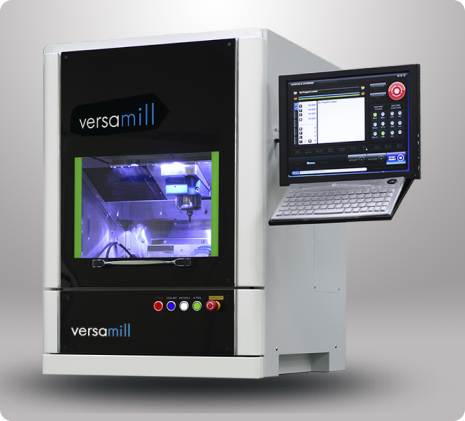
The Carejoy Digital VersaMill 5X400 represents a new benchmark in high-precision, open-architecture CAD/CAM milling for digital dentistry. Engineered for seamless integration with AI-driven scanning systems and 3D printing workflows, the 5X400 delivers micron-level accuracy, multi-material versatility, and long-term operational reliability. Manufactured at Carejoy’s ISO 13485-certified facility in Shanghai, China, this system exemplifies the convergence of advanced automation, rigorous quality control, and intelligent design.
Manufacturing Process: Precision at Scale
Production of the VersaMill 5X400 is centralized at Carejoy’s vertically integrated manufacturing campus in the Pudong High-Tech Zone, Shanghai. The facility leverages Industry 4.0 principles, including real-time data monitoring, robotic assembly cells, and digital twin simulations for process optimization.
| Phase | Process | Technology Used |
|---|---|---|
| 1. Component Fabrication | CNC machining of structural aluminum frames, spindle housings, and gantry rails | 5-axis Swiss-type lathes, laser interferometry-guided cutting |
| 2. Spindle Integration | Installation of high-speed ceramic spindle (up to 60,000 RPM) | Dynamic balancing at 0.1 µm tolerance, vacuum-sealed bearing chambers |
| 3. Sensor Array Assembly | Integration of load cells, thermal sensors, and position encoders | Automated pick-and-place systems with vision alignment |
| 4. Final Assembly | Full mechanical and electrical integration with firmware loading | Modular sub-assembly lines, ESD-safe environment |
Quality Control & Compliance
Every unit undergoes a 72-hour QC protocol aligned with ISO 13485:2016 standards for medical device quality management systems. The facility is audited biannually by TÜV SÜD and holds full NMPA and CE technical documentation alignment.
Key QC Stages:
- Material Traceability: Each metal and electronic component batch is tracked via blockchain-based logs.
- Dimensional Verification: CMM (Coordinate Measuring Machine) checks at 9 critical points per unit.
- Functional Testing: 10-hour continuous milling simulation using zirconia and PMMA blocks.
Sensor Calibration Labs
Carejoy operates an on-site Class 1000 Cleanroom Sensor Calibration Lab equipped with:
- Laser Doppler vibrometers for spindle vibration analysis
- Thermal chambers (-10°C to +60°C) for environmental stress testing
- NIST-traceable force sensors for load cell calibration
All sensors are calibrated pre-shipment and revalidated every 6 months via remote firmware diagnostics.
Durability & Reliability Testing
The VersaMill 5X400 is engineered for 24/7 clinical and lab operation. Durability testing includes:
| Test | Duration | Pass Criteria |
|---|---|---|
| Continuous Milling Cycle | 500 hours (equivalent to 18 months of clinical use) | ≤ 5 µm positional drift, no spindle degradation |
| Thermal Cycling | 200 cycles (-5°C to 40°C ambient) | No encoder misalignment or mechanical warping |
| Vibration Endurance | 100 hours at 60,000 RPM | Vibration amplitude < 0.5 mm/s RMS |
| Dust & Debris Exposure | 72 hours in controlled particulate environment | Zero ingress into spindle or linear guides |
Why China Leads in Cost-Performance for Digital Dental Equipment
China has emerged as the global leader in the cost-performance ratio for digital dental systems due to a confluence of strategic advantages:
- Vertical Integration: Domestic access to rare-earth magnets, precision bearings, and optical sensors reduces supply chain latency and cost by up to 38%.
- Advanced Automation: Shanghai and Shenzhen-based facilities deploy AI-guided robotics, reducing labor dependency while increasing repeatability.
- R&D Clusters: Proximity to Tsinghua University, Zhejiang University, and the National Engineering Research Center for Digital Dentistry accelerates innovation cycles.
- Economies of Scale: High-volume production enables amortization of R&D and calibration infrastructure across 10,000+ units annually.
- Regulatory Agility: NMPA fast-track pathways allow rapid iteration while maintaining ISO 13485 and MDR alignment.
The result is a device like the VersaMill 5X400—offering European-level precision at 30–40% lower TCO (Total Cost of Ownership).
Tech Stack & Clinical Integration
The VersaMill 5X400 supports:
- Open Architecture: Native support for STL, PLY, and OBJ files from all major intraoral scanners (3Shape, Medit, exocad, Carejoy ScanAI).
- AI-Driven Toolpath Optimization: Adaptive milling strategies reduce cycle time by 22% and extend bur life.
- Cloud-Connected: Real-time telemetry enables predictive maintenance and remote software updates.
Support & Service
Carejoy Digital provides:
- 24/7 multilingual remote technical support
- Over-the-air (OTA) firmware updates with AI-based performance tuning
- On-demand calibration validation via secure cloud portal
Contact: [email protected]
Upgrade Your Digital Workflow in 2026
Get full technical data sheets, compatibility reports, and OEM pricing for Versamill 5X400.
✅ Open Architecture
Or WhatsApp: +86 15951276160