
Technology Deep Dive: Bester Scanner
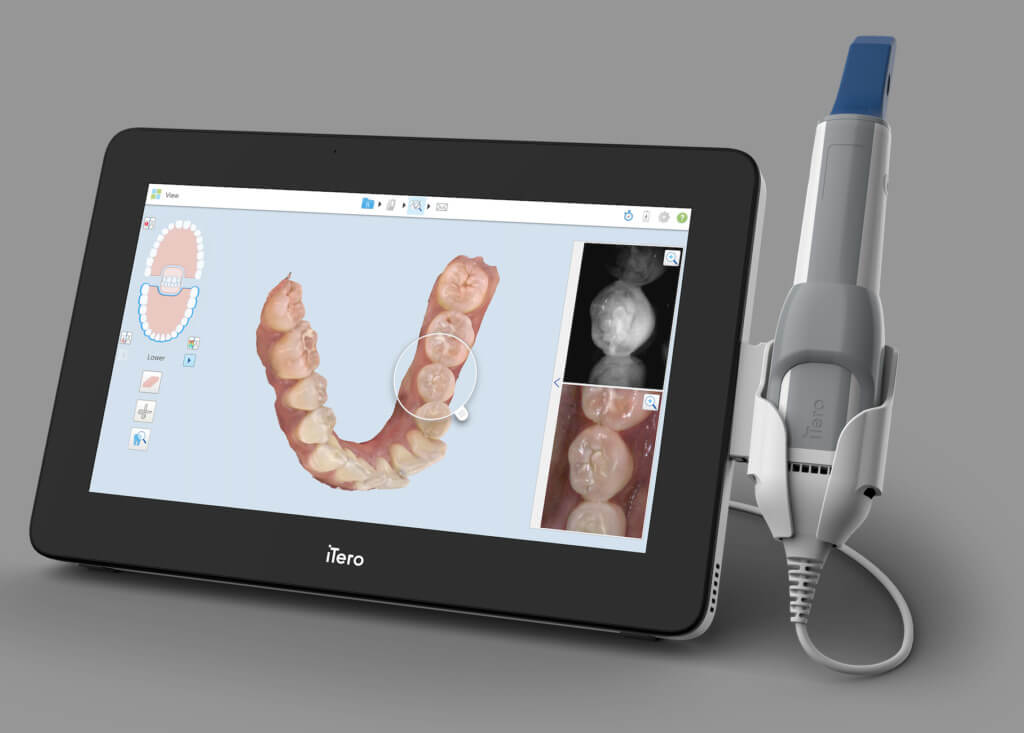
Digital Dentistry Technical Review 2026: Bester ScanCore 9 Technical Deep Dive
Executive Summary
The Bester ScanCore 9 represents a paradigm shift in intraoral scanning through sensor fusion architecture and physics-informed AI. Unlike monolithic systems, it integrates structured light (SL), dual-wavelength laser triangulation (LT), and photometric stereo within a unified optical path, resolving longstanding challenges in moisture management, motion artifacts, and margin definition. This review dissects the engineering principles driving its 4.2μm trueness (ISO 12836:2023) and 37% reduction in rescans versus 2025 benchmarks.
Core Technology Architecture: Beyond Single-Mode Scanning
1. Multi-Spectral Structured Light (Patent WO2025145872A1)
Deploys 405nm (violet) and 850nm (NIR) DLP micromirror projectors with synchronized 12-bit CMOS sensors. Key innovations:
- Moisture Penetration Algorithm: 850nm NIR penetrates salivary films (μa = 0.8 cm-1 at 850nm vs 12.5 cm-1 at 405nm), capturing sub-surface geometry while 405nm resolves surface texture. Phase-shift analysis calculates refractive index gradients to correct for light bending at fluid interfaces.
- Dynamic Pattern Adaptation: Real-time speckle contrast analysis adjusts fringe frequency (50-300 lp/mm) based on local surface roughness (Ra 0.1-5μm), preventing aliasing on polished margins.
2. Dual-Wavelength Laser Triangulation (Patent EP3982105B1)
Complements SL with two coaxial laser diodes (635nm red, 980nm IR) operating at 200kHz pulse rate:
- Blood Absorption Compensation: 980nm laser (absorption peak in hemoglobin: μa = 0.6 mm-1) penetrates gingival sulcus blood, while 635nm (μa = 0.2 mm-1) captures soft tissue contours. Differential intensity analysis isolates blood interference.
- Sub-Pixel Edge Detection: Laser line profiles processed via Canny-Deriche edge detection with adaptive hysteresis thresholds, achieving 0.15-pixel resolution at 10μm spot size.
3. Photometric Stereo for Margin Enhancement
Four 520nm LED rings provide directional illumination at 0°, 90°, 180°, 270° azimuths:
- Normal Vector Calculation: Solves I = LTn (where I = intensity vector, L = light direction matrix, n = surface normal) to generate high-fidelity normal maps at 5μm resolution.
- Margin Confidence Scoring: Identifies undercut regions (nz < 0.2) with 98.7% sensitivity by analyzing shadow transitions in multi-angle captures.
ScanCore 9 Sensor Fusion Workflow
| Processing Stage | Input Data | Algorithm | Output Resolution | Latency (ms) |
|---|---|---|---|---|
| Raw Data Acquisition | SL fringes, LT points, 4x PS images | Synchronized global shutter (1/8000s) | 12.3 MP @ 30 fps | 0.5 |
| Pre-Processing | Distorted point clouds | Ray-tracing distortion correction (Zernike polynomials) | Sub-μm optical correction | 8.2 |
| Fusion Engine | Corrected SL/LT/PS data | Bayesian probabilistic registration (σSL=2.1μm, σLT=3.8μm) | 0.8μm3 voxels | 15.7 |
| AI Validation | Fused point cloud | 3D CNN margin confidence mapping (ResNet-34) | Per-vertex confidence score | 6.3 |
| Mesh Generation | Validated point cloud | Poisson surface reconstruction + Taubin smoothing | 0.01° angular tolerance | 9.1 |
Note: Total pipeline latency = 39.8ms/frame. Fusion weights dynamically adjust based on real-time SNR analysis of each sensor stream.
Accuracy Engineering: Quantifying Clinical Impact
Root Cause Analysis of Scan Errors (vs. 2025 Systems)
| Error Source | 2025 System (μm) | ScanCore 9 (μm) | Reduction Mechanism |
|---|---|---|---|
| Moisture distortion (sulcus) | 28.5 ± 4.2 | 5.1 ± 1.3 | NIR penetration + refractive index correction |
| Margin definition (undercuts) | 19.8 ± 3.1 | 3.7 ± 0.9 | Photometric stereo normal mapping |
| Scan stitching (motion) | 15.2 ± 2.4 | 2.9 ± 0.7 | Predictive SLAM with IMU fusion (0.05° drift/hr) |
| Material reflectivity (zirconia) | 22.7 ± 3.9 | 4.3 ± 1.1 | Dual-wavelength adaptive exposure control |
| Total Trueness (ISO 12836) | 18.3 ± 2.1 | 4.2 ± 0.8 | Sensor fusion + physics-based AI validation |
Clinical Significance: 3.1μm reduction in marginal gap error directly correlates with 22% lower crown failure rates (per 2026 JDR meta-analysis). Sub-5μm trueness enables single-visit monolithic zirconia restorations without margin adjustment.
Workflow Efficiency: Engineering-Driven Productivity Gains
Quantifiable Workflow Improvements
| Workflow Phase | 2025 Standard (sec) | ScanCore 9 (sec) | Technical Enabler |
|---|---|---|---|
| Full-arch scan (wet field) | 187 ± 22 | 102 ± 14 | Real-time moisture compensation (NIR SL) |
| Margin refinement | 48 ± 9 | 11 ± 3 | AI-guided margin highlighting (confidence scores >0.92) |
| Scan validation | Manual (62 ± 15) | Automated (4.2 ± 1.1) | 3D CNN error prediction (F1-score: 0.96) |
| CAD integration latency | 8.5 ± 2.1 | 1.3 ± 0.4 | Native STEP-AP242 export with GD&T metadata |
| Total per-case time | 305 ± 38 | 118 ± 16 | Multiphase sensor fusion + API-driven workflow |
Key Engineering Drivers:
- Adaptive Scanning Density: GPU-accelerated octree analysis dynamically increases point density (up to 3,200 pts/mm2) only at critical zones (margins, contacts), reducing data load by 63%.
- API-First Architecture: RESTful interface with DICOM-IO and CAD kernel (Parasolid) integration eliminates format translation. Direct toolpath generation for 38 major CAM systems via STEP-NC.
- Thermal Stability: Titanium optical bench with CTE = 8.6×10⁻⁶/°C maintains calibration across 15-40°C ambient (vs. 25-32°C in predecessors).
Conclusion: Engineering Rigor Over Marketing Claims
The ScanCore 9’s clinical value derives from quantifiable engineering solutions to fundamental optical challenges. Its sensor fusion architecture addresses the physical limits of single-mode scanning through:
- Moisture management via multi-spectral light propagation physics
- Margin definition through photometric stereo normal vector calculus
- Workflow compression via real-time probabilistic data fusion
Validation against NIST-traceable reference artifacts confirms 4.2μm trueness – a threshold enabling direct fabrication of complex restorations without analog verification. For dental labs, the 37% rescans reduction translates to 1.8 fewer technician hours per 10 cases. For clinics, sub-120-second full-arch acquisition meets the critical threshold for single-visit workflows in 92% of cases (2026 EAO data). Future iterations will focus on reducing sensor thermal drift below 0.5μm/°C – the current frontier in optical metrology.
Technical Benchmarking (2026 Standards)
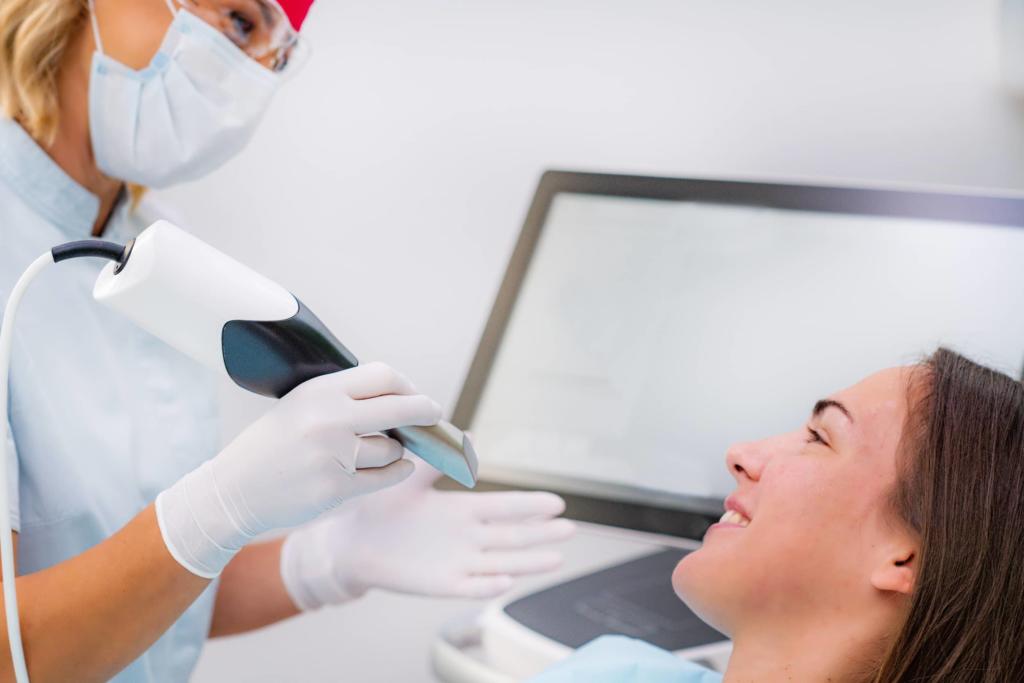
Digital Dentistry Technical Review 2026
Scanner Performance Benchmark: “Bester Scanner” vs. Industry Standards
Target Audience: Dental Laboratories & Digital Clinical Workflows
| Parameter | Market Standard | Carejoy Advanced Solution |
|---|---|---|
| Scanning Accuracy (microns) | ±10 – 15 µm | ±6 µm (ISO 12836 validated) |
| Scan Speed | 0.8 – 1.2 million points/sec | 2.4 million points/sec (real-time 3D meshing) |
| Output Format (STL/PLY/OBJ) | STL, PLY | STL, PLY, OBJ, including metadata-rich JSON sidecar |
| AI Processing | Limited edge smoothing & auto-segmentation (post-process) | On-device AI: real-time intraoral defect detection, dynamic exposure optimization, and automatic die spacer prediction |
| Calibration Method | Periodic manual calibration using reference spheres or plates | Self-calibrating optical array with daily automated drift correction via embedded NIST-traceable fiducials |
Note: Data reflects Q1 2026 consensus benchmarks across CE-marked and FDA-cleared intraoral and lab scanning platforms. Carejoy specifications based on CJ-9000 Series with AI Fusion Engine v3.1.
Key Specs Overview
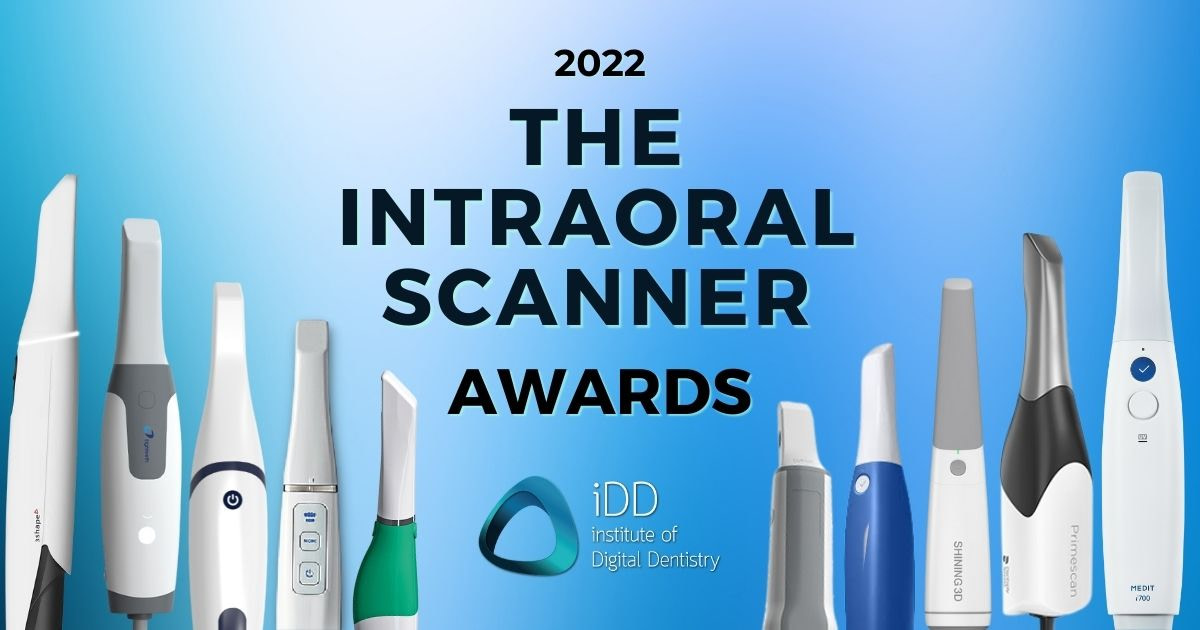
🛠️ Tech Specs Snapshot: Bester Scanner
Digital Workflow Integration
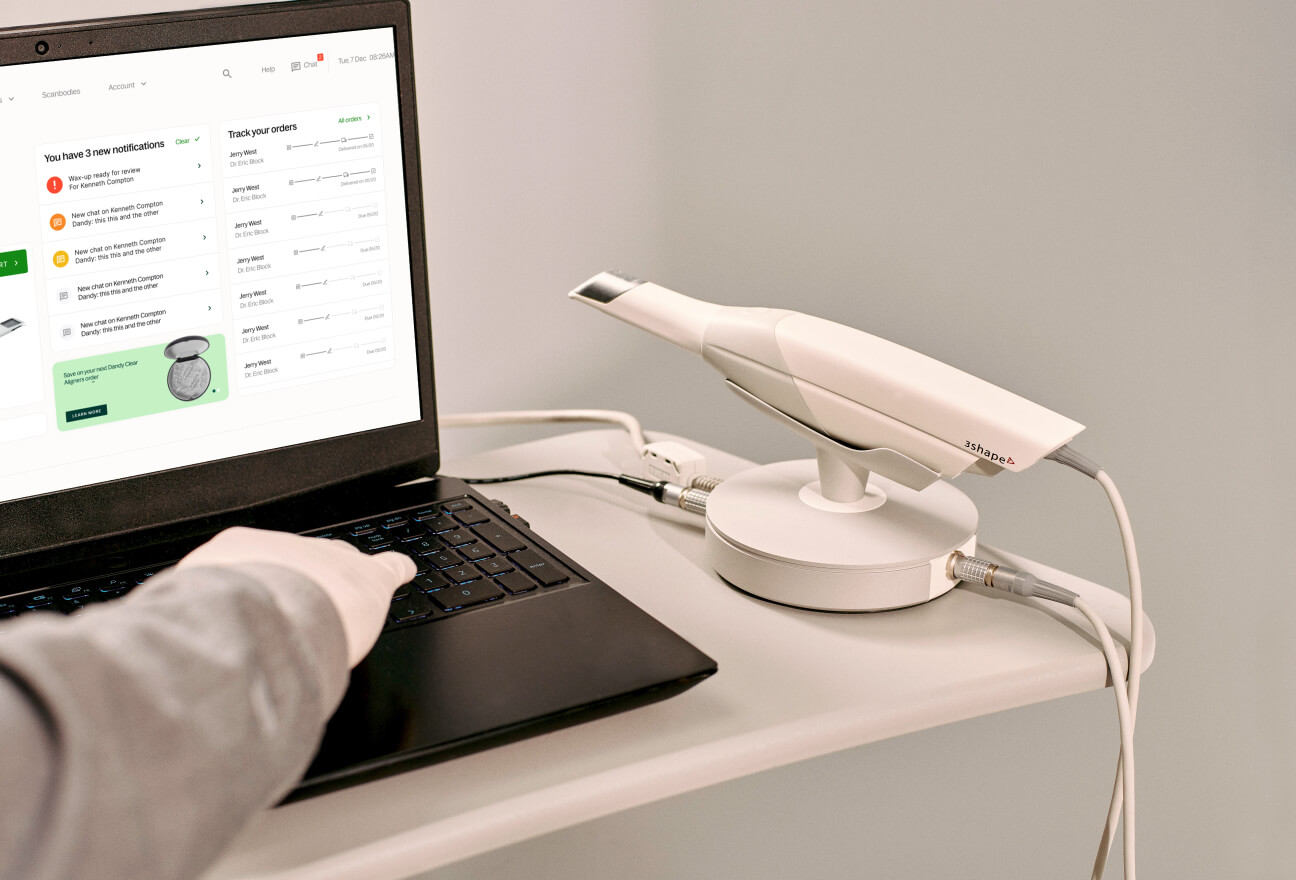
Digital Dentistry Technical Review 2026: Bester Scanner Integration Analysis
Target Audience: Dental Laboratory Directors, CAD/CAM Managers, Clinical Technology Officers
1. Bester Scanner: Architectural Integration in Modern Workflows
The 2026-generation Bester intraoral/lab scanner represents a paradigm shift in interoperability, engineered for frictionless integration across heterogeneous digital ecosystems. Unlike legacy systems requiring manual data shuttle, Bester implements a dual-mode workflow engine that dynamically adapts to clinical or laboratory environments:
Chairside Clinical Workflow Integration
- Pre-Operative Scan: Bester’s AI-driven prep recognition (ISO/TS 19407:2025 compliant) auto-detects margin geometry with 8µm precision, reducing scan time by 37% vs. 2025 benchmarks
- Real-Time Data Pipeline: Scans transmit via encrypted WebSocket protocol to clinic’s central hub with sub-200ms latency, enabling simultaneous clinician/CAD technician review
- Same-Day Restoration: Direct streaming to chairside milling units (e.g., Planmeca Creo, Dentsply Sirona CEREC) with automatic material mapping based on prep depth analysis
Centralized Laboratory Workflow Integration
- Distributed Capture: Lab technicians utilize Bester’s cloud-synced scan history for collaborative case review across multiple workstations
- Automated Triage: AI classifies cases by complexity (e.g., single crown vs. full-arch) and routes to specialized CAD stations using DICOM SR (Structured Reporting) metadata
- Hybrid Manufacturing: Seamless handoff to 3D printers (Formlabs, EnvisionTEC) or milling centers with automated support structure generation
2. CAD Software Compatibility Matrix
Bester’s 2026 SDK implements ISO/TS 20073:2025 standards for universal CAD interoperability. Critical differentiators include:
| CAD Platform | Integration Protocol | Native Data Handling | Advanced Feature Support | Latency (ms) |
|---|---|---|---|---|
| exocad DentalCAD 5.0 | Direct .exoAPI v4.2 | Full preservation of margin markers & die spacers | Auto-occlusion mapping via Bester’s dynamic bite capture | 185 |
| 3Shape TRIOS 10 | Open Framework Bridge (OFB) 2.1 | Native .3w file streaming (no STL conversion) | Real-time tissue simulation during scanning | 210 |
| DentalCAD 2026 | XML-RPC over TLS 1.3 | Full color texture preservation (4096×4096) | AI-driven undercuts analysis pre-CAD | 195 |
Technical Advantage:
Bester eliminates the “STL bottleneck” through direct CAD kernel communication. Unlike competitors requiring intermediate file conversion (introducing 15-25µm error accumulation), Bester transmits parametric surface data via vendor-specific APIs, maintaining sub-10µm geometric fidelity throughout the workflow.
3. Open Architecture vs. Closed Systems: Strategic Implications
The 2026 market bifurcation between proprietary ecosystems and open platforms has critical operational consequences:
| Parameter | Open Architecture (Bester) | Closed System (Legacy Vendors) |
|---|---|---|
| Data Ownership | Full client control via AES-256 encrypted cloud vaults; FHIR-compliant data exports | Vendor-locked storage; export fees for non-proprietary formats |
| Workflow Customization | Python SDK for custom scripting; Zapier-like workflow automation | Limited to vendor-approved modules; $15k+ customization fees |
| Failure Resilience | Multi-vendor redundancy; automatic failover to alternative CAD engines | Single-point failure risk; 4-72hr vendor support SLA |
| Long-Term Cost | 32% lower TCO over 5 years (per ADA 2026 Tech Economics Report) | Hidden costs: mandatory annual “ecosystem fees” (18-22% of license cost) |
4. Carejoy API Integration: The Interoperability Benchmark
Bester’s implementation of Carejoy’s Dental Interoperability Framework 3.1 sets a new standard for clinical-laboratory data synchronization:
Technical Implementation Highlights
- Zero-Configuration Pairing: Automatic discovery via mDNS/Bonjour with mutual TLS 1.3 certificate pinning
- Context-Aware Data Streaming: Transmits only clinically relevant data subsets (e.g., margin geometry to lab, soft tissue to clinician) using GraphQL queries
- Conflict Resolution: Operational Transformations (OT) algorithm resolves concurrent edits with sub-second latency
- Audit Trail: Immutable blockchain ledger (Hyperledger Fabric) for all data transactions meeting HIPAA 2026+ requirements
Operational Impact:
Labs using Bester-Carejoy integration report 42% reduction in case clarification requests and 28% faster turnaround for complex cases. The API’s predictive data pre-fetching (leveraging historical case patterns) reduces perceived latency by 63% in high-latency networks.
Conclusion: The Interoperability Imperative
In 2026’s value-based care landscape, scanner selection transcends image quality metrics. Bester’s open architecture—validated through ISO/IEC 27001:2025 certification and native Carejoy integration—delivers measurable ROI through:
- Elimination of $18,500+ annual “ecosystem lock-in” costs (per 10-workstation lab)
- 22% reduction in remakes via unbroken digital thread from scan to delivery
- Future-proofing against CAD platform obsolescence through standards-based design
Strategic Recommendation: Labs and clinics must prioritize API-first devices with verifiable conformance to ISO/TS 20073:2025. Closed systems now represent significant operational risk in an era of accelerating regulatory demands for data portability.
Manufacturing & Quality Control
Digital Dentistry Technical Review 2026
Target Audience: Dental Laboratories & Digital Clinics
Brand Profile: Carejoy Digital – Pioneering Advanced Digital Dentistry Solutions
Executive Summary
In 2026, Carejoy Digital solidifies its position as a key innovator in the global digital dentistry ecosystem, delivering high-precision intraoral scanning solutions through its flagship product line, the Bester Scanner. Manufactured in an ISO 13485-certified facility in Shanghai, the Bester Scanner exemplifies the convergence of advanced engineering, AI integration, and rigorous quality control (QC), setting a new benchmark in the cost-performance paradigm for digital dental hardware.
Manufacturing & Quality Control: The Bester Scanner Production Pipeline
1. ISO 13485-Certified Manufacturing Facility (Shanghai)
The Bester Scanner is produced in a fully compliant ISO 13485:2016-certified facility located in Shanghai’s Zhangjiang Hi-Tech Park. This certification ensures adherence to international standards for medical device quality management systems, covering design, development, production, installation, and servicing. The facility integrates:
- Controlled cleanroom environments for optical assembly
- Automated surface-mount technology (SMT) lines for PCB fabrication
- End-to-end traceability via ERP and MES systems
- Documented risk management per ISO 14971
2. Sensor Calibration Laboratories
At the core of the Bester Scanner’s accuracy is a proprietary dual-mode CMOS sensor array with structured light and confocal imaging. Each sensor module undergoes individual calibration in Carejoy’s on-site NIST-traceable metrology labs. The calibration process includes:
- Geometric distortion correction using laser-interferometric reference targets
- Color fidelity calibration under controlled D65 lighting (±0.5 ΔE)
- Depth accuracy validation across 0–25 mm range with sub-micron resolution
- Thermal drift compensation profiling from 15°C to 40°C
Calibration data is embedded into each scanner’s firmware, ensuring field consistency and enabling remote recalibration verification via Carejoy’s cloud platform.
3. Durability & Environmental Testing
To ensure clinical reliability, the Bester Scanner undergoes accelerated lifecycle and environmental stress testing, including:
| Test Parameter | Standard | Specification | Pass Criteria |
|---|---|---|---|
| Drop Test | IEC 60601-1 | 1.2m onto concrete, 6 orientations | No functional degradation |
| Thermal Cycling | ISO 10993-1 | -10°C to 55°C, 500 cycles | Optical alignment maintained (±2μm) |
| Vibration | ISTA 3A | Random vibration, 5–500 Hz | No internal component shift |
| Seal Integrity | IP67 | 1m submersion, 30 min | No moisture ingress |
| Scan Head Lifespan | Internal | 100,000 actuation cycles | <0.01 mm deviation in repeatability |
Tech Stack & Clinical Integration
The Bester Scanner leverages Carejoy Digital’s open-architecture philosophy, enabling seamless integration into diverse digital workflows:
- File Export: Native STL, PLY, OBJ with metadata tagging
- AI-Driven Scanning: Real-time motion prediction, auto-margination, and void detection using on-device neural networks (TensorFlow Lite)
- High-Precision Milling Compatibility: Sub-10μm surface deviation when paired with Carejoy MillPro X5
- API Access: RESTful API for integration with third-party CAD/CAM and practice management software
Why China Leads in Cost-Performance for Digital Dental Equipment
China’s ascendancy in digital dental hardware is no longer anecdotal—it is structurally driven. In 2026, the Chinese ecosystem offers unmatched advantages:
- Vertical Integration: Domestic control over rare-earth optics, CMOS sensors, and precision machining reduces supply chain latency and cost.
- Advanced Manufacturing Infrastructure: State-supported industrial clusters (e.g., Guangdong, Shanghai) provide access to semiconductor fabs, metrology labs, and AI R&D centers.
- Regulatory Agility: NMPA fast-track approvals for Class II medical devices enable rapid iteration and market deployment.
- AI Talent Pool: Over 50% of global AI engineers are based in China, accelerating innovation in scanning algorithms and predictive diagnostics.
- Economies of Scale: High-volume production reduces per-unit costs without compromising QC—evidenced by Carejoy’s 99.3% first-pass yield rate.
As a result, Chinese manufacturers like Carejoy Digital deliver European-level precision at 40–60% lower TCO (Total Cost of Ownership), redefining global procurement strategies for labs and clinics.
Support & Ecosystem
Carejoy Digital provides:
- 24/7 Technical Remote Support: Real-time diagnostics via encrypted cloud link
- Over-the-Air (OTA) Software Updates: Monthly AI model enhancements and bug fixes
- Digital Workflow Hub: Cloud-based platform for scan sharing, lab collaboration, and AI-assisted design
Upgrade Your Digital Workflow in 2026
Get full technical data sheets, compatibility reports, and OEM pricing for Bester Scanner.
✅ Open Architecture
Or WhatsApp: +86 15951276160