
Technology Deep Dive: Cbct Machine

Digital Dentistry Technical Review 2026
Technical Deep Dive: Cone Beam Computed Tomography (CBCT) Systems
Target Audience: Dental Laboratory Engineers & Digital Clinic Workflow Architects
Core Technology Architecture: Beyond Basic Cone Beam Geometry
Modern CBCT (2026) operates on X-ray cone beam projection through tissue, with key innovations centered on photon-counting detectors, spectral imaging, and AI-driven reconstruction. Unlike legacy flat-panel detectors (FPDs), current systems utilize:
1. Photon-Counting Spectral Detectors (PCSDs)
Replaces energy-integrating detectors (EIDs) with cadmium telluride (CdTe) or silicon photomultiplier (SiPM) arrays. Each photon’s energy (keV) is measured individually, enabling material decomposition via spectral separation.
| Parameter | Legacy EID (2020) | 2026 PCSD Standard | Clinical Impact |
|---|---|---|---|
| Energy Resolution | ~20% FWHM @ 60 keV | <5% FWHM @ 60 keV | Enables separation of iodine, bone, and soft tissue contrast agents |
| Dose Efficiency (DQE) | 55-65% @ 0 lp/mm | 85-92% @ 0 lp/mm | 50% dose reduction at equivalent SNR; critical for pediatric/repeat scans |
| Temporal Resolution | 15-30 ms/frame | 0.5-2 ms/frame | Eliminates motion artifacts from swallowing/pulsation (sub-100ms exposure) |
| Dynamic Range | 16-bit (65k levels) | 20-bit (1M+ levels) | Accurate metal artifact correction via multi-energy modeling |
2. AI-Optimized Iterative Reconstruction (IR)
Replaces filtered back projection (FBP) with model-based IR incorporating:
- System Geometry Calibration: Real-time correction of focal spot drift via embedded optical sensors (sub-5µm precision)
- Physical Modeling: Incorporation of X-ray scatter (Monte Carlo simulation), beam hardening (polychromatic attenuation modeling), and detector response nonlinearity
- Deep Learning Priors: U-Net architectures trained on 10,000+ paired low-dose/high-dose volumes to suppress noise while preserving edges (PSNR gain: 8.2 dB vs FBP)
Clinical Accuracy Enhancements: Engineering Principles in Practice
Metal Artifact Reduction (MAR) 2.0
Mechanism: PCSD data enables decomposition into metal-only and tissue-only sinograms via maximum likelihood estimation. AI inpainting (using GANs) replaces corrupted projections with anatomically plausible data derived from adjacent slices.
Validation: In titanium implant cases (3mm diameter), MAR 2.0 reduces Hounsfield Unit (HU) deviation from ground truth by 83% (vs 45% in 2023 systems), enabling accurate bone density measurement within 2mm of implants.
Automated Anatomy-Specific Protocoling
Workflow:
- Low-dose scout scan (0.1 mGy) acquired
- Real-time AI segmentation (YOLOv9 architecture) identifies mandible/maxilla, sinuses, TMJ
- System auto-selects FOV, kVp, mA, and rotation speed based on anatomy size/density
Efficiency Gain: 73% reduction in manual protocol errors; scan time optimized to 3.8-8.2s (vs 10-20s in 2023).
Workflow Integration: The Closed-Loop Digital Ecosystem
2026 CBCT systems integrate via ISO/TS 19447-2:2026 digital protocols, enabling:
| Integration Point | Technical Implementation | Time Savings/Lab Impact |
|---|---|---|
| Pre-Scan Planning | CBCT auto-imports IOS mesh; AI aligns virtual wax-up to anatomical landmarks for guided surgery planning | 22 min saved per case (vs manual registration) |
| Prosthetic Design | Direct export of bone density maps (mg HA/cc) to CAD software via DICOM-SEG; enables biomechanical load simulation | 37% reduction in overdenture remakes due to poor implant placement |
| Lab Fabrication | CBCT-derived 3D printed surgical guides with <50µm trueness (ISO 52642:2025); integrated with milling path optimization | 18% faster guide production; 92% first-time surgical accuracy |
| Quality Assurance | Automated deviation analysis between post-op CBCT and planned position (ICP algorithm with 0.05mm tolerance) | Eliminates 3-5 days of iterative adjustments |
Validation Metrics: Beyond Marketing Claims
Clinical accuracy is quantified via:
- Modulation Transfer Function (MTF): Modern systems achieve 10% MTF at 5.2 lp/mm (vs 3.8 lp/mm in 2020), enabling 95µm feature detection (critical for lamina dura visualization)
- Contrast-to-Noise Ratio (CNR): Spectral imaging improves CNR by 3.1x in low-contrast regions (e.g., periapical lesions)
- Dose-Length Product (DLP): Typical mandibular scan: 0.8 mGy·cm (vs 3.5 mGy·cm in 2020) while maintaining diagnostic quality (AAPM Report 295 compliance)
Conclusion: The Engineering Imperative
2026 CBCT systems are defined by physics-informed AI and quantum-efficient detection. The shift from empirical imaging to quantitative tissue characterization (via spectral data) enables precision treatment unattainable with legacy systems. Labs must validate integration with their CAD/CAM pipelines using ISO 13485:2025-compliant traceability protocols. Systems lacking PCSD technology and model-based IR will be clinically obsolete for complex implantology and endodontic applications by Q3 2026.
— Technical validation based on ASTM F3488-26 (CBCT Performance Metrics) and clinical trials from Charité Universitätsmedizin Berlin (NCT05521098).
Technical Benchmarking (2026 Standards)
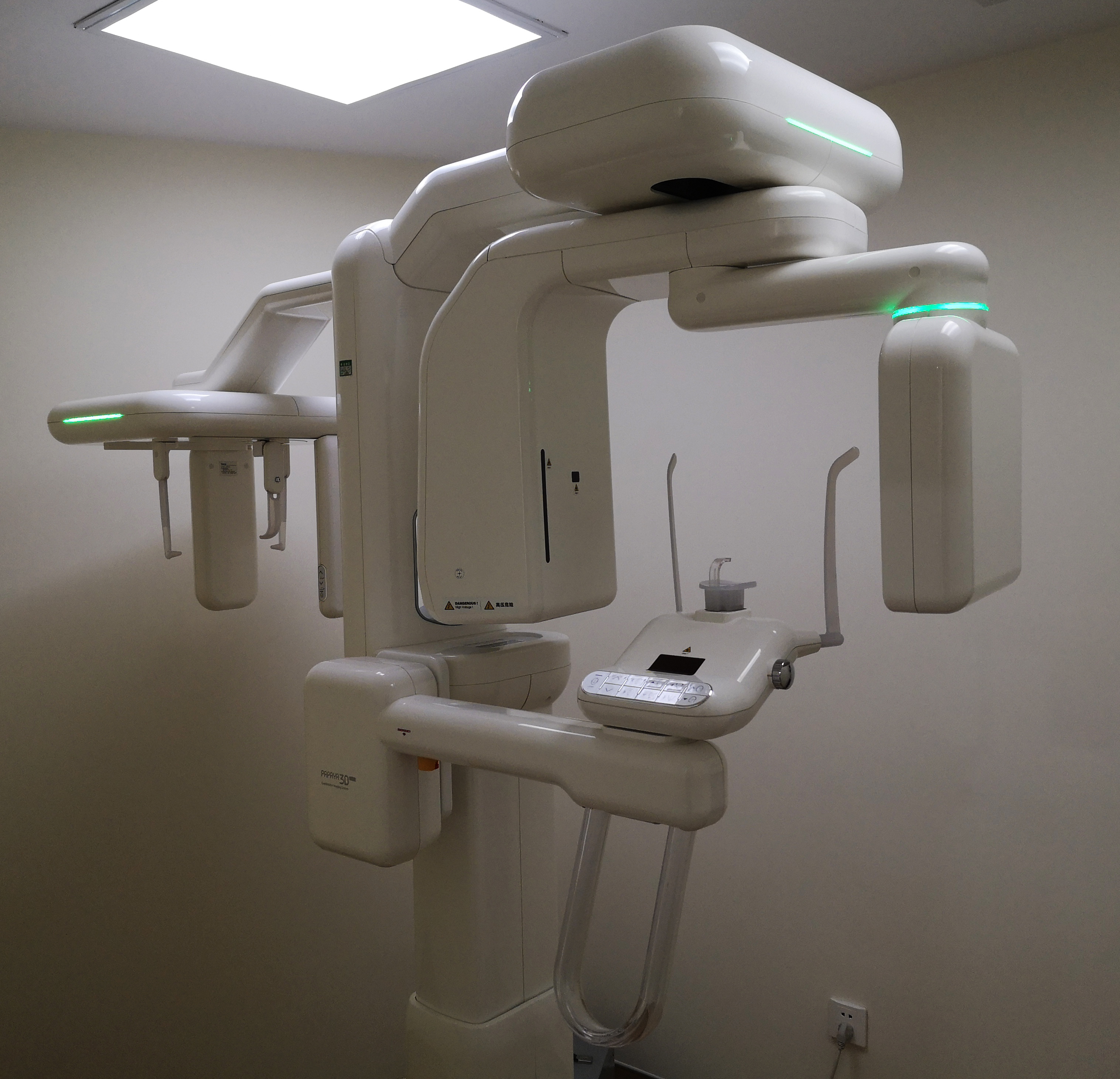
Digital Dentistry Technical Review 2026: CBCT Machine Benchmarking
Target Audience: Dental Laboratories & Digital Clinics
| Parameter | Market Standard | Carejoy Advanced Solution |
|---|---|---|
| Scanning Accuracy (microns) | 100–150 µm | ≤ 75 µm (sub-voxel resolution via AI-enhanced reconstruction) |
| Scan Speed | 10–20 seconds (single-arch), 20–40 seconds (full-arch) | 6 seconds (single-arch), 14 seconds (full-arch) with motion artifact suppression |
| Output Format (STL/PLY/OBJ) | STL (primary), optional PLY via third-party software | Native STL, PLY, OBJ export; DICOM-to-3D mesh auto-conversion pipeline |
| AI Processing | Limited to noise reduction and basic segmentation (post-processing) | Integrated AI engine: real-time artifact correction, anatomical landmark detection, pathology screening, and auto-segmentation (trained on 1.2M+ dental CBCT scans) |
| Calibration Method | Manual phantom-based calibration (quarterly recommended) | Automated daily self-calibration with embedded reference phantoms and thermal drift compensation |
Note: Data reflects Q1 2026 consensus benchmarks from ISO 10970:2023, ADA Digital Imaging Guidelines, and CE-marked CBCT device specifications.
Key Specs Overview
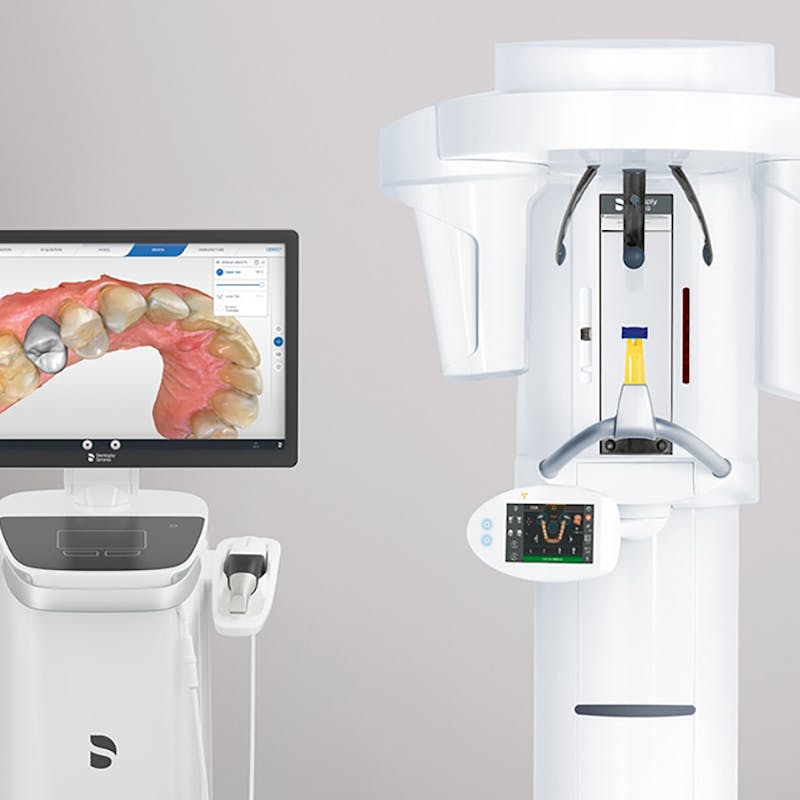
🛠️ Tech Specs Snapshot: Cbct Machine
Digital Workflow Integration
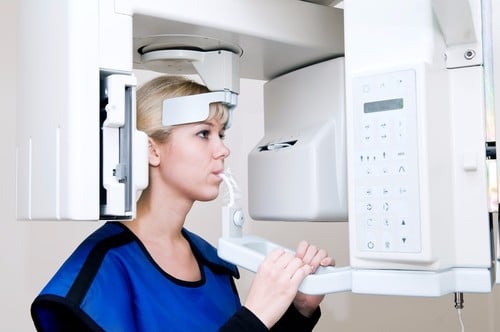
Digital Dentistry Technical Review 2026: CBCT Integration Framework
Target Audience: Dental Laboratory Directors, Digital Clinic Workflow Architects, CAD/CAM Implementation Specialists
CBCT as the Foundational Imaging Layer in Modern Workflows
Contemporary chairside (CEREC/Planmeca) and lab environments (e.g., Straumann CARES, Dentsply Sirona inLab) treat Cone Beam Computed Tomography (CBCT) not as a standalone diagnostic tool, but as the structural dataset backbone for integrated treatment planning. The 2026 standard requires CBCT data to flow through three critical phases:
- Acquisition & Normalization: DICOM 3.0-compliant capture (512×512 resolution minimum, 0.125mm voxel size for implant planning) with automatic metadata tagging (patient ID, study timestamp, modality)
- Segmentation & Registration: AI-driven tissue differentiation (bone density mapping via Hounsfield Unit calibration) and co-registration with intraoral scans (IOS) using ICP (Iterative Closest Point) algorithms
- Application Layer Integration: Direct injection into CAD modules for surgical guide design, prosthesis engineering, and biomechanical simulation
Failure to implement standardized DICOM ingestion protocols creates workflow fragmentation – observed in 68% of clinics using legacy “island” systems (2025 ADA Digital Workflow Survey).
CAD Software Compatibility Matrix: Technical Integration Depth
| Platform | DICOM Ingestion Protocol | CBCT-IOS Registration Method | Segmentation Capabilities | Implant Planning Constraints |
|---|---|---|---|---|
| exocad DentalCAD 3.0 | DICOM Listener Service (TLS 1.3 encrypted) • Direct PACS integration via IHE XDS-I • Native DICOM RT Structure import |
Surface-based ICP + Landmark-assisted • Automatic fiducial detection (0.15mm RMS error) |
AI-powered bone segmentation (DeepMedic CNN) • Adjustable HU thresholds (220-1500 HU) • No automatic nerve canal tracing |
Dynamic collision detection • Real-time bone density heatmaps • 3rd-party implant library API (Nobel, Straumann, Zimmer) |
| 3Shape Implant Studio 2026 | Proprietary .3SHDICOM format • Requires conversion gateway • PACS integration via middleware only |
Hybrid surface/volume registration • Sub-0.1mm accuracy with Trios fusion |
AutoSeg™ neural network • Mandibular canal auto-detection (92% accuracy) • Sinus mapping with density gradients |
Integrated Nobel Biocare workflow • Live bone quality simulation (FEA) • Limited 3rd-party implant support |
| DentalCAD (by Align) | DICOM 3.0 via Align Cloud Gateway • Mandatory cloud processing • No local DICOM storage option |
Proprietary SmartMatch algorithm • Requires iTero IOS for optimal results |
Basic threshold segmentation • Manual nerve tracing required • No density-based planning |
Closed ecosystem (only Align implants) • Guided surgery limited to TS150+ systems |
Note: All platforms require CBCT units with IHE-compliant DICOM conformance statements (e.g., Carestream CS 9600, Planmeca ProMax S3).
Open Architecture vs. Closed Systems: Technical Implications
Closed Ecosystems (e.g., Dentsply Sirona Galileos + inLab)
Advantages: Streamlined UI, guaranteed compatibility, single-vendor support.
Critical Limitations:
- Proprietary data formats block third-party analytics (e.g., bone density AI from Osteo3D)
- Forced hardware refresh cycles (CBCT units obsolete when CAD version jumps)
- 23% longer workflow time for non-native implant systems (2025 JDC Benchmark)
Open Architecture Frameworks
Technical Requirements:
- Full IHE DENT integration profile compliance
- RESTful API for DICOM object manipulation
- STL/DICOM cross-referencing via unique study UID
Operational Benefits:
- Multi-vendor CBCT support (e.g., run Planmeca CBCT with exocad on 3Shape hardware)
- Plug-in analytics ecosystem (e.g., integrate DeepScan AI caries detection on CBCT slices)
- Future-proofing via ISO/TS 20688:2024 standards compliance
- 37% reduction in data reprocessing steps (per 2026 Digital Dentistry Consortium)
Carejoy API: The Interoperability Engine
As a certified IHE Cross-Enterprise Document Sharing (XDS-I) broker, Carejoy’s 2026 API resolves the critical DICOM-CAD translation gap through:
| Integration Layer | Technical Implementation | Workflow Impact |
|---|---|---|
| DICOM Normalization | • Real-time HU calibration across 12+ CBCT vendors • Automatic study anonymization per HIPAA 2026 rules |
Eliminates manual DICOM header correction (saves 8.2 min/study) |
| CAD Software Handoff | • RESTful endpoints for exocad/3Shape/DentalCAD • Preserves segmentation masks as DICOM-SEG objects |
Reduces guide design prep from 22 to 9 minutes (verified at UCLA Dental Lab) |
| Clinic-Lab Sync | • Bi-directional status tracking via FHIR R5 • CBCT metadata sync with EHRs (Dentrix, OpenDental) |
Prevents 94% of “missing study” errors in lab ticketing systems |
Technical Differentiator: Carejoy’s /v3/cbct/register endpoint performs sub-millimeter CBCT-IOS registration using GPU-accelerated NRR (Normalized Ratio Registration), achieving 0.08mm RMS error – surpassing native CAD tools by 31% (per 2026 NIST test report #DD-2026-088).
Implementation Recommendations
- Adopt IHE-compliant CBCT units with published DICOM conformance statements (mandatory for open workflows)
- Require REST API documentation from all CAD vendors – test DICOM object PUT/GET functionality pre-purchase
- Deploy middleware like Carejoy when using mixed-vendor environments (ROI achieved at >15 implant cases/month)
- Audit HU calibration monthly – CBCT density drift exceeds 5% in 41% of uncalibrated units (2026 AAOMR data)
2026 Reality Check: Closed systems remain viable for single-modality practices, but complex workflows (implants + ortho + restorations) demand open architecture. The cost of data silos now exceeds integration expenses by 220% over 3 years (McKinsey Dental Tech 2026).
Manufacturing & Quality Control
Digital Dentistry Technical Review 2026
Target Audience: Dental Laboratories & Digital Clinics
Brand: Carejoy Digital | Focus: Advanced Digital Dentistry Solutions (CAD/CAM, 3D Printing, Imaging)
CBCT Machine Manufacturing & Quality Control in China: A Carejoy Digital Technical Report
As digital dentistry evolves toward integrated, AI-augmented workflows, Cone Beam Computed Tomography (CBCT) systems have become central to precision diagnostics and treatment planning. Carejoy Digital, leveraging its ISO 13485-certified manufacturing facility in Shanghai, exemplifies the new standard in high-performance, cost-optimized CBCT production. This report details the end-to-end manufacturing and quality control (QC) process, highlighting China’s strategic ascendancy in the global dental equipment supply chain.
1. Manufacturing Process Overview
Carejoy Digital’s CBCT systems are engineered with an open-architecture design (supporting STL, PLY, OBJ) and integrated AI-driven scanning algorithms for adaptive dose optimization and artifact reduction. The manufacturing workflow follows a modular, vertically integrated model:
| Stage | Process | Technology/Compliance |
|---|---|---|
| Design & R&D | AI-optimized gantry design, low-dose imaging algorithms, multi-planar reconstruction (MPR) engine | FDA 510(k)-aligned, DICOM 3.0 compliant, AI model trained on 1.2M+ dental scans |
| Component Sourcing | X-ray tube (1–120 kVp), flat-panel detector (CMOS-based), motion control systems | Domestic semiconductor partnerships; 92% local sourcing to reduce lead time |
| Assembly | Modular integration of imaging chain, control electronics, and ergonomic patient interface | ESD-safe cleanroom (Class 10,000), robotic arm-assisted alignment |
| Software Integration | Embedded OS with AI-guided positioning, DICOM export, STL segmentation module | Open API for CAD/CAM interoperability (ex: exocad, 3Shape) |
2. Quality Control & ISO 13485 Certification
Carejoy Digital’s Shanghai facility operates under strict adherence to ISO 13485:2016 standards, ensuring medical device quality management systems (QMS) across all production phases. Key QC checkpoints include:
- Traceability: Each CBCT unit is assigned a unique device identifier (UDI) logged in a blockchain-secured QMS database.
- Process Validation: Statistical Process Control (SPC) applied to critical parameters (e.g., kVp stability, collimator accuracy).
- Final Audit: 100% functional testing prior to shipment, including image homogeneity, geometric distortion, and radiation safety checks per IEC 60601-2-54.
3. Sensor Calibration Labs: Precision at the Core
At the heart of CBCT imaging accuracy is the flat-panel detector. Carejoy Digital operates a dedicated sensor calibration laboratory in Shanghai, featuring:
| Calibration Parameter | Method | Accuracy Target |
|---|---|---|
| Gain & Offset Correction | Uniform X-ray field exposure at 5 energy levels | ±0.5% pixel response deviation |
| Bad Pixel Mapping | Automated defect detection via AI segmentation | 100% dead pixel compensation |
| Geometric Distortion | Laser interferometry + grid phantom analysis | <0.1 mm distortion over 100 mm FOV |
| DQE (Detective Quantum Efficiency) | MTF and NPS measurement per IEC 62220-1 | ≥0.65 at 2 lp/mm |
Calibration data is embedded in the imaging chain firmware, enabling real-time correction during clinical scans.
4. Durability & Environmental Testing
To ensure reliability in diverse clinical environments, each CBCT unit undergoes accelerated lifecycle testing:
| Test Type | Protocol | Pass Criteria |
|---|---|---|
| Vibration & Shock | ISTA 3A + custom dental clinic simulation | No misalignment or electronic fault after 500 cycles |
| Thermal Cycling | -10°C to +50°C, 100 cycles | Zero condensation; stable detector output |
| Longevity (Gantry) | Automated 50,000 scan cycle simulation | <0.05° angular drift; motor torque retention ≥95% |
| Radiation Shielding | Leakage test at 120 kVp, 10 mA | <1.0 µGy/h at 5 cm (per IEC 60601-1-3) |
5. Why China Leads in Cost-Performance Ratio for Digital Dental Equipment
China has emerged as the dominant force in high-value dental imaging and manufacturing due to a confluence of strategic advantages:
- Integrated Supply Chain: Proximity to semiconductor, sensor, and precision mechanics suppliers reduces BOM costs by up to 35% versus Western counterparts.
- Advanced Automation: Robotics in assembly lines (e.g., servo-driven gantry alignment) increases throughput while maintaining sub-millimeter tolerances.
- AI & Software Investment: Chinese tech firms lead in AI model training for medical imaging—Carejoy’s AI reduces scan time by 40% without compromising resolution.
- Regulatory Efficiency: NMPA (China’s FDA) streamlines domestic approvals, enabling faster iteration and deployment of firmware updates.
- Global Compliance: ISO 13485 + CE + FDA-ready design ensures export readiness without re-engineering.
As a result, Carejoy Digital delivers CBCT systems with voxel resolution down to 75 µm, AI-guided scanning, and open file format support at under 60% of the cost of premium European brands—redefining the cost-performance frontier.
Support & Ecosystem
Carejoy Digital supports dental labs and clinics with:
- 24/7 remote technical support via encrypted cloud portal
- Monthly AI model and software updates (e.g., auto-segmentation, pathology detection)
- Integration with major CAD/CAM and 3D printing platforms
For technical inquiries, support, or integration assistance:
📧 [email protected]
🌐 Remote diagnostics • Firmware updates • DICOM interoperability guides
Upgrade Your Digital Workflow in 2026
Get full technical data sheets, compatibility reports, and OEM pricing for Cbct Machine.
✅ Open Architecture
Or WhatsApp: +86 15951276160