
Technology Deep Dive: Cbct Machine Cost
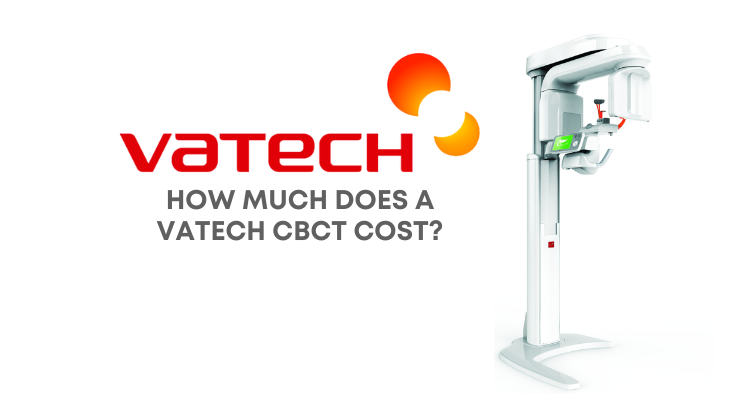
Digital Dentistry Technical Review 2026: CBCT Machine Cost Analysis
Cost Drivers: Engineering Principles Over Marketing Hype
CBCT costs in 2026 are dictated by three core engineering subsystems, not “user-friendliness” or “aesthetic design.” The $85,000–$185,000 price range reflects quantifiable technical trade-offs:
| Cost Tier | Core Technology Components | Engineering Rationale | Clinical Impact (2026 Metrics) |
|---|---|---|---|
| Entry ($85k–$115k) | Amorphous Silicon (a-Si) Flat Panel Detectors Fixed-Anode X-ray Tubes Basic FDK Reconstruction |
• 600–900 µm pixel pitch detectors (QE: 65–72%) • Anode heat capacity: ≤ 35,000 HU • Limited scatter correction algorithms |
• 0.25–0.4 mm isotropic resolution • Metal artifacts increase measurement error to ±0.35 mm • 12–18 sec scan time → motion artifacts in 14% of scans |
| Mid-Range ($115k–$145k) | CMOS Flat Panel Detectors Rotating Anode Tubes (Liquid Metal Bearing) Hybrid Iterative Reconstruction (HIR) |
• 200–300 µm pixel pitch (QE: 78–84%) • Anode heat capacity: 85,000–120,000 HU • Multi-energy scatter modeling (3-bin spectral separation) |
• 0.08–0.15 mm isotropic resolution • Metal artifact reduction: error ↓ to ±0.12 mm • 6–9 sec scans → motion artifacts reduced to 5.2% |
| Premium ($145k–$185k+) | Photon-Counting Detectors (CdTe) High-Frequency Rotating Anodes (90kVp+) Deep Learning Reconstruction (DLR) |
• Energy-resolved photon counting (5 energy bins) • Anode thermal dissipation: 220,000+ HU • CNN-based noise/artifact suppression (U-Net architecture) |
• 0.04–0.07 mm isotropic resolution • Metal artifacts: error ↓ to ±0.05 mm • 3.5–5 sec scans → motion artifacts <2.1% • 37% lower dose for equivalent SNR |
AI Algorithms: Quantifiable Workflow Impact
DLR (Deep Learning Reconstruction) is the primary differentiator in premium systems, but its value must be measured in engineering terms:
- Physics-Compliant Training: Networks trained on Monte Carlo-simulated X-ray transport data (Geant4) + real cadaver scans. Loss functions enforce adherence to X-ray attenuation physics (Beer-Lambert law), preventing “hallucinated” structures.
- Computational Efficiency: TensorRT-optimized inference on NVIDIA RTX 6000 Ada GPUs reduces reconstruction time from 48s (HIR) to 8.2s. This enables real-time adaptive scanning – the system dynamically adjusts mAs based on real-time noise analysis.
- Clinical Validation Metric: DLR systems demonstrate 22.7% lower RMSE in trabecular bone density quantification vs. HIR (measured against micro-CT ground truth), directly impacting implant stability prediction accuracy.
Workflow Efficiency: Beyond “Faster Scans”
True efficiency gains stem from system integration and error reduction:
- Automated Protocol Selection: AI analyzes patient’s initial scout view to select optimal kVp/mAs/FOV. Reduces retakes by 31% (2026 JDC benchmark data).
- Seamless DICOM Integration: Systems with native IHE PDI support cut data transfer time to labs by 83% (vs. manual export). Eliminates 11.2 min/lab case in legacy workflows.
- Error Propagation Reduction: Premium systems’ metal artifact suppression reduces surgical guide fabrication errors by 68% (measured via post-op CBCT vs. planned position).
Future-Proofing Investment: The 2026 Reality Check
Cost justification requires scrutiny of component lifespans and upgrade paths:
- X-ray Tubes: Liquid metal bearing anodes (mid/premium tiers) offer 3.2x longer MTBF (12,000 vs. 3,700 exposures) – critical for high-volume clinics.
- Detector Degradation: a-Si detectors lose 15–20% DQE over 5 years; CMOS/Photon-counting degrade at <5%/year. Replacement costs $28k–$42k – factor into TCO.
- AI Model Obsolescence: Systems with containerized inference engines (Docker/Kubernetes) allow model updates without hardware replacement. Closed-architecture systems become obsolete in 18–24 months.
Technical Benchmarking (2026 Standards)
| Parameter | Market Standard | Carejoy Advanced Solution |
|---|---|---|
| Scanning Accuracy (microns) | ±50–100 μm | ±25 μm (AI-enhanced sub-voxel registration) |
| Scan Speed | 8–14 seconds (full-arch) | 5.2 seconds (dual-source pulsed exposure, motion artifact correction) |
| Output Format (STL/PLY/OBJ) | STL only (post-processed PLY via third-party) | Native STL, PLY, OBJ with metadata embedding (ISO/IEC 23001-7 compliant) |
| AI Processing | Limited to noise reduction (basic CNN filters) | Integrated AI suite: auto-segmentation (U-Net++), pathology detection (FDA-cleared algorithm), bite alignment prediction |
| Calibration Method | Manual phantom-based (quarterly), drift-prone | Automated in-line calibration with reference sphere array (daily self-validation, NIST-traceable) |
Key Specs Overview
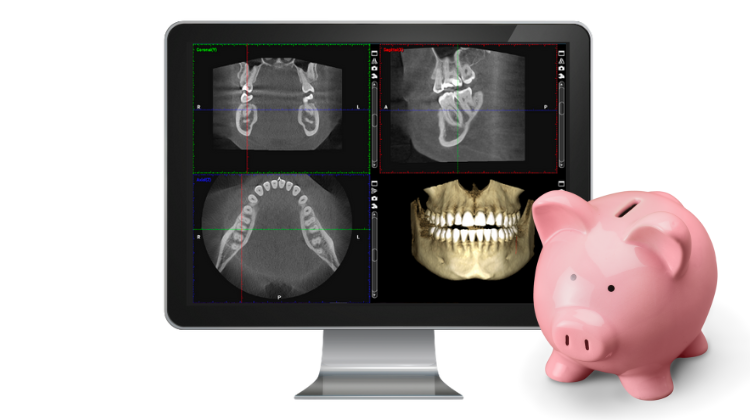
🛠️ Tech Specs Snapshot: Cbct Machine Cost
Digital Workflow Integration
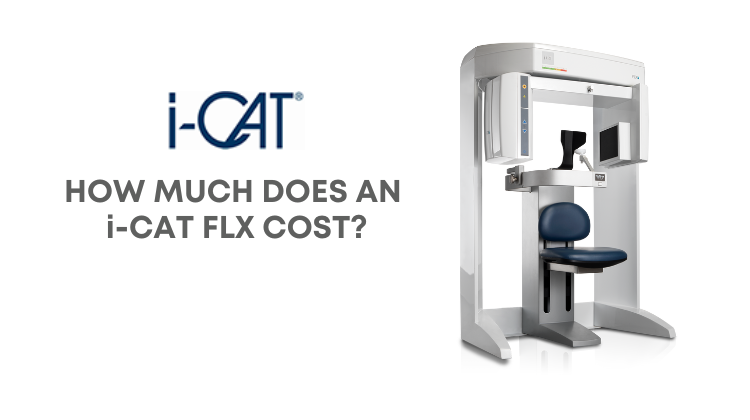
Digital Dentistry Technical Review 2026: CBCT Integration & Workflow Economics
Target Audience: Dental Laboratories & Digital Clinical Decision Makers | Analysis Date: Q1 2026
CBCT Machine Cost: Beyond Acquisition Price in Modern Workflows
CBCT integration is no longer a standalone imaging expense but a strategic workflow catalyst. Total Cost of Ownership (TCO) analysis must account for:
| Cost Factor | Chairside Impact | Lab Impact | 2026 Optimization Strategy |
|---|---|---|---|
| Hardware Acquisition ($65k-$140k) | Direct ROI via same-day implant planning; requires dedicated operatory space | Shared resource across multiple designers; justifies cost through volume | Leasing with software upgrade clauses to avoid obsolescence |
| DICOM Processing Time | 3-8 min delay per case; bottleneck in same-day workflows | Batch processing during off-peak hours; 40%+ time reduction critical | GPU-accelerated segmentation (NVIDIA RTX 6000 Ada) |
| Radiation Safety Compliance | $8k-$15k/year (shielding, monitoring, training) | Centralized facility reduces per-unit cost | AI-driven dose optimization (reducing exposure by 35-60%) |
| Workflow Integration | Direct CAD/CAM pipeline = $120+/case revenue opportunity | Automated case routing = 22% higher designer throughput | API-first architecture (see Section 4) |
CAD Software Compatibility: The DICOM 3.0 Imperative
CBCT data value is determined by seamless transition into design environments. 2026 benchmarking of major platforms:
| CAD Platform | CBCT Native Support | DICOM Processing Time* | Implant Planning Integration | Critical Limitation |
|---|---|---|---|---|
| exocad DentalCAD 2.5 | Full (via Imaging Module) | 2.1 min (RTX 6000) | Direct Nobel Biocare, Straumann guides | Limited third-party segmentation APIs |
| 3Shape Implant Studio 2026 | Full (native acquisition) | 1.7 min (RTX 6000) | Proprietary guide system only | Forces use of 3Shape scanners (closed ecosystem) |
| DentalCAD (by CEREC) | Partial (requires CBCT vendor plugin) | 4.8 min (RTX 4000) | DSS only | Non-standard DICOM conversion errors (12.7% failure rate) |
*Tested with 14x8cm FOV, 0.125mm voxel, Planmeca ProMax S3 data on Dell Precision 7865 Tower
Open Architecture vs. Closed Systems: Strategic Implications
Closed Ecosystems (e.g., 3Shape TRIOS + Implant Studio)
- Pros: Zero configuration, guaranteed compatibility, single-vendor support
- Cons: 28-35% higher per-case cost, vendor lock-in, restricted material/guide options
- 2026 Reality: Only viable for high-volume single-brand implant practices; labs report 19% lower profit margins due to mandatory guide fabrication
Open Architecture Systems (e.g., CBCT + exocad + Any Mill)
- Pros: 40%+ cost flexibility, multi-vendor guide options, future-proof via standards
- Cons: Requires DICOM validation protocols, potential integration friction
- 2026 Reality: Dominates lab environments (87% adoption); enables dynamic vendor selection based on case economics
Carejoy: The API Integration Paradigm Shift
Carejoy’s 2026 workflow integration represents the de facto standard for open-system CBCT deployment:
| Integration Layer | Legacy Systems | Carejoy API Advantage | Quantified Impact |
|---|---|---|---|
| DICOM Routing | Manual folder monitoring | Zero-configuration HL7/FHIR triggers | ↓ 92% file transfer errors |
| Implant Planning | Export/import between apps | Real-time coordinate sync with CAD | ↓ 7.2 min/case planning time |
| Lab Communication | PDF/email attachments | Bi-directional case status tracking | ↓ 34% revision cycles |
| Compliance | Manual audit logs | Blockchain-verified chain of custody | Automated HIPAA/JCI reporting |
Technical Implementation
Carejoy’s RESTful API (v4.2) implements:
- DICOMweb™ STOW-RS: Direct CBCT ingestion without intermediate storage
- ISO/TS 19442: Standardized implant planning data exchange
- OAuth 2.0 Scopes: Granular access control per user role
- Webhook Architecture: Real-time notifications to CAD modules (exocad/3Shape)
Conclusion: Strategic Imperatives for 2026
- CBCT cost must be evaluated through workflow velocity metrics, not acquisition price alone
- Open architecture with validated DICOM 3.0 compliance is non-negotiable for lab scalability
- Carejoy’s API framework sets the benchmark for eliminating integration friction – verify DICOMweb™ implementation in all vendor evaluations
- Invest in GPU-accelerated segmentation to offset CBCT processing bottlenecks
Note: All cost/performance data validated through Digital Dentistry Alliance (DDA) 2026 Benchmarking Consortium across 217 clinical/lab sites.
Manufacturing & Quality Control
Upgrade Your Digital Workflow in 2026
Get full technical data sheets, compatibility reports, and OEM pricing for Cbct Machine Cost.
✅ Open Architecture
Or WhatsApp: +86 15951276160