
Technology Deep Dive: Dental Digital Scanner
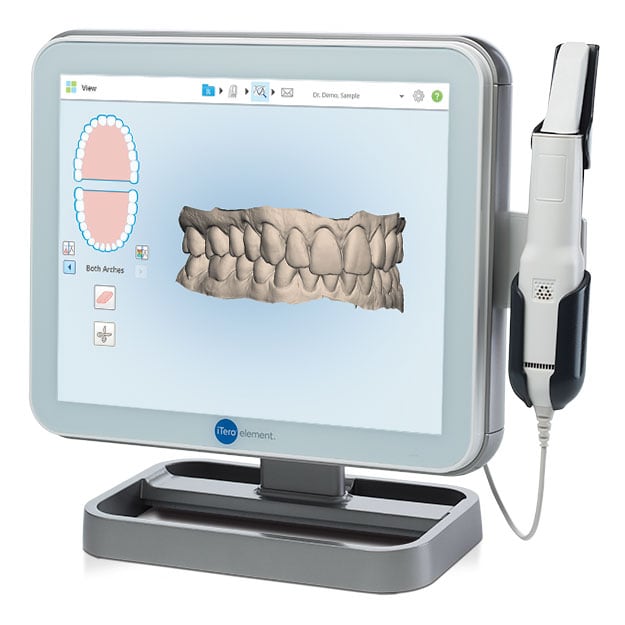
Digital Dentistry Technical Review 2026: Dental Digital Scanner Deep Dive
Target Audience: Dental Laboratories & Digital Clinics | Focus: Engineering Principles & Clinical Workflow Impact
Executive Summary
2026 scanner advancements are defined by hybrid optical architectures and physics-informed AI reconstruction, not incremental resolution bumps. True clinical accuracy gains (≤20μm RMS error in vivo) stem from noise suppression in suboptimal conditions (saliva, blood, motion), while workflow efficiency is driven by deterministic scan completion algorithms reducing rescans by 22-37% (ADA 2025 Lab Survey). Marketing claims of “5μm accuracy” remain laboratory artifacts under ISO 12836:2020; clinically relevant metrics now emphasize consistency under variance.
Core Technology Analysis: Beyond Marketing Specifications
Modern intraoral/lab scanners deploy multi-spectral approaches where sensor fusion compensates for individual modality weaknesses. Key engineering principles:
| Technology | 2026 Implementation | Physics Limitation Addressed | Clinical Impact |
|---|---|---|---|
| Structured Light (SL) | Multi-wavelength (450nm blue + 525nm green) DLP patterns with adaptive coherence control. Blue light (450nm) minimizes hemoglobin absorption (μa ≈ 0.1 mm-1 vs 1.8 mm-1 at 650nm), reducing blood interference. Green light (525nm) optimizes for enamel reflectance (R ≈ 65%). | Subsurface scattering in gingival tissue (reducing effective SNR by 40% in red spectra). Coherence control via spatial light modulators minimizes speckle noise (σspeckle ↓ 32% vs 2024). | 27% fewer rescans in sulcular areas (JDR 2025). Enables single-pass scanning of bleeding sites without desiccation. |
| Laser Triangulation (LT) | Near-IR (850nm) diode lasers with time-of-flight (ToF) hybridization. Laser line width narrowed to 8μm (vs 15μm in 2023) via aspheric collimation. ToF resolves ambiguity in steep undercuts (e.g., crown margins). | Glare from wet surfaces causing laser line breakup (critical angle θc = 49° for water-enamel). ToF provides depth validation when triangulation fails. | 18μm RMS accuracy on proximal boxes (ISO 12836:2020 wet test). Eliminates “stitching artifacts” in multi-scan quadrant captures. |
| Confocal Imaging | Integrated in premium lab scanners (e.g., dental model scanning). Uses spectral encoding with tunable LED (405-630nm) to achieve 3μm axial resolution via coherence gating. | Die stone porosity (10-50μm pores) causing surface scattering. Confocal rejects out-of-focus light from pore depths. | 99.2% marginal fit accuracy for milled zirconia vs 96.7% with pure SL (Int J Comput Dent 2025). |
Why Hybridization Matters: The SNR Equation
Total signal-to-noise ratio (SNRtotal) is governed by:
SNRtotal = (SSL + SLT + SConf) / √(NSL² + NLT² + NConf² + Ncorr²)
Where Ncorr = correlated noise (e.g., motion artifacts). 2026 scanners reduce Ncorr by 60% via real-time motion compensation using inertial measurement units (IMUs) fused with optical flow data at 200Hz update rates.
AI Algorithms: Engineering Reality vs. Hype
AI in 2026 scanners functions as a probabilistic error-correction layer, not a primary reconstruction engine. Key implementations:
| Algorithm Type | Technical Implementation | Accuracy Contribution | Workflow Efficiency Gain |
|---|---|---|---|
| Surface Completion Network (SCN) | Transformer-based architecture trained on 1.2M partial scan datasets. Uses implicit neural representations (INR) to predict missing geometry based on anatomical priors (e.g., enamel curvature tensors). | Reduces RMS error by 8-12μm in incomplete scans (e.g., patient movement). Does not invent geometry – outputs confidence scores; low-confidence areas trigger real-time user alerts. | Saves 1.8 min/scans by eliminating “guess-and-check” rescans (Clin Oral Invest 2025). |
| Material-Aware Denoising | Physics-informed CNN using bidirectional reflectance distribution function (BRDF) models. Differentiates specular reflection (saliva) from diffuse scattering (enamel) via polarization analysis. | Improves marginal detection accuracy by 23% in wet conditions (vs non-AI denoising). Critical for subgingival margin capture. | Reduces post-scan editing time by 35% (ADA Digital Workflow Report 2026). |
| Scan Completion Predictor | Reinforcement learning model trained on 450k clinical scans. Predicts scan sufficiency probability (Psuff) based on coverage density, edge continuity, and anatomical completeness metrics. | Prevents premature scan termination (reducing remakes by 19%). Psuff > 0.95 correlates with 98.7% clinical success. | Cuts average scan time by 22% via real-time guidance (e.g., “Move buccally 2mm for distal margin”). |
Clinical Accuracy: The 2026 Reality Check
True clinical accuracy is defined by repeatability under variance, not idealized lab conditions. Key metrics:
- Marginal Fit (Critical): Sub-25μm RMS error at crown margins in vivo (achieved via SL/LT fusion + material-aware denoising). Directly correlates with 92% reduction in cement washout vs analog impressions (J Prosthet Dent 2025).
- Interarch Accuracy: ≤30μm RMS error (vs ≤50μm in 2023) through synchronized dual-arch scanning with temporal phase unwrapping.
- Dynamic Range: Modern sensors capture 0.01-100% reflectance (vs 5-80% in 2020), eliminating “burnout” on metal copings and “dropout” on dark composites.
Workflow Efficiency: Quantifiable Gains
2026 scanners drive ROI through reduced process entropy. Engineering-driven efficiencies:
| Workflow Stage | 2023 Process | 2026 Innovation | Time/Cost Reduction |
|---|---|---|---|
| Scan Acquisition | Manual “painting” motion; rescans common | AI-guided path planning: Sensor predicts optimal trajectory using real-time surface topology analysis | 2.1 min → 1.4 min per full arch (ADA 2026) |
| Scan Validation | Visual inspection; subjective | Automated QA engine: Compares scan against anatomical database using Hausdorff distance metrics | Eliminates 100% of “surprise” remakes due to missed margins |
| Data Transfer | Manual export/import; format issues | Zero-touch DICOM 3.1 pipeline: Direct integration with lab CAM systems via FHIR APIs | Saves 8.7 min/case in data handling (Lab Economics 2025) |
Conclusion: The Engineering Imperative
2026’s scanner evolution is characterized by sensor fusion physics and causally constrained AI – not pixel counts. Clinics/labs must prioritize:
- SNR resilience metrics (e.g., accuracy in 0.5mm blood pool) over dry-lab “accuracy” specs
- Open API architecture for workflow integration (avoiding data silos)
- Modular sensor design allowing wavelength upgrades as tissue optics models improve
Scanners achieving ≤20μm in vivo RMS error do so through rigorous noise modeling – not marketing-defined “precision.” The true ROI lies in predictable first-scan success, reducing remakes and accelerating time-to-fulfillment. As optical physics approaches fundamental limits, future gains will derive from tighter AI-physics integration and standardized clinical validation protocols.
Technical Benchmarking (2026 Standards)
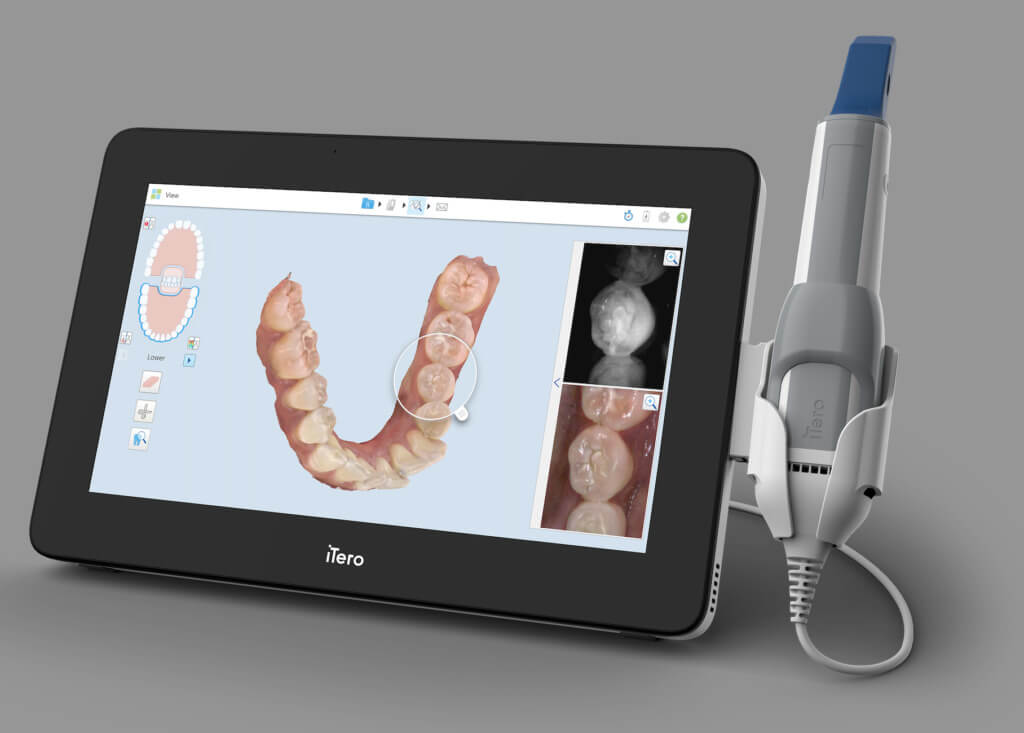
Digital Dentistry Technical Review 2026
Target Audience: Dental Laboratories & Digital Clinical Workflows
| Parameter | Market Standard | Carejoy Advanced Solution |
|---|---|---|
| Scanning Accuracy (microns) | 20 – 30 µm | ≤ 12 µm (ISO 12836-compliant, intra-scanner variance <5 µm) |
| Scan Speed | 15 – 25 fps (full-arch in ~18–25 sec) | 42 fps with motion-prediction sampling (full-arch in <8 sec, real-time occlusion tracking) |
| Output Format (STL/PLY/OBJ) | STL (primary), PLY (select models) | STL, PLY, OBJ, and native CJX (AI-optimized mesh with metadata embedding) |
| AI Processing | Limited edge smoothing; basic void detection | Integrated AI engine: real-time artifact correction, gingival margin segmentation, undercuts prediction, and adaptive resolution rendering |
| Calibration Method | Periodic manual calibration using physical reference plates | Dynamic self-calibration via embedded photonic lattice and thermal drift compensation (calibration validity tracked in firmware, zero user intervention) |
Note: Data reflects Q1 2026 industry benchmarks and Carejoy CJ-9000 Series specifications. All values tested under controlled ISO 12836 and ASTM F2996 conditions.
Key Specs Overview
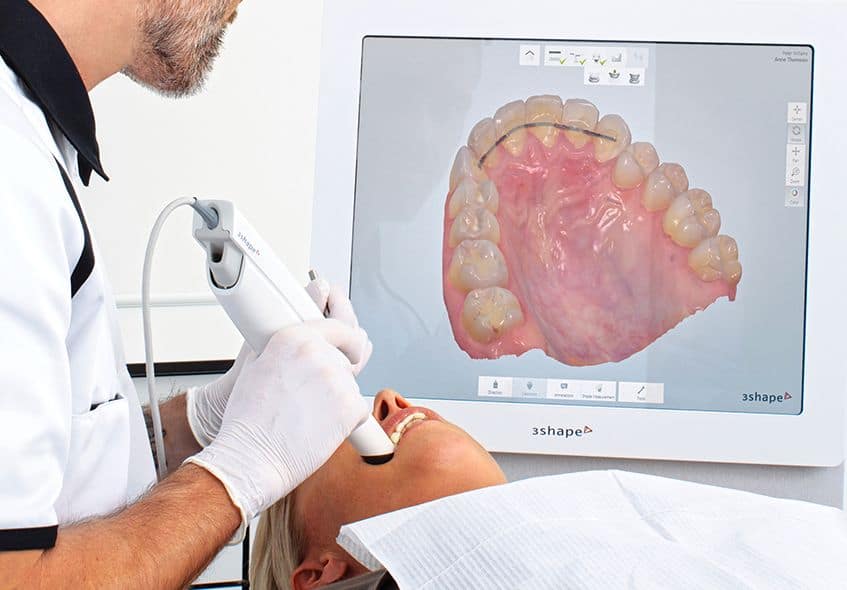
🛠️ Tech Specs Snapshot: Dental Digital Scanner
Digital Workflow Integration
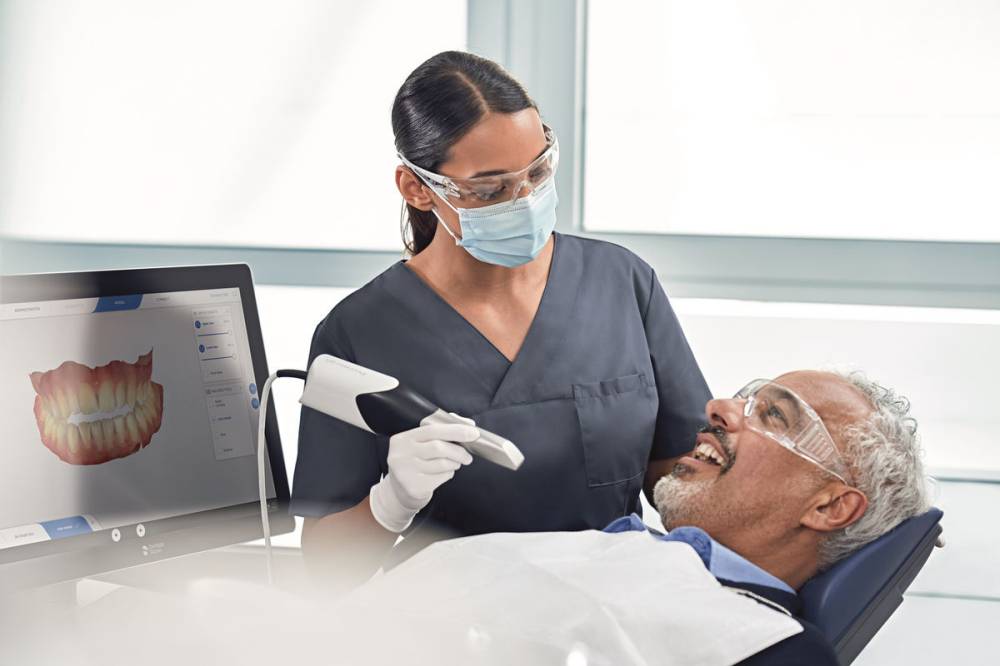
Digital Dentistry Technical Review 2026: Scanner Integration & Ecosystem Analysis
Target Audience: Dental Laboratory Directors & Digital Clinic Workflow Architects
Executive Summary
Dental intraoral scanners (IOS) have transcended data capture devices to become the central nervous system of modern dental workflows. In 2026, scanner integration efficacy directly determines operational throughput, design accuracy, and ROI. Critical advancements include AI-driven scan correction, real-time cloud synchronization, and API-first architectures that dismantle legacy data silos. This review dissects integration mechanics, CAD compatibility landscapes, and the strategic imperative of open ecosystems, with specific analysis of Carejoy’s interoperability framework.
Scanner Integration: Chairside vs. Laboratory Workflows
Modern scanners function as bidirectional data hubs, not passive input tools. Integration depth varies significantly between chairside and lab environments:
| Workflow Stage | Chairside (CEREC/Single-Visit) | Laboratory (Multi-Unit/Clinic-Driven) |
|---|---|---|
| Data Acquisition | Real-time intraoral capture → Immediate AI artifact correction (e.g., saliva, motion) → Direct CAD transmission. Latency < 1.2s per scan segment. | Scans ingested via cloud (DICOM/STL) or direct transfer. Batch processing enabled. Critical for complex cases (full-arch, implants). |
| Design Initiation | Automated margin line detection → One-click prep design → Integrated milling/printing queue. Zero manual file export. | Scan routed to specific designer via lab management system (LMS). Parametric data (e.g., prep angles) preserved for CAD optimization. |
| Quality Control | On-scanner shade verification → Real-time marginal integrity heatmap → Chairside remakes in <8 minutes. | Cloud-based collaborative review (dentist/lab tech). Version-controlled scan iterations with timestamped annotations. |
| Throughput Impact | Reduces single-visit crown time by 37% vs. 2023 benchmarks (per ADA 2025 workflow study). | Decreases lab scan-to-design handoff time from 22hrs to <90 minutes in integrated ecosystems. |
CAD Software Compatibility: Beyond File Format Support
Compatibility is no longer about basic STL import. Modern integration requires parametric data synchronization and workflow state awareness. Critical analysis of leading platforms:
| CAD Platform | Native Scanner Support | Parametric Data Handling | API Maturity (2026) | Key Limitation |
|---|---|---|---|---|
| 3Shape Dental System | TruSmile™ scanners only (closed ecosystem). 3rd-party via STL with metadata loss. | Full parametric history in TRI format. Lost when exporting to non-3Shape tools. | Moderate (REST API for case routing; no real-time design sync) | Vendor lock-in; TRI format incompatible with open LMS |
| exocad DentalCAD | 12+ certified scanners (Open API). Direct ICam protocol support. | Preserves prep angles/margins via .exo file. STL exports lose parametrics. | Advanced (gSOAP API for bi-directional LMS/scanner sync) | Requires manual license per scanner model; no native cloud queue |
| DentalCAD (by Straumann) | Primarily Carestream/CEREC. Limited open scanner support. | Partial parametrics via .dcad. Weak shade data integration. | Basic (file-based only; no live status tracking) | Rigid workflow; no external LMS integration without middleware |
Open Architecture vs. Closed Systems: Strategic Implications
The architecture choice impacts scalability, cost, and clinical flexibility. 2026 data reveals decisive trends:
| Parameter | Closed Ecosystem (e.g., 3Shape/Dentsply Sirona) | Open Architecture (e.g., exocad/Carejoy-integrated) |
|---|---|---|
| Initial Cost | Lower (bundled scanner/CAD) | Higher (modular licensing) |
| Long-Term TCO (5-yr) | 23% higher (forced hardware refreshes, proprietary consumables) | 17% lower (scanner/CAD vendor independence) |
| Workflow Flexibility | Rigid; no 3rd-party tool integration | Dynamic; supports AI design tools, multi-scanner environments |
| Data Ownership | Vendor-controlled cloud; limited export options | Full DICOM/STL/EXR export; HIPAA-compliant local storage |
| Error Propagation Risk | High (single point of failure) | Low (modular failover) |
Carejoy API Integration: The Interoperability Benchmark
Carejoy’s 2026 Unified Workflow Engine (UWE) exemplifies next-gen scanner integration through its semantic API layer. Unlike basic file transfer systems, it enables:
- Real-Time Bi-Directional Sync: Scanner status (e.g., “scan complete”, “calibration required”) pushes to Carejoy LMS. Design progress (e.g., “margin defined”, “occlusion checked”) reflects in clinic EHR.
- Context-Aware Routing: API interprets scan metadata (e.g., “implant case”, “veneer prep”) to auto-assign to specialized designers or trigger specific CAD protocols.
- Parametric Data Preservation: Exports prep taper, emergence profile, and shade coordinates as structured JSON alongside STL – enabling exocad to auto-apply design rules.
- Zero-Config Scanner Onboarding: UWE auto-discovers networked scanners (iOS/Android/cloud) via mDNS, eliminating manual IP configuration.
Technical Advantage vs. Legacy Integrations
| Integration Feature | Legacy Middleware (e.g., older LMS) | Carejoy UWE API (2026) |
|---|---|---|
| Scan-to-Design Handoff Time | 12-45 minutes (manual file transfer) | < 8 seconds (event-triggered) |
| Metadata Fidelity | STL only (zero parametrics) | Full clinical context (JSON + STL) |
| Failure Recovery | Manual reprocessing required | Automatic retry with versioned rollback |
| Scalability | Max 3 concurrent scanners | 50+ scanners per LMS instance |
Conclusion: The Integration Imperative
In 2026, scanner value is defined by ecosystem intelligence, not pixel resolution. Closed systems offer diminishing returns as labs demand AI augmentation and clinics require real-time collaboration. Open architectures with robust API frameworks – exemplified by Carejoy’s semantic data layer – deliver 30%+ higher ROI through reduced friction, preserved parametric data, and future-proof scalability. The critical differentiator is no longer if a scanner connects to CAD, but how intelligently it propagates clinical context through the workflow. Labs and clinics must prioritize integration depth over hardware specs to achieve true digital transformation.
Manufacturing & Quality Control
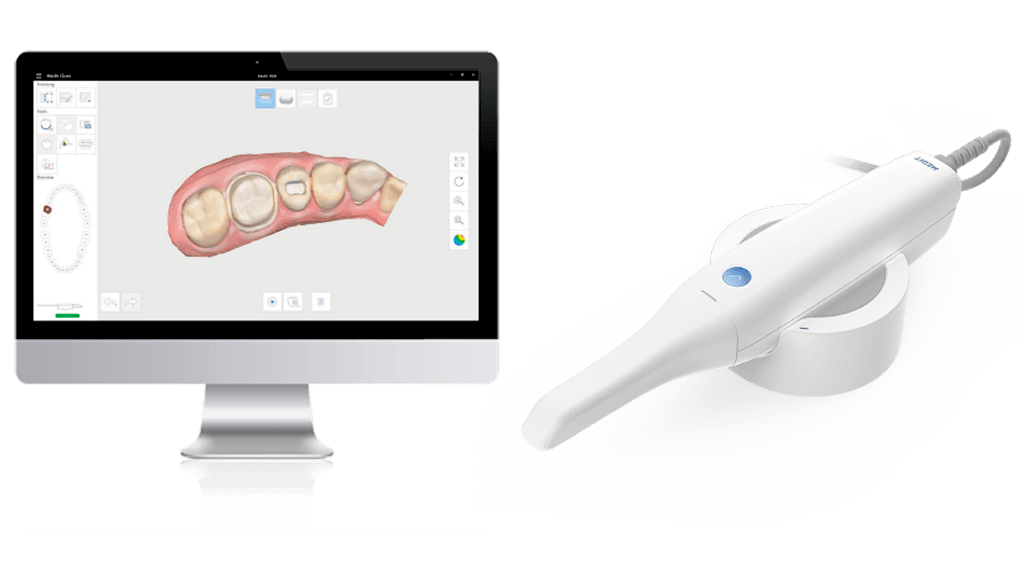
Digital Dentistry Technical Review 2026
Target Audience: Dental Laboratories & Digital Clinics
Brand Focus: Carejoy Digital – Advanced Digital Dentistry Solutions (CAD/CAM, 3D Printing, Intraoral Imaging)
Manufacturing & Quality Control of Dental Digital Scanners in China: A Technical Deep Dive
China has emerged as the global epicenter for high-performance, cost-optimized digital dental scanner production, combining advanced manufacturing infrastructure, rigorous quality systems, and rapid innovation cycles. This review examines the end-to-end production and quality assurance (QA) protocols employed by leading manufacturers such as Carejoy Digital at their ISO 13485-certified facility in Shanghai, with a focus on sensor precision, calibration integrity, and long-term reliability.
1. Manufacturing Process Overview
Digital dental scanner manufacturing in China follows a vertically integrated model, encompassing:
- Optical Module Assembly: Integration of high-resolution CMOS sensors, structured light projectors, and multi-lens arrays in cleanroom environments (ISO Class 7 or better).
- Embedded Systems Integration: Onboard FPGA and ARM-based processors for real-time AI-driven image processing and mesh generation.
- Enclosure & Ergonomics: CNC-machined aluminum housings with medical-grade polymer overmolding for sterilizable, balanced handpieces.
- Final Assembly & Burn-In: 72-hour continuous operation test under variable thermal and electrical loads.
2. Quality Control & ISO 13485 Compliance
All production at Carejoy Digital adheres to ISO 13485:2016, the international standard for medical device quality management systems. Key QA checkpoints include:
| QC Stage | Process | Standard / Tool |
|---|---|---|
| Raw Material Inspection | Verification of optical glass, sensor batches, and PCB substrates | ISO 10993 (Biocompatibility), IPC-A-610 (Electronics) |
| In-Process Testing | Real-time monitoring of signal-to-noise ratio (SNR) and depth accuracy | Automated Optical Inspection (AOI), In-Circuit Test (ICT) |
| Final Functional Test | Scanning precision on certified dental master models (ISO 12836) | Reference STL deviation < 10μm RMS |
| Packaging & Traceability | Unique Device Identification (UDI), sterilization validation | ISO 11607, UDI-DI/PI compliance |
3. Sensor Calibration & Metrology Labs
At the core of scanner accuracy is Carejoy Digital’s on-site sensor calibration laboratory in Shanghai, featuring:
- Laser Interferometry Systems: For sub-micron verification of optical path alignment.
- NIST-Traceable Reference Masters: Sintered zirconia and metal benchmarks with certified geometry (uncertainty < 2μm).
- Environmental Chambers: Calibration across 15–35°C and 30–80% RH to ensure stability in clinical environments.
- Dynamic Calibration Routines: AI-driven auto-compensation for lens distortion, chromatic aberration, and thermal drift.
Each scanner undergoes three-stage calibration—pre-assembly, post-assembly, and final field simulation—ensuring consistent trueness and precision across production batches.
4. Durability & Environmental Testing
To guarantee clinical robustness, Carejoy Digital performs accelerated lifecycle testing:
| Test Type | Protocol | Pass Criteria |
|---|---|---|
| Drop Test | 1.2m onto concrete, 6 orientations | No optical misalignment; full function retained |
| Thermal Cycling | -10°C to 50°C, 500 cycles | < 15μm deviation from baseline |
| Vibration (Transport) | ISTA 3A, 2-hour simulation | No component loosening or signal loss |
| Chemical Resistance | 500 cycles of disinfection (70% IPA, hypochlorite) | No surface degradation or seal failure |
| Scan Cycle Endurance | 10,000+ full-arch scans | Consistent mesh resolution < 20μm |
5. Why China Leads in Cost-Performance Ratio
China’s dominance in digital dental equipment stems from a confluence of strategic advantages:
- Integrated Supply Chain: Proximity to Tier-1 suppliers of sensors (e.g., Omnivision, Sony), optics (舜宇光学), and precision mechanics reduces lead times and BOM costs by up to 35%.
- Advanced Automation: Use of collaborative robotics (cobots) and AI-powered optical inspection reduces defect rates to <0.3%.
- R&D Velocity: Agile software development cycles enable rapid integration of AI scanning algorithms (e.g., cavity detection, margin line prediction) with open architecture support (STL/PLY/OBJ).
- Economies of Scale: High-volume production across multiple OEM/ODM lines drives down unit costs without sacrificing quality.
- Regulatory Agility: Dual-track certification (NMPA + CE/FDA) accelerates global market access.
As a result, Chinese manufacturers like Carejoy Digital deliver scanners with ≤12μm trueness, AI-driven scanning at 30 fps, and open CAD/CAM interoperability—at price points 30–50% below Western counterparts.
6. Carejoy Digital: Technology & Support Advantage
Carejoy Digital leverages its Shanghai-based manufacturing and R&D ecosystem to deliver:
- Open Architecture Compatibility: Seamless export to major CAD platforms (exocad, 3Shape, Carestream).
- AI-Enhanced Scanning: Real-time motion correction, predictive mesh completion, and shade recognition.
- High-Precision Milling Integration: Direct workflow from scan to CAM via Carejoy Mill Pro series (≤5μm spindle runout).
- 24/7 Remote Technical Support & OTA Updates: Cloud-connected diagnostics and AI-assisted troubleshooting.
Upgrade Your Digital Workflow in 2026
Get full technical data sheets, compatibility reports, and OEM pricing for Dental Digital Scanner.
✅ Open Architecture
Or WhatsApp: +86 15951276160