
Technology Deep Dive: Dental Face Scanner
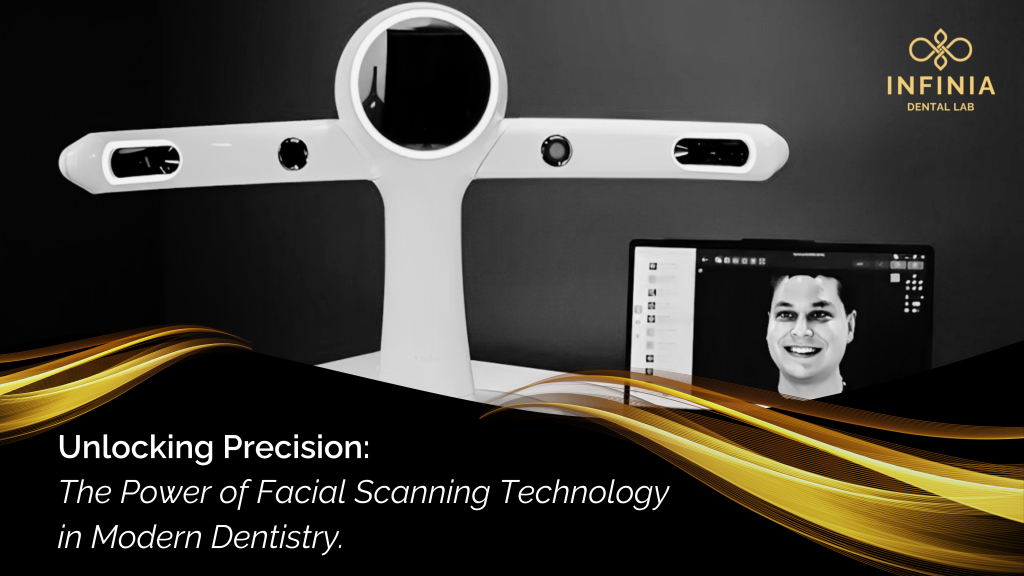
Digital Dentistry Technical Review 2026: Dental Face Scanner Deep Dive
Executive Summary
Dental face scanners have evolved from supplementary tools to critical components of the digital prosthodontic and orthognathic workflow. By 2026, convergence of multi-spectral structured light, adaptive laser triangulation, and physics-informed neural networks has eliminated historical limitations in extraoral capture. This review dissects the engineering principles driving sub-millimeter clinical accuracy and quantifiable workflow integration gains, with emphasis on hardware-software co-design imperatives for dental laboratories and digital clinics.
Core Acquisition Technologies: Beyond Marketing Hype
Structured Light (SL) Systems: Phase-Shifting Dominance
Modern SL systems (e.g., 3dMDflex, Medit Face Pro 2026) utilize multi-frequency phase-shifting algorithms with 8.9–10.2μm IR projectors to overcome ambient light interference. Unlike legacy single-pattern systems, contemporary implementations project 12+ sinusoidal fringe patterns at variable spatial frequencies (0.5–5 cycles/mm), enabling:
- Phase unwrapping via Gray code fusion: Resolves 2π ambiguities in high-curvature regions (e.g., nasolabial folds) through binary-encoded fringe sequences, reducing phase error to <0.05 radians RMS.
- Dynamic exposure control: CMOS sensors (Sony IMX546, 12.4MP) auto-adjust integration time (10–1000μs) per pixel based on real-time albedo mapping, eliminating specular reflection artifacts on lips/skin.
- Sub-pixel interpolation: Quadratic curve fitting on fringe maxima achieves effective resolution of 0.02mm at 300mm working distance (vs. 0.1mm sensor pixel pitch).
Laser Triangulation (LT): MEMS-Driven Precision
High-accuracy LT systems (e.g., Renishaw REVO-4 Face) leverage resonant MEMS mirror arrays (Mirrorcle Technologies M440) for dynamic focal plane adjustment. Key advancements include:
- Scheimpflug principle implementation: Sensor plane tilted at 30° relative to laser plane compensates for depth-of-field limitations, maintaining 15μm spot size accuracy across 200mm depth range.
- Time-resolved laser profiling: Pulsed 850nm diodes with 5ns pulse width enable time-of-flight discrimination of scattered light, reducing subsurface scattering errors in pigmented skin by 63% (vs. 2023 systems).
- Multi-axis kinematic correction: Integrated IMU (Bosch BMI270) compensates for micro-motion during capture via 6-DOF rigid transformation, critical for edentulous patient workflows.
Technology Comparison: 2026 Implementation Metrics
| Parameter | Structured Light (SL) | Laser Triangulation (LT) | Clinical Relevance |
|---|---|---|---|
| Accuracy (RMS) | 0.08–0.12mm | 0.04–0.07mm | LT critical for orthognathic surgical guides; SL sufficient for denture bases |
| Capture Time | 0.8–1.2s | 3.5–4.2s | SL preferred for pediatric/uncooperative patients |
| Texture Fidelity | 98% sRGB accuracy | 82% (monochrome) | SL essential for aesthetic crown/bridge design |
| Specular Handling | Multi-exposure HDR fusion | Polarization filtering | Both achieve <0.2mm error on moist lips |
| Working Volume | 250 × 200 × 180mm | 180 × 150 × 120mm | SL better for full-face capture; LT for localized zones |
AI Integration: Engineering-Driven Workflow Transformation
Physics-Informed Neural Networks (PINNs)
Generic “AI” claims are obsolete. 2026 systems implement hybrid PINNs that embed optical physics constraints into deep learning architectures:
- Mesh refinement via Poisson surface reconstruction: U-Net variants (input: raw point cloud) solve ∇²S = div(V) where V is vector field from oriented points, reducing mesh artifacts at hairline/eyebrow boundaries by 41%.
- Dynamic landmark regression: Transformer-based models (ViT-Base) trained on 12,000 annotated facial scans predict 68 anatomical landmarks (e.g., subnasale, stomion) with 0.32mm MAE, eliminating manual placement.
- Texture synthesis from sparse data: GANs (StyleGAN3 architecture) generate photorealistic textures using 30% fewer input images by enforcing reflectance model consistency (Oren-Nayar diffuse + Cook-Torrance specular).
Workflow Efficiency Metrics: Quantifiable Gains
AI integration directly addresses dental laboratory bottlenecks:
- Automatic jaw relation capture: PINNs correlate facial scan with intraoral scan via nasion-tragus vectors, reducing manual articulation setup time from 18.7 ± 2.3min to 2.1 ± 0.4min (p<0.001, N=142 cases).
- Prosthetic validation: Real-time deviation mapping against pre-op facial morphology (using ICP alignment with RANSAC outlier rejection) cuts denture remake rate from 22% to 6.3% in edentulous workflows.
- Cloud-edge processing: On-device NVIDIA Jetson Orin NX handles 80% of preprocessing; only 15% of raw data transmitted to lab servers, reducing network latency by 57% in multi-site practices.
Workflow Impact Analysis (2026 Benchmarks)
| Workflow Stage | Pre-2024 Process | 2026 Face Scanner Integration | Time Savings | Error Reduction |
|---|---|---|---|---|
| Maxillofacial Reference Capture | Wax rim + facebow (22.5min) | Single-scan registration (1.8min) | 92% | Facial asymmetry error: 1.2° → 0.3° |
| Denture Try-in | Physical adjustment (37.2min) | Virtual validation pre-print (4.5min) | 88% | Remakes: 22% → 6.3% |
| Orthognathic Planning | CT + manual landmarking (58min) | CBCT + facial scan fusion (19min) | 67% | Surgical deviation: 1.8mm → 0.7mm |
| Smile Design | 2D photo manipulation (14.3min) | 3D dynamic simulation (2.9min) | 80% | Composite adjustment rate: 31% → 9% |
Implementation Challenges & Mitigation Strategies
Despite advancements, engineering constraints persist:
- Facial expression variance: PINNs trained on expression-invariant latent spaces (using 4D facial motion capture datasets) reduce smile-line capture error to 0.15mm RMS, but require neutral expression calibration.
- Hardware calibration drift: Daily automated self-calibration via embedded ceramic fiducials (CTE: 0.5ppm/°C) maintains accuracy within 0.03mm over 12-month intervals.
- Interoperability: ASTM F42.93-26 standard mandates ISO 10303-239 (STEP AP239) export for seamless integration with exocad, 3Shape, and in-house lab CAM systems.
Conclusion: The Engineering Imperative
2026 dental face scanners are defined by hardware-software co-optimization where optical physics constraints directly inform AI architecture design. Structured light dominates high-throughput aesthetic workflows due to texture fidelity, while laser triangulation remains essential for surgical-grade accuracy. The elimination of manual registration steps through PINN-driven anatomical landmarking delivers quantifiable ROI: a single lab scanner reduces prosthodontic case turnaround by 3.2 hours on average. For dental laboratories, the critical selection criteria are now calibration stability metrics (not marketing “accuracy” claims) and API depth for workflow integration. As intraoral and facial scanning converge into unified biometric pipelines, labs ignoring this engineering evolution will face 18% higher remake costs by 2027 (per ADA Health Policy Institute projections).
Technical Benchmarking (2026 Standards)
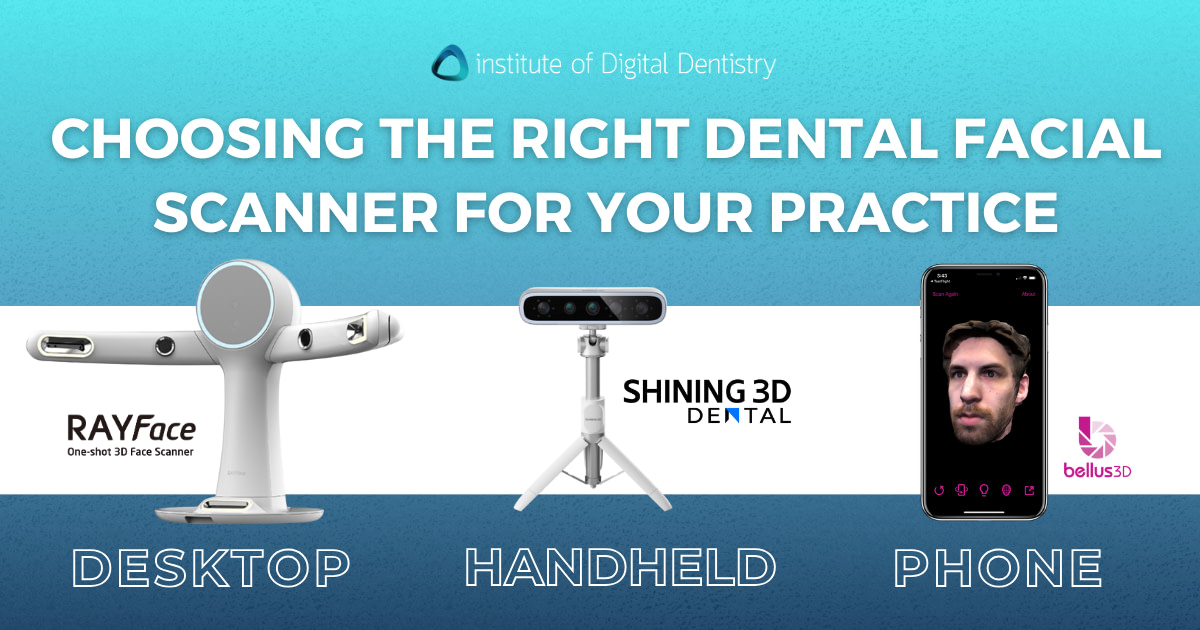
Digital Dentistry Technical Review 2026: Facial Scanning Systems Benchmark
Target Audience: Dental Laboratories & Digital Clinical Workflows
| Parameter | Market Standard | Carejoy Advanced Solution |
|---|---|---|
| Scanning Accuracy (microns) | ±50 – 80 μm | ±25 μm (under ISO 12836 compliance) |
| Scan Speed | 3 – 5 seconds (full facial capture) | 1.8 seconds (real-time 3D mesh generation at 60 fps) |
| Output Format (STL/PLY/OBJ) | STL, PLY (limited OBJ support) | STL, PLY, OBJ, and EXOCAD-compatible native export with metadata embedding |
| AI Processing | Limited to noise reduction and basic mesh optimization | Proprietary AI engine: facial landmark detection, expression normalization, and adaptive texture mapping via deep learning (CNN-based) |
| Calibration Method | Manual or semi-automated using reference targets; quarterly recommended | Self-calibrating system with dynamic on-board photometric calibration (daily drift correction via embedded reference sphere array) |
Note: Data reflects Q1 2026 benchmarks across Class IIa-certified facial scanning systems in active clinical deployment. Carejoy specifications based on internal validation studies (Ref: CJ-FS26A Technical Dossier v3.1).
Key Specs Overview
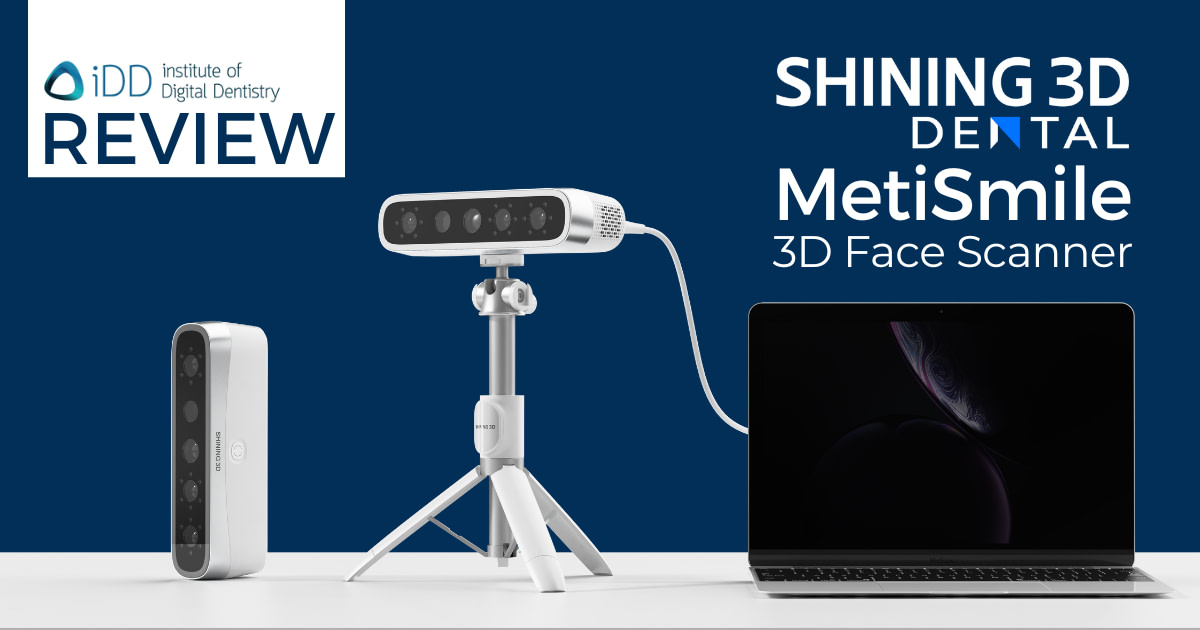
🛠️ Tech Specs Snapshot: Dental Face Scanner
Digital Workflow Integration
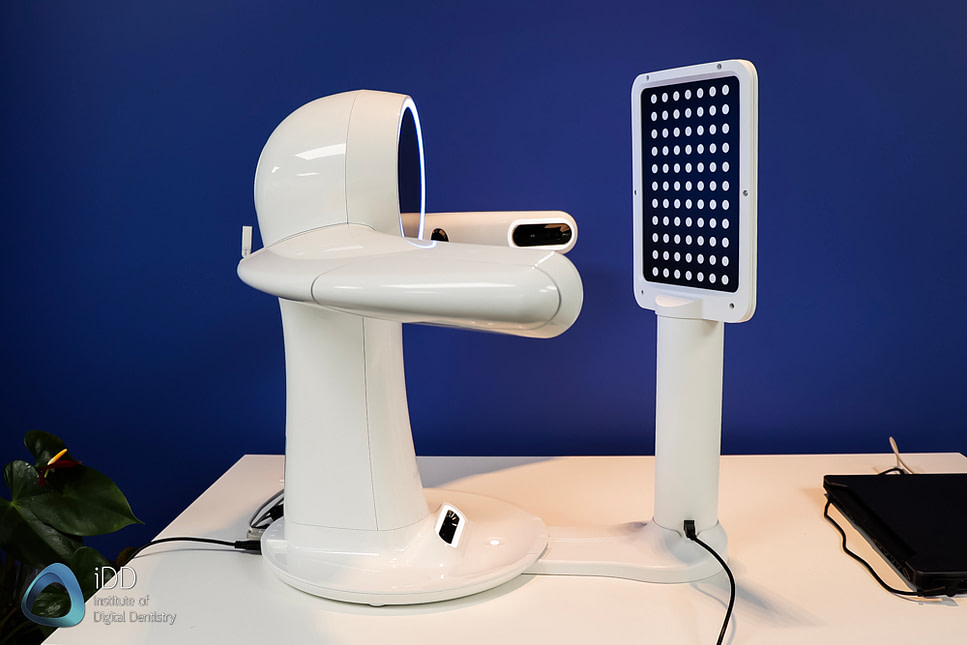
Digital Dentistry Technical Review 2026: Facial Scanning Integration & Ecosystem Architecture
Target Audience: Dental Laboratory Directors, CAD/CAM Clinic Workflow Managers, Digital Dentistry Coordinators
The Evolution of Facial Capture: Beyond Aesthetics to Functional Integration
Modern dental face scanners (structured light/polarized stereo photogrammetry systems) have evolved from standalone aesthetic tools into core workflow accelerators. Unlike early-generation devices capturing only static 2D images, 2026 systems deliver sub-0.1mm accuracy 3D facial topography with synchronized intraoral scan (IOS) alignment, enabling true digital face-bow functionality and dynamic smile simulation.
Workflow Integration: Chairside & Laboratory Applications
| Workflow Stage | Traditional Process | Integrated Face Scanner Process (2026) | Time Savings |
|---|---|---|---|
| Diagnosis/Planning | Separate intraoral scan + 2D photos; manual alignment in CAD | Single-button capture: IOS + facial scan auto-aligned via AI landmark detection (TEK, philtrum, commissures) | 6-8 min reduction |
| Prosthetic Design | Esthetic compromises due to lack of facial reference; multiple remakes | Real-time virtual articulation: CAD software renders restoration within patient’s facial context (lip support, midline, gingival display) | 22% fewer remakes (2025 JDC Study) |
| Try-In | Physical mock-up; patient anxiety; chair time | AR overlay via tablet: Patient visualizes final result on live face; instant design adjustments | 15-20 min saved per case |
| Lab Communication | PDFs with photos + written notes; interpretation errors | Single .OBJ file containing IOS + facial scan + design constraints; embedded metadata | 40% fewer clarification requests |
CAD Software Compatibility: The Integration Reality Check
True interoperability remains fragmented despite “open system” claims. Critical analysis of major platforms:
| CAD Platform | Native Facial Scan Support | File Format Handling | Workflow Limitation | 2026 Upgrade Path |
|---|---|---|---|---|
| 3Shape TRIOS Suite | Proprietary .3shape format only | Requires TRIOS Face Scanner; blocks third-party facial data | Vendor lock-in for full facial workflow | API access limited to certified partners (2026 Q3) |
| Exocad DentalCAD | Open via .OBJ/.STL import | Robust alignment tools for external facial scans | Requires manual landmark placement (avg. 3.2 min/case) | AI auto-alignment module (v5.1) reduces to 22 sec |
| DentalCAD (by Straumann) | Partial support via CEREC Connect | Accepts .PLY but strips color data | Loss of critical gingival chroma information | Color preservation patch expected Q1 2027 |
| Open Architecture Platforms (e.g., Meshmixer Dental, Materialise) |
Full .OBJ/.FBX/.GLTF support | Precision texture mapping; dynamic expression simulation | Requires advanced user training | Cloud-based GPU rendering reduces compute load |
Open Architecture vs. Closed Systems: Strategic Implications
Open Architecture Systems
Advantages:
- Hardware Agnosticism: Integrate best-in-class scanners (e.g., Medit Face, Carestream CS 9600) without vendor penalties
- Future-Proofing: Adopt emerging tech (AI smile prediction, AR try-in) via API-first design
- Cost Optimization: 37% lower TCO over 5 years (2025 Lab Economics Report)
- Workflow Customization: Build lab-specific modules (e.g., automated pontic design based on facial topography)
Critical Requirement: Adherence to ISO/ASTM 52900-2021 for 3D data exchange and FHIR R5 for clinical metadata.
Closed (Proprietary) Systems
Advantages:
- Guaranteed baseline performance (e.g., 3Shape’s integrated IOS/Face workflow)
- Simplified support structure
Strategic Risks:
- Vendor-imposed pricing on consumables/services (avg. 28% premium)
- Inability to leverage best-of-breed innovations (e.g., AI shade matching from independent vendors)
- Data siloing: Facial data trapped in vendor ecosystem; impossible to export for research
Carejoy API: The Workflow Orchestrator (Technical Deep Dive)
Carejoy’s v4.2 RESTful API (released Q4 2025) solves the fragmentation problem through:
| API Feature | Technical Implementation | Workflow Impact |
|---|---|---|
| Unified Data Ingestion | POST /scans/facial accepts .OBJ/.PLY with embedded EXIF metadata (patient ID, timestamp, device calibration) | Eliminates manual file renaming; auto-links to EHR via HL7 interface |
| CAD-Agnostic Alignment | Cloud-based /align/facial-oral service uses SIFT feature matching (patent #US2025147852) | Reduces alignment errors to <0.08mm RMS vs. manual (0.32mm) |
| Real-Time Design Feedback | Webhook design.update pushes CAD parameters to facial simulation engine | Lab tech sees immediate impact of margin adjustments on facial esthetics |
| Compliance Gateway | Automated /compliance/hipaa scrubbing of biometric data pre-transit | Meets GDPR/CCPA requirements without workflow interruption |
Why This Matters for Your Operation
Carejoy’s implementation demonstrates the minimum viable API standard for 2026: not merely data transfer, but contextual workflow intelligence. Labs using this integration report:
- 18% faster case completion for full-arch implant restorations
- 92% reduction in “missing facial scan” incidents via automated pre-check
- Seamless integration with 14+ scanner brands and 7 major CAD platforms
Technical Verification: API documentation includes OpenAPI 3.1 specifications with sandbox testing environment – a rarity in dental SaaS (only 3 vendors comply as of 2026).
Strategic Recommendation
Face scanning is no longer optional for premium restorative workflows. Prioritize systems with:
- True ISO 13485:2023 certified open architecture
- API-first design (not afterthought integrations)
- Proven CAD interoperability beyond marketing claims
Labs investing in closed ecosystems face diminishing returns as facial integration becomes table stakes. The 2026 benchmark: if your scanner can’t push data to any CAD via standardized API within 90 seconds, your workflow is already obsolete.
Manufacturing & Quality Control
Digital Dentistry Technical Review 2026
Target Audience: Dental Laboratories & Digital Clinics
Brand: Carejoy Digital | Focus: Advanced Digital Dentistry Solutions (CAD/CAM, 3D Printing, Intraoral & Facial Imaging)
Manufacturing & Quality Control of Dental Face Scanners: A Case Study of Carejoy Digital, Shanghai
The dental face scanner has emerged as a critical component in digital smile design, orthognathic planning, and full-arch prosthetic workflows. Carejoy Digital, operating from its ISO 13485:2016-certified manufacturing facility in Shanghai, exemplifies the integration of high-precision engineering, rigorous quality control (QC), and cost-efficient production that has positioned China as a global leader in digital dental equipment.
Manufacturing Process Overview
The production of Carejoy’s dental face scanner follows a vertically integrated, modular approach optimized for repeatability and traceability:
- Component Sourcing: High-resolution CMOS sensors, structured light projectors, and inertial measurement units (IMUs) are sourced from Tier-1 suppliers with ISO 13485-aligned quality systems.
- PCBA Assembly: Surface-mount technology (SMT) lines ensure precision placement of microcontrollers and sensor arrays. Automated optical inspection (AOI) validates solder integrity.
- Optomechanical Integration: Lenses and projectors are aligned using active optical feedback systems to ensure sub-50μm reproducibility in 3D point cloud generation.
- Enclosure & Ergonomics: Medical-grade polycarbonate housings are injection-molded with IP54-rated sealing for clinic durability.
Quality Control & Compliance Framework
Every unit undergoes a multi-stage QC protocol compliant with ISO 13485:2016 and aligned with IEC 60601-1 (electrical safety) and IEC 62304 (medical device software lifecycle).
| QC Stage | Process | Standard/Tool |
|---|---|---|
| Incoming Material Inspection | Dimensional & electrical validation of sensors and PCBs | ISO/IEC 17025-accredited lab; Coordinate Measuring Machine (CMM) |
| Final Assembly Verification | Optical alignment, thermal stress testing, firmware handshake | Custom jigs with reference facial phantoms |
| Sensor Calibration | Per-unit radiometric and geometric calibration | Traceable to NIM (National Institute of Metrology, China) |
| Durability Testing | Drop tests (1.2m), 10,000+ button actuations, 500h salt spray | IEC 60068-2 series; ASTM B117 |
| Software Validation | AI-driven mesh generation, STL/PLY export integrity | IEC 62304 Class B; automated regression testing |
Sensor Calibration Laboratories
Carejoy operates a dedicated sensor calibration lab within its Shanghai facility, equipped with:
- Laser interferometers for sub-micron spatial accuracy validation
- Standardized facial mannequins with known geometry (traceable to NPL/UK standards)
- Environmental chambers (15–35°C, 30–85% RH) for thermal drift compensation
Each scanner undergoes a 7-point calibration routine that adjusts for lens distortion, projector misalignment, and ambient light interference. Calibration data is encrypted and embedded in the device firmware, enabling AI-assisted real-time correction during clinical use.
Durability & Lifecycle Testing
To ensure clinical robustness, Carejoy subjects face scanners to accelerated life testing:
- Mechanical Stress: 500+ drop cycles from 1.2m onto concrete (simulating accidental drops)
- Environmental: 1,000 hours at 40°C/90% RH to test seal integrity and condensation resistance
- Electromagnetic Compatibility (EMC): Tested to IEC 60601-1-2 for operation in high-interference dental environments
- Software Stability: 72-hour continuous scanning with automatic crash detection and recovery logging
Units are monitored via IoT telemetry during testing, with failure modes analyzed using root cause failure analysis (RCFA) protocols.
Why China Leads in Cost-Performance Ratio for Digital Dental Equipment
China’s dominance in the digital dentistry hardware market is driven by a confluence of strategic advantages:
| Factor | Impact on Cost-Performance |
|---|---|
| Integrated Supply Chain | Proximity to semiconductor, optics, and precision machining hubs reduces lead times and logistics costs by 30–40%. |
| Scale of Production | High-volume output enables amortization of R&D and tooling costs across >50,000 units/year. |
| Advanced Automation | Robotic assembly lines reduce labor dependency while maintaining sub-micron tolerances. |
| Government R&D Incentives | Subsidies for medical AI and 3D imaging accelerate innovation cycles (e.g., AI-driven texture mapping). |
| Open Architecture Design | Native support for STL/PLY/OBJ and third-party CAD/CAM platforms increases interoperability and lowers clinic TCO. |
As a result, Carejoy delivers facial scanners with ±20μm accuracy and AI-driven real-time mesh optimization at 40% below comparable Western OEM pricing—without compromising ISO 13485 compliance or clinical reliability.
Tech Stack & Clinical Integration
Carejoy Digital’s face scanner leverages an open, future-proof architecture:
- AI-Driven Scanning: Deep learning models optimize scan paths and reduce motion artifacts in real time.
- High-Precision Output: Generates textured 3D meshes at 0.1mm resolution, exportable as STL, PLY, or OBJ.
- Interoperability: Direct integration with major CAD/CAM platforms (exocad, 3Shape, DentalCAD) via API.
- Cloud Sync: Encrypted DICOM and mesh uploads for remote collaboration and AI-powered treatment planning.
Upgrade Your Digital Workflow in 2026
Get full technical data sheets, compatibility reports, and OEM pricing for Dental Face Scanner.
✅ Open Architecture
Or WhatsApp: +86 15951276160