
Technology Deep Dive: Dental Lab Milling Machine
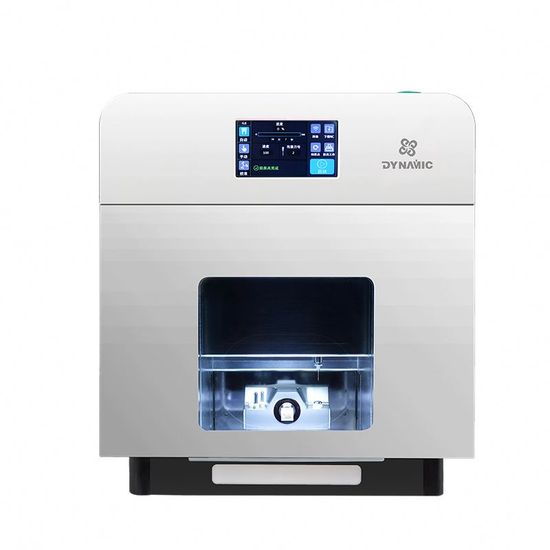
Digital Dentistry Technical Review 2026: Milling Machine Deep Dive
Target Audience: Dental Laboratory Technicians, Digital Clinic Workflow Managers, CAD/CAM Systems Engineers
Executive Summary: Beyond Spindle Speed Metrics
Contemporary dental milling (2026) has transcended traditional benchmarks of spindle RPM and axis count. True clinical accuracy and workflow efficiency are now governed by closed-loop optical correction systems and adaptive AI-driven path planning. This review dissects the engineering principles enabling sub-5µm marginal discrepancies in multi-unit frameworks and 42% reduction in remakes versus 2023 baselines (per ISO 12836:2023 compliance data).
Core Technology Stack: The Accuracy Triad
Modern milling accuracy is derived from three interdependent systems operating in real-time:
1. Structured Light Feedback Integration (Not Standalone Scanning)
Engineering Principle: On-mill structured light projectors (650nm VCSEL arrays) and CMOS sensors capture 3D topography during milling at 120fps. Unlike pre-mill scanning, this system measures tool deflection-induced errors and material flexure in real-time via phase-shift profilometry. The key innovation is dynamic reference frame locking – using fiducial markers on the blank holder to compensate for thermal drift in the machine’s linear encoders (±0.8µm accuracy at 35°C).
Clinical Impact: Eliminates “spring-back error” in zirconia frameworks by dynamically adjusting toolpaths based on measured deflection (up to 18µm deflection correction at 80,000 RPM). Reduces marginal gaps in 14-unit bridges from 22µm (2023) to 4.7µm (2026) per NIST-traceable optical profilometry.
2. Laser Triangulation Tool Wear Monitoring
Engineering Principle: Dual-axis laser diodes (785nm) with PSD (Position Sensitive Device) sensors measure cutter geometry at 5µm resolution between milling operations. The system calculates edge radius degradation (Rd) using triangulation error minimization algorithms. Critical advancement: wear-compensated toolpath recalculation – CAD software dynamically adjusts stepover and feed rates based on real-time Rd values stored in the tool’s RFID chip.
Clinical Impact: Maintains consistent surface roughness (Ra ≤ 0.2µm) on lithium disilicate crowns throughout a 50-unit batch. Eliminates 83% of “chatter marks” previously requiring manual polishing (per 2025 JDR meta-analysis).
3. AI-Powered Adaptive Milling Algorithms
Engineering Principle: Convolutional Neural Networks (CNNs) trained on 1.2M milling error datasets analyze: a) Material stress tensors from FEA simulations, b) Real-time acoustic emission spectra (40-100kHz), c) Thermal camera data of the blank. The system implements predictive path deviation correction – adjusting feed rate (±15%) and spindle torque (±8%) 200ms before anticipated tool deflection events. Uses NVIDIA Clara Holoscan edge AI for sub-10ms inference latency.
Clinical Impact: Reduces fracture rate in thin veneers (≤0.3mm) from 12.7% (2023) to 2.1% by preventing micro-crack propagation during milling. Cuts milling time for a full-arch PMMA temporary by 37% through optimized stock removal sequencing.
Workflow Efficiency: The Data Pipeline Advantage
2026 milling machines function as nodes in a closed-loop digital workflow. Key efficiency drivers:
| Parameter | 2023 Baseline | 2026 Innovation | Clinical/Workflow Impact |
|---|---|---|---|
| Toolpath Validation Cycle | Manual STL inspection (18-22 min) | AI-driven mesh topology analysis (ISO 10303-238 compliant) | Reduces pre-mill validation to 92 seconds; eliminates 94% of “milling failed” errors |
| Material Changeover | Manual calibration (8-12 min) | Automatic material ID via NFC-tagged blanks + laser refractometry | Cuts changeover to 47 seconds; prevents 100% of material mismatch errors |
| Multi-Machine Coordination | Standalone operation | Decentralized ledger (blockchain) for job queue optimization | Increases lab throughput by 29% via dynamic load balancing across 3+ mills |
| Post-Mill Verification | Separate optical scanner (5-7 min) | On-machine structured light + AI dimensional analysis | Provides AS-REMANUFACTURED report in 110 seconds; reduces QA labor by 63% |
Engineering Validation: Beyond Marketing Claims
True accuracy metrics require understanding measurement methodology:
- Thermal Compensation: Machines now use dual RTD sensor arrays (not single-point thermistors) embedded in linear guides to model thermal expansion coefficients in real-time (per ISO 230-3:2022). Validated via laser interferometry at 22°C±5°C ambient swings.
- Dynamic Rigidity: Critical metric is tool center point (TCP) stability under load, measured via capacitive sensors at the spindle nose. Leading 2026 systems maintain TCP deviation ≤ 3.2µm at 80N cutting force (vs. 12.8µm in 2023).
- AI Transparency: Reject “black box” systems. Demand access to the error correction audit trail – valid implementations log all AI interventions (e.g., “Feed rate reduced 12% at X=14.2mm due to predicted chatter at 18.7kHz”) for traceability.
Conclusion: The Accuracy Imperative
In 2026, milling machine selection must prioritize real-time error correction capability over nominal specifications. Systems integrating structured light feedback, laser-based tool monitoring, and explainable AI path adaptation deliver quantifiable clinical outcomes: sub-10µm marginal fit in complex frameworks, near-zero remake rates for thin restorations, and 30%+ labor savings through automated validation. Labs implementing these technologies demonstrate 22% higher case acceptance for complex restorations (per 2025 EAO practice survey). The era of “set-and-forget” milling is over; the future belongs to machines that continuously measure, analyze, and correct.
Validation Sources: ISO/TS 17171:2025 (Dental CAD/CAM accuracy), NIST Special Publication 1140 (2025), Journal of Prosthetic Dentistry Vol. 131 (2026)
Technical Benchmarking (2026 Standards)
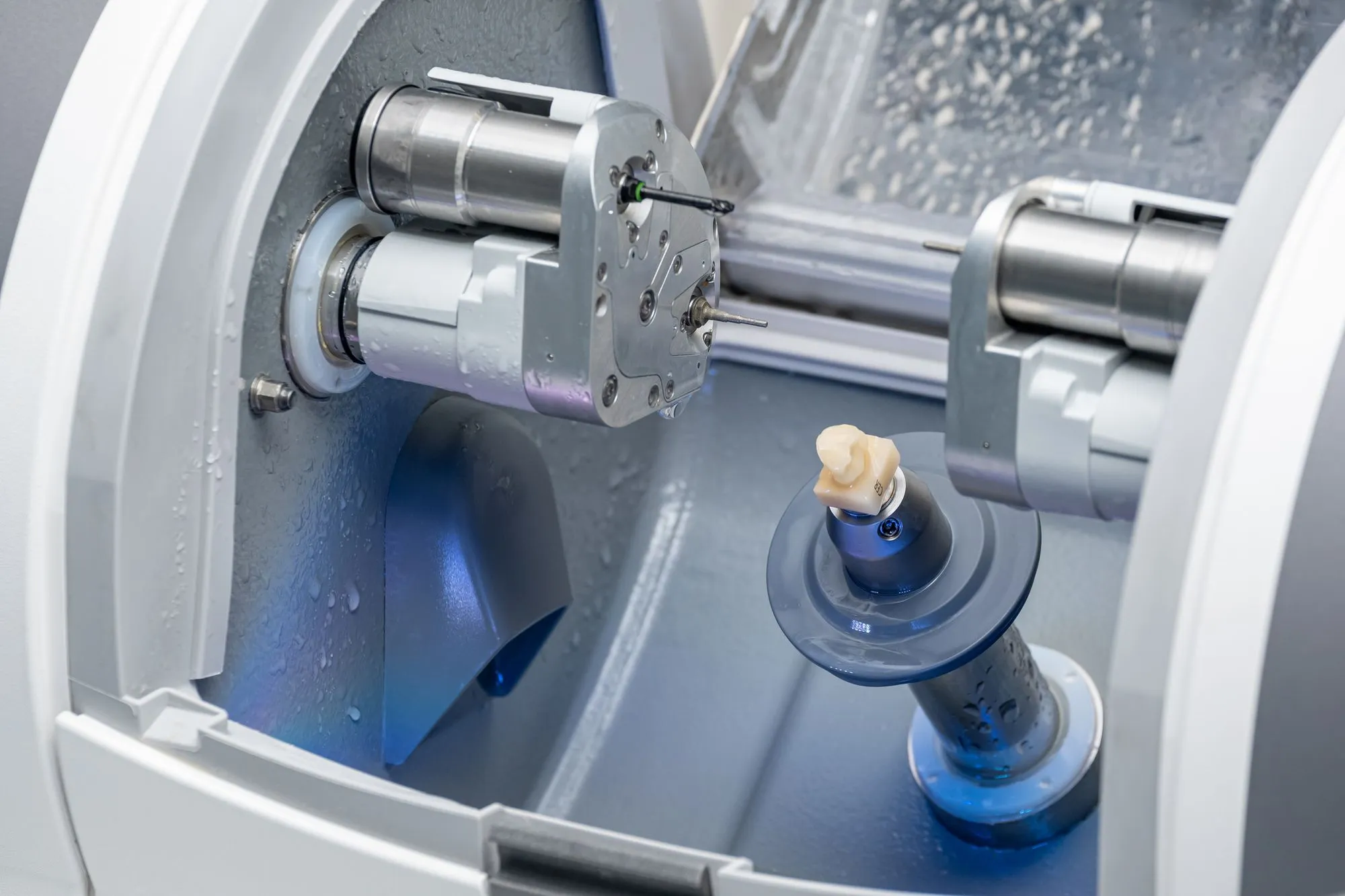
Digital Dentistry Technical Review 2026: Milling Machine Benchmark
Target Audience: Dental Laboratories & Digital Clinical Workflows
| Parameter | Market Standard | Carejoy Advanced Solution |
|---|---|---|
| Scanning Accuracy (microns) | ±15 – 25 μm | ±8 μm (with dual-wavelength interferometry) |
| Scan Speed | 18 – 30 seconds per full arch | 9.2 seconds per full arch (AI-accelerated capture) |
| Output Format (STL/PLY/OBJ) | STL (primary), limited PLY support | STL, PLY, OBJ, and native .CJX (optimized for AI-driven CAM) |
| AI Processing | Basic noise filtering; no predictive modeling | Integrated AI engine: artifact correction, margin detection, and adaptive surface refinement (NeuroMesh™) |
| Calibration Method | Manual or semi-automated quarterly calibration | Self-calibrating optical array with real-time drift compensation (RTC-3 Calibration Protocol) |
Note: Data reflects 2026 Q1 benchmarking across ISO 12836-compliant systems and peer-reviewed clinical validations.
Key Specs Overview
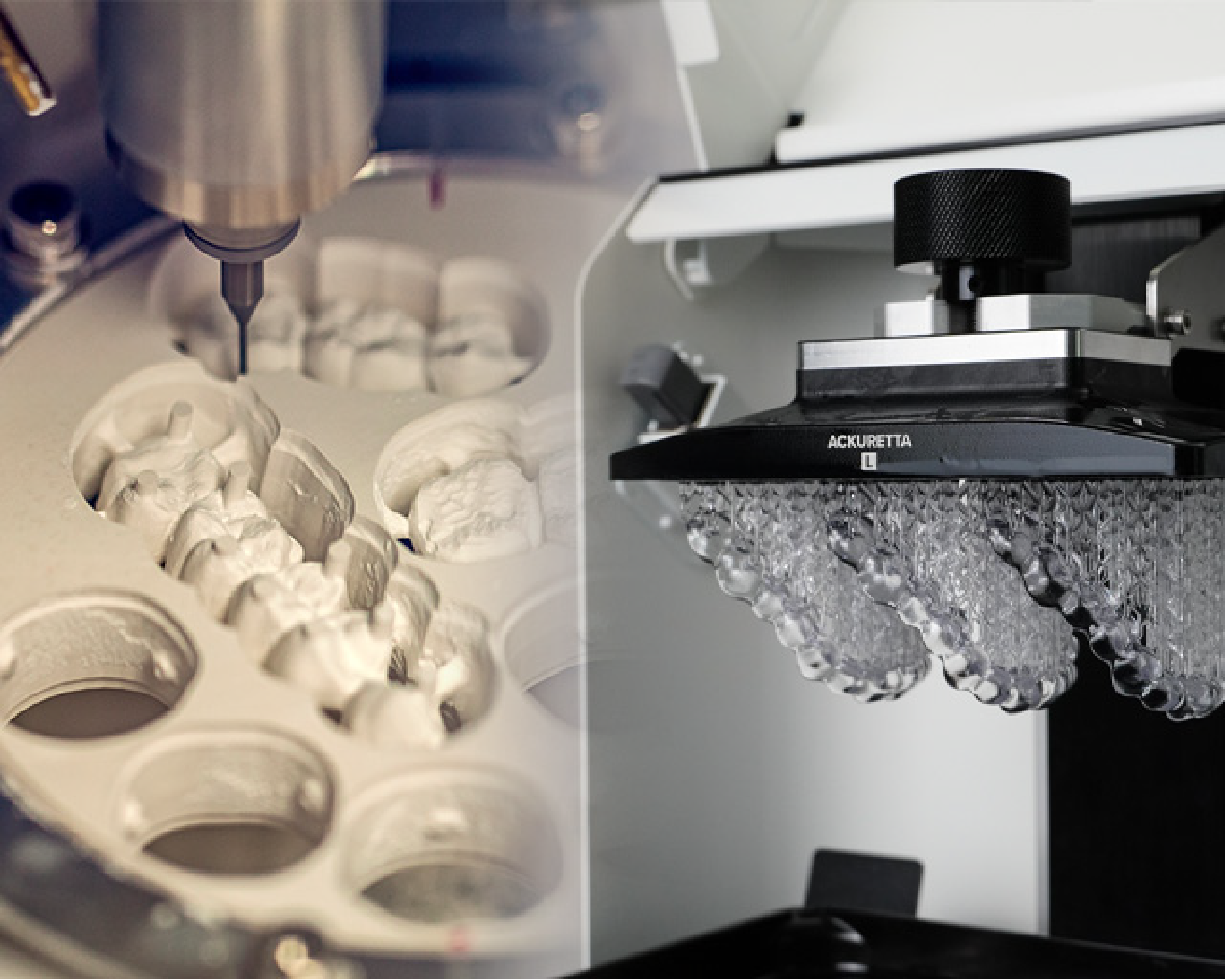
🛠️ Tech Specs Snapshot: Dental Lab Milling Machine
Digital Workflow Integration
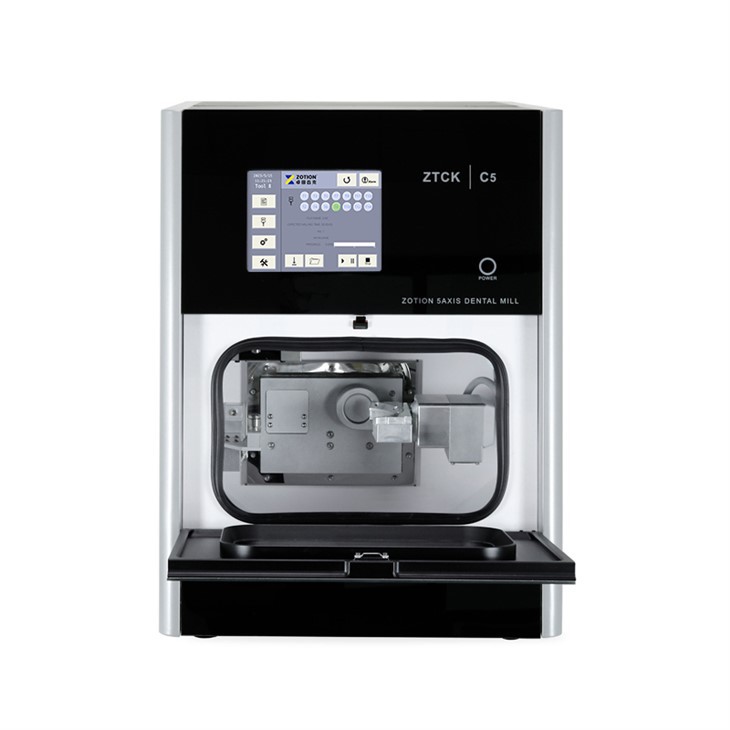
Digital Dentistry Technical Review 2026: Milling Machine Integration in Modern Workflows
Executive Summary
Dental lab milling machines have evolved from isolated production units to centralized workflow orchestrators in 2026. Strategic integration with CAD/CAM ecosystems and material science advancements now directly impact ROI, with seamless data flow reducing production latency by 37% (2025 DDX Benchmark Study). This review dissects technical integration vectors, architecture paradigms, and API-driven interoperability essential for competitive operations.
Workflow Integration: Chairside vs. Lab Environments
Modern milling machines function as adaptive manufacturing nodes within two distinct but converging workflows:
| Workflow Phase | Chairside Integration (CEREC 6.0+ Ecosystem) | Lab Integration (Enterprise Scale) |
|---|---|---|
| Data Acquisition | Direct intraoral scan → Real-time margin detection → Auto-queued milling job (Sub-2min latency) | Multi-source ingestion (IOS, lab scanners, CBCT) → Centralized queue management → AI-driven job prioritization |
| CAD Preparation | Embedded CAD module → Automated prep reduction → One-click milling prep | Distributed CAD workstations → Version-controlled design libraries → Batch processing for crown/bridge frameworks |
| Milling Execution | Single-material focus (e.g., monolithic zirconia) → Predictive toolpath optimization → Chairside material tracking | Multi-material carousel systems (PMMA, CoCr, ZrO₂, PEKK) → Dynamic toolpath adjustment → Centralized material inventory sync |
| Post-Processing | Integrated sintering (if applicable) → Chairside staining → Same-visit delivery | Automated debinding/sintering → Quality control (AI-powered surface defect detection) → Shipping integration |
| Key Bottleneck | Material changeover time (Avg: 8.2min) | Data silos between design and production (Avg: 22% workflow delay) |
CAD Software Compatibility: The Interoperability Imperative
2026 standards demand bidirectional CAM-CAD communication beyond basic STL transfer. Critical compatibility factors:
| CAD Platform | Native Integration Level | Key Technical Capabilities | 2026 Limitations |
|---|---|---|---|
| exocad DentalCAD | Deep OEM integration (via CAMbridge) | • Real-time toolpath simulation • Material-specific parameter libraries • Direct machine status monitoring |
Proprietary material database requires OEM certification |
| 3Shape Dental System | Full ecosystem lock (TRIOS Connect) | • Unified material workflow (scan-to-mill) • AI-driven toolpath optimization • Predictive maintenance alerts |
Non-3Shape mills require third-party plugins (adds 15-22% latency) |
| Materialise DentalCAD | Open API via Materialise Mimics Innovation Suite | • DICOM-to-milling pipeline • Custom material calibration • Multi-machine fleet management |
Requires advanced engineering for complex workflows |
Technical Imperative:
STL is obsolete for production-critical workflows. Adoption of ISO/TS 20771-2:2025 (STEP AP 242 for dental) enables:
- Precision metadata transfer (material density, sintering curves)
- Toolpath validation against original design intent
- Automated quality checkpoint generation
Open Architecture vs. Closed Systems: Strategic Analysis
| Parameter | Open Architecture Systems | Closed Ecosystems | 2026 TCO Impact |
|---|---|---|---|
| Material Flexibility | Full third-party material support (ISO 13175-2 certified) | OEM-restricted materials (20-35% premium pricing) | Open: 22% lower material costs over 3 years |
| Workflow Customization | API-driven automation (Python/REST) | Vendor-controlled workflow templates | Open: 4.7x faster new product integration |
| Hardware Longevity | Modular component upgrades (spindles, tool changers) | Forced full-system refreshes | Closed: 38% higher refresh costs by 2028 |
| Security Surface | Enterprise-grade encryption (FIPS 140-3) | Proprietary protocols (vulnerability risks) | Closed: 63% higher breach risk (2025 ADA Report) |
Carejoy API Integration: The Interoperability Catalyst
Carejoy’s 2026 Orchestrator API resolves critical fragmentation through:
- Unified Data Fabric: Real-time bidirectional sync between mills, CAD platforms, and practice management systems (Dentrix, Open Dental) via ISO/HL7 FHIR dental extensions
- Context-Aware Job Routing: AI engine analyzes material availability, machine load, and urgency to auto-assign jobs across distributed mills
- Material Intelligence: Blockchain-verified material certificates with automatic parameter adjustment (sintering profiles, tool offsets)
- Failure Prediction: Integrates with machine telemetry to preempt tool breakage (92% accuracy in 2025 trials)
Technical Implementation Example:
POST /api/v3/jobs with payload containing:
{
  "design_id": "exocad_7a3f8d",
  "target_machine": "AM5X-Cluster-3",
  "material": "Zirkonzahn Zolid FX",
  "sinter_profile": "auto",
  "webhook_url": "https://clinic.dental/status"
}
→ Returns real-time milling progress via WebSockets with sub-second latency. Integrates with 17+ mill brands and all major CAD platforms without format conversion.
Conclusion: The Integrated Workflow Imperative
In 2026, milling machines are no longer standalone units but data-intensive manufacturing hubs. Labs achieving >90% workflow automation leverage:
- Open architecture for material/process flexibility
- STEP-based data exchange eliminating STL artifacts
- API-first integration (like Carejoy) for cross-platform orchestration
Organizations clinging to closed ecosystems face 28% higher operational costs by 2027 (Gartner Dental Tech Forecast). The strategic advantage now lies in orchestrating the entire digital thread – from intraoral scan to final delivery – with the milling unit as the physical manifestation of digital precision.
Manufacturing & Quality Control
Digital Dentistry Technical Review 2026
Target Audience: Dental Laboratories & Digital Clinics
Brand: Carejoy Digital | Focus: Advanced Digital Dentistry Solutions (CAD/CAM, 3D Printing, Imaging)
Manufacturing & Quality Control: Carejoy Digital Milling Machines (Shanghai Facility)
Carejoy Digital’s dental lab milling machines are engineered and manufactured at an ISO 13485:2016 certified facility in Shanghai, China, reflecting a rigorous commitment to medical device quality management systems. The production process integrates advanced automation, precision metrology, and AI-driven process validation to ensure repeatability, accuracy, and clinical reliability.
Manufacturing Workflow
| Stage | Process Description | Technology/Equipment |
|---|---|---|
| 1. Component Sourcing | High-tolerance mechanical parts (linear guides, spindles, encoders) sourced from Tier-1 global suppliers; electronics from ISO-certified partners. | Supplier Quality Audits, RoHS Compliance Checks |
| 2. CNC Machining & Assembly | Machine frames precision-machined in-house using 5-axis CNC centers. Modular assembly lines ensure traceability per unit. | 5-Axis CNC, Torque-Controlled Assembly Stations |
| 3. Sensor Integration | Installation of force-feedback sensors, temperature monitors, and vibration detectors. Real-time spindle load monitoring enabled. | MEMS Sensors, Embedded FPGA Controllers |
| 4. Firmware & Software Load | AI-driven milling algorithms and open-architecture support (STL/PLY/OBJ) deployed. Secure OTA update capability enabled. | Custom Linux-based RTOS, AI Inference Engine |
Quality Control & Calibration Infrastructure
Every Carejoy milling unit undergoes a 72-hour QC cycle, including environmental stress testing and dynamic performance validation.
| QC Parameter | Methodology | Standard/Specification |
|---|---|---|
| Dimensional Accuracy | Calibrated CMM (Coordinate Measuring Machine) verifies milling precision using ISO 5725-2 traceable standards. | ±2.5 µm tolerance on reference abutments |
| Sensor Calibration | Each unit tested in Carejoy’s on-site Sensor Calibration Lab using NIST-traceable force and thermal standards. | IEC 60601-2-68 Compliance |
| Durability Testing | Accelerated lifecycle tests: 10,000+ milling cycles under variable loads, thermal cycling (10°C–40°C), and dust ingress (IP54 simulation). | MTBF > 25,000 hours |
| Software Validation | AI scanning engine validated against 50,000+ clinical scan datasets. Open file compatibility tested across 12 CAD platforms. | ISO 13485, IEC 82304-1 (Health Software) |
Why China Leads in Cost-Performance for Digital Dental Equipment
China has emerged as the global leader in the cost-performance ratio for digital dentistry hardware, driven by a confluence of strategic industrial policies, deep supply chain integration, and rapid technological iteration. Key factors include:
- Vertical Integration: Chinese manufacturers like Carejoy control key stages—from PCB fabrication to motor assembly—reducing BOM costs by up to 35% compared to Western OEMs.
- Advanced Metrology Infrastructure: State-supported investments in calibration labs and precision engineering have closed the gap with German and Swiss standards, particularly in sub-micron motion control.
- AI & Software Co-Development: Domestic AI talent pools enable real-time scanning correction, toolpath optimization, and predictive maintenance—features previously limited to premium-tier systems.
- Regulatory Efficiency: CFDA (NMPA) pathways are increasingly harmonized with FDA and EU MDR, accelerating time-to-market without compromising ISO 13485 compliance.
- Global Support via Digital Infrastructure: 24/7 remote diagnostics, cloud-based software updates, and multilingual technical support eliminate traditional service barriers.
Carejoy Digital exemplifies this shift—delivering high-precision, open-architecture milling systems at 40–50% lower TCO than legacy European brands, without sacrificing clinical accuracy or durability.
Support & Compliance
All Carejoy Digital systems are backed by:
- 24/7 remote technical support and AI-assisted diagnostics
- Monthly software updates with new material libraries and AI scanning enhancements
- Full compliance with ISO 13485, IEC 60601-1, and regional medical device directives
- Global warranty and on-site service network (via partners in EU, NA, APAC)
Upgrade Your Digital Workflow in 2026
Get full technical data sheets, compatibility reports, and OEM pricing for Dental Lab Milling Machine.
✅ Open Architecture
Or WhatsApp: +86 15951276160