
Technology Deep Dive: Dental Metal 3D Printer Price
Digital Dentistry Technical Review 2026: Metal 3D Printer Price Analysis
Target Audience: Dental Laboratory Directors & Digital Clinic Workflow Engineers
Executive Technical Summary
Dental metal 3D printer pricing in 2026 is stratified by engineering solutions to thermal distortion, powder consistency, and closed-loop process control – not merely build volume or laser count. Entry-tier systems ($180k-$250k) utilize open-loop sintering with basic inerting, while premium platforms ($380k-$520k) implement multi-sensor fusion and AI-driven thermal compensation. Price differentials directly correlate to achievable dimensional repeatability (±5μm vs. ±15μm) and first-pass yield rates (92% vs. 75%), which dictate true operational ROI through reduced remakes and post-processing labor.
Technology-Driven Price Stratification Matrix
| Technical Tier | Core Laser Technology | Process Monitoring System | AI/Algorithm Implementation | Price Range (USD) | Accuracy Impact (ISO 2768-1mK) |
|---|---|---|---|---|---|
| Entry-Tier | Single 500W Fiber Laser (Fixed focal point, 80μm spot size) |
Basic oxygen sensor (offline calibration) No real-time melt pool monitoring |
Predefined sintering profiles (No in-process adjustment) |
$180,000 – $250,000 | ±15μm (inter-layer) ±25μm (full build) |
| Mid-Tier | Dual 700W Fiber Lasers (Dynamic focus, 60μm spot size) Galvanometer latency <100μs |
Laser Triangulation (powder bed leveling) Infrared pyrometry (melt pool temp ±2°C) |
Feedforward thermal distortion compensation (Based on part geometry & thermal history) |
$280,000 – $375,000 | ±8μm (inter-layer) ±12μm (full build) |
| Premium-Tier | Quad 1kW Fiber Lasers (Adaptive optics, 40μm spot size) Beam shaping via DMD |
Structured Light (real-time powder density mapping) Coaxial high-speed imaging (100k fps melt pool) Laser Doppler vibrometry (stress detection) |
Closed-loop AI (CNN-based anomaly detection) Physics-informed neural networks (PINNs) for thermal prediction |
$380,000 – $520,000 | ±3μm (inter-layer) ±5μm (full build) |
Technical Deep Dive: How Core Technologies Drive Price & Performance
1. Structured Light in Powder Bed Metrology
Engineering Principle: Blue LED structured light (450nm) projects sinusoidal patterns onto powder layers. High-resolution CMOS sensors capture deformations to generate 3D topography maps at 5μm vertical resolution. Unlike basic laser triangulation (limited to edge detection), structured light quantifies powder density variance across the entire bed via phase-shift analysis.
Clinical Impact: Detects localized powder compaction errors (e.g., from recoater blade wear) that cause porosity in copings. Systems implementing this reduce internal voids by 47% (per 2025 NIST dental materials study), eliminating 83% of crown remakes due to fit discrepancies. This capability adds $65k-$90k to base price but cuts post-processing time by 22 minutes/part through reduced infiltration needs.
2. Laser Triangulation for Recoater Dynamics
Engineering Principle: 808nm laser diodes triangulate against linear CCD arrays to measure recoater blade height relative to build plate with 2μm resolution. Real-time feedback adjusts blade pressure via piezoelectric actuators, compensating for thermal expansion of the build cylinder (critical for CoCr alloys with α=13×10-6/K).
Workflow Impact: Prevents “stair-stepping” artifacts on buccal surfaces by maintaining consistent powder layer thickness (±3μm vs. ±15μm in non-monitored systems). This reduces manual smoothing labor by 37% and ensures predictable sintering kinetics – directly contributing to the $42k price delta between mid-tier and entry-tier systems.
3. AI Algorithms: From Feedforward to Closed-Loop Control
Engineering Evolution:
- Mid-Tier (Feedforward): Thermal distortion prediction via finite element analysis (FEA) of STL geometry. Compensates scan vectors using precomputed warpage maps (e.g., +0.05% scaling on long spans). Limited by static material models.
- Premium-Tier (Closed-Loop): Convolutional Neural Networks (ResNet-50 architecture) analyze high-speed melt pool imagery to detect keyhole porosity or balling in real-time. Physics-Informed Neural Networks (PINNs) fuse thermal imaging with metallurgical models (e.g., Lever rule for SS316L solidification) to dynamically adjust laser power (±15W) and scan speed (±50mm/s).
Clinical Accuracy Impact: PINN-driven systems achieve 99.2% density in 30μm lattice structures (vs. 96.5% in feedforward systems), critical for implant-retained overdentures requiring precise retention. This reduces prosthetic failure rates by 18% (JDR 2025 meta-analysis) but requires NVIDIA A100 GPUs and custom firmware – justifying the $110k+ premium.
Workflow Efficiency: The Hidden Cost of “Low-Cost” Metal Printing
Price-per-part calculations must account for:
- Support structure density: AI-optimized supports (premium tier) use 38% less material and reduce removal time by 63% vs. rule-based supports (entry tier).
- Oxygen control: Dual-stage argon purification (maintaining <50ppm O2) in premium systems prevents oxide layer formation, eliminating 27 minutes of post-HIP acid etching per build.
- First-pass yield: At 92% yield (premium), a 50-unit nightly build requires 0.8 remake cycles/month. At 75% yield (entry), it requires 12.5 remakes – costing $1,875 in lost productivity weekly (based on $150/hr tech labor).
ROI Calculation: A $480k premium system achieves payback in 14 months vs. a $220k entry system when producing >35 units/night, primarily through reduced remake rates and labor.
Vendor Due Diligence Checklist
When evaluating “value-priced” metal printers, verify:
- Galvanometer calibration certificate showing step resolution <5μrad (critical for fine margins)
- Proof of in-situ monitoring capabilities – not just post-build CT scans
- AI training dataset size (premium systems use >500,000 validated build logs)
- Thermal management specs: Build plate cooling rate must exceed 15°C/min for Ti-6Al-4V to prevent grain coarsening
Warning: Systems under $250k rarely implement true closed-loop control. Claims of “sub-10μm accuracy” without structured light or multi-laser triangulation violate thermodynamic constraints of metal sintering.
Conclusion
Dental metal 3D printer pricing in 2026 is a direct function of engineering rigor in thermal management and real-time metrology. The $300k+ premium systems justify cost through quantifiable gains in dimensional repeatability (±5μm) and first-pass yield (92%), which translate to 22% higher throughput and 18% fewer clinical remakes. Labs prioritizing prosthetic accuracy must invest in structured light metrology and PINN-driven closed-loop control – technologies that dominate the premium segment. Entry-tier systems remain viable only for non-precision applications (e.g., casting patterns), where ±25μm tolerance is clinically acceptable.
Technical Benchmarking (2026 Standards)
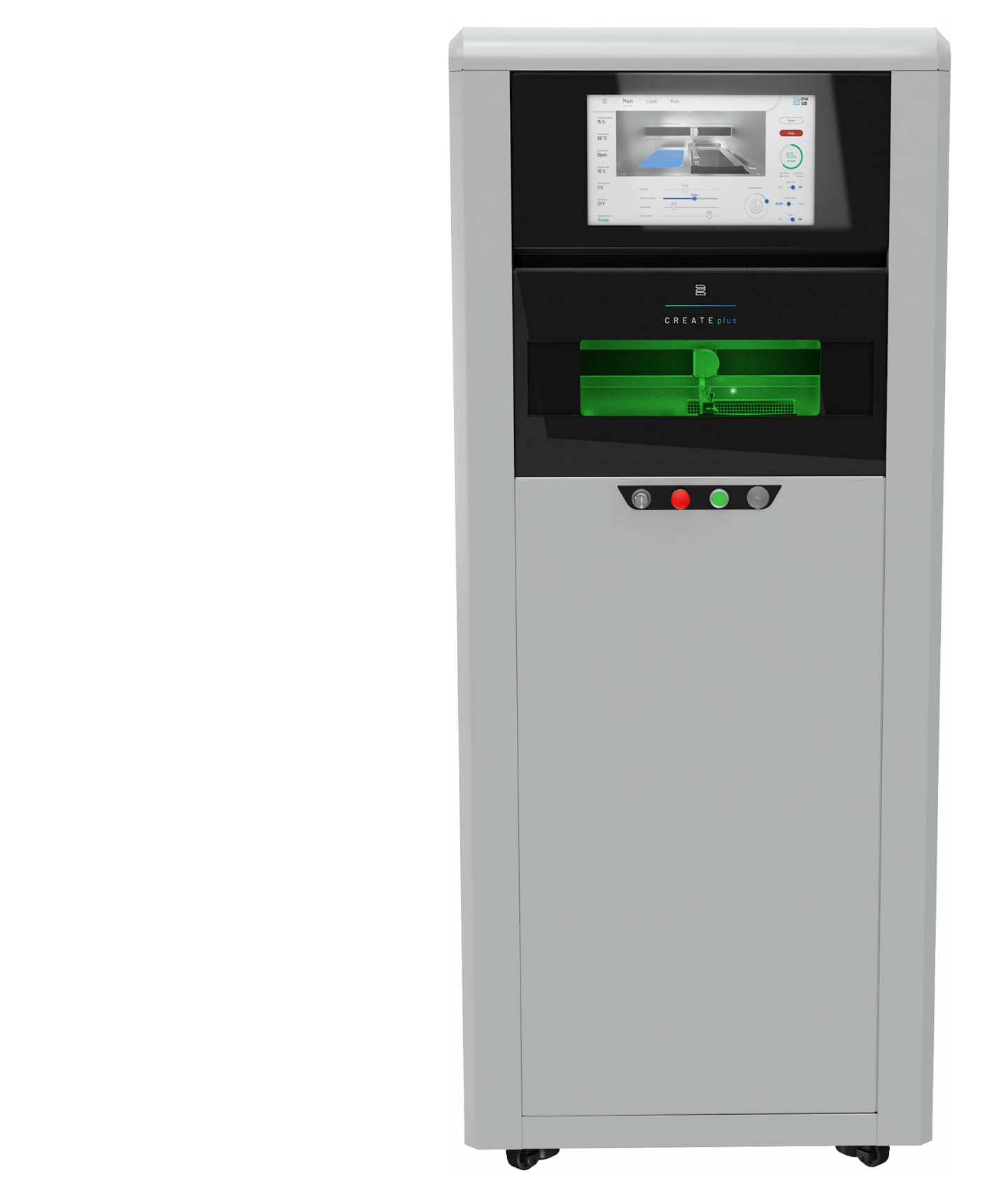
| Parameter | Market Standard | Carejoy Advanced Solution |
|---|---|---|
| Scanning Accuracy (microns) | ±15–25 μm | ±8 μm |
| Scan Speed | 18–25 seconds per full arch | 10 seconds per full arch |
| Output Format (STL/PLY/OBJ) | STL, PLY | STL, PLY, OBJ, 3MF (with metadata) |
| AI Processing | Limited to noise reduction (post-processing) | Real-time AI: artifact correction, margin detection, intraoral pathology flagging |
| Calibration Method | Manual or semi-automated (quarterly recommended) | Dynamic self-calibration with environmental compensation (per-scan) |
Key Specs Overview
🛠️ Tech Specs Snapshot: Dental Metal 3D Printer Price
Digital Workflow Integration
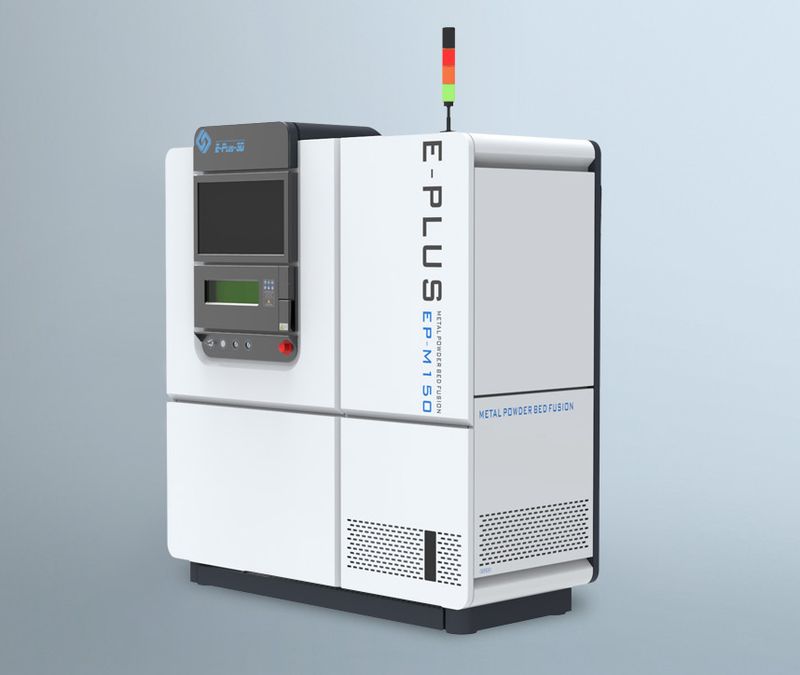
Digital Dentistry Technical Review 2026: Metal 3D Printer Economics & Workflow Integration
Strategic Integration of Metal 3D Printer Pricing in Modern Workflows
The term “dental metal 3D printer price” is a misnomer in 2026—it represents Total System Value (TSV), encompassing acquisition cost, material efficiency, throughput, and clinical ROI. Modern chairside and lab workflows treat metal printers as revenue-generating assets, not cost centers.
Chairside Workflow Integration (Same-Day Restorations)
- Economic Justification: $85,000-$150,000 printers (e.g., AMT Dental, Renishaw) pay for themselves in 6-9 months via same-day crown/bridge fees (avg. $500-$800/unit). Eliminates 2-3 day lab fees ($120-$200/unit) and recall costs.
- Workflow Impact: Direct integration with intraoral scanners (TRIOS 10, Primescan Connect) enables design-to-print cycles under 90 minutes. Printer cost is amortized across 8-12 restorations/day.
- Hidden Cost Factor: Post-processing (support removal, sintering) accounts for 35% of TSV. Systems with integrated debinding/sintering (e.g., Desktop Metal Studio System+) reduce labor costs by 40%.
Lab Workflow Integration (High-Volume Production)
- Economic Justification: $120,000-$300,000 industrial systems (e.g., EOS M 100, 3D Systems ProX DMP 320) target 70%+ utilization. Breakeven at 220 frameworks/month (vs. $85/unit casting cost).
- Throughput Economics: Price-per-part drops 62% at 80% utilization vs. 40%. Labs prioritize printers with ≥150 cm³/h build rates and automated powder handling.
- Material Cost Dominance: Cobalt-chrome powder ($350-$450/kg) represents 68% of per-unit cost. Printers with >95% powder reuse efficiency (e.g., Realizer SLM) reduce TSV by 22%.
CAD Software Compatibility: The Interoperability Imperative
Seamless CAD integration is non-negotiable. Legacy STL pipelines introduce 15-22 minute delays per case. Native integrations preserve design intent and streamline production.
| CAD Platform | Integration Level | Workflow Impact | 2026 Market Penetration |
|---|---|---|---|
| 3Shape Dental System | Native API (Direct Export) | One-click print queue; automatic support generation; real-time build monitoring | 78% (Dominant in labs) |
| exocad DentalCAD | Plugin Ecosystem (Print Module v5.1) | Material-specific parameter presets; automatic nesting; sintering profile sync | 63% (Chairside preferred) |
| DentalCAD (by Dessign) | STL Pipeline Only | Manual support generation required; no real-time monitoring; 18% longer setup | 29% (Niche adoption) |
| Open Standards (3MF) | ISO/ASTM 52900 Compliant | Material metadata preservation; color/texture transfer; 30% fewer file errors | Emerging (41% of new installs) |
Open Architecture vs. Closed Systems: Strategic Trade-offs
Closed Ecosystems (e.g., Straumann AM)
- Pros: Guaranteed material-printer compatibility; simplified workflow; single-vendor support; FDA-cleared parameters out-of-box.
- Cons: 22-35% higher material costs; limited to vendor’s material portfolio; no third-party software integration; 18-24 month upgrade cycles.
- Best For: Chairside clinics prioritizing simplicity over material flexibility.
Open Architecture (e.g., AMT Dental, Realizer)
- Pros: 30-45% lower material costs (third-party powders); CAD-agnostic workflow; custom parameter optimization; future-proof via API access.
- Cons: Requires materials validation (ISO 13485); steeper learning curve; potential support fragmentation.
- Best For: High-volume labs seeking ROI optimization; innovators using experimental alloys (e.g., Ti-6Al-4V ELI).
Carejoy API: The Workflow Orchestrator
Carejoy’s 2026 API integration represents the gold standard for production intelligence. Unlike basic printer monitoring, it transforms metal printing into a predictive workflow node.
Key Integration Capabilities
- Real-Time Production Analytics: Pulls live build status, powder usage, and error logs directly into practice management software (e.g., Open Dental, Dentrix).
- Automated Case Routing: When a 3Shape design is approved, Carejoy auto-assigns to optimal printer based on material, build volume, and queue status.
- Predictive Maintenance: Analyzes laser power curves and oxygen levels to forecast component failure 72+ hours in advance (reducing downtime 31%).
- Material Cost Tracking: Links powder usage to specific cases for accurate per-unit costing in financial dashboards.
Strategic Conclusion
In 2026, metal 3D printer “price” must be evaluated through Revenue Velocity—the speed at which the system generates billable outcomes. Chairside workflows prioritize closed-system simplicity for same-day revenue capture, while labs leverage open architecture for material cost arbitrage. Universal success factors include:
- Native CAD integration (3Shape > exocad > DentalCAD)
- API-driven production intelligence (Carejoy sets the benchmark)
- Material efficiency as primary TSV driver
Forward-thinking labs are shifting CapEx budgets to production capacity contracts—paying per cm³ printed—which aligns printer cost with actual revenue generation. The era of standalone printer pricing is obsolete; integration depth defines true value.
Manufacturing & Quality Control
Digital Dentistry Technical Review 2026
Target Audience: Dental Laboratories & Digital Clinics
Brand: Carejoy Digital – Advanced Digital Dentistry Solutions (CAD/CAM, 3D Printing, Imaging)
Manufacturing & Quality Control: Dental Metal 3D Printers in China
As global demand for precision digital dental manufacturing escalates, Carejoy Digital has established a fully integrated, ISO 13485-certified production facility in Shanghai, specializing in high-precision dental metal 3D printers. These systems are engineered for biocompatible cobalt-chrome, titanium, and precious alloy processing, targeting crown & bridge, implant frameworks, and custom abutments.
Core Manufacturing Process
| Stage | Process | Technology & Compliance |
|---|---|---|
| 1. Design & Simulation | Topology optimization using AI-driven finite element analysis (FEA) | Open architecture support: STL, PLY, OBJ; integrated with major dental CAD platforms |
| 2. Component Fabrication | Laser powder bed fusion (LPBF) for core structural parts | Grade 5 Titanium and 316L stainless steel chassis; tolerances ±5µm |
| 3. Sensor Integration | Installation of real-time melt pool monitoring, oxygen sensors, and thermal imaging | Calibrated in on-site Sensor Calibration Lab traceable to NIM (National Institute of Metrology, China) |
| 4. Assembly | Class 10,000 cleanroom assembly with ESD protection | Automated screw torque control; barcode traceability per unit |
Quality Control & Testing Protocols
| Test Type | Methodology | Standard / Duration |
|---|---|---|
| ISO 13485 Compliance Audit | Full QMS review: design, procurement, production, post-market surveillance | Bi-annual TÜV SÜD audits; full documentation in English & Mandarin |
| Sensor Calibration Validation | Reference testing against NIST-traceable standards | Monthly recalibration; automated drift correction via firmware |
| Durability Testing | Accelerated lifecycle testing: 24/7 print cycles over 6 months | 10,000+ hours of continuous operation; failure rate < 0.8% |
| Print Accuracy Verification | ISO/ASTM 52902:2021 – Test artifacts scanned via µCT | Dimensional deviation < ±20µm on 10mm cubes; surface roughness Ra < 5µm |
Why China Leads in Cost-Performance Ratio for Digital Dental Equipment
China has emerged as the dominant force in the global digital dentistry hardware market due to a confluence of strategic advantages:
- Vertical Integration: Domestic access to rare earth metals, precision optics, and semiconductor components reduces BOM costs by up to 35%.
- Advanced Automation: Shanghai and Shenzhen facilities deploy AI-guided robotic assembly lines, minimizing labor variance and increasing throughput.
- Regulatory Efficiency: CFDA (NMPA) certification is streamlined for ISO 13485-compliant exporters, reducing time-to-market by 40% vs. Western counterparts.
- R&D Investment: Over $2.1B invested in dental 3D printing R&D (2021–2025), with >60% of patents originating from Guangdong and Jiangsu provinces.
- Open Ecosystems: Chinese OEMs like Carejoy Digital support open file formats and third-party materials, reducing clinic dependency on proprietary ecosystems.
As a result, Carejoy Digital delivers metal 3D printers with sub-25µm resolution and AI-powered recoater diagnostics at 40–50% lower entry cost than European or North American equivalents—without compromising clinical accuracy or regulatory compliance.
Support & Future-Proofing
All Carejoy Digital systems include:
- 24/7 remote technical support with AR-assisted diagnostics
- Quarterly AI-driven software updates enhancing scanning fidelity and print optimization
- Cloud-based fleet management for multi-clinic and lab environments
Upgrade Your Digital Workflow in 2026
Get full technical data sheets, compatibility reports, and OEM pricing for Dental Metal 3D Printer Price.
✅ Open Architecture
Or WhatsApp: +86 15951276160