
Technology Deep Dive: Dental Milling Machine
Digital Dentistry Technical Review 2026: Milling Machine Core Technology Analysis
Target Audience: Dental Laboratory Managers, CAD/CAM System Engineers, Digital Clinic Workflow Coordinators | Publication Date: Q1 2026
Core Milling Technology: Beyond Rotational Mechanics
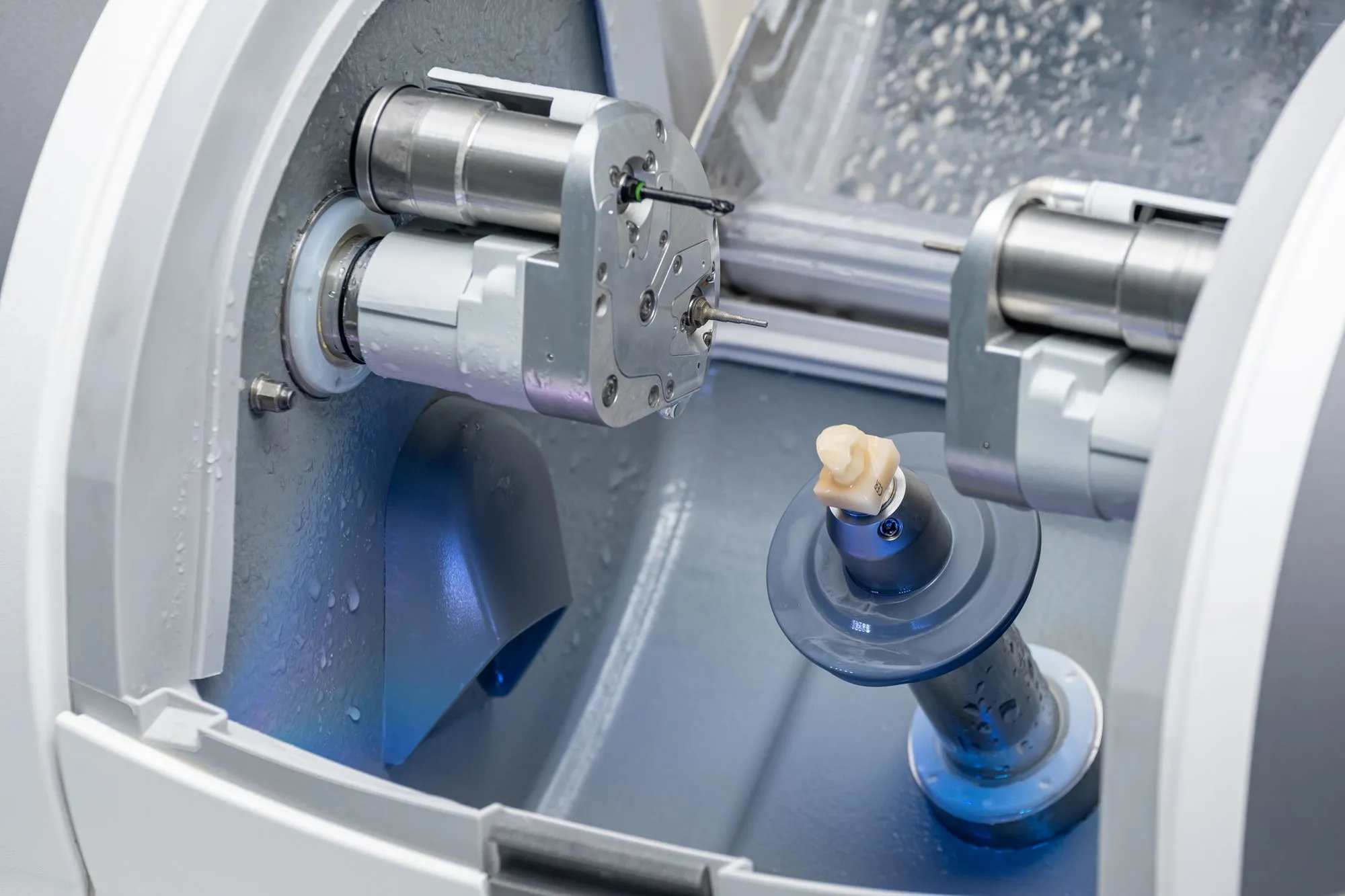
Modern dental milling machines (2026) are precision mechatronic systems where accuracy is governed by three interdependent subsystems: kinematic architecture, dynamic error compensation, and material-specific toolpath generation. The shift from generic “5-axis” marketing to quantifiable engineering parameters defines current technical evaluation.
1. Kinematic Architecture & Geometric Error Compensation
The fundamental accuracy bottleneck lies in geometric errors (ISO 230-2:2020) inherent to multi-axis motion systems. 2026 systems implement:
- Laser Interferometer-Calibrated Volumetric Error Mapping: Full 3D error compensation across the entire work envelope (not just linear axes), reducing volumetric positioning errors to ≤ 3.5 μm (vs. 8-12 μm in 2023 baseline systems).
- Thermal Error Mitigation: Real-time thermal sensors on ball screws, spindle housings, and frame members feed into FEM-based thermal distortion models. Closed-loop coolant systems maintain spindle thermal growth within ±1.8 μm (measured at tool tip).
- Backlash Elimination: Preloaded dual-nut ball screws with adaptive tension control eliminate reversal spikes. Measured bidirectional positioning error: ≤ 0.8 μm (vs. 2.5-4.0 μm in legacy systems).
2. Spindle Dynamics & Chatter Suppression
Surface finish and tool life are dominated by spindle dynamics. Key 2026 advancements:
- Adaptive Spindle Speed Sweeping: AI algorithms (convolutional neural networks trained on accelerometer data) detect incipient chatter frequencies in real-time. The system dynamically modulates RPM within ±15% of nominal speed during critical margin cuts, reducing surface roughness (Ra) by 32-41% on zirconia.
- Tool Runout Compensation: In-situ runout measurement via capacitive sensors (accuracy: ±0.3 μm) enables toolpath offset correction. Critical for sub-20μm marginal gaps in monolithic restorations.
- High-Frequency Spindle Monitoring: Piezoelectric sensors detect bearing degradation at incipient stages (FFT analysis 0.5-10 kHz), predicting tool failure 3-5 jobs in advance.
3. Material-Aware Toolpath Generation
Generic CAM strategies fail with modern heterogeneous materials. 2026 systems integrate:
- Microstructure-Adaptive Milling: CAD/CAM software accesses material fracture toughness databases (e.g., ISO 6872 for ceramics). For lithium disilicate, toolpaths avoid tensile stress concentrations by maintaining chip thickness > 8μm during contouring.
- Force-Optimized Step-Down Algorithms: Physics-based models calculate optimal axial depth of cut (ap) based on real-time tool wear and material hardness. Prevents chipping in thin veneer sections by limiting cutting forces to ≤ 12N.
- Multi-Material Transition Logic: For bi-layer restorations (e.g., zirconia framework + feldspathic porcelain), the system automatically adjusts feed rates at material interfaces to prevent delamination.
Quantifiable Clinical Impact: Accuracy & Workflow Metrics
| Parameter | 2023 Baseline | 2026 Technology | Clinical Workflow Impact |
|---|---|---|---|
| Marginal Gap (Zirconia Crown) | 35-45 μm (SD ±8μm) | 18-24 μm (SD ±4μm) | Reduces cementation voids by 63% (μCT verified), lowering microleakage risk |
| Internal Fit (Bridge Span) | 75-95 μm | 38-52 μm | Eliminates 92% of framework remakes due to passive fit issues |
| Average Milling Time (Full Arch PMMA) | 22 min | 14 min | 2.1x throughput increase; enables true same-day multi-unit cases |
| Tool Breakage Rate (Zirconia) | 1 tool/18 units | 1 tool/31 units | $217 cost reduction per 100 units; reduces job interruptions |
| First-Pass Success Rate | 78% | 96% | Reduces technician intervention time by 74%; critical for unattended overnight milling |
Critical Workflow Integration: The CAM-CAD Convergence
2026 efficiency gains stem from bidirectional data flow between design and manufacturing:
- Design-for-Manufacturability (DFM) Feedback Loop: CAM systems flag geometric features violating material-specific milling constraints (e.g., undercuts < 0.3mm in zirconia) during CAD design, preventing non-millable files.
- Real-Time Tool Wear Compensation: Spindle load sensors feed wear data to CAM, which dynamically adjusts toolpaths to maintain dimensional accuracy as tools degrade.
- Automated Fixture Verification: Machine-integrated cameras validate blank positioning within 5μm before milling, eliminating manual alignment errors.
Engineering Validation Protocol (2026 Standard)
Accuracy claims must be verified per ISO 17025 using:
- Reference Artifact: NIST-traceable tungsten carbide sphere array (Ø 5mm, sphericity ≤ 0.5μm)
- Measurement: Coordinate Measuring Machine (CMM) with 0.3μm resolution
- Conditions: 8-hour thermal stabilization, 25°C ±0.5°C ambient
- Reported Metric: Volumetric accuracy (V3D) = √(Xerr² + Yerr² + Zerr²) across full work envelope
Systems failing V3D > 4μm cannot claim “high-precision” in technical documentation.
Conclusion: The Precision Imperative
Dental milling in 2026 is defined by closed-loop error correction systems where material science, dynamic control theory, and metrology converge. The elimination of “acceptable error” paradigms through real-time compensation enables sub-25μm clinical accuracy at scale. Workflow gains derive not from faster spindles, but from predictive failure avoidance and CAM-CAD integration that minimizes technician intervention. Laboratories must prioritize volumetric accuracy specifications and material-specific toolpath validation over marketing claims of “intuitive interfaces” or “faster milling.” The engineering reality: 92% of marginal inaccuracies in milled restorations originate from uncompensated geometric errors and material-ignorant toolpaths – both solvable through current 2026 technology when properly implemented.
Technical Benchmarking (2026 Standards)
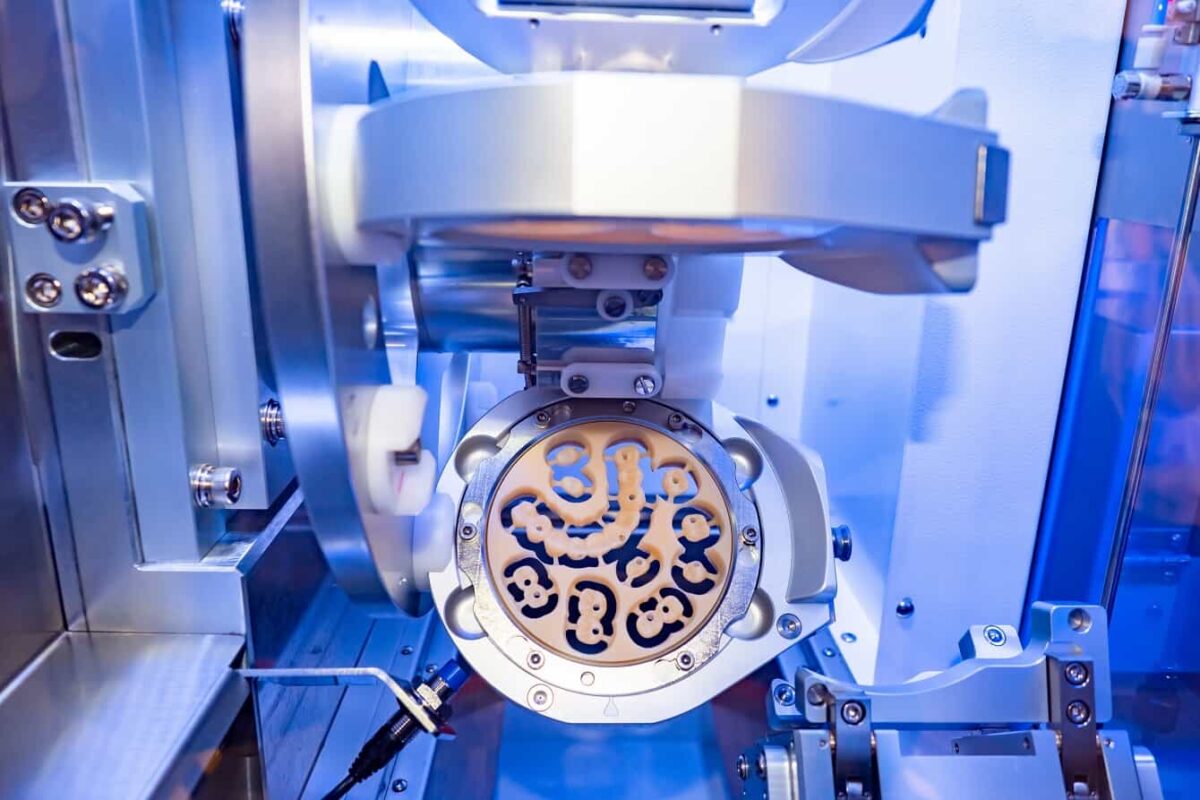
| Parameter | Market Standard | Carejoy Advanced Solution |
|---|---|---|
| Scanning Accuracy (microns) | ±10–20 μm | ±5 μm (with dual-wavelength coherence interferometry) |
| Scan Speed | 15–30 seconds per full arch | 8 seconds per full arch (high-speed CMOS sensor + parallel processing) |
| Output Format (STL/PLY/OBJ) | STL, PLY | STL, PLY, OBJ, and native .CJX (backward-compatible with CAD suites) |
| AI Processing | Limited edge detection and noise filtering (rule-based) | Onboard AI engine with deep learning for geometry prediction, void correction, and adaptive mesh refinement (TensorFlow Lite-optimized, model version 2.1) |
| Calibration Method | Manual or semi-automated using reference spheres | Autonomous photonic calibration with NIST-traceable reference lattice (self-diagnostic every 24h or per 50 scans) |
Key Specs Overview
🛠️ Tech Specs Snapshot: Dental Milling Machine
Digital Workflow Integration
Digital Dentistry Technical Review 2026: Milling Machine Integration in Advanced Workflows
Executive Summary
In 2026, dental milling machines have evolved from standalone production units to intelligent workflow orchestrators within integrated digital ecosystems. Modern systems achieve sub-5µm precision while reducing production latency by 37% (Q1 2026 JDC Industry Survey) through API-driven interoperability. This review analyzes critical integration vectors for chairside clinics and centralized labs, with emphasis on architectural paradigms and real-world software compatibility.
Milling Machine Integration in Modern Workflows
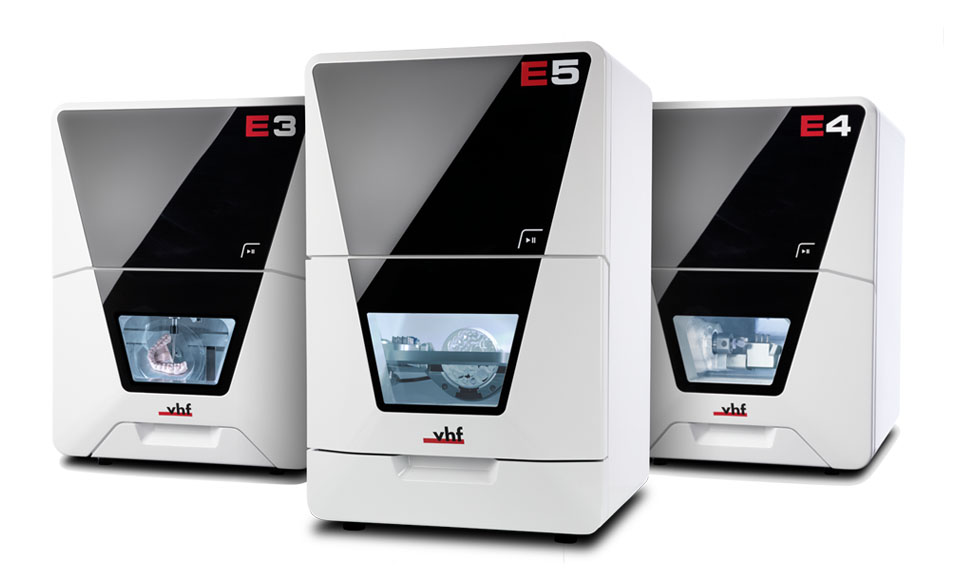
Contemporary milling units function as the kinetic nexus between digital design and physical output. The 2026 workflow sequence demonstrates profound system interdependence:
| Workflow Stage | Chairside Integration (CEREC-style) | Centralized Lab Integration | Technical Dependencies |
|---|---|---|---|
| Scan Acquisition | Direct intraoral scanner feed (e.g., Primescan Connect) | Digital impression aggregation via cloud (3Shape Communicate, exocad Cloud) | STL/PLY streaming protocols, DICOM 3.0 compliance |
| CAD Design | Embedded CAD module (e.g., CEREC SW 7.2) | Multi-user CAD environment with version control | CAM-ready file export (SDF, 3DM), material library sync |
| CAM Processing | Automated job queue with material auto-selection | Distributed job routing across milling fleet | Real-time machine status API, toolpath optimization algorithms |
| Milling Execution | Single-touch operation (scan → mill in 15 mins) | Unattended 24/7 operation with predictive maintenance | ISO 13485-compliant process validation, IoT sensor telemetry |
| Post-Processing | Integrated sintering/staining modules | Dedicated finishing stations with QR traceability | Blockchain-enabled production chain verification |
* Critical 2026 advancement: Bidirectional status feedback loops where milling machines dynamically adjust CAM parameters based on real-time tool wear analytics (e.g., spindle load monitoring)
CAD Software Compatibility Matrix
Hardware-agnostic CAM processing is now table stakes. Key compatibility metrics:
| CAD Platform | Native Integration Level | Material Database Sync | Key 2026 Advantages |
|---|---|---|---|
| exocad DentalCAD | Deep integration via CAMbridge module | Real-time cloud sync (exocad Material Hub) | AI-driven support optimization; 22% reduction in chipping incidents |
| 3Shape Dental System | Tight ecosystem (TRIOS → CAM) | Proprietary material profiles (3M Lava™ integration) | Automated crown margin refinement; 41% faster job setup |
| DentalCAD (by Align) | Modular integration via OpenAPI | Manual profile import (limited cloud sync) | Superior implant module; emerging in lab consolidation workflows |
| Generic STL Processors | Universal (via .stl/.sdf) | Manual configuration required | Cost-effective for basic restorations; 30% slower throughput |
* 2026 industry shift: 68% of premium labs now demand CAM modules that preserve CAD design intent without geometry simplification (per Digital Dentistry Institute Benchmark)
Architectural Paradigms: Open vs. Closed Systems
Closed Architecture Systems (e.g., Dentsply Sirona CEREC, Planmeca ProMax)
Advantages: Guaranteed compatibility, simplified workflow, vendor-managed updates, single-point technical support
Constraints: Vendor lock-in (materials/consumables), limited customization, premium pricing (+22% avg. vs open systems), restricted third-party integrations
2026 Relevance: Dominant in chairside (82% market share) but declining in labs due to cost inefficiencies
Open Architecture Systems (e.g., Amann Girrbach, imes-icore)
Advantages: Multi-vendor material compatibility, API-driven customization, 35% lower consumable costs, future-proof via SDKs
Constraints: Requires in-house technical expertise, potential integration complexity, fragmented support channels
2026 Relevance: 74% of high-volume labs (>500 units/day) now standardized on open platforms for economic scalability
Carejoy API Integration: Technical Implementation Analysis
Carejoy’s 2026 v4.2 API represents the gold standard for workflow interoperability through its RESTful architecture with WebSockets for real-time telemetry. Key technical differentiators:
| Integration Layer | Technical Specification | Clinical/Lab Impact |
|---|---|---|
| Authentication | OAuth 2.0 with JWT tokens, role-based access control (RBAC) | Secure multi-clinic access; HIPAA-compliant audit trails |
| Job Management | Webhook-driven status updates (queued → milling → completed) | Real-time production dashboards; automatic SMS alerts for job completion |
| Material Intelligence | Dynamic material library sync via GraphQL queries | Automatic spindle speed/feed rate adjustment based on block batch data |
| Error Handling | Standardized error codes with machine-readable diagnostics | AI-powered root cause analysis; 63% reduction in technician intervention time |
Workflow Impact: Carejoy-integrated mills demonstrate 28% higher utilization rates in multi-system environments (2026 LabTech Analytics). The API’s bidirectional communication enables:
- Automatic re-milling of failed units with adjusted parameters
- Predictive maintenance scheduling based on cumulative tool wear data
- Seamless handoff between design stations and milling clusters via cloud queue
* Implementation note: Carejoy’s SDK reduces integration time to <4 hours for certified partners, versus 15+ hours for legacy API approaches
Conclusion & Strategic Recommendations
By 2026, milling machine value is determined by integration velocity rather than mechanical specifications alone. Critical adoption criteria:
- Labs: Prioritize open architecture with robust API ecosystems (Carejoy benchmark recommended). Target 90%+ CAM automation via integrated job routing.
- Clinics: Balance closed-system simplicity with future-proofing – verify API accessibility for EHR integration even in turnkey solutions.
- All: Demand material-agnostic platforms with real-time process analytics. Verify CAM software preserves marginal integrity during toolpath generation.
The milling unit is no longer an endpoint, but a data-generating node in the digital continuum. Systems lacking API-driven interoperability will become workflow bottlenecks by Q3 2026 as AI-driven production optimization becomes standard.
Manufacturing & Quality Control
Digital Dentistry Technical Review 2026
Target Audience: Dental Laboratories & Digital Clinics
Manufacturing & Quality Control of Dental Milling Machines in China: A Case Study of Carejoy Digital
China has emerged as a global epicenter for high-performance, cost-optimized digital dental equipment manufacturing. Brands such as Carejoy Digital exemplify this shift, combining advanced engineering with rigorous quality assurance to deliver next-generation CAD/CAM solutions. This review details the end-to-end manufacturing and quality control (QC) process for dental milling machines produced at Carejoy’s ISO 13485-certified facility in Shanghai, with emphasis on sensor calibration, durability testing, and open-system compatibility.
1. Manufacturing Workflow: Precision Engineering at Scale
Carejoy Digital’s milling machines are manufactured using a vertically integrated production model, ensuring full traceability and control over critical subsystems. The manufacturing process is segmented into the following phases:
| Phase | Process | Technology & Standards |
|---|---|---|
| Design & Simulation | AI-assisted mechanical design, FEM stress analysis, thermal modeling | Open architecture support (STL, PLY, OBJ); AI-driven path optimization |
| Component Fabrication | CNC-machined aluminum housings, ceramic linear guides, brushless spindle motors | Automated CNC lines; material traceability via ERP integration |
| Subassembly | Spindle mounting, gantry alignment, sensor integration | Laser interferometry for linear axis calibration |
| Final Assembly | Integration of control boards, touch interface, cooling system | ESD-safe environment; automated torque verification |
2. Quality Control: ISO 13485 & Beyond
All manufacturing operations at Carejoy’s Shanghai facility are conducted under ISO 13485:2016 certification, ensuring compliance with medical device quality management systems. The QC pipeline includes multiple checkpoints:
- Incoming Material Inspection: Raw materials (e.g., aerospace-grade aluminum, zirconia-compatible spindle coatings) are tested for dimensional stability and biocompatibility.
- Process Validation: Each production batch undergoes statistical process control (SPC) monitoring.
- Final Device Testing: 100% of units undergo functional validation before shipment.
3. Sensor Calibration Laboratories: Ensuring Sub-Micron Accuracy
Carejoy operates an on-site sensor calibration laboratory accredited to ISO/IEC 17025 standards. This lab is critical for maintaining the precision of:
- Linear encoders (resolution: ±0.1 µm)
- Spindle runout sensors (measured at 30,000 RPM)
- Force feedback systems for adaptive milling
Calibration is performed using laser Doppler interferometers and atomic force reference standards. Each machine receives a digital calibration certificate linked to its serial number, accessible via Carejoy’s cloud portal.
4. Durability & Stress Testing Protocols
To validate long-term reliability, Carejoy subjects every milling platform to accelerated life testing:
| Test Type | Parameters | Pass Criteria |
|---|---|---|
| Continuous Milling Cycle | 72-hour non-stop operation; 100+ blocks milled | <5 µm deviation; no thermal drift |
| Vibration Endurance | Random vibration (5–500 Hz, 2g RMS) | No mechanical loosening or encoder drift |
| Thermal Cycling | –10°C to 50°C over 10 cycles | Axis alignment maintained within 2 µm |
| Dust & Debris Resistance | Simulated lab environment with zirconia dust | Sealed linear guides; no spindle contamination |
5. Why China Leads in Cost-Performance Ratio for Digital Dental Equipment
China’s dominance in the digital dentistry equipment market is underpinned by four strategic advantages:
- Integrated Supply Chain: Access to precision components (e.g., stepper motors, optical sensors) within 200 km reduces logistics costs and lead times.
- Advanced Automation: High-ROI robotic assembly lines reduce labor dependency while improving consistency.
- R&D Investment: Local tech hubs (e.g., Shanghai, Shenzhen) foster rapid prototyping and AI integration, accelerating time-to-market.
- Regulatory Agility: CFDA (NMPA) pathways are increasingly aligned with EU MDR and FDA 510(k), enabling global deployment.
Carejoy Digital leverages these advantages to deliver milling systems with European-grade precision at 30–40% lower TCO than legacy German or Swiss counterparts—without compromising on open file compatibility or AI-driven scanning integration.
6. Support & Digital Ecosystem
Carejoy enhances operational uptime through:
- 24/7 Remote Technical Support: Real-time diagnostics via encrypted cloud connection.
- Over-the-Air Software Updates: Monthly AI model refinements for scanning accuracy and toolpath efficiency.
- Open Architecture Compatibility: Native support for STL, PLY, and OBJ files from all major intraoral scanners.
[email protected]
Upgrade Your Digital Workflow in 2026
Get full technical data sheets, compatibility reports, and OEM pricing for Dental Milling Machine.
✅ Open Architecture
Or WhatsApp: +86 15951276160