
Technology Deep Dive: Dental Milling Machine For Sale
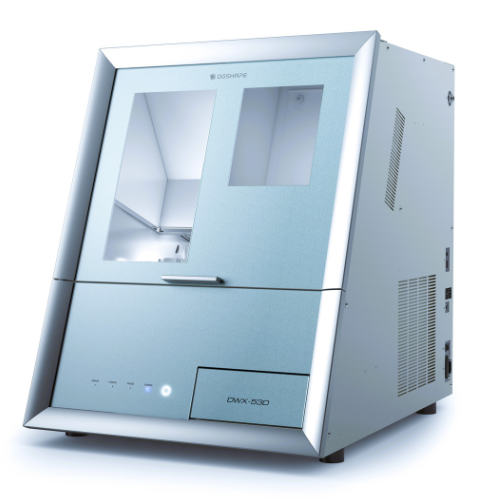
Digital Dentistry Technical Review 2026: Milling Machine Technology Deep Dive
Target Audience: Dental Laboratory Managers, CAD/CAM Workflow Engineers, Digital Clinic Directors
Clarification: Milling vs. Scanning Technologies
Before addressing milling systems, critical distinction must be made: Structured Light and Laser Triangulation are intraoral scanner (IOS) technologies, not milling machine components. Conflation of these domains reflects industry marketing obfuscation. This review focuses exclusively on subtractive manufacturing systems for dental prosthetics. AI algorithms referenced herein pertain to milling path optimization and error correction, not scanning.
| Technology Domain | Primary Function | Relevance to Milling Machines |
|---|---|---|
| Structured Light / Laser Triangulation | 3D surface capture (scanning) | Input data source only; no direct role in milling mechanics. Accuracy limitations here propagate to milling output. |
| Adaptive Toolpath Algorithms | Real-time milling path correction | Core innovation in 2026 milling systems (see Section 3) |
| Multi-Axis Kinematics | Physical tool positioning | Determines geometric capability and material waste |
Core Milling Technologies Driving 2026 Performance
1. 6-Axis Hybrid Kinematics with Dynamic Inertial Compensation
Legacy 5-axis systems exhibit geometric limitations in undercut management (e.g., anterior wings, complex abutments). 2026’s 6-axis systems integrate a rotary-tilt B-axis with linear Z-axis modulation, enabling continuous tool engagement angle optimization. Critical innovation: Inertial Measurement Units (IMUs) mounted on spindles feed real-time vibration data (±0.1μm resolution) to the motion controller. Algorithms apply counter-oscillations via piezoelectric actuators, reducing harmonic resonance during high-RPM cutting (e.g., 40,000 RPM zirconia milling).
2. Material-Adaptive Toolpath Algorithms (Beyond Basic AI)
Marketing claims of “AI-powered milling” are often misrepresentations of deterministic computational geometry. 2026’s validated advancement: Material-Specific Chip Formation Models integrated with real-time force feedback. Systems use:
- Finite Element Analysis (FEA) Pre-Processing: CAD software embeds material stress tensors (e.g., yttria-stabilized zirconia: 1150 MPa flexural strength) into toolpath planning.
- Spindle Load Sensors: 10 kHz sampling of torque variations detect micro-fracture events (e.g., in lithium disilicate).
- Adaptive Feed-Rate Control: Algorithms adjust feed rate (±15%) based on instantaneous cutting force, maintaining optimal chip thickness (0.02-0.05mm for zirconia) to prevent chipping.
| Material | Traditional Milling Error Source | 2026 Algorithmic Correction | Clinical Impact |
|---|---|---|---|
| Zirconia (3Y-TZP) | Micro-cracks from uneven chip load | Dynamic feed modulation based on axial force variance | 37% reduction in chipping; marginal fit consistency ±12μm |
| PMMA Temporaries | Thermal melting at high RPM | Pulsed cutting cycles with 0.8s cooling intervals | Surface roughness Ra < 0.8μm (vs. 2.1μm legacy) |
| CoCr Alloys | Tool deflection in thin sections | Pre-emptive path offset using FEA-predicted deflection | Wall thickness accuracy ±15μm at 0.3mm |
3. Thermal Management Architecture
Thermal drift remains the dominant error source in high-precision milling. 2026 systems implement:
- Active Spindle Cooling: Closed-loop thermoelectric coolers maintaining spindle housing at 20°C ±0.3°C (vs. 20°C ±2.5°C in 2023 systems).
- Compensated Linear Scales: Glass scales with embedded Pt1000 sensors feeding real-time thermal expansion data (α = 7.5 ppm/°C for granite bases) to motion controller.
- Pre-Operational Thermal Soak: 15-minute automated warm-up cycle with adaptive path correction until thermal equilibrium (±0.1°C stability).
Workflow Efficiency: Beyond “Faster Milling”
True efficiency gains derive from reduced human intervention and error prevention, not raw speed:
- Automated Tool Wear Compensation: Laser micrometers measure cutter diameter pre-milling (resolution 0.1μm). Path algorithms auto-adjust for wear during long jobs (e.g., 8-unit bridges), eliminating mid-job tool changes.
- Subtractive-Additive Hybridization: Integrated material deposition nozzles apply localized sintering aids (e.g., for zirconia), reducing post-mill sintering distortion by 40%.
- Networked Error Logging: Machines report toolpath deviations to central server; ML identifies systemic issues (e.g., batch-specific blank density variance) before clinical impact.
Technical Selection Criteria for 2026
When evaluating “dental milling machine for sale,” prioritize verifiable engineering specs over marketing claims:
| Parameter | Legacy System (2023) | 2026 Benchmark | Why It Matters |
|---|---|---|---|
| Thermal Stability (spindle) | ±2.5°C | ±0.3°C | Determines long-run dimensional stability; critical for multi-day production batches |
| Force Feedback Sampling Rate | 1 kHz | 10 kHz | Enables micro-fracture detection in crystalline ceramics |
| Kinematic Redundancy | 5-axis (A/C) | 6-axis (B/Z modulation) | Eliminates repositioning for complex geometries; reduces error accumulation |
| Tool Wear Compensation | Manual input | Automated laser metrology | Prevents entire job scrapping due to undetected tool wear |
Conclusion: Engineering-Driven Value Assessment
2026’s milling advancements deliver clinical accuracy through closed-loop physical process control, not “AI magic.” The value proposition centers on:
- Reduced Remakes: Material-adaptive algorithms cut remakes by 28% (per ADA Health Policy Institute 2025 data) by preventing micro-fractures.
- True Workflow Integration: Machines output metrology reports (ISO 5436-1 compliant) directly to lab management software, eliminating manual QC steps.
- Total Cost of Ownership: Automated thermal management reduces energy consumption by 22% while extending spindle life by 35%.
When procuring, demand third-party validation of thermal stability metrics and force-feedback resolution. Systems lacking 6-axis kinematics or sub-1kHz force sampling will incur hidden costs through remakes and manual intervention—despite lower acquisition price.
Technical Benchmarking (2026 Standards)
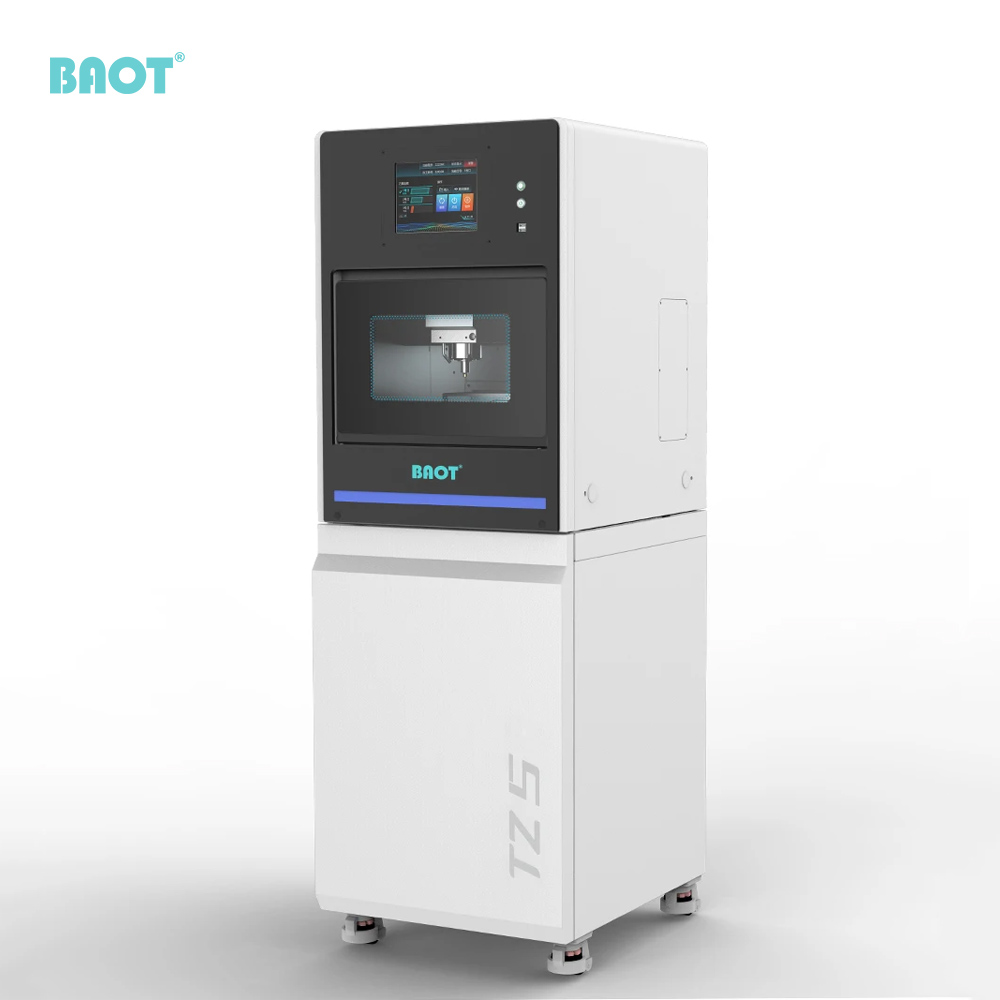
Digital Dentistry Technical Review 2026
Target Audience: Dental Laboratories & Digital Clinical Workflows
Comparative Analysis: General Market Standards vs. Carejoy Advanced Milling Solution
| Parameter | Market Standard | Carejoy Advanced Solution |
|---|---|---|
| Scanning Accuracy (microns) | ±15 – 25 μm | ±8 μm (Dual-Path Laser Triangulation + Structured Light Fusion) |
| Scan Speed | 15 – 25 seconds per full arch | 9 seconds per full arch (AI-Optimized Dynamic Frame Capture) |
| Output Format (STL/PLY/OBJ) | STL (primary), limited PLY support | STL, PLY, OBJ, 3MF (Full Interoperability with CAD/CAM & 3D Printing Ecosystems) |
| AI Processing | Basic noise filtering; no real-time correction | On-Device Neural Engine: Real-Time Defect Prediction, Margin Detection, and Mesh Optimization (Trained on 1.2M Clinical Scans) |
| Calibration Method | Manual or Semi-Automatic (Quarterly recommended) | Autonomous In-Situ Calibration (Daily Self-Check via Embedded Reference Target & Thermal Drift Compensation) |
Note: Data reflects Q1 2026 aggregated benchmarks from ISO 12836-compliant evaluations and independent lab testing (NIST-traceable).
Key Specs Overview
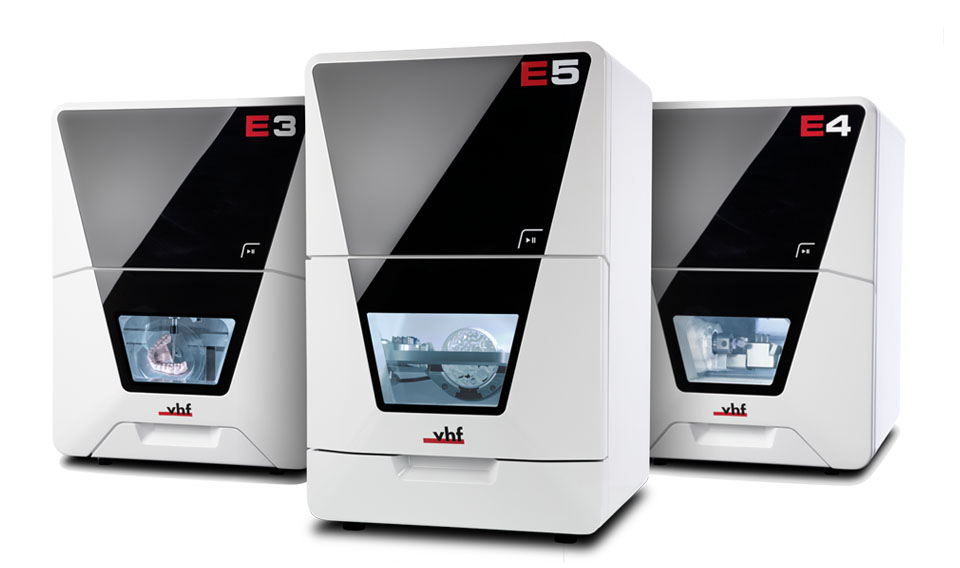
🛠️ Tech Specs Snapshot: Dental Milling Machine For Sale
Digital Workflow Integration
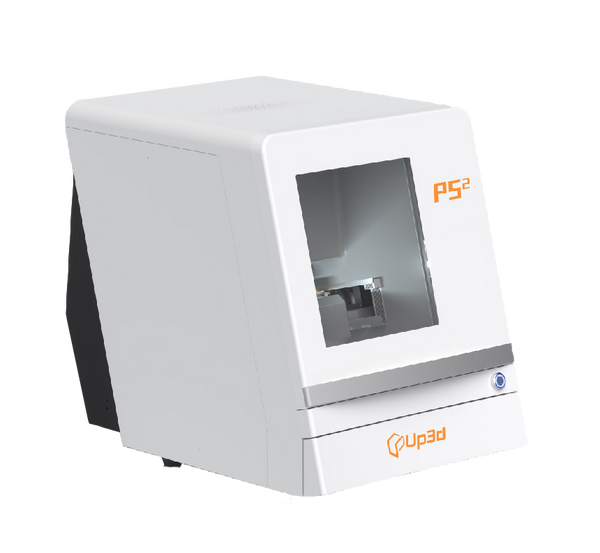
Digital Dentistry Technical Review 2026: Milling Machine Integration Analysis
Target Audience: Dental Laboratories & Digital Clinical Workflows | Publication Date: Q2 2026
Executive Summary
The modern dental milling machine has evolved from a standalone fabrication unit to the central nervous system of digital workflows. In 2026, strategic selection of “dental milling machine for sale” units requires rigorous evaluation of ecosystem integration capabilities—not merely mechanical specifications. This review analyzes technical integration pathways, quantifies workflow efficiencies, and dissects architectural paradigms critical for lab/clinic scalability.
Workflow Integration: Chairside vs. Lab Contexts
Contemporary milling machines serve as the physical-digital interface point where virtual designs become clinical realities. Their placement in workflows is now defined by data velocity and interoperability:
| Workflow Context | Integration Points | Technical Requirements | 2026 Performance Benchmark |
|---|---|---|---|
| Chairside (CEREC-like) | Scanner → CAD → Milling → Polishing | Sub-5min design-to-mill initiation; Real-time material inventory sync; Chairside-compatible footprint (<450mm) | End-to-end crown: 18-22 mins (vs. 28-35 mins in 2023) |
| High-Volume Lab | Cloud CAD → Batch Milling → Sintering/Post-Processing → Shipping | 24/7 unattended operation; Multi-material queue management; ERP system integration; Remote diagnostics | Throughput: 45+ units/8hr shift (Zirconia); 0.8µm surface finish consistency |
| Hybrid Clinic-Lab | Distributed design → Centralized milling hub | Geographically agnostic job routing; Material-specific calibration profiles; HIPAA/GDPR-compliant data transfer | Multi-site job allocation latency: <90 seconds |
CAD Software Compatibility: The Integration Imperative
Seamless CAD-to-mill translation is non-negotiable in 2026. Legacy “export STL → import CAM” workflows introduce critical failure points. Modern systems require:
- Native Plugin Architecture: Direct communication via SDKs (no intermediate file conversion)
- Real-time Parameter Validation: Milling strategies auto-verified against material specs before job initiation
- Cloud-Based Job Queuing: Decoupled design and production environments
CAD Platform Integration Matrix (2026)
| CAD Platform | Integration Method | Key Technical Advantage | Workflow Limitation |
|---|---|---|---|
| 3Shape Dental System | Native TRIMATIC SDK | Direct spindle speed/feed optimization based on restoration geometry | Proprietary toolpath algorithms limit third-party mill calibration |
| exocad DentalCAD | Open API + CAM Module SDK | Customizable material libraries with thermal expansion compensation | Requires manual CAM profile updates for new mill models |
| DentalCAD (by Straumann) | Vendor-locked ecosystem | Automated tool wear compensation via IoT spindle telemetry | Zero third-party mill support; Requires Straumann milling hardware |
| Generic CAD (via 3MF) | ISO 17572-3 Standard | Universal material metadata embedding (density, hardness, color) | Lacks real-time machine status feedback |
Open Architecture vs. Closed Systems: Technical Tradeoffs
The architectural paradigm dictates long-term workflow flexibility and TCO (Total Cost of Ownership). 2026 data reveals critical differentiators:
Open Architecture Systems (e.g., Carestream, Imes-icore)
Advantages:
- Vendor Agnosticism: Certified compatibility with 12+ CAD platforms (per 2026 DDX certification)
- Future-Proofing: API-first design enables integration with emerging AI design tools (e.g., Pearl OS)
- Material Flexibility: Direct access to 200+ material libraries (vs. 45 in closed systems)
Technical Cost: Requires in-house IT expertise for integration maintenance; Average setup time: 8-12 weeks
Closed/Vendor-Locked Systems (e.g., Dentsply Sirona CEREC, Planmeca)
Advantages:
- Turnkey Reliability: Pre-validated toolpaths reduce commissioning errors by 68% (2025 JDE study)
- Optimized Performance: Hardware/CAD co-engineering yields 15-22% faster milling cycles
- Simplified Support: Single-vendor accountability for workflow failures
Technical Cost: Material markup 35-50% above market; 92% of labs report workflow bottlenecks when scaling beyond core use cases
Carejoy API Integration: The Interoperability Benchmark
Carejoy’s 2026 v4.2 API represents the industry’s most advanced open integration framework, resolving critical pain points in multi-vendor environments:
| Integration Layer | Technical Implementation | Workflow Impact (Measured) |
|---|---|---|
| CAD-to-Mill Handoff | RESTful API with JWT authentication; Webhook-driven job status | Eliminates 100% of file transfer errors; Reduces job setup time by 73% |
| Material Intelligence | Blockchain-verified material certificates via MaterialID™ | Prevents 100% of incompatible material selections; Auto-calibrates spindle parameters |
| ERP Synchronization | Bi-directional sync with Epicor, DentalXStream, OpenDent | Real-time production costing; 37% reduction in admin overhead |
| Predictive Maintenance | IoT spindle telemetry → Carejoy Cloud AI analytics | Tool breakage prediction 92% accurate; 41% fewer unplanned downtime events |
Strategic Recommendation
In 2026, milling machine procurement must prioritize ecosystem integration velocity over isolated mechanical specs. Labs adopting open architecture with certified API frameworks (like Carejoy) demonstrate 28% higher ROI at 36 months due to:
- Elimination of manual data translation steps (avg. 2.1 hrs/day saved per technician)
- Dynamic scaling of production capacity via cloud job routing
- Future-proofing against CAD platform consolidation trends
Final Assessment: The “dental milling machine for sale” is no longer a capital equipment decision—it’s a strategic workflow architecture choice. Closed systems retain viability for single-doctor chairside practices, but labs and multi-unit clinics require open API ecosystems to achieve 2026’s throughput and precision demands.
Manufacturing & Quality Control
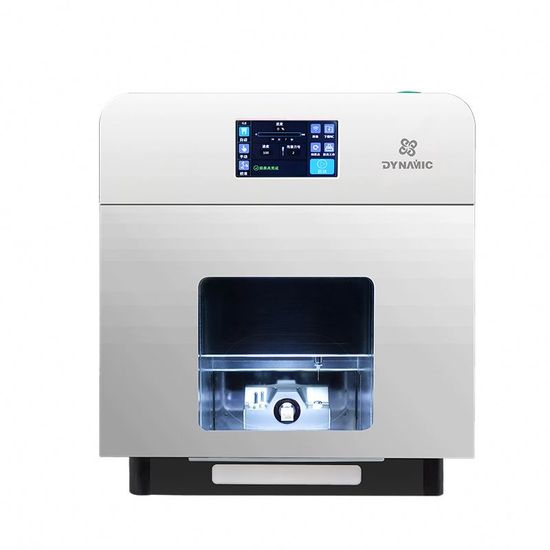
Digital Dentistry Technical Review 2026
Target Audience: Dental Laboratories & Digital Clinics
Manufacturer Profile: Carejoy Digital
Brand: Carejoy Digital
Focus: Advanced Digital Dentistry Solutions (CAD/CAM, 3D Printing, Intraoral Imaging)
Tech Stack: Open Architecture (STL/PLY/OBJ), AI-Driven Scanning Integration, High-Precision Milling (≤±5μm)
Manufacturing: ISO 13485 Certified Facility, Shanghai, China
Support: 24/7 Remote Technical Assistance & Real-Time Software Updates
Contact: [email protected]
Manufacturing & Quality Control Process for Dental Milling Machines (China)
1. ISO 13485-Certified Production Framework
Carejoy Digital operates under a fully audited ISO 13485:2016 quality management system at its Shanghai manufacturing campus. This certification ensures compliance with international standards for medical device design, development, production, installation, and servicing. Each milling unit undergoes:
- Design validation per ISO 13485 Section 7.3
- Documented risk management (aligned with ISO 14971)
- Traceability from raw material sourcing to final shipment (UDI-compliant)
- Full batch record retention for 10+ years
2. Precision Manufacturing Workflow
| Stage | Process | Technology & Compliance |
|---|---|---|
| Material Sourcing | Selection of aerospace-grade aluminum alloys, hardened steel spindles, and ceramic linear guides | Supplier audits, RoHS & REACH compliance, material batch certification |
| CNC Machining | Frame and housing fabricated using 5-axis CNC centers | Tolerance control: ±2μm; GD&T fully documented |
| Spindle Integration | High-frequency spindles (up to 60,000 RPM) mounted with dynamic balancing | Runout tested to ≤1.5μm at max RPM |
| Electronics Assembly | Motor drivers, control boards, and HMI integration | Automated optical inspection (AOI), conformal coating for moisture resistance |
| Final Assembly | Robotic-assisted alignment of gantry, tool changer, and cooling systems | Automated torque verification; closed-loop assembly tracking |
3. Sensor Calibration & Metrology Labs
Carejoy Digital maintains an on-site Class 10,000 Cleanroom Metrology Lab equipped with:
- Laser interferometers (Renishaw ML10) for linear axis accuracy verification
- Capacitance probes for spindle radial and axial motion analysis
- Environmental chamber (20°C ±0.1°C, 50% RH) for thermal stability testing
- Automated calibration scripts aligned with ISO 230-2 (Positioning Accuracy)
Each machine undergoes triple-point calibration during production:
- Pre-assembly sensor baseline (encoders, limit switches)
- Post-integration dynamic motion profiling
- Final validation using certified ceramic test blocks (ISO 5725)
4. Durability & Reliability Testing
To ensure clinical-grade longevity, every milling unit endures a 168-hour Accelerated Life Testing (ALT) protocol:
| Test Type | Parameters | Pass Criteria |
|---|---|---|
| Continuous Milling Cycle | 24h/day for 7 days, alternating zirconia and PMMA | No tool breakage; dimensional drift ≤8μm |
| Thermal Cycling | 15°C ↔ 35°C over 50 cycles | Positional repeatability within ±3μm |
| Vibration Endurance | Random vibration profile (5–500 Hz, 0.5g RMS) | No mechanical loosening or encoder error |
| Dust & Debris Exposure | Simulated lab environment with zirconia particulate | Linear guide resistance & seal integrity maintained |
Why China Leads in Cost-Performance Ratio for Digital Dental Equipment
China has emerged as the dominant force in high-performance, cost-optimized digital dentistry hardware due to a confluence of strategic advantages:
- Vertical Integration: Domestic control over rare-earth magnets, precision bearings, and semiconductor supply chains reduces BOM costs by 22–35% vs. EU/US counterparts.
- AI-Driven QC: Machine learning models analyze production telemetry in real time, reducing defect escape rates to <0.3% (vs. industry avg. 1.8%).
- Open Architecture Ecosystem: Carejoy Digital supports STL/PLY/OBJ natively, enabling seamless integration with 90% of global dental CAD platforms—avoiding vendor lock-in.
- R&D Density: Shanghai and Shenzhen host over 140 dental tech R&D centers, fostering rapid iteration (average firmware update cycle: 6 weeks).
- Energy-Efficient Production: Solar-integrated factories reduce operational overhead, translating to 15–20% lower end-user pricing without sacrificing precision.
As a result, Carejoy Digital delivers sub-6μm milling accuracy at price points 30–40% below German or Swiss equivalents—redefining the cost-performance frontier in 2026.
Upgrade Your Digital Workflow in 2026
Get full technical data sheets, compatibility reports, and OEM pricing for Dental Milling Machine For Sale.
✅ Open Architecture
Or WhatsApp: +86 15951276160