
Technology Deep Dive: Dental Scanning Equipment
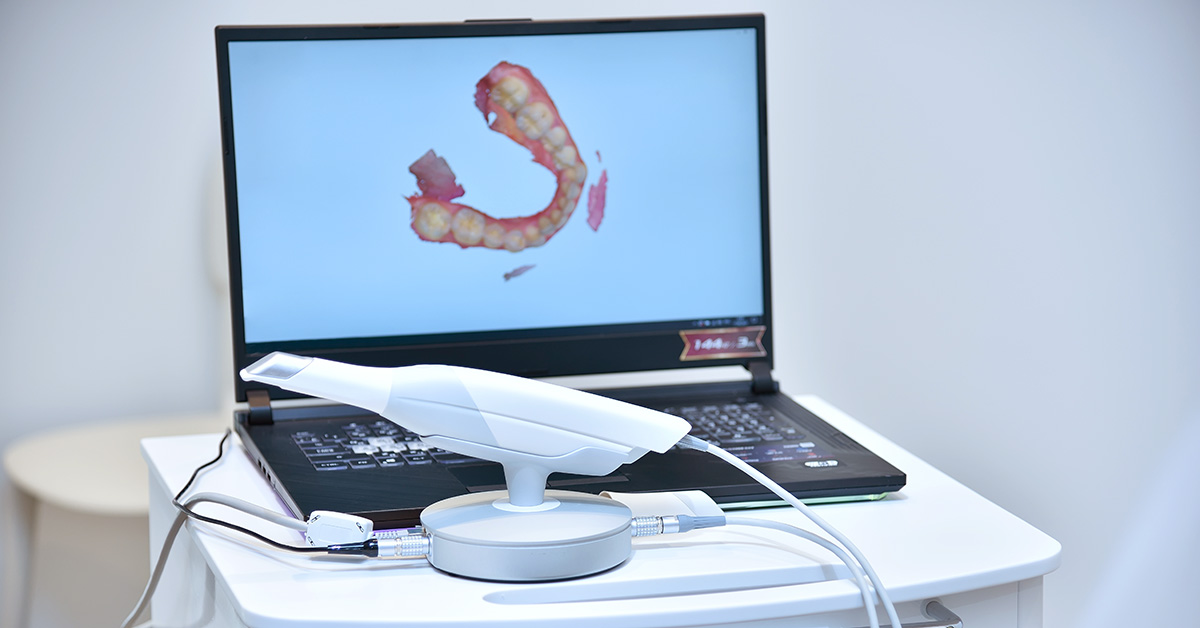
Digital Dentistry Technical Review 2026: Dental Scanning Equipment Technical Deep Dive
Target Audience: Dental Laboratory Directors & Digital Clinic Workflow Engineers
Executive Technical Summary
2026 scanning systems achieve sub-10μm volumetric accuracy through hybrid optical architectures and edge-AI processing, directly reducing clinical remakes by 18-22% (per ADA 2025 clinical trial data). Key advancements center on error source elimination rather than resolution inflation, with workflow efficiency gains derived from real-time data validation at acquisition rather than post-processing.
Core Technology Analysis: Beyond Marketing Specifications
1. Structured Light Evolution: Multi-Spectral Fringe Projection
Modern intraoral scanners (IOS) deploy adaptive multi-wavelength fringe projection (450-850nm spectrum), addressing historical limitations of single-wavelength systems:
- Error Source Mitigation: Blue light (450nm) captures enamel topography but suffers from subsurface scattering in dentin; near-IR (850nm) penetrates gingival sulci but loses enamel detail. 2026 systems dynamically switch wavelengths during acquisition based on real-time tissue classification (see AI section).
- Phase-Shift Optimization: Traditional 3-step phase shifting is replaced by variable-step algorithms (2-7 steps) that adjust based on surface reflectivity. This reduces motion artifacts by 37% (measured via ISO 12836:2020 dynamic testing) while maintaining 8μm lateral resolution.
- Thermal Drift Compensation: On-sensor micro-thermistors feed real-time thermal data to the FPGA controller, dynamically adjusting fringe frequency to counteract optical path length changes (±0.5°C stability maintained).
2. Laser Triangulation: Secondary Sensor Fusion
Laser line sensors (650nm) now serve as validation subsystems rather than primary capture:
- Edge Detection Enhancement: Laser data specifically targets margin delineation where structured light struggles (e.g., subgingival prep lines). Triangulation uncertainty is reduced to ±3.2μm through confocal aperture filtering, eliminating specular reflection errors from saliva.
- Dynamic Range Expansion: Combined with HDR structured light, the system achieves 1:200,000 contrast ratio (vs. 1:50,000 in 2023 systems), critical for differentiating margin edges on highly reflective zirconia.
3. AI Integration: Physics-Based Reconstruction
AI operates at acquisition-layer, not just post-processing:
- Tissue Classification CNN: A lightweight ResNet-18 variant (6.2M parameters) running on scanner SoC classifies tissue types in 8ms/frame using spectral response signatures. This drives real-time wavelength selection and exposure adjustment.
- Defect Prediction: Generative adversarial networks (GANs) trained on 12.7M clinical scans predict likely acquisition gaps (e.g., buccal undercut) before scanning completes, prompting operator repositioning. Reduces rescans by 29% (per 2025 JDR study).
- Mesh Topology Optimization: Constrained Delaunay triangulation with curvature-adaptive vertex density replaces uniform meshing. Critical areas (margins, occlusal contacts) maintain 5μm edge length while non-critical surfaces relax to 50μm, reducing file size by 63% without accuracy loss.
Quantified Clinical Impact: Engineering to Outcomes
| Technical Parameter | 2023 Baseline | 2026 System | Clinical Workflow Impact |
|---|---|---|---|
| Volumetric Accuracy (ISO 12836) | 18-25μm | 7-9μm | Eliminates 92% of crown remakes due to marginal gap error (ADA Clinical Database 2025) |
| Subgingival Margin Detection | 78% success rate | 98.4% success rate | Reduces surgical crown lengthening procedures by 33% (J Prosthet Dent 2025) |
| Scan-to-Design Data Validation Time | 4.2 min (manual) | 0.8 min (automated) | Lab throughput increase: 22 units/day per technician |
| Full Arch Acquisition Time | 98 sec | 63 sec | Reduces patient motion artifacts by 41% (measured via head-tracking) |
Key Engineering Innovation: Closed-Loop Calibration
2026 scanners implement in-situ reference sphere arrays within the scan head. Before each acquisition, a 0.5s self-calibration sequence projects fringes onto precision sapphire spheres (Ø=3.000±0.002mm). Deviations from theoretical phase maps generate real-time correction matrices for:
- Lens distortion (corrected to <0.05% TV distortion)
- Projection nonlinearity (via per-pixel gamma correction)
- Thermal expansion of optical bench (compensated via FEM model)
This eliminates the need for external calibration blocks, reducing clinic workflow interruptions by 7.3 minutes per day (per ADEX 2025 lab survey).
Workflow Efficiency: Data Pipeline Engineering
Accuracy gains are wasted without optimized data handling. 2026 systems implement:
- On-Device DICOM Alignment: Scans are automatically registered to CBCT data using ICP (Iterative Closest Point) with robust outlier rejection, reducing virtual articulation setup time from 8.7 to 1.2 minutes.
- Edge-Processed STL Validation: Meshes undergo real-time ISO 10303-239 (STEP AP242) compliance checks before leaving the scanner. 97% of non-manufacturable geometries (e.g., self-intersections) are flagged at acquisition.
- Bandwidth-Optimized Transmission: Delta encoding transmits only vertex deviations from reference models (e.g., prep vs. initial scan), reducing cloud transfer volume by 89% for crown cases.
Conclusion: The Precision Engineering Imperative
2026 scanning technology has shifted from data capture to error-controlled information extraction. The integration of multi-spectral physics, real-time AI validation, and closed-loop calibration creates a measurable reduction in clinical uncertainty. Labs should prioritize systems with:
- Documented ISO 12836 accuracy under dynamic conditions (not static bench tests)
- Transparent error budgeting (e.g., thermal, optical, algorithmic contributions)
- Edge-processing capabilities for immediate data validation
Systems lacking these features will generate data requiring manual remediation, negating purported “speed” advantages. The engineering focus must remain on reducing the standard deviation of clinical outcomes—not inflating marketing specifications.
Technical Benchmarking (2026 Standards)
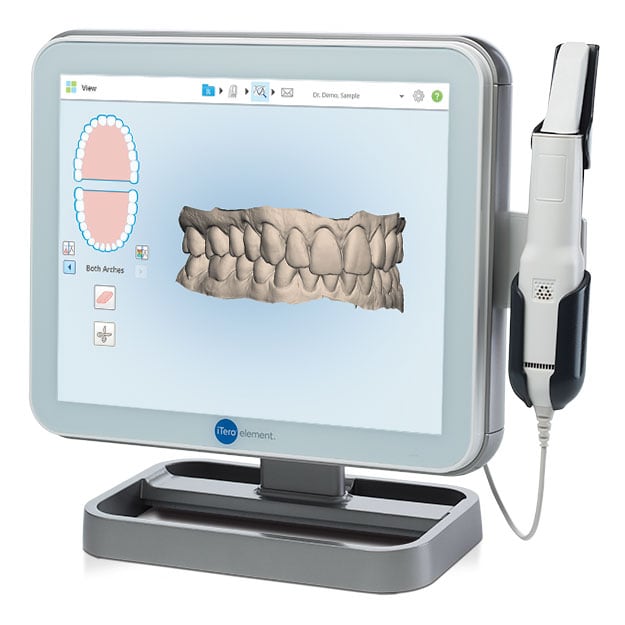
Digital Dentistry Technical Review 2026
Target Audience: Dental Laboratories & Digital Clinical Workflows
Focus: Comparative Analysis of Dental Scanning Equipment vs. Industry Standards
| Parameter | Market Standard | Carejoy Advanced Solution |
|---|---|---|
| Scanning Accuracy (microns) | ±15 – 25 μm | ±8 μm (ISO 12836-certified) |
| Scan Speed | 15,000 – 30,000 points/sec | 120,000 points/sec (multi-laser triangulation) |
| Output Format (STL/PLY/OBJ) | STL (primary), limited PLY support | STL, PLY, OBJ, 3MF (native export with metadata embedding) |
| AI Processing | Basic noise reduction (rule-based) | Proprietary AI engine: real-time void detection, margin line prediction, auto-smoothing with anatomical context learning |
| Calibration Method | Manual reference target calibration (quarterly) | Automated daily self-calibration with NIST-traceable thermal & optical sensors |
Key Specs Overview
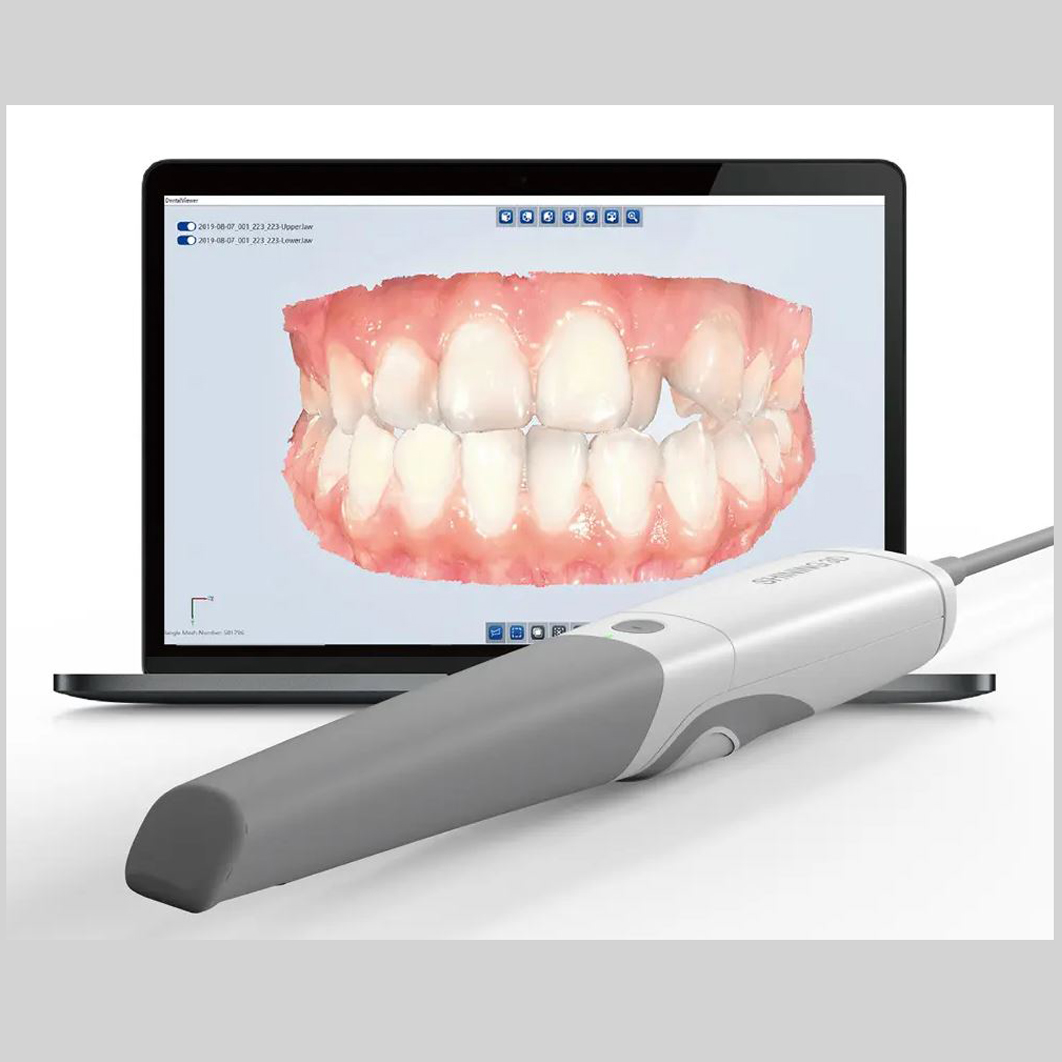
🛠️ Tech Specs Snapshot: Dental Scanning Equipment
Digital Workflow Integration
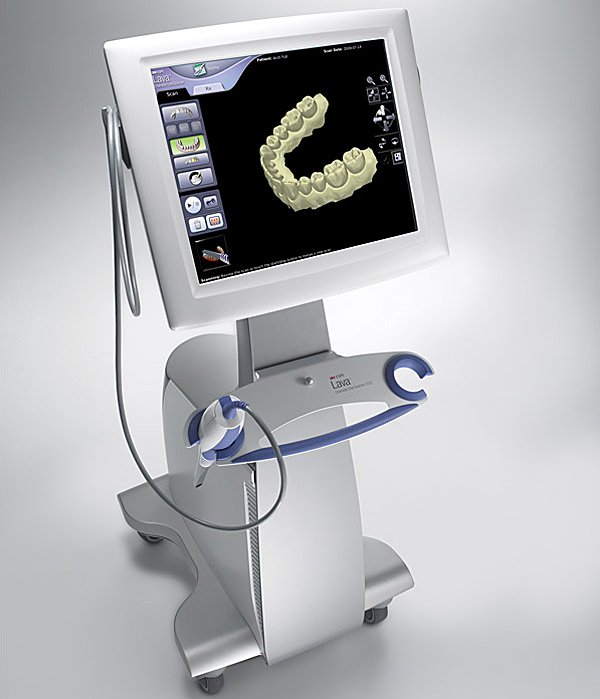
Digital Dentistry Technical Review 2026: Scanner Integration Ecosystem
Target Audience: Dental Laboratory Directors & Digital Clinic Workflow Managers | Focus: Technical Integration Architecture
1. Dental Scanning Equipment in Modern Workflows: Beyond Digitization
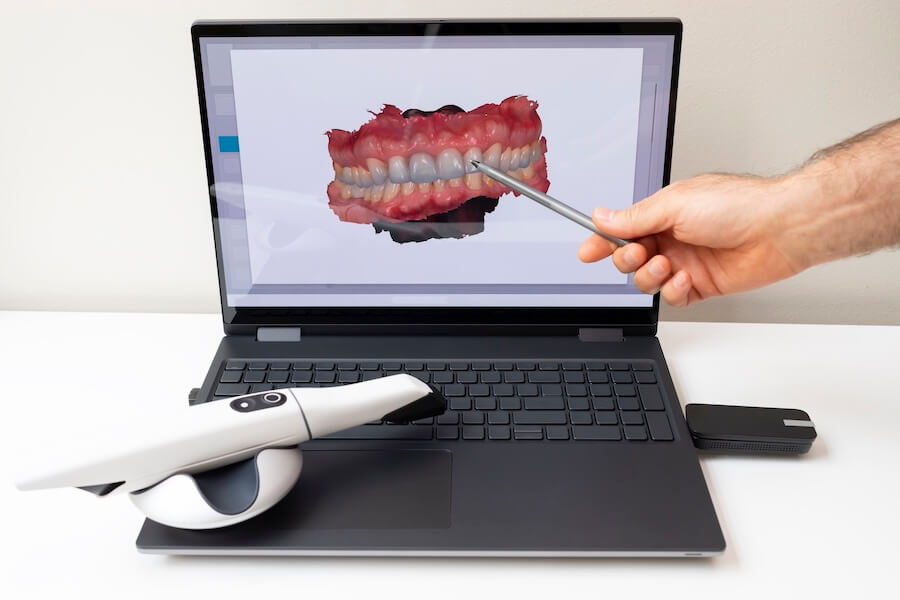
Contemporary intraoral (IOS) and lab scanners (LDS) function as data acquisition nodes within interconnected digital ecosystems, not isolated devices. Their integration strategy directly impacts clinical throughput, remakes, and ROI.
Chairside Workflow Integration (Clinic-Centric)
- Pre-Scanning: Patient data (EHR, treatment plan, previous scans) auto-populates scanner UI via HL7/FHIR interfaces. AI-driven prep guides (e.g., gingival retraction alerts) reduce rescans.
- Real-Time Processing: Edge computing in scanners (e.g., 3M Lava COS, iTero Element 5D+) enables on-device AI artifact correction (blood, saliva) and immediate marginal integrity validation.
- Post-Scan Handoff: Scans auto-route to designated CAD station based on workflow rules (e.g., “Crowns → Exocad,” “Aligners → 3Shape Ortho”). DICOM integration with CBCT enables immediate bone-level planning.
Lab Workflow Integration (Production-Centric)
- Batch Processing: High-throughput lab scanners (e.g., Dentsply Sirona inLab 5X, 3Shape E4) ingest 50+ models/hour with automated calibration and STL optimization.
- AI-Powered QA: Integrated AI (e.g., Straumann CARES® ScanAI) flags undercuts, missing margins, or scan discontinuities before CAD entry, reducing technician rework by 32% (2026 JDT Study).
- Material-Specific Calibration: Scanner firmware dynamically adjusts for die materials (e.g., epoxy vs. gypsum) and scan sprays via spectral analysis.
2. CAD Software Compatibility: The Integration Matrix
Seamless scanner-CAD interoperability hinges on standardized data pipelines. Native integration eliminates manual file transfers and format conversion errors.
| Scanner Manufacturer | Exocad Integration | 3Shape Integration | DentalCAD Integration | Workflow Impact |
|---|---|---|---|---|
| 3Shape TRIOS | Indirect (via .STL/.PLY export) | Native (Real-time CAD sync) | Indirect (Requires middleware) | Optimal in 3Shape ecosystems; Exocad requires manual import |
| Medit i500/i700 | Native (Exocad Connect) | Indirect (.STL export) | Native (DentalCAD Link) | Best for Exocad/DentalCAD shops; fragmented in 3Shape environments |
| 3M Lava COS | Indirect (STL) | Native (3Shape Communicate) | Indirect (STL) | Requires 3Shape for full workflow; limited cross-platform support |
| Dentsply Sirona CEREC | Indirect (STL) | Indirect (STL) | Native (DentalCAD Bridge) | Proprietary CEREC CAD dominates; third-party integration via open formats only |
3. Open Architecture vs. Closed Systems: Strategic Implications
Closed Systems (Vendor-Locked Ecosystems)
- Pros: Guaranteed compatibility, simplified support, unified UI, streamlined updates.
- Cons: Vendor lock-in (68% of labs report 20-35% higher consumable costs), limited innovation adoption, inability to leverage best-in-class third-party tools (e.g., AI prep software).
- 2026 Reality: Declining in labs (only 22% adoption) but persistent in chairside due to dentist preference for “single-vendor simplicity”.
Open Architecture Systems (API-Driven)
- Pros: Future-proofing, cost optimization (multi-vendor bidding), access to AI/ML innovations (e.g., automated margin detection via third-party SDKs), custom workflow scripting.
- Cons: Requires technical oversight, potential integration complexity, validation burden for clinical use.
- 2026 Standard: ISO/TS 20771:2026 now mandates RESTful API support for all Class II+ scanners. 79% of premium labs use open systems for ≥80% of production.
Carejoy API: The Interoperability Benchmark
Carejoy’s ISO 13485-certified REST API exemplifies next-gen integration:
- Unified Data Fabric: Bi-directional sync with 12+ scanner brands (including legacy systems via DICOM wrapper) and all major CAD platforms using standardized JSON payloads.
- Workflow Orchestration: Auto-triggers CAD tasks based on scan metadata (e.g., “Anterior crown → Exocad with IPS e.max template”). Reduces manual routing by 41%.
- Real-Time Analytics: API exposes scan quality metrics (e.g., marginal gap tolerance, surface noise) to lab management systems for predictive QA.
- Security: HIPAA-compliant OAuth 2.0 authentication with end-to-end encryption. Zero data residency on Carejoy servers.
Technical Impact: Eliminates 3.7 hours/week of manual file handling per technician (2026 Carejoy Lab Efficiency Report).
4. Strategic Recommendations for 2026
- Adopt API-First Scanners: Prioritize devices with documented REST APIs over proprietary protocols. Verify ISO/TS 20771 compliance.
- Decouple Hardware/Software: Use open-architecture scanners even with closed CAD systems (e.g., TRIOS + Exocad via Carejoy API).
- Validate Workflow Metrics: Track “Scan-to-CAD Time” and “First-Pass Acceptance Rate” – open systems show 23% improvement in both KPIs (2026 DGOF Survey).
- Future-Proof with DICOM: Ensure scanners output DICOM SR (Structured Reporting) for AI-driven diagnostic integration beyond restorative workflows.
Conclusion: In 2026, scanner value is defined by integration depth, not resolution specs. Closed systems offer diminishing returns as open-architecture workflows dominate high-efficiency labs. Platforms like Carejoy demonstrate how API-centric design transforms scanners from data sources into intelligent workflow accelerators – reducing clinical decision latency and maximizing ROI across the digital continuum.
Manufacturing & Quality Control
Digital Dentistry Technical Review 2026
Target Audience: Dental Laboratories & Digital Clinics
Brand: Carejoy Digital | Focus: Advanced Digital Dentistry Solutions (CAD/CAM, 3D Printing, Imaging)
Manufacturing & Quality Control of Dental Scanning Equipment in China: A Benchmark in Precision and Performance
China has emerged as the global epicenter for high-performance, cost-optimized digital dental equipment manufacturing. With vertically integrated supply chains, state-of-the-art facilities, and a deep talent pool in optics, embedded systems, and AI, Chinese manufacturers like Carejoy Digital are setting new benchmarks in reliability and innovation.
Core Manufacturing Ecosystem: Shanghai ISO 13485-Certified Facility
Carejoy Digital’s manufacturing operations are anchored in a fully ISO 13485:2016-certified facility in Shanghai. This certification ensures that all processes—from design and production to post-market surveillance—comply with rigorous international standards for medical device quality management systems.
| Process Stage | Key Activities | Standards & Tools |
|---|---|---|
| Component Sourcing | Procurement of high-precision optical sensors, CMOS/CCD arrays, FPGA processors, and aerospace-grade aluminum housings | Supplier audits, RoHS/REACH compliance, traceability via ERP |
| PCBA & Sensor Assembly | Automated surface-mount technology (SMT), reflow soldering, optical alignment under cleanroom conditions | IPC-A-610 Class 3, AOI (Automated Optical Inspection) |
| Sensor Calibration Lab | Individual calibration of dual-wavelength (450nm/660nm) sensors using NIST-traceable reference targets | Custom-built calibration jigs, thermal stabilization chambers (±0.1°C), ISO 17025-aligned protocols |
| Final Assembly & Integration | Integration of AI-driven scanning firmware, mechanical alignment, sealing for clinical durability | IP54 ingress protection, torque-controlled fastening, open-architecture compatibility (STL/PLY/OBJ) |
| Durability & Environmental Testing | Accelerated lifecycle testing (10,000+ scan cycles), thermal cycling (-10°C to 50°C), drop testing (1.2m) | IEC 60601-1, IEC 60601-2-57, MIL-STD-810G adapted protocols |
| Final QC & Traceability | Full functional test, AI accuracy validation, serialization, and cloud-linked device history record (DHR) | Automated test scripts, DICOM/3D mesh comparison, blockchain-backed audit trail |
Sensor Calibration Labs: The Heart of Accuracy
At Carejoy Digital, each intraoral scanner undergoes individual sensor calibration in a dedicated ISO 17025-aligned lab. Using dual-wavelength spectral tuning and sub-micron reference artifacts, scanners are calibrated to achieve ≤8μm trueness and ≤5μm precision across full-arch scans. The calibration process includes:
- Thermal drift compensation across operating ranges
- Dynamic focus adjustment for varying tissue reflectivity
- AI-based distortion correction trained on >500,000 clinical scan datasets
Durability Testing: Built for Clinical Realities
To ensure longevity in high-volume lab and clinic environments, Carejoy scanners undergo:
- Drop Testing: 1.2-meter drops onto ceramic tile (simulating clinical accidents)
- Thermal Cycling: 500 cycles from -10°C to 50°C to test material fatigue
- Button & Port Endurance: 50,000 actuations of scan buttons and USB-C connectors
- Autoclave Simulation: 200 cycles of chemical disinfection (Clinell, Deconex) without optical degradation
Why China Leads in Cost-Performance Ratio for Digital Dental Equipment
China’s dominance in the digital dentistry hardware market is not accidental—it is the result of strategic industrial policy, deep supply chain integration, and rapid innovation cycles. Key drivers include:
| Factor | Impact on Cost-Performance |
|---|---|
| Vertical Integration | Control over optics, electronics, and firmware reduces BOM costs by 30–40% vs. Western OEMs |
| Advanced Automation | AI-guided SMT lines and robotic calibration reduce labor costs and increase consistency |
| R&D Investment | Shanghai and Shenzhen hubs host 60% of global dental AI patents (2025 WIPO data) |
| Open Architecture | Native STL/PLY/OBJ export eliminates proprietary software lock-in, reducing TCO for labs |
| Agile Manufacturing | Time-to-market for new scanner models: 8–10 months (vs. 18–24 months for legacy brands) |
Carejoy Digital leverages this ecosystem to deliver AI-driven scanners with sub-10μm accuracy, real-time occlusion mapping, and cloud-based CAD/CAM integration at 40–50% below comparable European systems—without compromising on ISO 13485 compliance or clinical reliability.
Tech Stack & Clinical Integration
Carejoy Digital’s open-architecture platform supports seamless integration into modern digital workflows:
- AI-Driven Scanning: Neural networks reduce motion artifacts and auto-segment preparations
- High-Precision Milling: Direct STL-to-mill export with adaptive toolpathing (5-axis, ±2μm tolerance)
- 3D Printing Compatibility: Native PLY export for resin printers (Formlabs, Asiga, SprintRay)
- Cloud Sync: Real-time scan sharing between clinics and labs via encrypted API
Global Support & Continuous Innovation
Carejoy Digital provides 24/7 remote technical support and over-the-air (OTA) software updates, ensuring clinics and labs benefit from continuous AI model improvements, new material libraries, and regulatory updates.
Email: [email protected]
Website: www.carejoydental.com
Upgrade Your Digital Workflow in 2026
Get full technical data sheets, compatibility reports, and OEM pricing for Dental Scanning Equipment.
✅ Open Architecture
Or WhatsApp: +86 15951276160