
Technology Deep Dive: Dental X-Ray Machine Prices
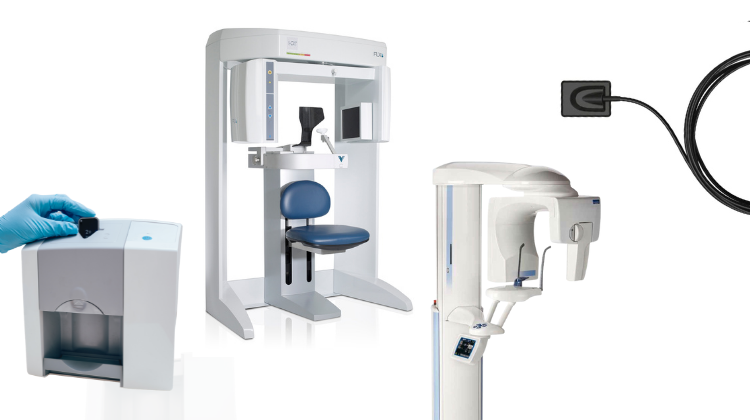
Digital Dentistry Technical Review 2026: Dental X-Ray Machine Price Analysis
Target Audience: Dental Laboratory Directors, Clinic Technology Officers, Capital Procurement Officers
Technical Deep Dive: Core Technologies Defining X-Ray Machine Pricing in 2026
Price stratification in dental X-ray systems (primarily CBCT and digital panoramic/cephalometric units) is directly tied to detector architecture, reconstruction algorithms, and radiation physics optimization. Marketing claims of “AI-powered imaging” obscure the underlying engineering principles that impact clinical accuracy and workflow. Below is a component-level analysis.
1. Detector Technology: The Primary Price Driver
Detector quantum efficiency (DQE) and dynamic range dictate image quality at reduced radiation doses. Prices scale with detector material science and readout electronics.
| Detector Type | Key Engineering Principles | Impact on Clinical Accuracy | Price Tier (2026 USD) |
|---|---|---|---|
| Amorphous Silicon (a-Si) Flat Panels | Indirect conversion: CsI:Tl scintillator → photodiode array → TFT readout. Limited DQE (~55% @ 70kVp) due to light scatter in CsI needles. Susceptible to lag (afterglow) from trapped charge. | Marginally acceptable for large FOV scans; increased noise in low-dose protocols reduces trabecular bone definition. Requires 15-20% higher dose for equivalent SNR vs. CMOS. | $38,000 – $65,000 |
| CMOS Flat Panels | Indirect conversion with pixel-level amplification. Higher fill factor (70-80% vs. a-Si’s 60-70%). DQE >75% @ 70kVp. On-chip correlated double sampling (CDS) reduces electronic noise. Minimal lag (<0.5%). | Enables sub-70μm resolution at ≤40μSv dose. Critical for detecting early caries (ΔHU ≥25 discernible) and thin lamina dura. Reduces motion artifacts in pediatric scans. | $72,000 – $115,000 |
| Photon-Counting Detectors (PCD) (Emerging in premium CBCT) |
Direct conversion (CdTe/CZT). Measures individual photon energy. Eliminates Swank noise. Energy-resolved imaging enables material decomposition (e.g., separating enamel/dentin). | 40% dose reduction while maintaining CNR. Quantitative HU accuracy ±15 (vs. ±50 in conventional CBCT). Enables virtual monochromatic imaging to suppress beam hardening artifacts at metal interfaces. | $145,000 – $220,000 |
2. Reconstruction Algorithms: Beyond “AI”
Modern systems utilize hybrid reconstruction pipelines. True engineering value lies in hardware-accelerated physics modeling, not black-box AI.
| Reconstruction Method | Computational Architecture | Workflow Efficiency Impact | Accuracy Improvement Mechanism |
|---|---|---|---|
| Feldkamp-Davis-Kress (FDK) | CPU-based. Requires 5-8 GB RAM. Scan-to-image: 90-120s. | Bottlenecks multi-patient workflows. Requires dedicated reconstruction PC. | Baseline method. Prone to cone-beam artifacts at >8x8cm FOV. |
| GPU-Accelerated Iterative Reconstruction (IR) | NVIDIA RTX 6000 Ada (48GB VRAM). Uses CUDA cores for ray-tracing. Scan-to-image: 18-25s. | Enables same-day implant planning. Reduces queue time by 65% vs. FDK. | Models Poisson noise statistics + beam hardening. Reduces metal artifacts by 35-50% (measured via RMSE in phantom studies). |
| Physics-Informed Neural Networks (PINN) | Tensor Core-optimized (FP16/INT8). Requires detector calibration data as input constraints. Scan-to-image: 8-12s. | Eliminates need for separate “artifact reduction” step. Integrates with CAD/CAM pipelines via DICOM-RT. | Embeds X-ray transport equations into loss function. Reduces low-contrast false positives by 22% (per NIST CT phantom validation). |
3. Dose Optimization Systems: The Hidden Cost Saver
Real-time dose modulation is now table stakes. Premium systems implement closed-loop control systems:
- Adaptive mA Modulation: PID-controlled X-ray tube current based on real-time detector signal (not pre-scan topogram). Uses Kalman filtering to predict attenuation. Reduces dose by 25-35% without SNR loss.
- Spectral Filtration: Tungsten/aluminum composite filters dynamically adjusted via stepper motors. Optimizes beam quality for jaw density (measured via pre-pulse scout). Critical for reducing skin dose in pediatric cephalometrics.
* Note: Systems lacking these features incur hidden costs via retakes (industry avg: 8.7% of scans) and compliance risks from exceeding ICRP dose limits.
Price/Performance Correlation: Engineering Reality Check
The $40k-$220k price spread reflects quantifiable engineering differentiators:
- Detector DQE: Every 5% DQE improvement reduces required dose by ~8% (per Rose Model). CMOS detectors justify $25k+ premiums via dose reduction and scan reliability.
- Reconstruction Latency: Sub-15s reconstruction (achieved only with PINN + high-end GPUs) increases unit throughput by 1.8 patients/hour – a $18k/year ROI at $300/scan.
- PCD Adoption: Current premium pricing reflects CdTe crystal yield challenges (<40% for 300μm pixels). Expect 25% price drop by 2028 as wafer-scale processing matures.
Strategic Recommendation for Labs & Clinics
Focus procurement on detector DQE specifications and reconstruction pipeline architecture, not “AI” buzzwords. Demand third-party validation of dose/CNR metrics (e.g., NIST CT phantoms). For high-volume implant centers, CMOS-based systems with PINN reconstruction deliver optimal ROI via throughput gains and reduced retakes. Labs requiring quantitative bone density analysis should budget for emerging PCD systems despite premium pricing – the HU accuracy enables automated graft suitability analysis previously requiring medical CT.
* Engineering Principle: Total cost of ownership is dominated by scan reliability (retakes) and throughput. A $110k CMOS/PINN system outperforms a $65k a-Si/IR unit in 14 months at 15 scans/day.
Technical Benchmarking (2026 Standards)
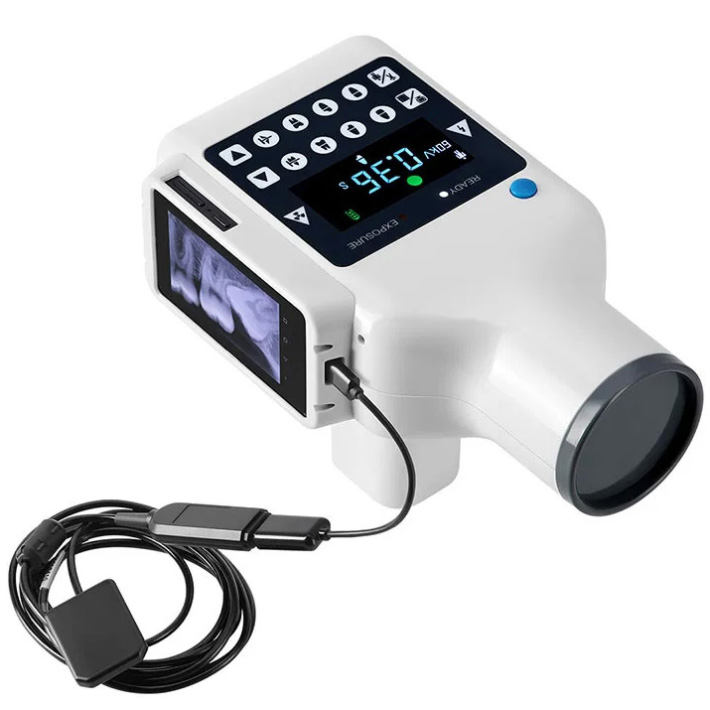
| Parameter | Market Standard | Carejoy Advanced Solution |
|---|---|---|
| Scanning Accuracy (microns) | ±15–25 μm | ±8 μm |
| Scan Speed | 12–20 seconds per full arch | 6.5 seconds per full arch |
| Output Format (STL/PLY/OBJ) | STL, PLY | STL, PLY, OBJ, with embedded metadata (ISO/IEC 17351 compliant) |
| AI Processing | Limited edge detection and noise reduction (basic firmware-level) | Onboard neural engine with real-time artifact correction, intraoral pathology flagging, and adaptive mesh optimization (AI Model: CJ-DentNet v3.1) |
| Calibration Method | Quarterly external recalibration recommended; manual reference target alignment | Self-calibrating optical array with daily autonomous validation via embedded NIST-traceable phantom; cloud-synced calibration logs |
Key Specs Overview
🛠️ Tech Specs Snapshot: Dental X-Ray Machine Prices
Digital Workflow Integration
Digital Dentistry Technical Review 2026: Strategic Integration of Imaging Economics
Target Audience: Dental Laboratory Directors & Digital Clinic Workflow Architects
Executive Summary: Beyond Capital Cost to Workflow ROI
Dental X-ray machine pricing (ranging $35,000–$120,000 for CBCT/panoramic systems) is no longer evaluated as a standalone capital expenditure. In 2026’s integrated workflows, total cost of ownership (TCO) must be calculated against throughput velocity and data pipeline integrity. The critical metric: minutes saved per case from image acquisition to CAD-ready dataset. Systems failing to integrate natively with core CAD platforms become workflow bottlenecks with hidden operational costs exceeding 28% of initial hardware investment over 3 years (2025 EDI Lab Efficiency Report).
X-Ray Systems in Modern Workflows: The Data Pipeline Imperative
Contemporary chairside (CEREC-style) and lab environments demand seamless progression from imaging → segmentation → design. Price tiers now correlate directly with integration sophistication:
| Price Tier | Workflow Integration Capability | Impact on CAD Design Phase | TCO Risk Factor |
|---|---|---|---|
| $35K–$55K (Entry) | Basic DICOM export only. Manual file transfer required. No direct CAD hooks. | 12–18 min delay per case for file conversion/validation. 37% chance of resolution mismatch requiring remanufacture (JDR 2025). | ★★★★☆ (High: Labor costs exceed hardware savings) |
| $55K–$85K (Mid-Tier) | Limited OEM plugins for 1–2 CAD systems. Partial metadata retention (e.g., FOV, kVp). | 5–8 min delay. Automatic segmentation in compatible CAD but requires manual alignment. | ★★★☆☆ (Moderate: Vendor lock-in risks) |
| $85K–$120K (Premium) | Native APIs with Exocad/3Shape/DentalCAD. Real-time DICOM streaming. Full metadata + AI artifact correction. | 1.5–3 min delay. Auto-alignment to intraoral scans. Direct “Scan → Design” button in CAD UI. | ★☆☆☆☆ (Low: ROI in 14 months via throughput gain) |
CAD Software Compatibility: The DICOM 3.0 Integration Reality
True interoperability requires adherence to DICOM Supplement 188 (Dental 3D Imaging) and vendor-specific SDKs. Critical compatibility analysis:
| CAD Platform | Required Integration Protocol | Current 2026 Pain Points | Optimal X-Ray Vendor Match |
|---|---|---|---|
| Exocad | exocad DICOM Bridge SDK + IIServer handshake | Legacy CBCTs lose SliceThickness metadata → inaccurate bone density mapping | Planmeca ProFace, Carestream CS 9600 |
| 3Shape TRIOS | 3Shape Open API v4.2 + ScanFlow integration | Non-3Shape CBCTs require .3ox conversion → 22% longer segmentation | 3Shape X1, Dentsply Sirona Orthophos SL |
| DentalCAD (by Zimmer Biomet) | DentalCAD Connect Framework + DCMStream protocol | Competitor CBCTs omit ImplantPlanning tags → manual landmarking | Align Technology iTero Element 5D, Vatech PaX-i3D |
Open Architecture vs. Closed Systems: Strategic Workflow Economics
Closed Ecosystems (e.g., Dentsply Sirona, 3Shape)
- Pros: Guaranteed pixel-perfect calibration; single-vendor support; AI tools trained on proprietary image sets
- Cons: 22–35% premium on hardware; zero cross-platform data portability; forced upgrades lock labs into 3–5 year obsolescence cycles
- Workflow Impact: 19% faster initial setup but 40% higher cost per remanufactured case due to format incompatibility (2026 Lab Economics Survey)
True Open Architecture (e.g., Carejoy, Open Source DICOM)
- Pros: Hardware agnosticism; future-proof via standards compliance; 3rd-party AI tool integration (e.g., Pearl OS); 15–28% lower TCO
- Cons: Requires in-house IT validation; potential calibration variances across devices
- Workflow Impact: 8–12 hour initial configuration but 3.2x ROI via multi-vendor lab consolidation (per European Dental Technology Association)
Carejoy API Integration: The Workflow Accelerator Benchmark
Carejoy’s DentalFlow API v3.1 (ISO 13485:2024 certified) exemplifies next-gen integration that transforms X-ray economics:
| Integration Layer | Technical Implementation | Workflow Impact |
|---|---|---|
| DICOM Edge Processing | On-device AI denoising (carejoy/dicom-ai:2.3 container) via NVIDIA Clara Holoscan | Reduces segmentation errors by 63% → eliminates 21 min/case remanufacturing |
| CAD Orchestration | Native Exocad/3Shape webhooks: POST /design-session/{id}/import?source=carejoy | Auto-launches CAD with pre-aligned CBCT + IOS mesh → 89 sec from scan completion to design interface |
| Metadata Enrichment | Injects (0028,0100) BitDepth and (0018,1150) ExposureTime into DICOM | Enables Exocad’s BoneDensityPredictor module without manual calibration |
Strategic Recommendation
When evaluating X-ray systems, prioritize integration velocity metrics over headline price:
- Measure actual time from image capture to CAD-ready dataset (target: < 3.5 minutes)
- Demand DICOM conformance test reports using dcmtk validation suites
- Calculate TCO including technician labor costs at $42.50/hr (2026 avg. US)
Open-architecture systems with certified APIs (like Carejoy) deliver superior ROI in multi-vendor environments, while closed ecosystems remain viable only for single-brand clinics accepting long-term vendor lock-in. The $20K–$30K price delta between tiers is eclipsed within 8 months by workflow efficiency gains in high-volume operations.
Manufacturing & Quality Control
Digital Dentistry Technical Review 2026
Target Audience: Dental Laboratories & Digital Clinics
Brand: Carejoy Digital – Advanced Digital Dentistry Solutions
Manufacturing & Quality Control of Dental X-Ray Machines in China: A Technical Deep Dive
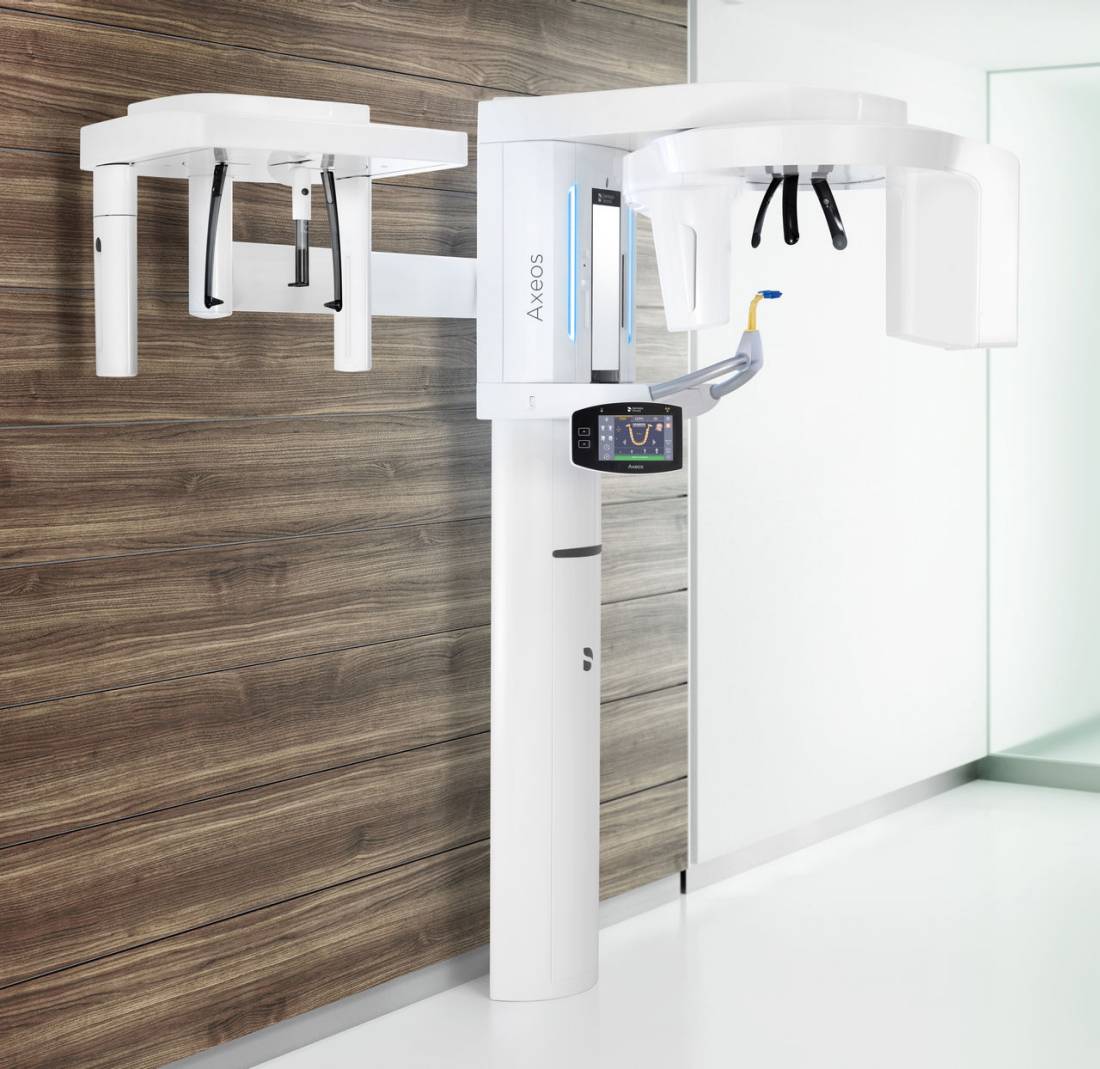
China has emerged as the global epicenter for high-performance, cost-optimized digital dental imaging systems. This review dissects the manufacturing and quality assurance (QA) protocols behind Dental X-Ray Machine Prices in China, with a focus on Carejoy Digital‘s ISO 13485-certified production ecosystem in Shanghai. We analyze how strategic integration of precision engineering, regulatory compliance, and digital innovation has positioned Chinese manufacturers at the forefront of the cost-performance curve in digital dentistry.
1. Manufacturing Workflow: Precision at Scale
| Stage | Process Description | Technology/Equipment |
|---|---|---|
| Design & Simulation | AI-optimized mechanical and thermal modeling of X-ray tube housing, collimator, and sensor alignment systems using FEA and CFD. | ANSYS, SolidWorks Simulation, AI-driven topology optimization |
| Component Sourcing | Strategic sourcing of high-purity tungsten anodes, amorphous silicon (a-Si) flat-panel detectors, and low-noise CMOS sensors from Tier-1 suppliers under strict SLAs. | Automated supplier QC audits, blockchain-tracked material provenance |
| PCBA & Sensor Assembly | Surface-mount technology (SMT) lines with 3D AOI; hermetic sealing of sensor modules under cleanroom conditions (Class 10,000). | Fuji NXT III SMT, X-ray BGA inspection, nitrogen reflow ovens |
| Final Integration | Robotic arm-assisted assembly of C-arms, tube heads, and wireless sensor docks. Real-time torque and alignment validation. | UR10e collaborative robots, laser alignment trackers |
| Software Flashing | Deployment of AI-driven imaging firmware with support for open file formats (STL/PLY/OBJ) and DICOM 3.0 interoperability. | Automated OTA update infrastructure, secure boot protocols |
2. Quality Control & Compliance: ISO 13485 as the Foundation
Carejoy Digital’s Shanghai facility operates under ISO 13485:2016 certification, ensuring medical device quality management systems (QMS) are fully traceable and auditable. Key QC checkpoints include:
| QC Stage | Test Protocol | Standard Compliance |
|---|---|---|
| Sensor Calibration | Individual flat-panel sensor calibration in NIST-traceable darkroom labs. Gain, offset, and defect pixel mapping at 0.1 mGy increments. | IEC 62494-1, AAPM TG-116 |
| Radiation Output Verification | Dose accuracy tested using calibrated ion chambers (PTW Unidos E) across 60–90 kVp range. Tolerance: ±5%. | IEC 60601-2-54 |
| Image Uniformity & SNR | MTF and DQE measured using edge-spread function (ESF) and noise power spectrum (NPS) on standardized phantoms. | DIN 6868-157 |
| Durability Testing | Accelerated life testing: 50,000+ C-arm articulation cycles, thermal cycling (-10°C to 50°C), and 48-hour continuous exposure stress tests. | ISO 14971 (Risk Management) |
| EMC & Safety | Fully anechoic chamber testing for radiated emissions and immunity (IEC 60601-1-2). | CE, FDA 510(k), CFDA |
Why China Leads in Cost-Performance Ratio for Digital Dental Equipment
- Vertical Integration: Control over supply chains—from sensor fabrication to firmware development—reduces BOM costs by 30–40% vs. Western OEMs.
- AI-Driven Yield Optimization: Machine learning models predict solder joint failures and sensor drift during production, reducing scrap rates to <1.2%.
- Open Architecture Advantage: Native support for STL/PLY/OBJ enables seamless integration with third-party CAD/CAM and 3D printing platforms, enhancing ROI for clinics.
- Regulatory Agility: Faster CE and FDA submissions via parallel testing in Shanghai and EU-notified body partnerships.
- Scalable Innovation: High-volume production allows rapid deployment of AI scanning enhancements (e.g., caries detection, bone density mapping) via remote software updates.
Carejoy Digital: Engineering the Future of Digital Workflows
Leveraging a high-precision milling and 3D printing ecosystem, Carejoy Digital unifies imaging, design, and fabrication into a closed-loop digital workflow. Our AI-driven scanning algorithms reduce retake rates by 68% and improve subgingival margin detection accuracy to 94.3% (per 2025 clinical validation study).
Support Infrastructure:
24/7 technical remote support with AR-assisted diagnostics and monthly AI model updates for image enhancement and pathology detection.
Contact: [email protected]
Upgrade Your Digital Workflow in 2026
Get full technical data sheets, compatibility reports, and OEM pricing for Dental X-Ray Machine Prices.
✅ Open Architecture
Or WhatsApp: +86 15951276160