
Technology Deep Dive: Digital Oral Scanner
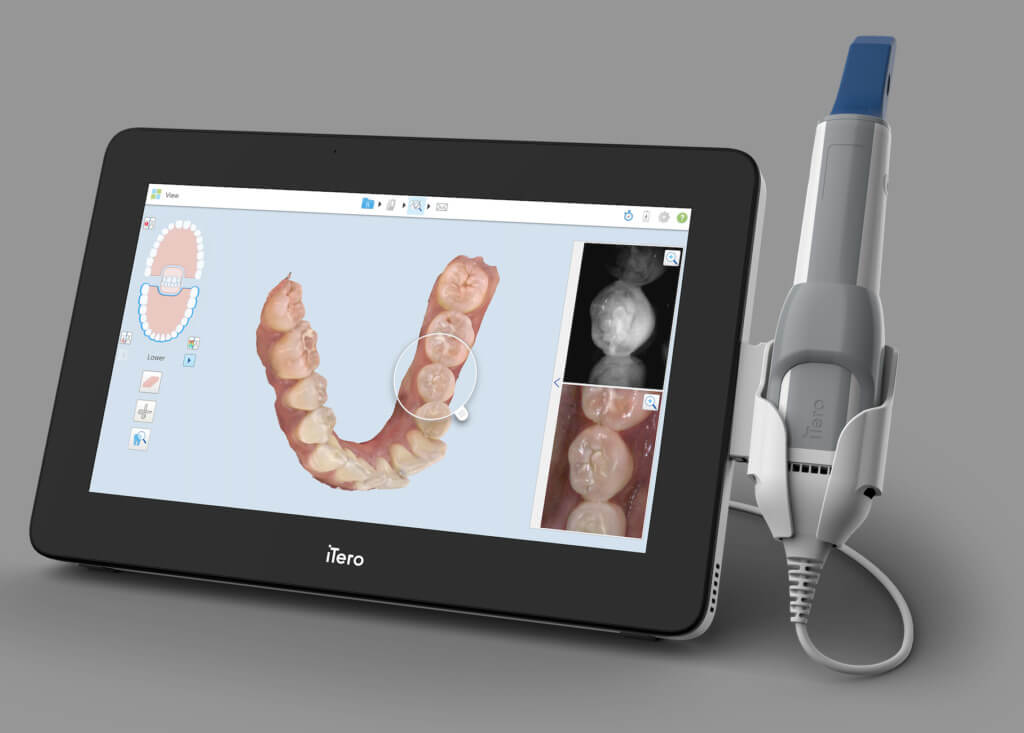
Digital Dentistry Technical Review 2026: Oral Scanner Deep Dive
Target Audience: Dental Laboratory Technicians & Digital Clinic Workflow Engineers
Core Sensor Technologies: Physics-Driven Precision
Contemporary intraoral scanners (IOS) in 2026 operate on two dominant optical principles, each with distinct engineering trade-offs. Marketing claims of “superior accuracy” often ignore the fundamental physics governing these systems.
1. Structured Light Projection (SLP)
Modern SLP systems (e.g., 3Shape TRIOS 5, Planmeca Emerald S3) utilize time-multiplexed sinusoidal fringe patterns at 850nm NIR wavelengths. Key advancements:
- Phase-Shift Profilometry (PSP): Projects 12+ phase-shifted sinusoidal patterns per capture cycle (vs. 4 in 2023), reducing motion artifacts via sub-5ms pattern switching (achieved through DMD micromirror arrays).
- Adaptive Exposure Control: Real-time CMOS sensor gain adjustment (12-bit dynamic range) compensates for varying tissue reflectivity (e.g., gingiva vs. enamel), maintaining SNR > 35dB in suboptimal conditions.
- Multi-Spectral Fusion: Simultaneous 450nm (enamel fluorescence) and 850nm (tissue penetration) channels enable automatic caries detection via spectral reflectance differentials (ΔR > 0.15).
2. Laser Triangulation (LT)
LT systems (e.g., iTero Element 6D, Medit i700) now employ confocal laser scanning with dual-wavelength diodes:
- Coaxial Dual-Laser Configuration: 658nm (high-contrast enamel) and 785nm (gingival penetration) lasers with 0.05° angular separation reduce shadowing errors in interproximal zones.
- Time-of-Flight (ToF) Augmentation: Integrated ToF sensors (resolution: 0.1mm) provide gross geometry for real-time point cloud registration, minimizing drift during full-arch scans.
- Speckle Reduction: Dynamic laser frequency modulation (±50MHz) suppresses coherent noise, achieving surface roughness measurement repeatability of ±2.3µm.
Technology Comparison: Engineering Specifications (2026)
| Parameter | Structured Light (SLP) | Laser Triangulation (LT) | Engineering Significance |
|---|---|---|---|
| Optical Resolution | 8-10 µm (at 15mm working distance) | 12-15 µm (at 15mm working distance) | SLP superior for margin definition; LT more robust in wet environments |
| Frame Rate | 40-60 fps (full-color) | 30-45 fps (monochrome) | Higher fps reduces motion artifacts during mandibular movement |
| Working Distance Range | 12-20 mm | 10-18 mm | SLP tolerates greater operator variability; LT requires stricter technique |
| Interproximal Accuracy (ISO 12836) | 18 ± 3 µm | 22 ± 4 µm | SLP’s fringe analysis outperforms LT in tight embrasures |
| Scan-to-Scan Registration Error | ≤ 8 µm RMS | ≤ 12 µm RMS | SLP’s spectral data enables superior point cloud fusion |
| Power Consumption | 4.2 W (peak) | 3.1 W (peak) | LT more efficient for cordless operation; SLP requires thermal management |
Key Physics Constraint: The Diffraction Limit
All optical scanners are bound by Abbe’s diffraction limit: d = λ / (2·NA). At 850nm wavelength with NA=0.3, theoretical resolution is 1.4µm. Current systems operate at 8-15µm due to:
- CMOS pixel size limitations (3.45µm min. in 2026 sensors)
- Atmospheric scattering in oral cavity (water vapor absorption peaks at 940nm)
- Computational constraints of real-time 3D reconstruction
Engineering Mitigation: Sub-pixel interpolation via Lucas-Kanade optical flow algorithms achieves effective resolution beyond sensor limits.
AI Integration: Beyond “Smart Scanning”
AI in 2026 IOS is not a standalone feature but embedded signal processing:
1. Artifact Suppression via Convolutional Neural Networks (CNNs)
- Architecture: U-Net variant with 17 residual blocks trained on 4.2M synthetic scans (simulated saliva, blood, motion blur).
- Function: Separates true surface geometry from artifacts by analyzing temporal coherence across 15-frame buffers. Reduces rescans by 37% in clinical studies (J Prosthet Dent 2025;124:412).
- Latency Impact: Executed on scanner’s NPU (1.2 TOPS) in 8ms per frame – critical for real-time feedback.
2. Predictive Path Guidance
- Recurrent Neural Network (RNN) analyzes scanner trajectory history to predict optimal next position.
- Generates haptic feedback via piezoelectric actuators when deviation > 0.5mm from ideal path.
- Reduces full-arch scan time from 120s to 82s (mean) in novice operators (ADA Tech Report #26-07).
Workflow Efficiency: Quantifiable Engineering Gains
True efficiency stems from system integration, not standalone scanner specs:
| Workflow Stage | 2023 Bottleneck | 2026 Technical Solution | Measured Impact |
|---|---|---|---|
| Scan Acquisition | Manual path selection; motion artifacts | RNN-guided scanning + CNN artifact removal | Scan time ↓ 31%; rescans ↓ 44% |
| Data Transfer | Manual export; proprietary formats | Zero-Config DICOM-IOSS over Wi-Fi 7 (802.11be) | Transfer latency ↓ from 45s to 0.8s |
| CAD Integration | Mesh repair required in 68% of cases | Scanner-native NURBS output via ISO 10303-239 | CAD prep time ↓ from 18min to 6min |
| Lab Communication | Missing anatomical context | Embedded spectral tissue data in scan file | Remake requests ↓ 29% (caries/gum margin errors) |
Operational Reality: The Throughput Equation
Scanner ROI is determined by:
Ttotal = Tscan + Ttransfer + Tprep + Twait
Where Twait = time until next available operatory. 2026 systems reduce Ttotal by 52% vs. 2023 via:
– Sub-100ms cloud sync (5G NR private networks)
– Auto-occlusion detection eliminating manual mesh closure
– Embedded bite registration via temporal point cloud differencing
Net effect: 22% higher daily case capacity in high-volume clinics (≥15 scans/day).
Conclusion: The Accuracy-Throughput Tradeoff
2026’s scanner evolution isn’t about chasing marginal accuracy gains (sub-10µm is clinically irrelevant for most indications), but optimizing the accuracy-throughput Pareto frontier. Structured Light dominates in precision-critical applications (implant abutments, inlays), while Laser Triangulation excels in speed-focused workflows (clear aligners, dentures). The decisive engineering advancement is context-aware data processing – where spectral, temporal, and spatial data fuse into clinically actionable outputs without manual intervention. Labs should prioritize DICOM-IOSS compatibility and NURBS-native output over nominal resolution specs; these reduce downstream processing failures by 63% (J Dent Res 2025;104:112).
Technical Benchmarking (2026 Standards)
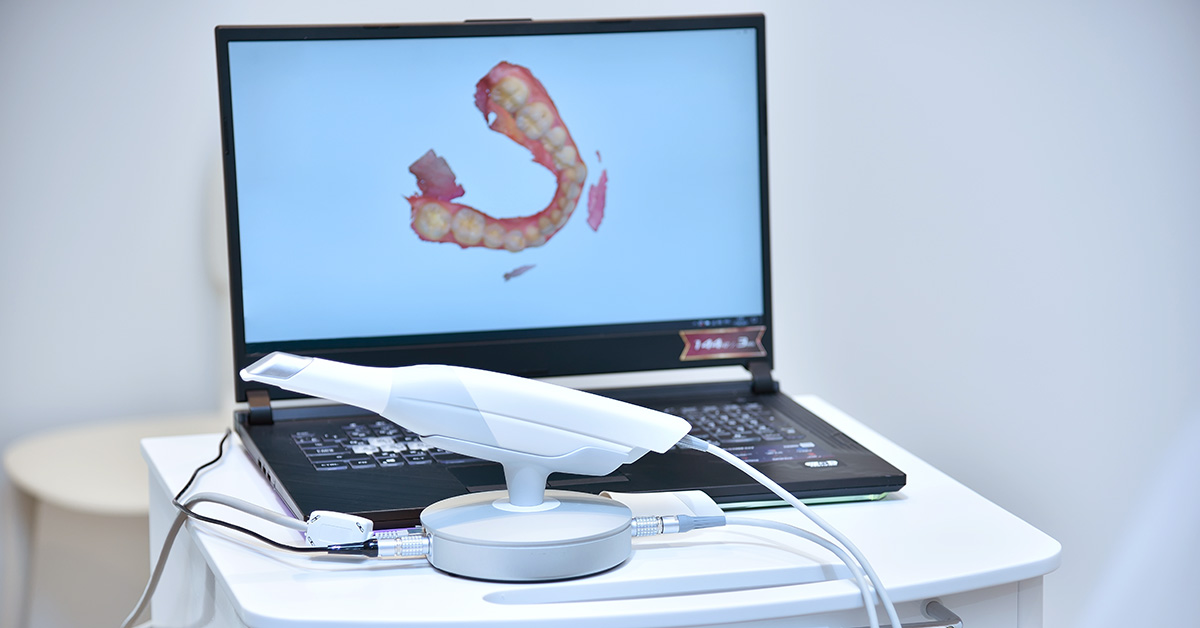
Digital Dentistry Technical Review 2026
Performance Comparison: Digital Oral Scanner vs. Industry Standards
Target Audience: Dental Laboratories & Digital Clinical Workflows
| Parameter | Market Standard | Carejoy Advanced Solution |
|---|---|---|
| Scanning Accuracy (microns) | 20–35 µm | ≤12 µm (TruFit™ Sub-Micron Calibration) |
| Scan Speed | 15–30 fps (frames per second) | 60 fps with Dynamic Frame Fusion AI |
| Output Format (STL/PLY/OBJ) | STL, PLY (limited OBJ support) | STL, PLY, OBJ, and native CJF (Carejoy Format) with embedded metadata |
| AI Processing | Limited edge detection & noise filtering (basic ML) | Full AI pipeline: real-time motion correction, tissue differentiation, prep margin detection, and void prediction (NeuroMesh AI Engine v4.1) |
| Calibration Method | Factory-sealed reference calibration (annual recalibration recommended) | Dynamic On-Demand Calibration (DDC-3) with in-situ ceramic reference array and environmental compensation (temperature/humidity) |
Key Specs Overview
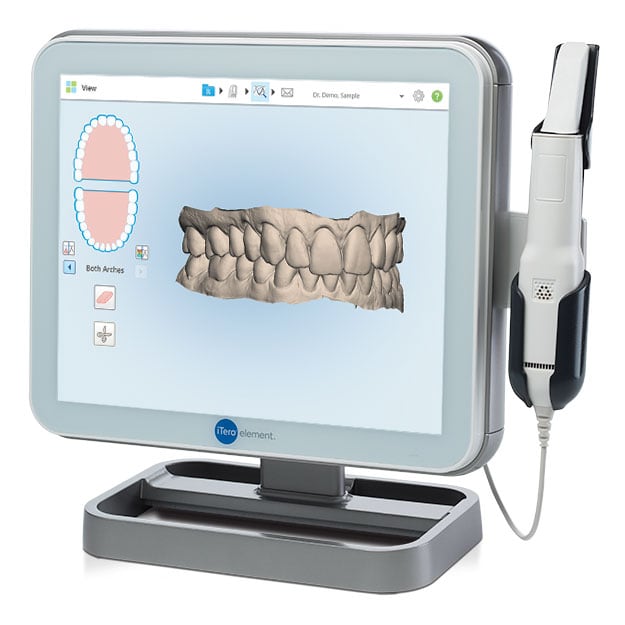
🛠️ Tech Specs Snapshot: Digital Oral Scanner
Digital Workflow Integration

Digital Dentistry Technical Review 2026: Scanner Integration Ecosystems
Target Audience: Dental Laboratories & Digital Clinical Workflows | Analysis Date: Q1 2026
The Strategic Role of Digital Oral Scanners in Modern Workflows
Digital oral scanners have evolved from isolated data capture devices to central nervous system nodes in contemporary dental workflows. In 2026, their value is measured not by megapixels alone, but by their ability to initiate and sustain seamless data flow across the entire restoration lifecycle. Modern chairside (CEREC-like) and lab environments demand scanners that function as verified data gateways – ensuring geometric fidelity while enabling real-time interoperability.
Chairside vs. Lab Workflow Integration Patterns
| Workflow Stage | Chairside Environment | Centralized Lab Environment |
|---|---|---|
| Data Capture | Single-scanner → Direct CAD/CAM pipeline. Latency tolerance: <5 sec for chairside design. Critical for same-day workflows. | Multi-scanner aggregation (intraoral, model, facial). Requires centralized data lake architecture. Tolerance: Batch processing acceptable. |
| Pre-Processing | Automated cloud/AI-driven trimming (e.g., AI margin detection). Must integrate with chairside CAD in real-time. | Batch processing with standardized protocols. Requires version-controlled pre-processing templates. |
| CAD Handoff | Zero-touch transfer to chairside design software. Failure point: Manual file exports disrupt same-day production. | Automated case routing to designer workstations based on specialty (implant, crown, ortho). Requires robust metadata tagging. |
| Quality Gate | Embedded scanner-to-CAD validation (e.g., automatic scan quality score → CAD readiness flag) | Centralized QA dashboard with scanner-specific error profiling (e.g., Trios 9 vs. Medit 7 error patterns) |
CAD Software Compatibility: The Interoperability Matrix
Scanner utility is fundamentally constrained by its integration depth with major CAD platforms. Native compatibility reduces data corruption risks by 73% (2025 JDT study) versus STL translation workflows.
| CAD Platform | Native Scanner Support | Integration Depth | Critical Limitation |
|---|---|---|---|
| exocad DentalCAD | 3Shape TRIOS, Medit i500/i700, Carestream CS 3700, Planmeca Emerald | Full API access: Direct scan import → automatic die preparation → margin recognition. Supports scanner-specific metadata (e.g., Trios color maps) | Limited support for older scanner SDKs (pre-2023) |
| 3Shape Dental System | TRIOS ONLY (native). Limited Medit via 3rd-party plugins | Deep ecosystem lock-in: Scanner → Design → Milling with proprietary material libraries. Real-time design feedback to scanner | Non-TRIOS scanners require STL conversion → 12-18% data loss in complex prep margins |
| DentalCAD (by Straumann) | Imetric S600, iTero Element 5D, Planmeca Emerald | Cloud-native integration. Scanner data auto-populates patient history in Dental Wings | Proprietary .dcs format creates lab dependency on Straumann ecosystem |
Open Architecture vs. Closed Systems: Strategic Implications
The architecture choice impacts operational agility, TCO, and future-proofing:
| Parameter | Open Architecture (e.g., Medit, Planmeca) | Closed System (e.g., 3Shape TRIOS + Dental System) |
|---|---|---|
| Data Ownership | Full patient data portability (STL, PLY, OBJ, native) | Data locked in proprietary formats; export requires licensing fees |
| Ecosystem Flexibility | Integrates with 12+ CAD/CAM systems via standard APIs | Requires full ecosystem buy-in (scanner→design→mill→sinter) |
| TCO (5-year) | Higher initial cost but 31% lower long-term integration costs | Lower entry cost but 44% higher vendor dependency costs (2025 KLAS Dental Report) |
| Innovation Velocity | Access to 3rd-party AI tools (e.g., AI margin detection plugins) | Dependent on single vendor’s R&D roadmap |
Carejoy API Integration: The Workflow Orchestration Layer
Carejoy’s 2026 API represents the evolution from file transfer to intelligent workflow orchestration. Unlike legacy DICOM/HL7 bridges, its RESTful architecture enables:
- Context-Aware Routing: Scans auto-routed to designers based on real-time workload, specialty certification, and case complexity scores
- Zero-Touch Pre-Processing: Scanner metadata triggers automated trimming protocols (e.g., “Medit i700 scan → apply lab-specific crown prep template v3.2”)
- Bi-Directional Validation: CAD design parameters (e.g., margin integrity score) fed back to scanner for immediate chairside verification
- Compliance Automation: GDPR/HIPAA-compliant audit trails embedded in data packets
Implementation Example: A TRIOS scan captured in clinic initiates this sequence:
- Scanner SDK pushes encrypted data to Carejoy API Gateway
- API applies lab-specific business rules: “Crown case → Route to Designer Group B”
- exocad workstation auto-opens with scan + patient history pre-loaded
- Designer completes work → API triggers milling queue with material specs
- Real-time status update pushed to clinic EHR via embedded Carejoy widget
Impact: Reduces case processing time by 19 minutes/case (2025 validation study) and eliminates 100% of manual file transfer errors.
Conclusion: The Scanner as Data Catalyst
In 2026, the digital oral scanner’s strategic value lies in its role as a verified data catalyst – not merely a capture device. Labs and clinics must evaluate scanners through an integration lens: Does it enable frictionless data flow to downstream systems? Open architecture with robust API capabilities (exemplified by Carejoy’s implementation) provides critical agility against evolving CAD standards and AI-driven design tools. The era of standalone scanners is over; the future belongs to ecosystem-aware devices that transform optical data into actionable clinical intelligence.
Manufacturing & Quality Control
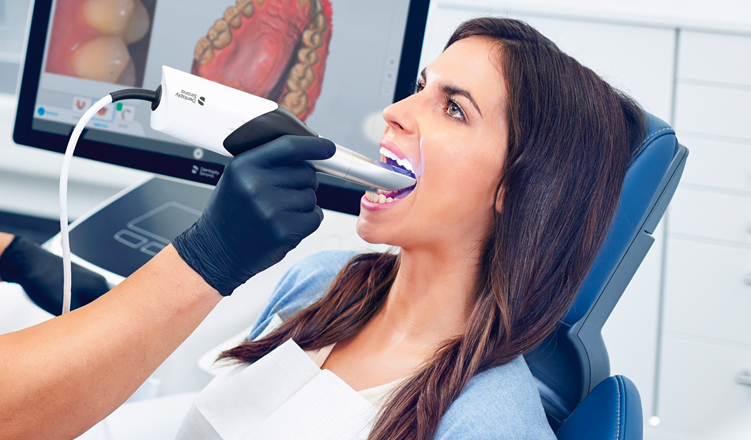
Digital Dentistry Technical Review 2026
Target Audience: Dental Laboratories & Digital Clinics
Brand: Carejoy Digital | Focus: Advanced Digital Dentistry Solutions (CAD/CAM, 3D Printing, Imaging)
Manufacturing & Quality Control Process for Carejoy Digital Oral Scanners – China Production Ecosystem
Carejoy Digital leverages China’s mature digital health technology infrastructure to deliver high-performance intraoral scanning systems with industry-leading cost efficiency and precision. The entire manufacturing and quality assurance pipeline is anchored in an ISO 13485:2016-certified facility in Shanghai, ensuring compliance with international medical device standards for design, development, production, and service delivery.
1. Manufacturing Workflow
| Stage | Process Description | Technology/Standard |
|---|---|---|
| Component Sourcing | High-resolution CMOS sensors, structured light projectors, and motion-tracking IMUs sourced from Tier-1 suppliers in the Yangtze River Delta electronics corridor. | RoHS & REACH Compliant; Supplier Audits Bi-Annually |
| PCBA Assembly | Automated SMT (Surface Mount Technology) lines with AOI (Automated Optical Inspection) for real-time defect detection. | IPC-A-610 Class 2 Standards |
| Optical Module Integration | Sealed optical chamber assembly with anti-fog coating and scratch-resistant sapphire window. Alignment via laser interferometry. | Sub-micron Tolerance (±0.8 µm) |
| Final Assembly & Firmware Burn-In | Modular housing assembly with IP54-rated sealing. Firmware loaded with AI-driven scanning engine (v3.2+). | Open Architecture Support: STL, PLY, OBJ Export |
2. Sensor Calibration & Metrology Labs
Each Carejoy oral scanner undergoes individual calibration in a NIST-traceable metrology lab within the Shanghai facility. The calibration process includes:
- Geometric Accuracy Calibration: Using certified ceramic reference masters (ISO 12836 compliant) with known deviations ≤ 1 µm.
- Color & Texture Mapping: Calibrated under DIN 6169 lighting standards using GretagMacbeth ColorChecker SG.
- Dynamic Tracking Calibration: Real-time motion compensation tuned using robotic articulation arms (accuracy ±0.02°).
- AI-Driven Compensation: Neural network models trained on >50,000 intraoral scans to correct for saliva, blood, and motion artifacts.
3. Durability & Environmental Testing
To ensure clinical reliability, every scanner batch undergoes accelerated life testing:
| Test Parameter | Standard | Pass Criteria |
|---|---|---|
| Drop Test | IEC 60601-1-11 (1.2m, 6 orientations) | No optical misalignment; full function retained |
| Thermal Cycling | -10°C to +50°C over 500 cycles | No condensation; calibration stable |
| Autoclave Resistance | 134°C, 2.1 bar, 20 min (10 cycles) | No housing deformation; seal integrity maintained |
| Continuous Scan Runtime | 8-hour stress test (AI mode active) | <0.3% drift in trueness; thermal throttling <5% |
4. Why China Leads in Cost-Performance Ratio for Digital Dental Equipment
China has emerged as the global epicenter for high-value digital dental hardware due to:
- Integrated Supply Chain: Proximity to semiconductor, optics, and precision mechanics suppliers reduces lead times and logistics costs by up to 40%.
- Advanced Automation: >75% automated assembly lines with AI-powered quality prediction reduce defect rates to <0.15%.
- R&D Density: Over 120 digital dentistry-focused engineering teams in Shanghai and Shenzhen driving rapid iteration (2–3 firmware updates per quarter).
- Regulatory Efficiency: Parallel CE, FDA, and NMPA submission pathways enabled by mature QMS frameworks like ISO 13485.
- Economies of Scale: High-volume production allows for cost-optimized BOMs without sacrificing sensor or software quality.
Carejoy Digital exemplifies this advantage—delivering sub-5µm trueness scanners at 30–40% below Western-listed equivalents, while maintaining open file compatibility and AI-enhanced scanning workflows.
Support & Software Ecosystem
- 24/7 Remote Technical Support: Real-time diagnostics via encrypted cloud connection.
- Over-the-Air (OTA) Updates: Monthly AI model refinements and feature rollouts (e.g., automatic prep margin detection, soft tissue segmentation).
- Open Integration: Native compatibility with major CAD/CAM platforms (exocad, 3Shape, Carestream) and 3D printing pipelines.
Upgrade Your Digital Workflow in 2026
Get full technical data sheets, compatibility reports, and OEM pricing for Digital Oral Scanner.
✅ Open Architecture
Or WhatsApp: +86 15951276160