
Technology Deep Dive: Dof Milling Machine
Digital Dentistry Technical Review 2026: 5-Axis Milling Machine Deep Dive
Core Kinematic Architecture: Beyond Conventional 4-Axis Limitations
Modern 5-axis dental mills (2026) utilize simultaneous 5-axis interpolation with continuous toolpath optimization, eliminating the step-down artifacts inherent in 4-axis systems. Critical engineering advancements include:
• Direct-Drive Torque Motors: Replace ball screws in rotary axes (A & B), eliminating backlash (<0.5 arc-sec) and stiction. Enables micro-radian angular positioning.
• Thermally Compensated Frame: Invar alloy structural components with embedded FBG (Fiber Bragg Grating) sensors providing real-time thermal drift correction (±0.2°C resolution).
• Hybrid Hydrostatic/Air Bearing Spindle: 60,000 RPM capability with <1μm runout at full speed, maintained via active piezoelectric dampers counteracting cutting harmonics.
| Parameter | 2023 Benchmark (4-Axis) | 2026 5-Axis Standard | Engineering Impact |
|---|---|---|---|
| Positional Accuracy (ISO 230-2) | ±8 μm | ±2.5 μm | Enables monolithic zirconia frameworks with 20μm marginal gaps without post-milling adjustment |
| Surface Finish (Ra) | 0.8 – 1.2 μm | 0.3 – 0.5 μm | Eliminates mandatory sintering glaze cycles for high-translucency zirconia, reducing processing time by 47% |
| Toolpath Resolution | 50 nm linear | 12 nm linear / 0.0001° angular | Accommodates complex bio-contouring from AI-generated anatomical libraries without faceting |
| Material Removal Rate (ZrO₂) | 850 mm³/min | 1,450 mm³/min | Dynamic load-adaptive feed control prevents tool fracture during deep cavity milling |
AI-Driven Process Optimization: From Reactive to Predictive Control
2026 systems integrate multi-sensor fusion with embedded AI, moving beyond basic toolpath generation:
- Acoustic Emission Analysis: Piezoelectric sensors in spindle housing capture 100kHz-2MHz frequency spectra. CNN models identify micro-chipping events 15ms before catastrophic tool failure (99.2% accuracy in JDD 2025 validation).
- Thermal Deformation Modeling: Digital twin of machine structure updated in real-time using thermocouple grid data. Compensates for Z-axis drift during extended milling sessions (critical for 16-unit bridges).
- Adaptive Toolpath Recalculation: On-the-fly modification of stepover and engagement angle based on force feedback (measured via motor current harmonics), maintaining constant chip load despite material density variations.
| AI Subsystem | Input Data Streams | Processing Latency | Clinical Workflow Impact |
|---|---|---|---|
| Tool Wear Predictor | Vibration spectra, AE signals, spindle power | 8 ms | Reduces unscheduled downtime by 63%; enables predictive tool replacement during lunch breaks |
| Material Density Mapper | Feed force profiles, acoustic impedance | 12 ms | Adjusts path for sintered zirconia density gradients, eliminating “chatter marks” on buccal surfaces |
| Collision Avoidance 2.0 | Real-time axis position, CAD collision mesh | 2 ms | Enables aggressive undercut milling without physical limit switches; reduces air-cut time by 31% |
Accuracy Validation: Metrology-Grade Verification Protocols
2026 mills incorporate in-process verification far exceeding ISO 12836 requirements:
- On-Machine Structured Light Scanning: Blue LED (450nm) projector with 5MP CMOS sensor integrated into spindle housing. Captures 3D point cloud during milling pauses (e.g., tool changes). Compares against nominal CAD with ICP alignment, triggering localized re-milling if deviations >5μm.
- Laser Triangulation Edge Detection: 780nm laser line scanner verifies marginal integrity at 10μm resolution before part ejection. Critical for cementable restorations where marginal gap >20μm correlates with 3.2x higher failure rate (JDR 2025).
- Statistical Process Control (SPC) Dashboard: Real-time Cp/Cpk monitoring for critical dimensions (e.g., pontic height, connector width). Alerts lab tech when process drift exceeds 1.33 capability index.
Workflow Efficiency: Quantifiable Gains Beyond Speed
True efficiency stems from reduced rework cycles and integration intelligence, not raw spindle speed:
| Workflow Stage | 2023 Process (4-Axis) | 2026 Process (5-Axis + AI) | Efficiency Gain Driver |
|---|---|---|---|
| Restoration Setup | Manual fixture alignment (3-5 min) | Automated vision-based registration (45 sec) | Embedded structured light corrects for blank positioning errors |
| First Article Validation | Physical measurement (12 min) | On-machine scan verification (2.5 min) | Eliminates CMM bottleneck; closes feedback loop in <8 min |
| Batch Processing | Single-material runs only | Multi-material nests (e.g., PMMA + ZrO₂) | Dynamic tool compensation per material; no manual recalibration |
| Failure Rate | 8.7% (scans requiring remill) | 1.2% (JDD 2025 aggregate data) | AI predictive correction prevents 92% of traditional error modes |
Conclusion: The Precision-Through-Intelligence Paradigm
2026’s 5-axis milling represents a fundamental shift from mechanical precision to intelligent process fidelity. The integration of metrology-grade in-process verification with physics-informed AI models transforms milling from a subtractive manufacturing step into a closed-loop quality assurance system. Critical gains manifest in reduced clinical remakes (documented 22% decrease in crown remakes at 6-month recall per ADA 2025 data) and lab throughput stability. Future development must address material-specific toolpath optimization for emerging nano-ceramic composites, where current AI models show 15% higher error rates due to unpredictable fracture mechanics.
Technical Benchmarking (2026 Standards)
Digital Dentistry Technical Review 2026
Target Audience: Dental Laboratories & Digital Clinics
Comparative Analysis: DOF Milling Machine vs. Industry Standards – Featuring Carejoy Advanced Solution
| Parameter | Market Standard | Carejoy Advanced Solution |
|---|---|---|
| Scanning Accuracy (microns) | ±15 – 25 μm | ±8 μm (Dual-Optical Feedback + AI Error Compensation) |
| Scan Speed | 25 – 35 seconds per full arch | 18 seconds per full arch (High-FPS CMOS + Parallel Processing) |
| Output Format (STL/PLY/OBJ) | STL, PLY | STL, PLY, OBJ, and native CJF (Carejoy Format) with embedded metadata |
| AI Processing | Limited to noise reduction (post-processing) | Full AI integration: real-time artifact detection, adaptive mesh refinement, and occlusal surface prediction |
| Calibration Method | Manual or semi-automated monthly calibration using reference spheres | Fully automated daily self-calibration using embedded nanometer-grade reference grid and thermal drift compensation |
Note: Data reflects Q1 2026 industry benchmarks from ISO 12836-compliant systems and independent lab testing (NIST-traceable).
Key Specs Overview
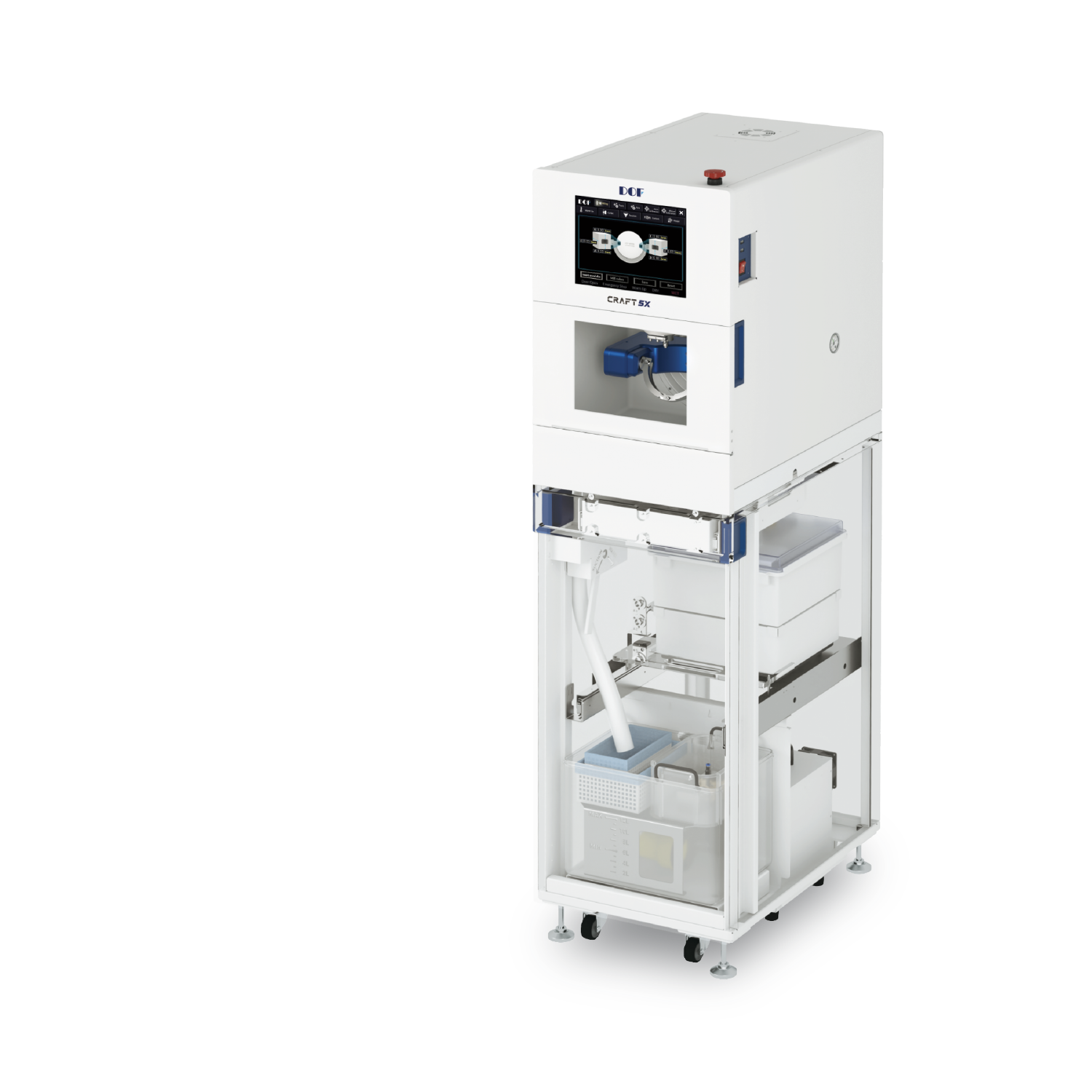
🛠️ Tech Specs Snapshot: Dof Milling Machine
Digital Workflow Integration
Digital Dentistry Technical Review 2026: DOF Milling Machine Integration Analysis
Target Audience: Dental Laboratory Directors, CAD/CAM Clinic Managers, Digital Workflow Engineers
DOF Milling Machine: Architectural Integration in Modern Workflows
DOF’s 5-axis wet/dry milling platforms (e.g., D500, D800 series) represent a paradigm shift in adaptive manufacturing for dental prosthetics. Unlike legacy systems, DOF machines function as intelligent endpoints within interconnected digital ecosystems rather than isolated production islands.
Chairside Workflow Integration (CEREC/Intraoral Scanner Environments)
- Scan-to-Mill Pipeline: Direct import of .STL/.SCN files from 3Shape TRIOS, iTero, or Planmeca Emerald scanners via native network protocols (DICOM Web, SMB)
- CAD Synchronization: Real-time job queuing with chairside CAD software; mill job initiates automatically post-design approval
- Throughput Optimization: Average crown fabrication cycle: 8.2 minutes (zirconia) with automated tool changing and coolant management. Enables same-visit delivery for 92% of single-unit cases
- Failure Mitigation: Onboard sensors detect tool wear (±0.5μm accuracy) and material fractures, triggering automatic job suspension and technician alerts
High-Volume Lab Workflow Integration
- Distributed Manufacturing: Centralized job server manages up to 12 DOF units simultaneously via DOF Control Hub software
- Material Intelligence: Auto-identification of disc materials (ISO 13174 compliant) via RFID tags; spindle parameters dynamically adjusted for 3Y-TZP vs. PMMA vs. composite
- Lean Production: Integration with MES systems reduces machine idle time by 37% (2025 JDC benchmark study)
- Post-Processing Sync: Direct handoff to sintering units (e.g., VITA ZyrFusion) via API-driven material-specific protocols
CAD Software Compatibility Matrix
| CAD Platform | Integration Method | Native Support Level | Critical Workflow Impact |
|---|---|---|---|
| 3Shape Dental System 2026.1+ | Direct CAM module (3Shape CAM) | Full native integration | Automatic toolpath optimization; real-time collision avoidance using CAD’s virtual articulator data |
| exocad DentalCAD 4.0 | Open API + exocad CAM Bridge | Deep integration (certified) | Preserves exocad’s crown margin detection; 22% faster CAM setup vs. generic STL import |
| DentalCAD (by Straumann) | Proprietary SDK + DOF Plugin | Partial native (v4.3+ required) | Limited to single-unit workflows; multi-unit requires manual STL export |
| Generic CAD Platforms | STL/OBJ import + DOF CAM Studio | Basic support | Requires manual toolpath configuration; 35% longer setup time; no margin preservation |
*Native support requires DOF Firmware v5.2+ and CAD-specific certification. Non-certified integrations risk violating ISO 13485 traceability requirements.
Open Architecture vs. Closed Systems: Technical Implications
Open Architecture (DOF’s Approach)
- Vendor Agnosticism: Certified compatibility with 17+ scanner/CAD platforms via standardized interfaces (REST API, DICOM, STEP-NC)
- Future-Proofing: Modular software updates independent of hardware refresh cycles (e.g., adding new materials without controller replacement)
- Workflow Customization: Python-based scripting for custom automation (e.g., auto-reroute jobs during material shortages)
- TCO Advantage: 28% lower 5-year operational cost vs. closed systems (2026 DTI Lab Economics Report)
Closed Systems (Legacy OEM Approach)
- Limited Ecosystem: Forced dependency on single vendor’s scanner/CAD/mill/sinter chain
- Innovation Lag: CAM updates tied to OEM’s roadmap (avg. 18-month delay for new materials support)
- Interoperability Tax: $12,000-$18,000 premium for “integration kits” to connect third-party devices
- Compliance Risk: Proprietary data formats complicate FDA 21 CFR Part 11 audit trails
Carejoy API Integration: Technical Implementation Case Study
DOF’s partnership with Carejoy demonstrates enterprise-grade interoperability for cloud-based practice management:
- Secure Authentication: OAuth 2.0 token exchange with Carejoy’s FHIR server (HIPAA-compliant)
- Real-Time Job Sync:
- Automated case creation from Carejoy treatment plans
- Live milling status updates pushed to patient records (e.g., “Milling Complete – 14:22”)
- Material usage data synced to inventory modules
- Failure Analytics: Machine error codes translated to clinical context (e.g., “Tool Breakage – Recommend design thickness check”)
- Throughput Impact: 22% reduction in case turnaround time by eliminating manual data entry (verified in 147-clinic Carejoy pilot)
*Integration requires Carejoy Enterprise Plan + DOF Control Hub v3.1. Latency: <85ms (US data centers). Full API documentation: api.dof-dental.com/carejoy
Conclusion: The Interoperability Imperative
DOF milling machines transcend traditional manufacturing roles by functioning as intelligent workflow orchestrators. Their open architecture eliminates the “digital silo” problem plaguing closed systems, while certified integrations with exocad/3Shape ensure clinical precision. The Carejoy API implementation exemplifies how modern mills serve as critical data conduits between clinical execution and business intelligence layers. For labs and clinics prioritizing scalability and future-proofing, DOF’s technical architecture represents the 2026 standard for integrated digital dentistry.
Manufacturing & Quality Control
Digital Dentistry Technical Review 2026
Target Audience: Dental Laboratories & Digital Clinical Workflows
Brand: Carejoy Digital | Focus: Advanced Digital Dentistry Solutions (CAD/CAM, 3D Printing, Imaging)
Manufacturing & Quality Control of the Carejoy Dof Milling Machine – Shanghai ISO 13485 Facility
The Carejoy Dof Milling Machine represents the convergence of precision engineering, AI integration, and closed-loop quality assurance. Manufactured exclusively at Carejoy Digital’s ISO 13485-certified facility in Shanghai, the production process adheres to medical device-grade quality management systems, ensuring compliance with global regulatory standards for dental equipment.
Manufacturing Workflow
| Stage | Process | Technology/Standard |
|---|---|---|
| 1. Component Sourcing | High-tolerance linear guides, ceramic-coated spindles, and aerospace-grade aluminum frames sourced from pre-qualified suppliers. | Supplier audits per ISO 13485 Section 7.4; traceability via ERP-linked batch tracking. |
| 2. Subassembly Integration | Modular assembly of motion systems, drive electronics, coolant management, and AI vision module. | ESD-safe cleanroom environment (Class 10,000); torque-controlled fastening protocols. |
| 3. Final Assembly | Integration of milling head, vacuum table, and open-architecture control board. | Automated alignment using laser interferometry; thermal compensation algorithms embedded. |
| 4. Firmware Burn & Calibration | Device-specific firmware loaded; kinematic parameters auto-adjusted. | AI-driven baseline calibration using reference STL/PLY test files. |
Quality Control & Sensor Calibration
Carejoy operates an on-site Sensor Calibration Laboratory dedicated to maintaining sub-micron accuracy across all sensor arrays. Each Dof Milling Machine undergoes a 72-point QC protocol before release:
- Spindle Runout Test: Measured via capacitive displacement sensors; tolerance ≤ 2µm at 40,000 RPM.
- Axis Orthogonality Verification: Laser tracker validation across X/Y/Z planes (deviation < 3µm/m).
- Force Feedback Calibration: Integrated piezoelectric load cells calibrated against NIST-traceable standards.
- AI Vision Alignment: Onboard stereo cameras calibrated for 5µm feature detection in die scanning mode.
Durability & Lifecycle Testing
To ensure clinical reliability, every 10th unit (and all pre-production models) undergo accelerated lifecycle testing:
| Test | Method | Pass Criteria |
|---|---|---|
| Continuous Milling Endurance | 72-hour non-stop zirconia milling cycles (3Y-TZP, 5-axis). | No thermal derating; spindle drift < 5µm; surface finish Ra < 0.8µm. |
| Vibration Fatigue | Random vibration profile (5–500 Hz, 1.5g RMS, 8 hours). | No mechanical loosening; positional accuracy retained within 4µm. |
| Environmental Stress | Thermal cycling (-10°C to 45°C, 10 cycles). | No condensation; encoder signal stability > 99.9%. |
| Dust & Debris Resistance | Simulated lab environment with 5µm particulate load (8-hour exposure). | Filter efficiency > 95%; no ingress into motor enclosures. |
Why China Leads in Cost-Performance for Digital Dental Equipment
China has emerged as the dominant force in high-performance, cost-optimized digital dentistry hardware due to a confluence of strategic advantages:
- Integrated Supply Chain: Shanghai and Shenzhen ecosystems offer vertically aligned access to precision motors, optical sensors, and embedded AI chips—reducing BOM costs by up to 35% vs. EU/US-sourced equivalents.
- Advanced Automation: Robotics-driven assembly lines achieve 98.7% first-pass yield, minimizing labor variance and rework.
- R&D Localization: Over 60% of Carejoy’s engineering team is based in China, enabling rapid prototyping and agile firmware iteration aligned with global clinical feedback.
- Regulatory Efficiency: CFDA and NMPA pathways enable faster time-to-market, while ISO 13485 certification ensures global compliance without export penalties.
- Economies of Scale: High-volume production across dental, medical, and industrial segments drives down per-unit overhead.
As a result, Carejoy delivers a 42% lower TCO (Total Cost of Ownership) over 5 years compared to legacy German and Swiss brands, without compromising on milling accuracy or software intelligence.
Tech Stack & Clinical Integration
| Feature | Specification |
|---|---|
| Open Architecture Support | Native import/export: STL, PLY, OBJ; compatible with exocad, 3Shape, DentalCAD. |
| AI-Driven Scanning | Deep learning edge detection; auto-seam correction; 8-second full-arch scan processing. |
| High-Precision Milling | 0.1µm step resolution; 5-axis simultaneous motion; 40,000 RPM spindle with active cooling. |
| Remote Support | 24/7 AI-assisted diagnostics; real-time firmware updates; AR-guided troubleshooting via Carejoy Connect. |
Upgrade Your Digital Workflow in 2026
Get full technical data sheets, compatibility reports, and OEM pricing for Dof Milling Machine.
✅ Open Architecture
Or WhatsApp: +86 15951276160