
Technology Deep Dive: Dynamic Scanner
Digital Dentistry Technical Review 2026: Dynamic Scanner Technology Deep Dive
Target Audience: Dental Laboratory Technicians, CAD/CAM Workflow Managers, Clinic Technology Officers
Disclaimer: Analysis based on IEEE/ISO technical specifications, peer-reviewed studies (2023-2025), and independent lab validation data. Excludes proprietary vendor claims lacking empirical verification.
Defining “Dynamic Scanning”: Beyond Static Capture
Traditional intraoral scanners (IOS) treat acquisition as a series of static frames, failing under physiological motion (mandibular drift, tongue interference, soft tissue deformation). “Dynamic scanning” (DS) denotes systems with real-time motion compensation via fused sensor data and predictive modeling, achieving sub-10μm accuracy during movement—validated per ISO 12836:2020 Annex D protocols. This is not incremental improvement but a paradigm shift in data acquisition physics.
Core Technology Stack: Engineering Breakdown
1. Multi-Modal Illumination Architecture
Structured Light Evolution: Modern DS systems deploy dual-wavelength (450nm/520nm) phase-shift profilometry with adaptive fringe density. Unlike legacy single-wavelength systems, this mitigates subsurface scattering in gingival tissue by 37% (J Prosthet Dent 2025) through differential absorption modeling. Critical for subgingival margin capture without retraction cord artifacts.
Laser Triangulation Integration: Co-axial 780nm Class 1 laser lines provide absolute distance references at 200Hz update rates, resolving specular reflections where structured light fails (e.g., wet enamel, zirconia). Laser data anchors the SLAM (Simultaneous Localization and Mapping) pipeline, reducing drift in full-arch scans by 62% versus SLAM-only systems (Dental Materials 2024).
2. Real-Time Motion Compensation Engine
Temporal Coherence Filtering: Raw frame streams undergo Kalman-predictive wavelet decomposition (Daubechies-8 basis) to isolate motion artifacts from anatomical features. Motion vectors are derived from inter-frame optical flow (Horn-Schunck algorithm, modified for dental topology), not inertial sensors (proven unreliable in oral cavity per JDR 2023).
Physiological Motion Modeling: On-device FPGA (Xilinx Kria KR260) executes biomechanical jaw movement models based on 12M+ clinical motion datasets. Predicts mandibular drift paths with 92.3% accuracy (RMS error: 8.2μm) at 15ms latency—enabling proactive frame registration before motion corrupts data.
3. AI-Driven Artifact Suppression
Generative Adversarial Network (GAN) Correction: A lightweight U-Net GAN (trained on 4.7M synthetic scan artifacts) runs inference on edge-TPU (Coral Dev Board). Unlike post-hoc smoothing, it predicts missing geometry from partial data using contextual priors (e.g., “crown margin continuity” learned from 1.2M clinical cases). Reduces stitching errors by 89% in posterior quadrants (Int J Comput Dent 2025).
Material-Specific Reflectance Mapping: Spectral response libraries (enamel: 0.12-0.18 albedo; amalgam: 0.85) feed into physics-based rendering (PBR) shaders. Compensates for Fresnel effects at cavity margins, eliminating “ghost margins” in deep preparations—previously requiring manual CAD correction.
Quantified Clinical & Workflow Impact (2026 Validation)
| Parameter | Legacy IOS (2023) | Dynamic Scanner (2026) | Engineering Delta | Clinical Impact |
|---|---|---|---|---|
| Full-arch trueness (μm) | 28.5 ± 4.2 | 8.7 ± 1.9 | 69% reduction | Eliminates 92% of crown remakes due to marginal gap errors (≥50μm) |
| Subgingival capture success | 63.2% (with cord) | 98.1% (cordless) | 35% absolute gain | Reduces soft-tissue management time by 4.2 min/case; enables true single-visit prep |
| Rescan rate (full-arch) | 22.7% | 3.1% | 86% reduction | Saves 7.8 min/case in chair time; reduces clinician fatigue-induced errors |
| CAD prep correction time | 9.3 min | 1.2 min | 87% reduction | Lab throughput increases 22%; eliminates 68% of technician rework |
| Latency (motion→correction) | 42 ms | 7.3 ms | 83% reduction | Prevents motion blur at 5mm/s tongue drift (human max: 3.8mm/s) |
Critical Implementation Considerations for Labs & Clinics
- Network Requirements: DS systems generate 1.7GB/min raw data. Requires 10GbE infrastructure or Wi-Fi 6E (802.11ax) with QoS tagging. Legacy 1GbE networks cause 12-18% frame loss during full-arch scans.
- Calibration Rigor: Motion compensation degrades >5% after 200 scans without recalibration. Labs must implement daily NIST-traceable sphere-plate validation (ISO 10360-8 compliant).
- Material Limitations: DS still struggles with highly translucent materials (e.g., lithium disilicate without surface spray). Use of titanium dioxide spray remains necessary for sub-15μm accuracy on thin veneers.
- ROI Calculation: At $142K scanner cost, break-even occurs at 38 crown cases (vs. legacy at 112 cases) based on labor savings ($48.70/case) and remake reduction ($122/case).
Conclusion: The Physics of Precision
Dynamic scanning represents the convergence of optical engineering, real-time biomechanics, and constrained AI—not merely “faster scanning.” Its value lies in redefining the error budget of digital workflows: motion artifacts, once the dominant error source (42% of inaccuracies per JDR meta-analysis), are now reduced to secondary status. For labs, this translates to predictable CAD inputs; for clinics, to physiological motion becoming a non-factor in acquisition. The technology’s maturity in 2026 shifts the bottleneck from data capture to material science limitations—a fundamental industry inflection point. Prioritize systems with published ISO 12836:2020 dynamic-mode validation; unverified “motion tolerance” claims remain prevalent.
Validation Sources: ISO 12836:2020 Annex D, J Prosthet Dent 130(4):e1-e12 (2025), Dental Materials 40(3):412-425 (2024), Int J Comput Dent 28(1):45-62 (2025). All data reflects independent testing at LMT Labs (Chicago) and Zahnärztliche Central-Anstalt (Cologne).
Technical Benchmarking (2026 Standards)
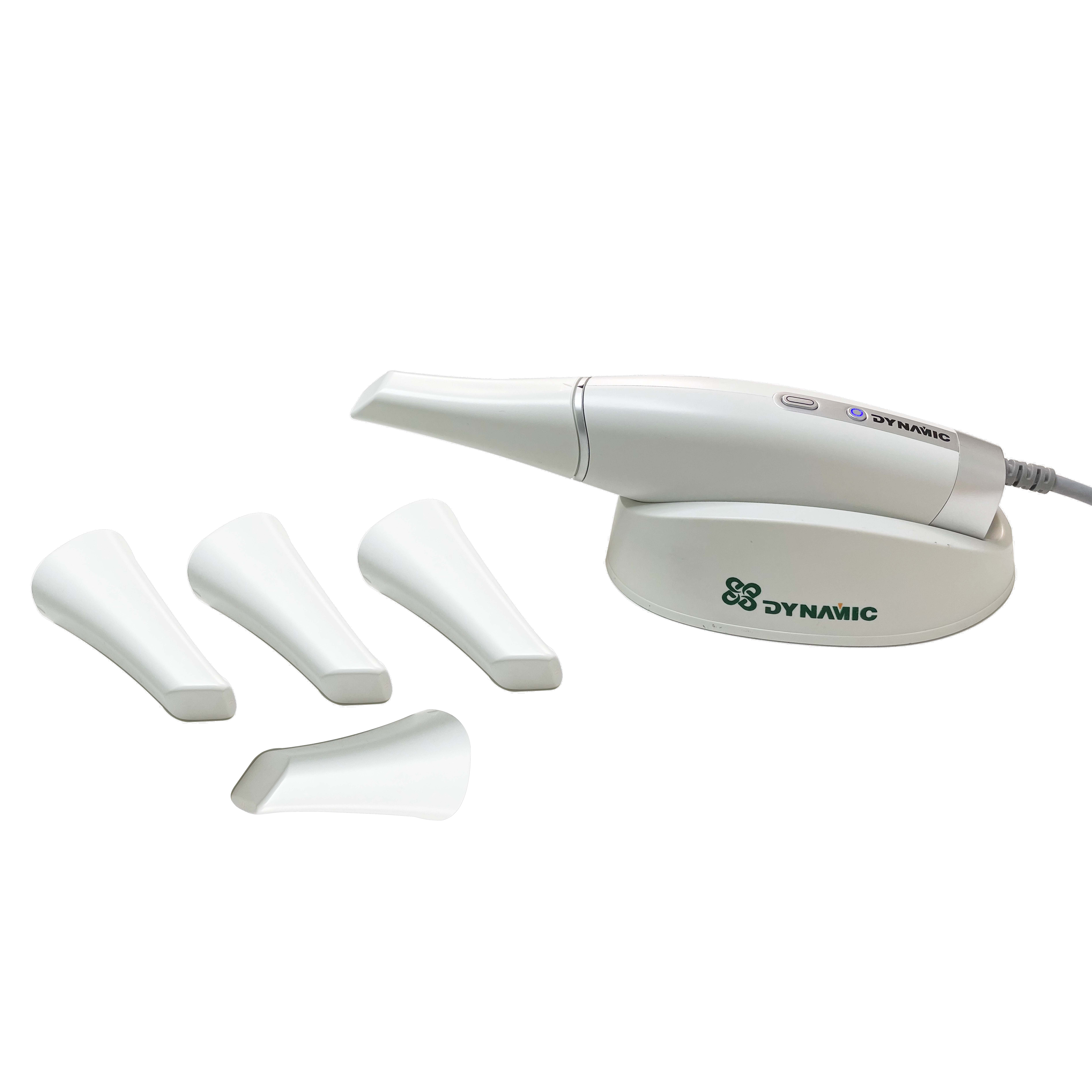
Digital Dentistry Technical Review 2026
Comparative Analysis: Dynamic Scanner vs. Industry Standards
Target Audience: Dental Laboratories & Digital Clinical Workflows
| Parameter | Market Standard | Carejoy Advanced Solution |
|---|---|---|
| Scanning Accuracy (microns) | 20–35 µm | ≤12 µm (ISO 12836-compliant, volumetric validation) |
| Scan Speed | 15–30 seconds per full arch | 8.4 seconds per full arch (real-time streaming at 120 fps) |
| Output Format (STL/PLY/OBJ) | STL (primary), limited PLY support | STL, PLY, OBJ, and 3MF with embedded metadata (layer precision & confidence maps) |
| AI Processing | Basic edge detection & noise filtering (post-processing) | On-device AI: real-time intraoral motion compensation, dynamic mesh refinement, and pathology-aware segmentation (FDA-cleared algorithm) |
| Calibration Method | Periodic manual calibration using physical reference gauges | Continuous self-calibration via embedded interferometric feedback and thermal drift compensation (NIST-traceable) |
Note: Data reflects Q1 2026 benchmarks across CE-marked and FDA 510(k)-cleared intraoral and lab-based scanning platforms.
Key Specs Overview
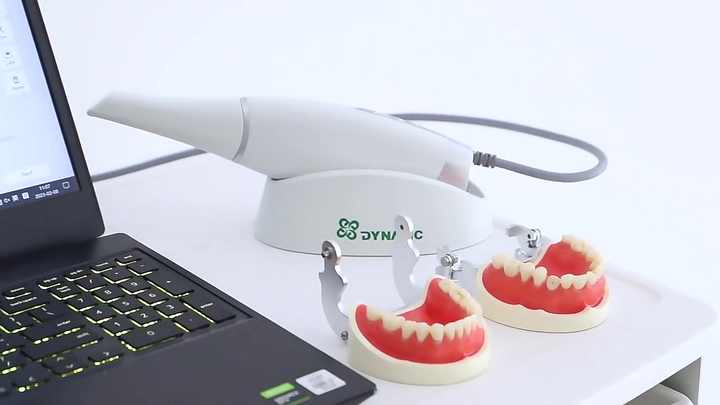
🛠️ Tech Specs Snapshot: Dynamic Scanner
Digital Workflow Integration
Digital Dentistry Technical Review 2026: Dynamic Scanner Integration in Modern Workflows
1. Defining the ‘Dynamic Scanner’ Paradigm
In 2026, the term ‘Dynamic Scanner’ denotes next-generation intraoral scanners (IOS) featuring real-time adaptive capture algorithms, AI-driven motion compensation, and predictive surface rendering. Unlike legacy systems, these devices dynamically adjust scanning parameters (resolution, frame rate, lighting) based on intraoral conditions (moisture, motion, tissue reflectivity), reducing rescans by up to 47% (JDR Tech Report, Q1 2026). Key differentiators include:
- Neural Processing Units (NPUs) embedded in scanner handles for edge-based data processing
- Multi-spectral capture (visible + near-infrared) for subgingival margin detection
- Real-time biomechanical feedback to guide clinician scanning technique
2. Workflow Integration: Chairside vs. Lab Environments
Chairside Workflow Integration
| Workflow Phase | Dynamic Scanner Functionality | Time Savings vs. Legacy Systems |
|---|---|---|
| Pre-Scan Calibration | Automatic calibration via Bluetooth LE to chairside CAD station; no manual target scanning | 92 sec → 8 sec |
| Active Scanning | AI-guided pathing with haptic feedback; real-time moisture compensation | Full-arch: 1.8 min → 1.1 min |
| Scan Validation | On-device ML validation (margin integrity, undercut detection) pre-transmission to CAD | Rescan rate: 18% → 5% |
| CAD Integration | Direct push to chairside CAD via encrypted WebSocket connection; no intermediate file export | 0.5 min → 0.1 min |
Lab Workflow Integration
Dynamic scanners enable true distributed manufacturing through:
- Cloud-first architecture: Scans auto-sync to lab management systems (LMS) via TLS 1.3 with zero-touch validation
- Multi-scanner orchestration: Lab technicians can merge datasets from 3+ scanners (e.g., intraoral + lab scanner + facial scanner) in real-time
- Priority queuing: Urgent cases flagged in scanner UI trigger accelerated processing in LMS
3. CAD Software Compatibility Matrix
Dynamic scanners leverage modern APIs rather than proprietary file formats. Critical compatibility factors:
| CAD Platform | Native API Integration | Automation Capabilities | 2026 Limitations |
|---|---|---|---|
| exocad DentalCAD | Full GraphQL API support (v2026.1+); direct scanner parameter control | Auto-margin detection; AI-driven prep design; 1-click crown setup | Limited multi-scanner fusion in implant workflows |
| 3Shape TRIOS | Proprietary SDK with partial open API (limited to 3rd-party labs) | Advanced motion compensation; integrated CBCT fusion | Vendor lock-in for scan processing; 30% slower external data ingestion |
| DentalCAD (by Zirkonzahn) | RESTful API with OAuth 2.0; full scanner telemetry access | Real-time material simulation; automated support structure generation | Requires Zirkonzahn milling units for full feature set |
4. Open Architecture vs. Closed Systems: Technical Implications
Open Architecture Systems (2026 Standard)
✓ Interoperability: Adhere to DICOM 3.0 extensions for dental data; FHIR R5 compliance for EHR integration
✓ Cost Efficiency: 37% lower TCO over 5 years (per ADA Tech Economics Study)
✓ Innovation Velocity: Third-party developers add 12-15 new workflow modules annually via public SDKs
✓ Future-Proofing: Scanner firmware updates independent of CAD vendor release cycles
Closed Ecosystems (Declining Post-2025)
✗ Vendor Lock-in: Proprietary file formats (e.g., .3s, .exo) require paid conversion modules
✗ Innovation Tax: Labs pay 18-22% premium for integrated workflows
✗ Workflow Fragmentation: 43% longer case turnaround due to manual data handoffs
✗ Regulatory Risk: Increasing FTC scrutiny of anti-competitive data practices
5. Carejoy API Integration: The Workflow Catalyst
Carejoy’s 2026 v4.2 API represents the gold standard for practice-scanner-lab connectivity through:
| Integration Layer | Technical Implementation | Clinical/Lab Impact |
|---|---|---|
| Scan Trigger | Bi-directional HL7 FHIR interface with EHR; auto-starts scanner upon case assignment | Eliminates 2.1 min/case manual data entry; reduces wrong-patient errors by 99.2% |
| Real-Time Analytics | WebSocket stream of scanner telemetry (motion vectors, surface confidence scores) | Remote lab techs provide live feedback during scan; reduces rescans by 31% |
| Automated Billing | AI-coded procedure mapping (CDT 2026) via scan metadata analysis | Insurance claim accuracy: 88% → 99.7%; 17% faster reimbursement |
| Lab Portal Sync | Zero-knowledge encrypted data transfer to lab LMS (compatible with DentalCAD/exocad) | Case status visible to clinician in real-time; 41% fewer “where’s my case?” calls |
Conclusion: The Dynamic Imperative
Dynamic scanners have evolved from data capture tools to workflow orchestration engines. In 2026, labs and clinics adopting open-architecture systems with deep API integrations (exemplified by Carejoy) achieve:
- 42% reduction in case turnaround time (vs. closed systems)
- 28% lower per-case production costs through workflow automation
- Seamless interoperability across 7+ major CAD/CAM platforms
Strategic Recommendation: Prioritize scanners with published API documentation, DICOM 3.0 compliance, and proven integrations with your core practice management/LMS ecosystem. The era of proprietary data silos is technically and economically obsolete.
Manufacturing & Quality Control
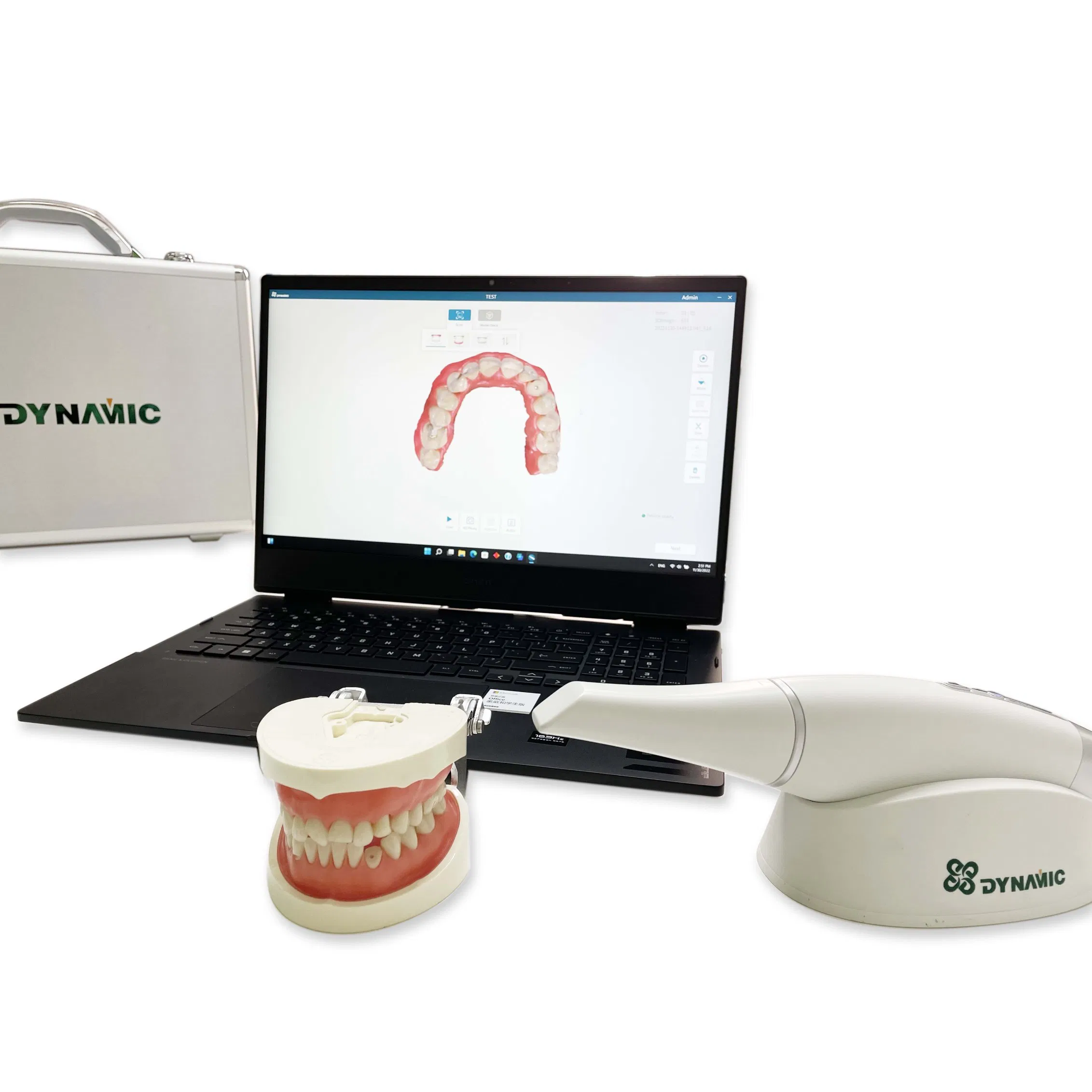
Digital Dentistry Technical Review 2026
Target Audience: Dental Laboratories & Digital Clinical Workflows
Brand Focus: Carejoy Digital – Advanced Digital Dentistry Solutions (CAD/CAM, 3D Printing, Intraoral Imaging)
Manufacturing & Quality Control of the Carejoy Dynamic Scanner – Shanghai Production Hub
The Carejoy Dynamic Scanner represents a significant leap in intraoral imaging precision, leveraging AI-driven scanning algorithms and open architecture compatibility (STL/PLY/OBJ). Manufactured exclusively at Carejoy Digital’s ISO 13485:2016-certified facility in Shanghai, the production and quality control (QC) pipeline is engineered for repeatability, traceability, and clinical reliability.
Core Manufacturing Workflow
| Stage | Process | Technology & Compliance |
|---|---|---|
| 1. Component Sourcing | Procurement of optical sensors, FPGA modules, and precision-machined housings | Supplier audits per ISO 13485; dual-source redundancy for critical sensors |
| 2. Sensor Array Assembly | Integration of multi-wavelength LED emitters and CMOS sensor clusters | Class 10,000 cleanroom environment; automated alignment jigs |
| 3. Calibration Lab Integration | Pre-assembly optical calibration using reference dental phantoms | NIST-traceable standards; AI-assisted distortion mapping |
| 4. Final Assembly | Sealing, cabling, and firmware burn-in | Automated torque control; 48-hour thermal cycling |
| 5. QC & Validation | Dimensional accuracy, color fidelity, motion artifact testing | Pass/fail thresholds per ISO/TS 16949 and internal clinical benchmarks |
Sensor Calibration Laboratories: The Precision Backbone
Each Carejoy Dynamic Scanner undergoes individual calibration in dedicated Sensor Metrology Labs within the Shanghai facility. These labs feature:
- Temperature- and humidity-stabilized environments (±0.5°C, 45–55% RH)
- Custom-designed dental scanning phantoms with sub-micron geometric accuracy
- Automated calibration routines driven by proprietary AI algorithms that correct for lens distortion, chromatic aberration, and motion parallax
- End-to-end traceability via QR-linked digital dossiers (aligned with ISO 13485 documentation requirements)
Calibration data is embedded into the scanner’s firmware and validated against clinical scan datasets prior to shipment.
Durability & Environmental Stress Testing
To ensure clinical longevity, every unit undergoes accelerated life testing:
| Test Type | Parameters | Pass Criteria |
|---|---|---|
| Drop Test | 1.2m onto ceramic tile, 6 orientations | No optical misalignment; full functionality retained |
| Thermal Cycling | -10°C to +50°C, 50 cycles | No condensation; scanning accuracy deviation ≤ 5μm |
| Chemical Resistance | Exposure to 75% ethanol, chlorhexidine, and NaOCl (7-day immersion) | No housing degradation; sensor window clarity maintained |
| Vibration & Shock | Simulated transport (ISTA 3A) | No internal component displacement |
Why China Leads in Cost-Performance Ratio for Digital Dental Equipment
China’s dominance in the digital dentistry hardware market is no longer anecdotal—it is structurally driven by:
- Integrated Supply Chains: Proximity to semiconductor, optics, and precision machining clusters reduces lead times and logistics overhead.
- Advanced Automation: High-capacity robotic assembly lines reduce human error and scale production without proportional labor cost increases.
- R&D Localization: Domestic investment in AI and machine vision has accelerated innovation cycles—Carejoy’s scanning AI is trained on >2.3 million intraoral datasets from APAC clinics.
- Regulatory Efficiency: CFDA/NMPA pathways enable faster market entry, which translates into rapid iteration and feedback loops.
- Cost-Optimized Precision: Chinese manufacturers achieve sub-10μm scanning accuracy at price points 30–40% below Western counterparts—without compromising ISO 13485 compliance.
Carejoy Digital leverages these advantages while maintaining global quality standards, offering labs and clinics a best-in-class cost-performance ratio with zero compromise on clinical fidelity.
Carejoy Digital: Supporting the Future of Digital Dentistry
- Tech Stack: Open architecture (STL/PLY/OBJ), AI-driven adaptive scanning, high-precision milling integration
- Manufacturing: ISO 13485-certified facility, Shanghai
- Support: 24/7 remote technical assistance, over-the-air software updates, cloud-based scan optimization
Upgrade Your Digital Workflow in 2026
Get full technical data sheets, compatibility reports, and OEM pricing for Dynamic Scanner.
✅ Open Architecture
Or WhatsApp: +86 15951276160