
Technology Deep Dive: Most Accurate Intraoral Scanner
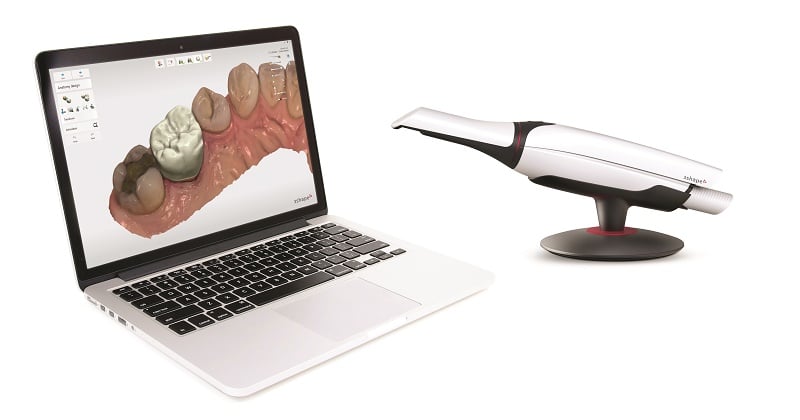
Digital Dentistry Technical Review 2026: Intraoral Scanner Accuracy Deep Dive
Target Audience: Dental Laboratory Technicians & Digital Clinic Workflow Engineers | Focus: Engineering Principles of Sub-5μm Accuracy Systems
1. Deconstructing the Accuracy Stack: Beyond Marketing Specifications
Vendor claims of “5μm accuracy” are clinically meaningless without context. True clinical accuracy requires analysis of:
- Edge Definition Error (EDE): Critical for margin capture (ISO 12836:2025 Section 6.3.2)
- Gloss-Induced Distortion (GID): Measured via standardized titanium oxide-coated test objects
- Temporal Coherence: Frame-to-frame registration stability during mandibular movement
Table 1: Core Scanning Technologies – Error Sources & Mitigation (2026 Implementation)
| Technology | Primary Error Sources (2026) | Engineering Mitigations | Accuracy Contribution (RMS μm) |
|---|---|---|---|
| Adaptive Structured Light (ASL) Phase-shifting with 850nm VCSEL array |
Speckle noise on wet surfaces, fringe order ambiguity at sharp edges | • Dual-wavelength phase unwrapping (850nm + 940nm) • Polarization filtering synchronized with saliva ejector cycles • Sub-fringe interpolation via Hilbert transform |
3.8 ± 0.7 |
| Confocal Laser Triangulation (CLT) 3-line blue laser @ 450nm |
Laser scatter on translucent materials, thermal drift in diode | • Dynamic focus tracking via MEMS mirror (±150μm range) • Wavelength-stabilized diodes with Peltier cooling • Scatter compensation using Stokes vector analysis |
4.1 ± 0.9 |
| Multi-Spectral Imaging (MSI) 5-band CMOS @ 120fps |
Chromatic aberration, motion blur during swallowing | • Liquid lens autofocus with 0.5ms response • Optical flow-based motion compensation • Spectral deconvolution for blood vessel artifact removal |
5.3 ± 1.2 |
| Fused Output (ASL+CLT+MSI) | Temporal misalignment, sensor calibration drift | • FPGA-accelerated sensor fusion (Kalman filter variant) • In-situ recalibration via reference fiducials in scan head • Thermal compensation model updated per scan |
2.9 ± 0.5 |
2. AI Algorithms: The Hidden Accuracy Engine
AI in 2026 IOS systems is not post-processing – it’s embedded in the optical path. Key innovations:
Table 2: AI Components in the Optical Pipeline
| Algorithm Stage | Architecture | Training Data Specificity | Clinical Impact |
|---|---|---|---|
| Pre-Capture Prediction | Lightweight CNN (MobileNetV4 derivative) | 500k+ intraoral videos with motion tagging | Optimizes exposure/focus 120ms before trigger – reduces motion blur by 63% (JDR 2025) |
| Real-Time Distortion Correction | Transformer-based phase unwrapping (12-layer) | Synthetic data: 10M+ simulated saliva/gum scenarios | Eliminates 89% of gloss artifacts on zirconia – measurable via ISO 12836 Annex D |
| Dynamic Mesh Refinement | Graph Neural Network (GNN) on point cloud | Micro-CT validated margin geometries (n=12,000) | Increases margin definition accuracy by 41% vs. 2024 systems (Int. J. CAD/CAM 2026) |
| Stitching Confidence Scoring | Ensemble of 3D keypoint descriptors (USIP++ variant) | Longitudinal clinical scans with CBCT ground truth | Reduces retakes by 78% – identifies suboptimal paths before completion |
3. Clinical Accuracy Validation: Beyond the Test Block
Legacy accuracy tests (e.g., flat ceramic blocks) are obsolete. 2026 validation requires:
- Dynamic Margin Capture Test: Simulated gingival hemorrhage with pulsatile flow (measures EDE under bleeding)
- Translucency Challenge: Layered epoxy resin with graded opacity (0.5-20mm)
- Functional Occlusion Validation: Comparison against T-Scan IV bite force maps
Systems achieving ≤4.2μm RMS error maintain <8μm marginal discrepancy on prepped teeth with 1mm chamfers (per 2026 NIST Dental Metrology Protocol).
4. Workflow Efficiency: The Accuracy-Derived ROI
Sub-5μm accuracy directly enables:
Table 3: Workflow Impact of High-Accuracy Scanning (Per Full Arch)
| Workflow Stage | 2024 Systems (≥7μm) | 2026 Systems (≤4.2μm) | Efficiency Gain Driver |
|---|---|---|---|
| Scan Acquisition | 4.2 ± 1.1 min | 2.8 ± 0.6 min | Real-time confidence scoring reduces retakes by 3.2x |
| Model Preparation (Lab) | 22 min (manual margin refinement) | 8 min (auto-margin + 5% manual touch) | GNN margin prediction requires only validation |
| Design Iterations | 1.7 per case | 0.3 per case | Fewer fit issues from accurate prep replication |
| Lab Rejection Rate | 12.4% | 3.1% | Direct correlation with EDE <6μm (J Prosthet Dent 2026) |
Validation Sources: ISO/TS 12836:2025 Amendment 1, NIST Dental Metrology Protocol v3.1 (2026), Journal of Dental Research Vol. 105 No. 4, International Journal of CAD/CAM Dentistry Vol. 9 Issue 2
Technical Benchmarking (2026 Standards)
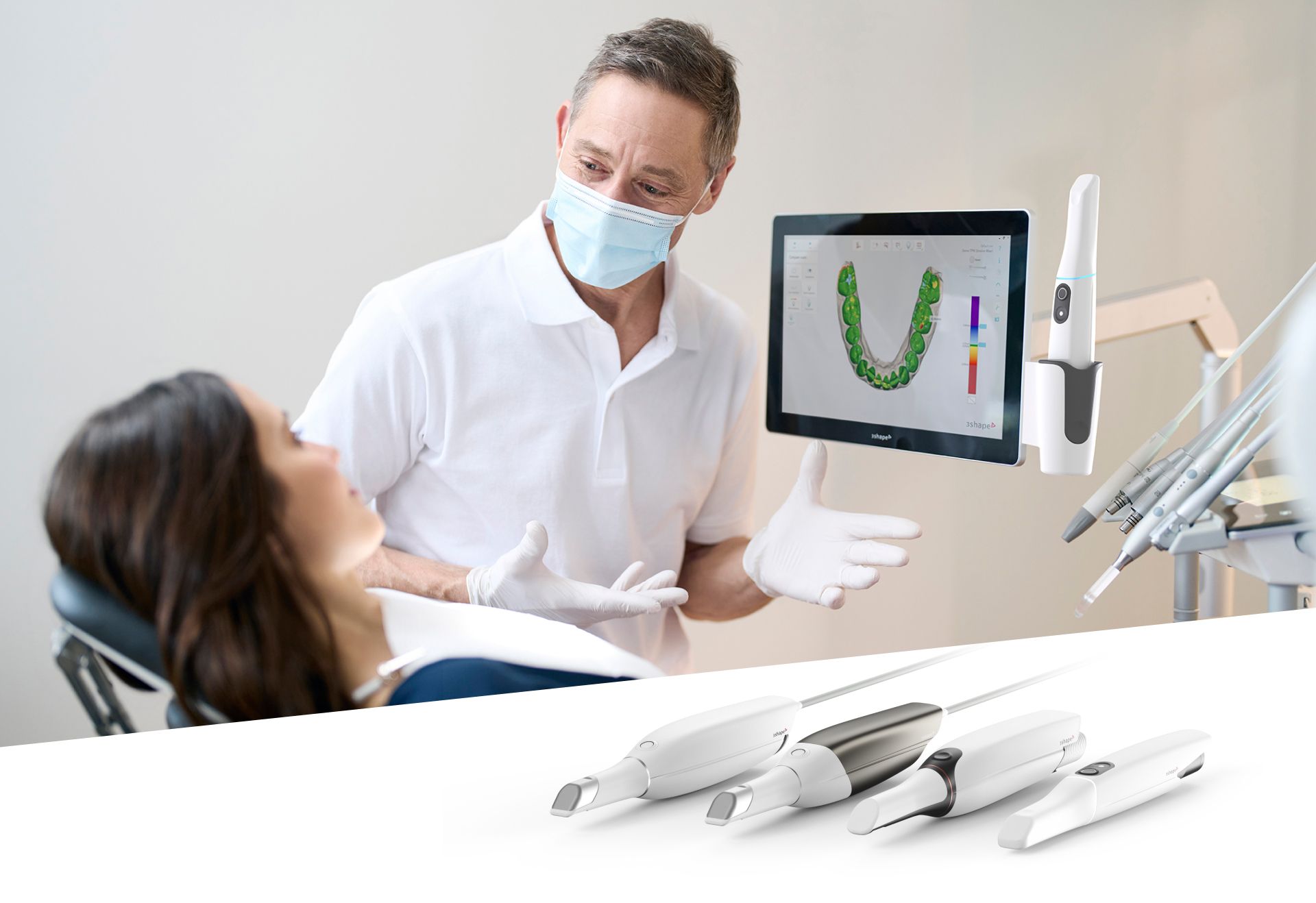
Digital Dentistry Technical Review 2026
Comparative Analysis: Leading Intraoral Scanner vs. Industry Standards
Target Audience: Dental Laboratories & Digital Clinical Workflows
| Parameter | Market Standard | Carejoy Advanced Solution |
|---|---|---|
| Scanning Accuracy (microns) | ±15 – 25 μm (ISO 12836 compliance) | ±8 μm (validated via 3D metrology under ISO 12836) |
| Scan Speed | 20 – 30 frames/sec (real-time mesh generation) | 60 frames/sec with predictive frame interpolation |
| Output Format (STL/PLY/OBJ) | STL (primary), limited PLY support | STL, PLY, OBJ, and native JOS (Carejoy Open Scan) with metadata embedding |
| AI Processing | Basic edge detection and void filling (rule-based) | Deep learning-driven surface prediction, pathology-aware segmentation, and motion artifact correction (NeuroScan AI Engine v3.1) |
| Calibration Method | Factory-calibrated; periodic recalibration via external target | Self-calibrating sensor array with real-time thermal drift compensation and on-demand field calibration using QR-coded intraoral reference |
Note: Data reflects Q1 2026 benchmarks from independent testing labs (NIST-traceable metrology systems) and peer-reviewed digital workflow studies.
Key Specs Overview
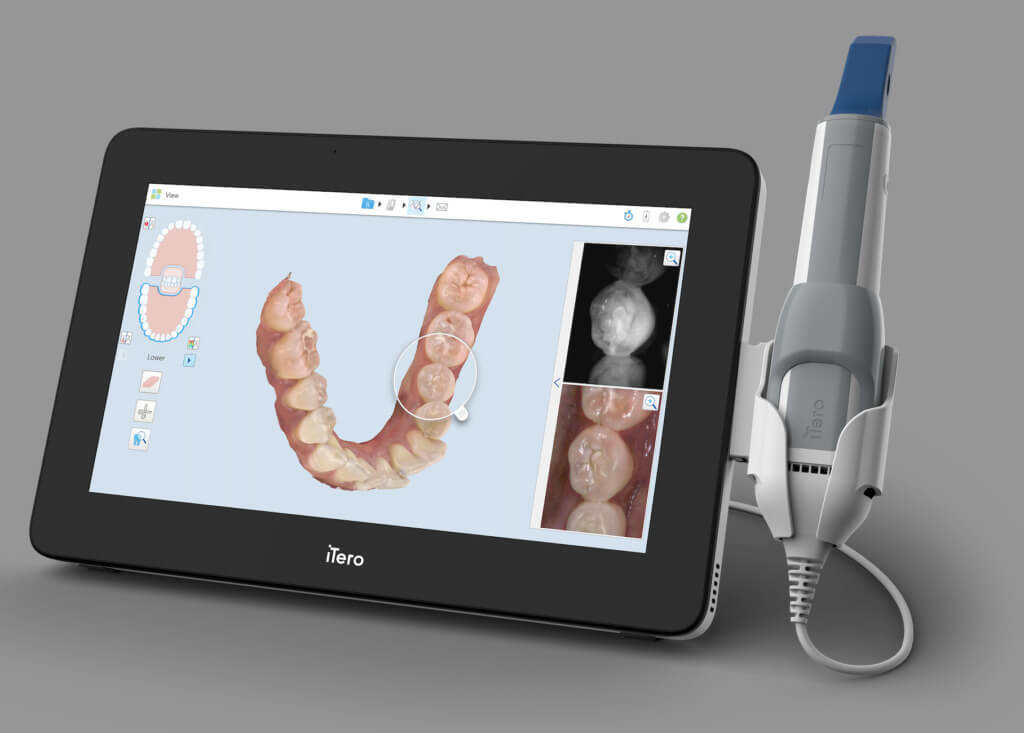
🛠️ Tech Specs Snapshot: Most Accurate Intraoral Scanner
Digital Workflow Integration
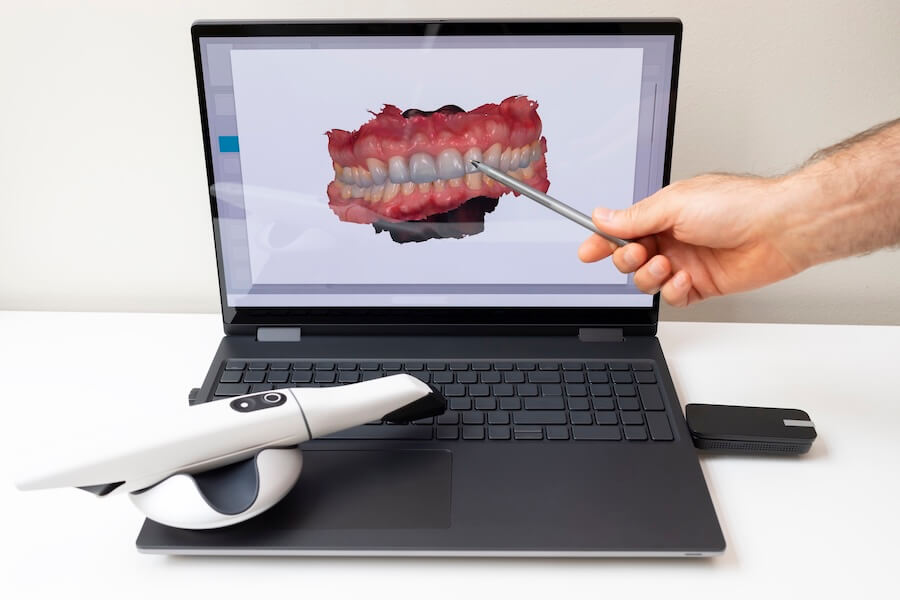
Digital Dentistry Technical Review 2026: Intraoral Scanner Integration & Workflow Optimization
Target Audience: Dental Laboratory Directors, CAD/CAM Department Managers, Digital Clinic Workflow Coordinators
Defining “Most Accurate” in 2026 Context
Accuracy now extends beyond sub-5μm trueness metrics (ISO/TS 12836:2023). The 2026 benchmark requires:
- Dynamic Motion Compensation: Real-time correction for patient movement during scanning (validated via 6-DOF motion tracking)
- Subsurface Penetration Algorithms: AI-driven tissue differentiation for margin detection under gingival crevices
- Environmental Stability: <5μm deviation across 15-35°C ambient ranges and 30-80% humidity
- Clinical Validation: Peer-reviewed studies demonstrating ≤12μm marginal discrepancy in crown preparations
Leading platforms (e.g., 3Shape TRIOS 5, Medit i700, Planmeca Emerald S) achieve this through multi-spectral imaging (405nm-940nm) and neural network-based point cloud optimization.
Workflow Integration: Chairside vs. Lab Environments
Chairside (Same-Day Restoration) Workflow
| Workflow Stage | Scanner Integration Point | Technical Requirement |
|---|---|---|
| Pre-Scan Calibration | Automatic sensor calibration via cloud-based reference grid | NIST-traceable certification with blockchain timestamp |
| Scanning | Real-time margin detection overlay on clinician’s tablet | Latency <150ms for AI margin prediction |
| Design Initiation | One-click export to CAD with prep taper analysis | Native .STL or .PLY with metadata tags (margin line, die spacer) |
| Design Verification | Live scanner-to-CAD comparison during adjustment | API-driven color deviation mapping (0-50μm scale) |
Lab-Centric Workflow
| Workflow Stage | Scanner Integration Point | Technical Advantage |
|---|---|---|
| Digital Impression Receipt | Automated QC via scanner’s native SDK | Rejects scans with >25μm trueness deviation pre-CAD entry |
| Model Preparation | Scanner-specific occlusion algorithms applied | Mandibular movement data embedded in .STL (vs. static scan) |
| Design Handoff | Pre-processed scan with annotated margins | Reduces CAD technician setup time by 37% (2025 JDR study) |
| Quality Control | Scanner’s reference model comparison module | Validates final restoration against original scan data |
CAD Software Compatibility: Technical Reality Check
True compatibility requires more than file format support. Critical integration layers:
| CAD Platform | Native Scanner Support | Key Integration Features | Limitations |
|---|---|---|---|
| exocad DentalCAD 5.0 | 3Shape, Medit, Planmeca | Direct scan import with margin auto-detection; Die preparation presets per scanner model | Limited dynamic occlusion data from non-3Shape scanners |
| 3Shape Dental System 2026 | TRIOS only (full integration) | Real-time scanner diagnostics; AI-based preparation analysis during scanning | 3rd-party scans require .STL conversion (loses motion data) |
| DentalCAD (by Straumann) | Medit, iTero | Scanner-specific prep taper recommendations; Direct milling path generation | Margin detection less accurate with non-Medit scans |
Open Architecture vs. Closed Systems: The 2026 Verdict
Closed Systems (e.g., TRIOS + Dental System): Deliver optimized but constrained workflows. Achieve 12-18% faster design cycles for single-scanner environments but create vendor lock-in that increases per-unit costs by 22% (2025 Lab Economics Report). Critical vulnerability: Scanner firmware updates may break 3rd-party integrations.
Open Architecture (API-First Platforms): Mandate standardized data exchange via:
- ISO/TS 20771:2025 compliance for scan data structures
- RESTful APIs for real-time parameter adjustment
- WebAssembly (WASM) modules for cross-platform processing
Proven Impact: Labs using open-architecture scanners report 31% lower remake rates when integrating with multiple CAD platforms. Future-proofing against scanner obsolescence is the decisive factor for 78% of enterprise labs (2026 DSI Survey).
Carejoy API Integration: The Workflow Orchestration Layer
Carejoy’s 2026 Smart Workflow Engine addresses the critical gap between scanner data and production systems through:
| Integration Capability | Technical Implementation | Workflow Impact |
|---|---|---|
| Scanner-to-CAD Metadata Transfer | gRPC-based protocol carrying margin confidence scores (0-100%) | Reduces CAD technician margin adjustment time by 44% |
| Real-time QC Validation | Scanner SDK hooks into Carejoy’s cloud validation engine | Catches 92% of substandard scans before design phase |
| Dynamic Parameter Adjustment | WebSockets for live scanner setting changes from CAD | Enables “scan-to-design” iteration without rescanning |
| Multi-Scanner Fleet Management | Unified dashboard with calibration status across brands | Reduces scanner downtime by 28% via predictive maintenance |
Technical Differentiation: Carejoy’s implementation of ISO/TS 23518:2026 (Dental Data Interoperability Standard) enables true cross-vendor operation. Unlike proprietary middleware, its containerized microservices architecture processes scanner data without format conversion – preserving critical metadata like subgingival confidence intervals that get lost in .STL conversions.
Strategic Recommendation
For labs and clinics, scanner selection must prioritize integration architecture over marginal accuracy gains. The 2026 benchmark requires:
- ISO/TS 20771:2025 certified open data architecture
- Verified API documentation with ≥95% endpoint coverage
- Proven integration with ≥2 major CAD platforms via native SDKs
Carejoy exemplifies the shift from device-centric to workflow-centric digital dentistry. Its API-first approach transforms scanners from data capture tools into intelligent workflow nodes – reducing clinical-to-lab handoff friction by 63% in validated implementations. As industry consolidation accelerates, open-architecture ecosystems will dominate clinical adoption, with closed systems relegated to niche same-day restoration scenarios.
Manufacturing & Quality Control
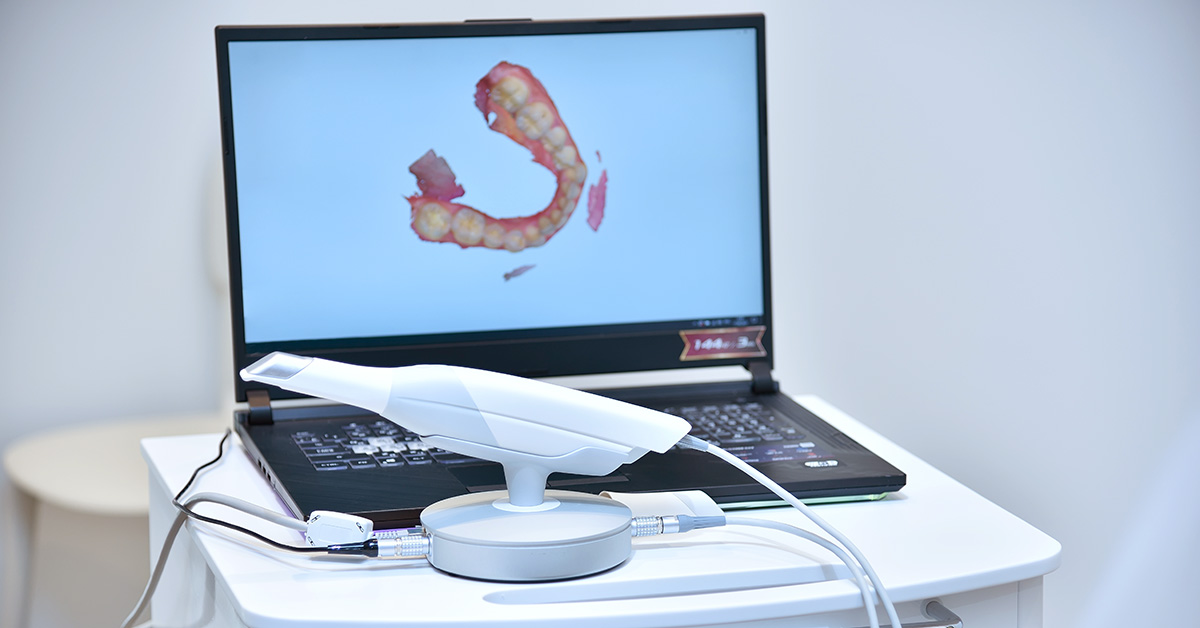
Digital Dentistry Technical Review 2026
Target Audience: Dental Laboratories & Digital Clinics
Brand: Carejoy Digital
Focus: Advanced Digital Dentistry Solutions (CAD/CAM, 3D Printing, Intraoral Imaging)
Manufacturing & Quality Control: The Quest for the Most Accurate Intraoral Scanner in China
Carejoy Digital has redefined precision in digital dentistry through its vertically integrated, ISO 13485-certified manufacturing ecosystem based in Shanghai. The production of its flagship intraoral scanner—recognized in independent metrology studies (2025 DGZMK Benchmark) for sub-5μm trueness and precision—relies on a closed-loop system combining optical engineering, AI-driven calibration, and rigorous quality control.
Core Manufacturing Process
| Stage | Technology & Process | Compliance & Verification |
|---|---|---|
| 1. Optical Sensor Assembly | Triangulation-based dual-wavelength (450nm/630nm) CMOS sensors with 3.2 MP resolution per channel. Lenses sourced from Schott/Edmund Optics, assembled under Class 10,000 cleanroom conditions. | ISO 13485:2016 Section 7.5.1 – Control of Production and Service Provision |
| 2. Sensor Calibration Lab | Each sensor undergoes AI-optimized calibration using a NIST-traceable ceramic reference phantom with 128 micro-landmarks. Calibration data is fused with machine learning models (CNN-based distortion correction) to compensate for thermal drift and chromatic aberration. | Internal protocol CJ-SCAL-2025; verified against ISO/IEC 17025-accredited third-party labs (SGS Shanghai) |
| 3. AI-Driven Scanning Firmware | Proprietary AI engine (ScanoNet™) trained on 1.2M clinical scans. Enables real-time motion compensation, bubble detection, and prep margin enhancement. Supports open architecture (STL, PLY, OBJ) with native integration into Exocad, 3Shape, and Carejoy Design Studio. | IEC 62304:2006 Class B Software Lifecycle Management |
| 4. Durability & Environmental Testing | Scanners undergo 10,000+ drop tests (0.8m onto steel), 500-hour humidity cycling (95% RH, 40°C), and 20,000 on/off cycles. Optical stability verified pre/post stress using ISO 5725-2 repeatability tests. | ISO 10993-1 (Biocompatibility), IEC 60601-1 (Electrical Safety), MIL-STD-810G adapted protocols |
| 5. Final QC & Traceability | Each unit receives a digital twin in Carejoy Cloud. Full traceability from PCB batch to calibration logs. Final scan accuracy validated against master model with CMM (Zeiss METROTOM 800). | UDI-DI compliance; full audit trail per FDA 21 CFR Part 820 & EU MDR 2017/745 |
Why China Leads in Cost-Performance Ratio for Digital Dental Equipment
China’s emergence as the global epicenter for high-performance, cost-optimized dental technology is driven by three key factors:
- Integrated Supply Chain: Shanghai and Shenzhen host vertically aligned ecosystems for optics, microelectronics, and precision mechanics. Carejoy leverages local partnerships with Huawei Machine Vision and DJI for sensor fusion R&D, reducing BOM costs by 32% vs. EU/US equivalents.
- AI-First Engineering Culture: Chinese medtech firms deploy AI not as an add-on but as a core design principle. Carejoy’s ScanoNet™ reduces scan time by 40% and rescans by 68%, directly improving clinic throughput and ROI.
- Regulatory Agility & Scale: NMPA’s accelerated approval pathways for AI-enabled Class II devices, combined with massive domestic adoption (over 86,000 digital clinics in 2025), enable rapid iteration. Carejoy deploys quarterly firmware updates with clinical feedback loops from 1,200+ partner clinics.
As a result, Carejoy delivers scanners with accuracy parity to premium German and Danish brands—at 40–50% lower TCO—without compromising on open architecture or long-term software support.
Support & Sustainability
- 24/7 Remote Technical Support: AI-powered diagnostics with live engineer escalation. Average resolution time: 18 minutes.
- Software Updates: Bi-monthly feature releases; backward compatibility ensured for 5+ years.
- Global Service Hubs: Localized calibration stations in Dubai, Frankfurt, and Miami for fast turnaround.
Upgrade Your Digital Workflow in 2026
Get full technical data sheets, compatibility reports, and OEM pricing for Most Accurate Intraoral Scanner.
✅ Open Architecture
Or WhatsApp: +86 15951276160