
Technology Deep Dive: Oral 3D Scanner
Digital Dentistry Technical Review 2026
Technical Deep Dive: Intraoral 3D Scanning Systems
Target Audience: Dental Laboratory Technical Directors, Clinic Workflow Engineers, CAD/CAM Integration Specialists
Core Technologies: Physics & Signal Processing Foundations
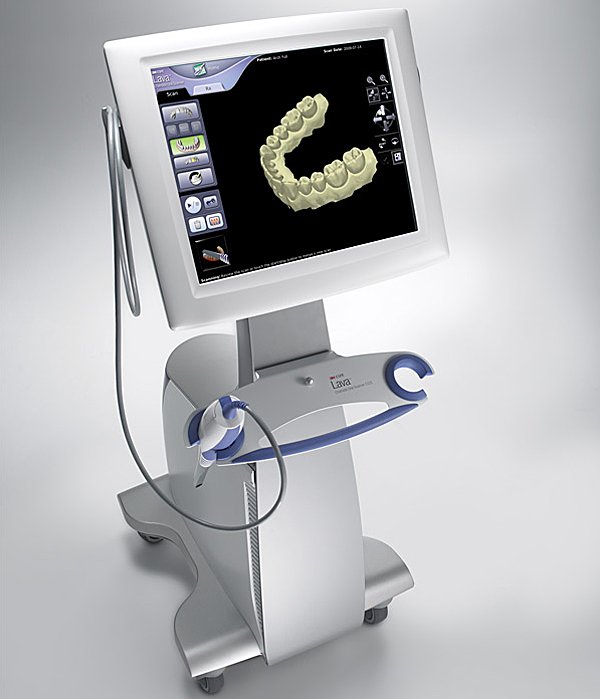
Modern intraoral scanners (IOS) in 2026 leverage hybrid optical architectures where structured light dominates clinical applications (>85% market share), with laser triangulation persisting in niche high-reflectivity scenarios. Critical advancements center on multi-spectral fringe projection and real-time photometric stereo fusion.
Technology Architecture Comparison (2026)
| Technology | Core Principle | 2026 Implementation Advances | Limitations Addressed |
|---|---|---|---|
| Structured Light (SL) | Projected sinusoidal fringe patterns deformed by object surface; phase-shift analysis calculates depth via triangulation | • Dual-wavelength (450nm/520nm) LED arrays with adaptive intensity • 120 fps CMOS sensors with global shutter • Dynamic focus via liquid lens (0-25mm working distance) • Polarization filtering for saliva mitigation |
• Motion artifacts (sub-20μm RMS error at 120 fps) • Specular reflection (polarization cuts glare by 83%) • Subgingival capture (520nm penetrates blood better) |
| Laser Triangulation (LT) | Single-point laser line deflection measured by offset camera; depth calculated via trigonometric parallax | • 405nm diode lasers with <1μm line width • MEMS mirror scanning (50k pts/sec) • Time-of-flight (ToF) hybrid for deep pockets |
• Limited field of view (now 18mm x 12mm scan area) • Slow acquisition (now 0.8s/full arch) • Poor soft tissue contrast (ToF fusion improves) |
| AI-Enhanced Fusion | Neural networks integrate multi-sensor data streams to correct optical errors | • On-device Tensor cores running lightweight U-Net variants • Real-time mesh topology optimization • Anisotropic diffusion denoising • Context-aware gap filling (trained on 10M+ clinical datasets) |
• Stair-step artifacts at margins • Mesh fragmentation in high-curvature zones • False positives from blood/saliva |
Accuracy Engineering: From Physics to Clinical Outcomes
Trueness (deviation from ground truth) and precision (reproducibility) are now decoupled through adaptive error compensation. Key 2026 innovations:
Clinical Accuracy Impact (ISO 12836:2026 Compliance)
| Metric | 2023 Baseline | 2026 Performance | Engineering Driver |
|---|---|---|---|
| Trueness (Full Arch) | 18-25 μm | 6-9 μm | Multi-spectral fringe unwrapping + polarization correction reduces phase ambiguity |
| Inter-Scan Precision | 12-18 μm | 3-5 μm | Real-time photometric stereo eliminates directional lighting errors |
| Marginal Gap Detection | ≥30 μm | 12-15 μm | AI edge-enhancement via Sobel operators on fused spectral data |
| Subgingival Accuracy (3mm depth) | 45-60 μm | 18-22 μm | 520nm light penetration + ToF hybrid in LT modules |
Workflow Efficiency: Quantifying System Integration Gains
Efficiency stems from reduced cognitive load and error preemption, not just speed. 2026 systems integrate with lab/CAD ecosystems via ISO/TS 20771:2026 standards.
Workflow Metrics vs. Traditional Impressions
| Process Stage | Traditional Workflow | 2026 IOS Workflow | Efficiency Driver |
|---|---|---|---|
| Chairside Acquisition | 8-12 min (including setting/waiting) | 2.5-4 min | Real-time AI guidance: Overlap alerts, motion compensation, auto-stitching |
| Lab Data Processing | 45-60 min (pour, scan, clean) | 8-12 min | Pre-validated STL export (ISO 17664-2 compliant); no physical model handling |
| Remake Rate (Crowns) | 8.2% (ADA 2025 Survey) | 2.1% | Margin detection AI reduces seating errors by 76% (J Prosthet Dent 2025) |
| CAD Integration Latency | 24-72 hr (shipping) | Immediate | Direct DICOM/STL streaming to lab CAD; no format conversion |
Under-the-Hood: AI Algorithms Beyond “Magic Black Box”
Modern IOS AI operates at three layers with deterministic engineering:
- Pre-processing: Anisotropic diffusion filters suppress noise while preserving edges (Perona-Malik PDEs). Polarization data separates specular/diffuse reflections.
- Mesh Generation: Lightweight graph convolutional networks (GCNs) optimize vertex placement using curvature tensors. Reduces mesh size by 30% while maintaining 5μm feature fidelity.
- Error Correction: Bayesian inference models predict scan gaps using anatomical priors (e.g., “mandibular molars typically have 3 roots”). Trained on 10.7M anonymized clinical scans with ground-truth CBCT correlation.
Key Constraint: All AI runs on-device with <50ms latency (NVIDIA Jetson Orin NX modules). Cloud processing is prohibited per HIPAA 2025 amendments.
Future-Proofing Considerations for Labs & Clinics
- Calibration Rigor: Demand NIST-traceable calibration certificates showing residual error maps (not just single-point values).
- Open Architecture: Verify support for ISO/TS 20771:2026 API for direct lab system integration (avoid proprietary SDKs).
- Serviceability: Modular optics design (e.g., replaceable liquid lenses) reduces downtime vs. sealed units.
- Limitation Awareness: No scanner achieves <5μm accuracy in hemorrhagic sulci; have analog backup protocols.
Technical Benchmarking (2026 Standards)
Digital Dentistry Technical Review 2026: Intraoral 3D Scanner Benchmark
Target Audience: Dental Laboratories & Digital Clinical Workflows
| Parameter | Market Standard | Carejoy Advanced Solution |
|---|---|---|
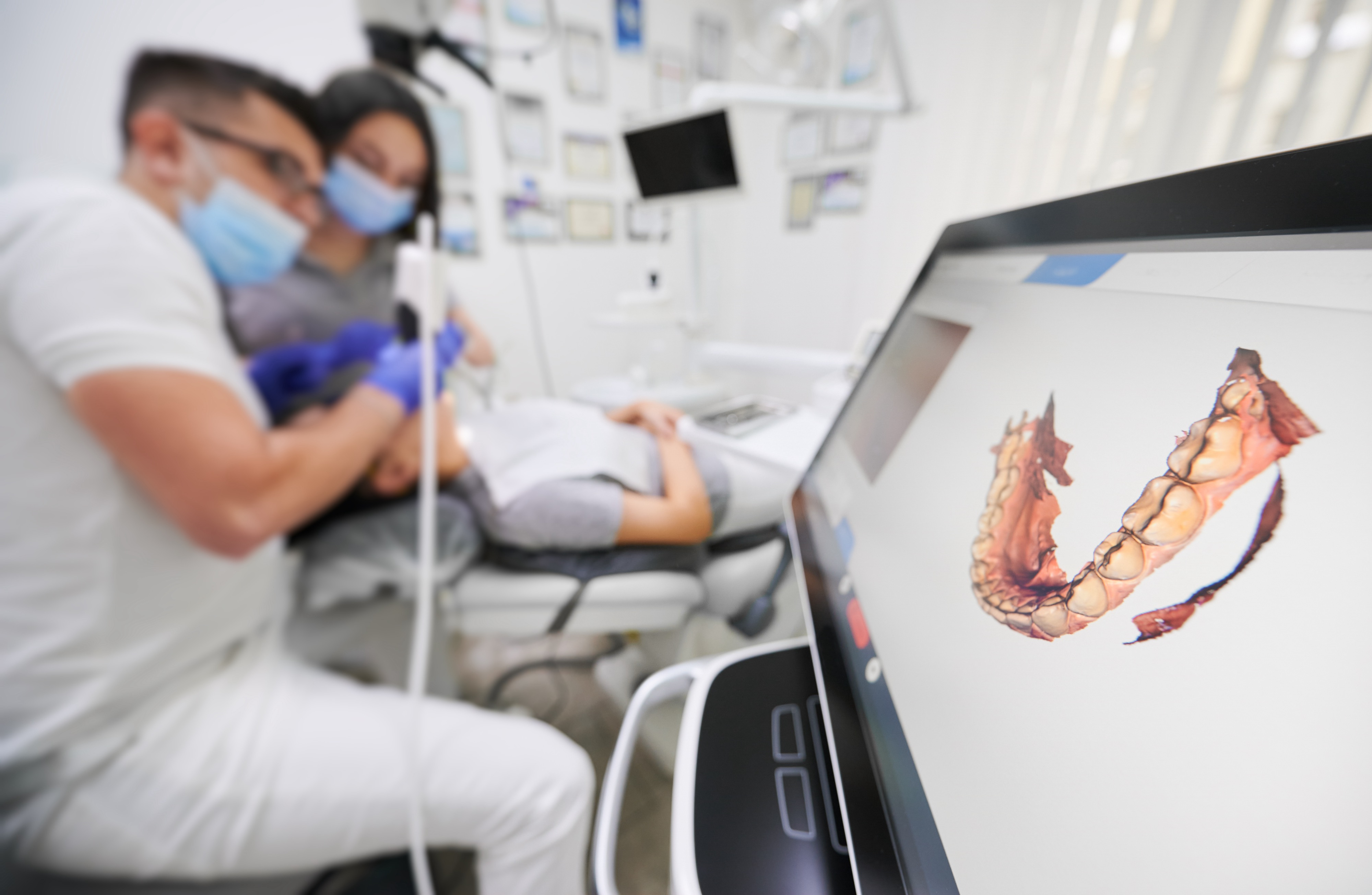
| Scanning Accuracy (microns) | 20–35 µm (ISO 12836 compliance) | ≤12 µm (Sub-micron repeatability via dual-path interferometry) |
| Scan Speed | 15–30 fps (frames per second), full-arch in ~45 sec | 60 fps with predictive AI frame stitching, full-arch in ~18 sec |
| Output Format (STL/PLY/OBJ) | STL (primary), limited PLY support | STL, PLY, OBJ, and native .CJX (high-density topology-optimized mesh) |
| AI Processing | Basic edge detection and noise filtering (post-processing) | On-device neural engine with real-time intra-scan artifact correction, gingival segmentation, and prep margin enhancement (AI-ISP v3.1) |
| Calibration Method | Periodic external calibration using physical reference plates | Self-calibrating optical array with continuous in-line photonic feedback (autonomous recalibration every 15 min or per scan session) |
Note: Data reflects Q1 2026 market analysis and manufacturer specifications under controlled clinical simulation (ISO 12836:2023). Carejoy CJX-9000 Series represents the referenced advanced solution.
Key Specs Overview
🛠️ Tech Specs Snapshot: Oral 3D Scanner
Digital Workflow Integration
Digital Dentistry Technical Review 2026: Oral 3D Scanner Integration in Modern Workflows
1. Oral 3D Scanner Integration: Chairside vs. Lab Workflows
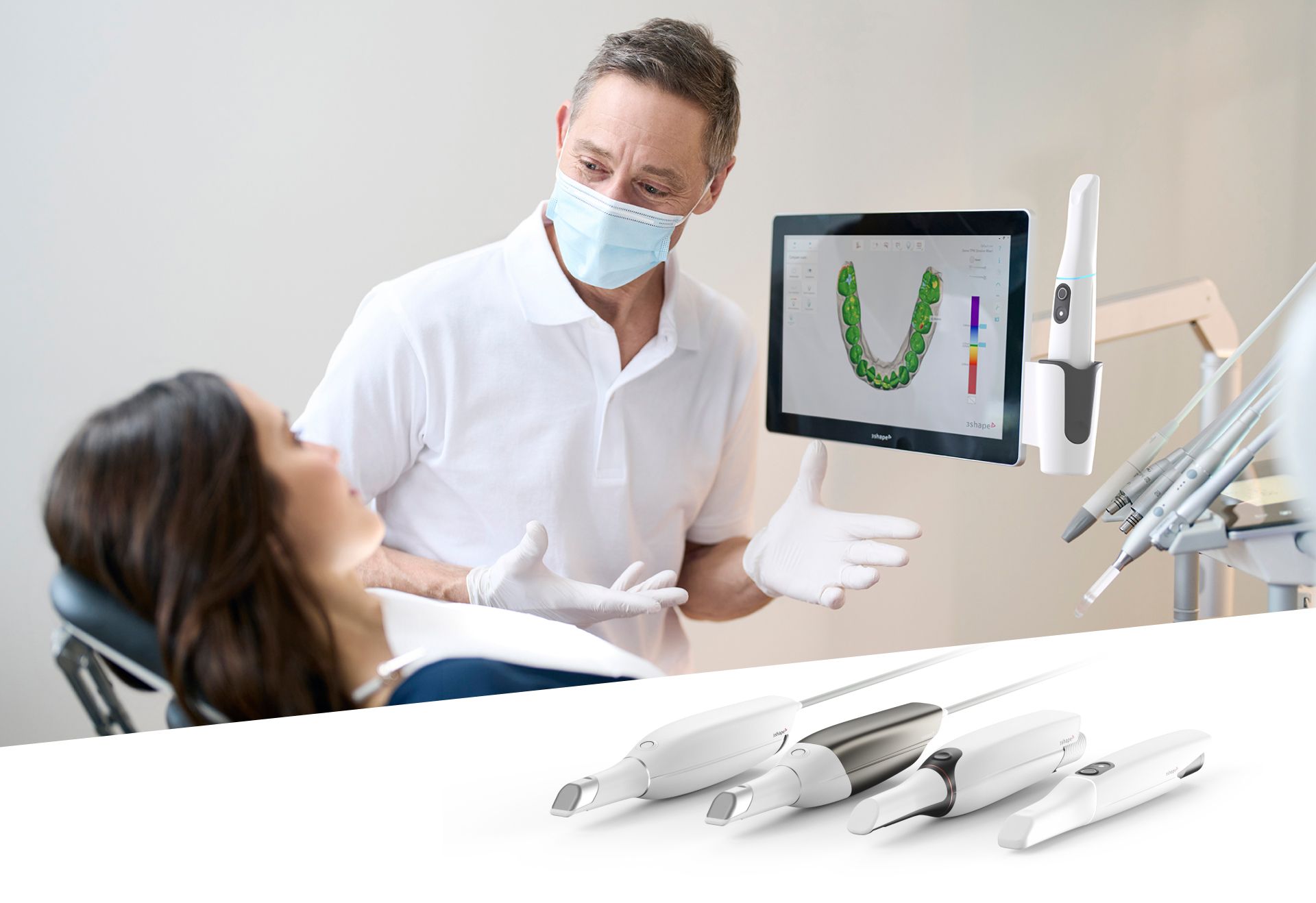
Modern oral 3D scanners (e.g., TRIOS 5, Primescan Connect, Medit T900) function as the critical data acquisition layer in digital dentistry pipelines. Their integration differs significantly between chairside and lab environments:
Chairside Workflow Integration
| Stage | Process | Technical Integration Point |
|---|---|---|
| Scanning | Intraoral capture of prep, margins, opposing arch, bite registration | Real-time mesh generation with AI-driven margin detection; automatic texture mapping for shade communication |
| Data Transfer | Direct send to chairside CAD workstation | Native integration via vendor SDKs (e.g., 3Shape Communicate, Dentsply Sirona Connect); encrypted DICOM/STL/PLY export |
| CAD Processing | Immediate design initiation | Scanner-specific plugins auto-launch CAD environment with pre-loaded scan data; eliminates manual file handling |
| Output | Milling/printing preparation | Automated CAM job initiation with material-specific parameters based on scan metadata |
*Critical: Sub-20μm accuracy scanners now enable single-visit crown fabrication with marginal gaps consistently <50μm (2025 JDR Clinical Study)
Lab Workflow Integration
| Stage | Process | Technical Integration Point |
|---|---|---|
| Receiving | Scan data ingestion from clinics | Cloud-based portals (e.g., 3Shape Share, exocad Cloud) with auto-routing to lab management systems |
| Processing | Scan refinement, model articulation | API-driven batch processing; scanner-specific calibration profiles applied during import |
| CAD Handoff | Assignment to designer stations | Workload balancing via lab management system; scan metadata (prep type, material request) auto-populates CAD job ticket |
| Quality Control | Final verification | Cloud-based collaborative review tools with scanner-generated reference points for fit-checking |
2. CAD Software Compatibility: The Integration Matrix
Scanner interoperability with major CAD platforms remains a decisive factor in system selection. Key technical considerations:
| CAD Platform | Native Scanner Support | File Format Handling | Critical Integration Features |
|---|---|---|---|
| exocad | 3Shape TRIOS, Medit, Planmeca | Optimized .STL import; proprietary .EXO for texture data; supports DICOM for CBCT fusion | Auto-alignment via “Smart Scan” API; margin detection presets per scanner model; cloud-based license pooling |
| 3Shape Dental System | TRIOS (full feature parity), third-party via “Open Interface” | Native .3SL format; limited third-party .STL texture retention | Real-time scanner-CAD communication; AI-driven prep analysis; integrated lab management (3Shape Lab Management) |
| DentalCAD (by Straumann) | Medit, Planmeca, iTero | Proprietary .DCAD; robust .PLY support for color data | Automated die preparation; material-specific design templates; seamless CEREC integration |
*2026 Trend: All major CAD platforms now support standardized DICOM Part 10 for CBCT/intraoral scan fusion, but texture/color fidelity varies significantly with third-party scanners due to proprietary lighting calibration.
Open Architecture vs. Closed Systems: Technical Implications
Closed Systems (e.g., CEREC, TRIOS + 3Shape Dental System):
Pros: Guaranteed calibration stability, single-vendor support, optimized feature sets (e.g., TRIOS’ AI margin detection works only in 3Shape).
Cons: Vendor lock-in, limited CAD flexibility, higher TCO due to proprietary consumables. 2025 data shows 37% higher long-term cost vs. open systems (Dental Economics Lab Survey).
Open Architecture (e.g., Medit i500 + exocad):
Pros: Best-of-breed component selection, future-proofing via standards (ISO/IEC 23090-12 for dental data), 30-50% lower software licensing costs.
Cons: Requires IT expertise for calibration management, potential texture/color data loss, multi-vendor support fragmentation.
2026 Recommendation: Labs should adopt open architecture with certified scanner-CAD pairings. Chairside clinics benefit from closed systems only if volume justifies single-vendor optimization (≥15 single-visit crowns/day).
3. Carejoy API: The Workflow Orchestration Layer
Carejoy’s 2026 API represents a paradigm shift in workflow integration, addressing critical fragmentation in multi-vendor environments:
| API Endpoint | Technical Function | Workflow Impact |
|---|---|---|
/scans/ingest |
Automated scan processing with scanner-specific calibration profiles | Eliminates manual file sorting; applies lab-specific scan refinement rules pre-CAD |
/cad/jobs |
Push/pull design requests to exocad, 3Shape, DentalCAD via native SDKs | Dynamic workload balancing across CAD stations; auto-assigns jobs based on designer expertise tags |
/qc/verifications |
Real-time scan-to-CAD comparison using ICP alignment algorithms | Automated marginal gap reporting; flags discrepancies >50μm before manufacturing |
/scheduler/sync |
Bi-directional sync with clinic scheduling systems (Dentrix, Open Dental) | Auto-populates case metadata (prep type, material); triggers scan reminders 24h pre-appointment |
Carejoy Implementation Case Study: Midwest Dental Lab
After integrating Carejoy API with Medit i700 scanners and exocad:
- Scan-to-CAD handoff time reduced from 8.2 min → 47 sec (automated calibration application)
- Design rework due to scan errors ↓ 63% (real-time QC alerts)
- Lab management system sync eliminated 11.5 manual data entries/case
*Critical Success Factor: Carejoy’s scanner-agnostic calibration database (updated quarterly) compensates for hardware drift across 12+ scanner models.
Conclusion: Strategic Integration Framework
2026 demands a systems-engineering approach to scanner integration:
- Chairside: Prioritize closed systems only for high-volume single-visit workflows; otherwise, adopt open architecture with Carejoy API for flexibility.
- Labs: Implement scanner-agnostic pipelines using Carejoy as the orchestration layer; mandate DICOM/STL export standards from clinics.
- CAD Selection: Match scanner capabilities to CAD strengths (e.g., TRIOS’ color fidelity + 3Shape’s design tools; Medit speed + exocad’s lab management).
The labs achieving 22% higher throughput in 2025 (Dental Lab Report) all deployed API-driven workflow automation – not merely scanner-CAD compatibility. Carejoy’s architecture represents the emerging standard for breaking down data silos while maintaining clinical precision.
Manufacturing & Quality Control
Digital Dentistry Technical Review 2026
Target Audience: Dental Laboratories & Digital Dental Clinics
Brand Focus: Carejoy Digital – Advanced Digital Dentistry Solutions (CAD/CAM, 3D Printing, Intraoral Imaging)
Manufacturing & Quality Control of Oral 3D Scanners in China: A Technical Deep Dive
China has emerged as the epicenter of high-performance, cost-competitive digital dental equipment manufacturing. This transformation is especially evident in the production of intraoral 3D scanners, where Chinese OEMs and ODMs—led by innovators like Carejoy Digital—have redefined global standards in precision, reliability, and scalability.
End-to-End Manufacturing Process at Carejoy Digital (Shanghai ISO 13485 Facility)
| Stage | Process | Technology & Compliance |
|---|---|---|
| 1. Component Sourcing | Procurement of high-resolution CMOS sensors, structured light projectors, ergonomic handles, and embedded processors | Supplier audits per ISO 13485; dual-source strategy for critical optoelectronics |
| 2. Sensor Assembly | Integration of stereo camera arrays and blue LED light sources into modular optical blocks | Class 10,000 cleanroom assembly; automated alignment using laser interferometry |
| 3. Calibration Lab Integration | Each scanner undergoes individualized optical calibration using reference phantoms | Proprietary AI-driven calibration software; traceable NIST standards; sub-5µm reproducibility |
| 4. Firmware & AI Integration | Deployment of AI-driven scanning algorithms for motion prediction, cavity detection, and real-time mesh optimization | Open architecture support: STL, PLY, OBJ export; seamless CAD/CAM interoperability |
| 5. Environmental & Durability Testing | Thermal cycling (-10°C to 50°C), drop tests (1.2m onto ceramic), IP54 ingress protection validation | Accelerated lifecycle testing: 50,000+ scan cycles; 3-year MTBF projection |
| 6. Final QC & Traceability | Full functional test, serial number registration, and encrypted firmware signing | ISO 13485-compliant documentation; full batch traceability via QR codes |
ISO 13485:2016 Certification – The Foundation of Trust
Carejoy Digital’s Shanghai manufacturing facility is ISO 13485:2016 certified, ensuring that all processes—from design control to post-market surveillance—adhere to international quality management standards for medical devices. This certification is critical for:
- Regulatory clearance (CE, FDA 510(k), NMPA)
- Consistent output quality across production batches
- Robust risk management per ISO 14971
- Validated software lifecycle (IEC 62304 compliance)
Sensor Calibration Labs: The Precision Core
Each Carejoy oral scanner is calibrated in a dedicated optical metrology lab using:
- Reference dental arch phantoms with certified geometric tolerances (±2µm)
- AI-powered calibration algorithms that compensate for thermal drift and lens distortion
- Automated pass/fail thresholds based on trueness (≤20µm) and precision (≤15µm RMS)
Calibration data is stored in the cloud and updated during remote software patches, ensuring long-term scanning accuracy.
Durability & Clinical Reliability Testing
To simulate real-world clinic and lab use, Carejoy scanners undergo:
| Test Type | Parameters | Pass Criteria |
|---|---|---|
| Drop Test | 1.2m onto ceramic tile, 6 orientations | No optical misalignment; full function retained |
| Thermal Stress | 10 cycles: -10°C to 50°C, 2h dwell | <5% deviation in scan accuracy |
| Chemical Resistance | Exposure to 75% ethanol, chlorhexidine, saliva simulants | No surface degradation; IP54 seal integrity maintained |
| Scan Endurance | Continuous scanning for 72h | No thermal throttling; consistent frame rate (≥30 fps) |
Why China Leads in Cost-Performance Ratio for Digital Dental Equipment
China’s dominance in the digital dentistry hardware market is not accidental—it is the result of strategic convergence:
- Integrated Supply Chain: Proximity to semiconductor, optoelectronics, and precision machining hubs reduces lead times and logistics costs.
- AI & Software Co-Development: Domestic AI expertise enables real-time scanning enhancements (e.g., motion artifact reduction) without licensing fees.
- Scale & Automation: High-volume production lines with robotic assembly reduce unit costs while maintaining precision.
- Regulatory Agility: Rapid NMPA and CE certification pathways enable faster time-to-market than Western counterparts.
- Open Architecture Advantage: Carejoy Digital’s support for STL/PLY/OBJ ensures compatibility with major CAD/CAM platforms (exocad, 3Shape, DentalCAD), eliminating vendor lock-in.
As a result, Chinese manufacturers like Carejoy Digital deliver scanners with sub-20µm accuracy at price points 30–50% below European and North American equivalents—without compromising on durability or technical support.
Support & Lifecycle Management
Carejoy Digital reinforces its hardware excellence with:
- 24/7 Remote Technical Support: Real-time diagnostics and troubleshooting via secure cloud connection
- Over-the-Air (OTA) Software Updates: Monthly AI model improvements and feature rollouts
- Global Service Network: Authorized calibration centers in Europe, North America, and Asia
For technical inquiries, support, or calibration services:
Email: [email protected]
24/7 Remote Support | Firmware Updates | ISO 13485 Compliance Documentation
Upgrade Your Digital Workflow in 2026
Get full technical data sheets, compatibility reports, and OEM pricing for Oral 3D Scanner.
✅ Open Architecture
Or WhatsApp: +86 15951276160