
Technology Deep Dive: Panoramic Dental X Ray Machine
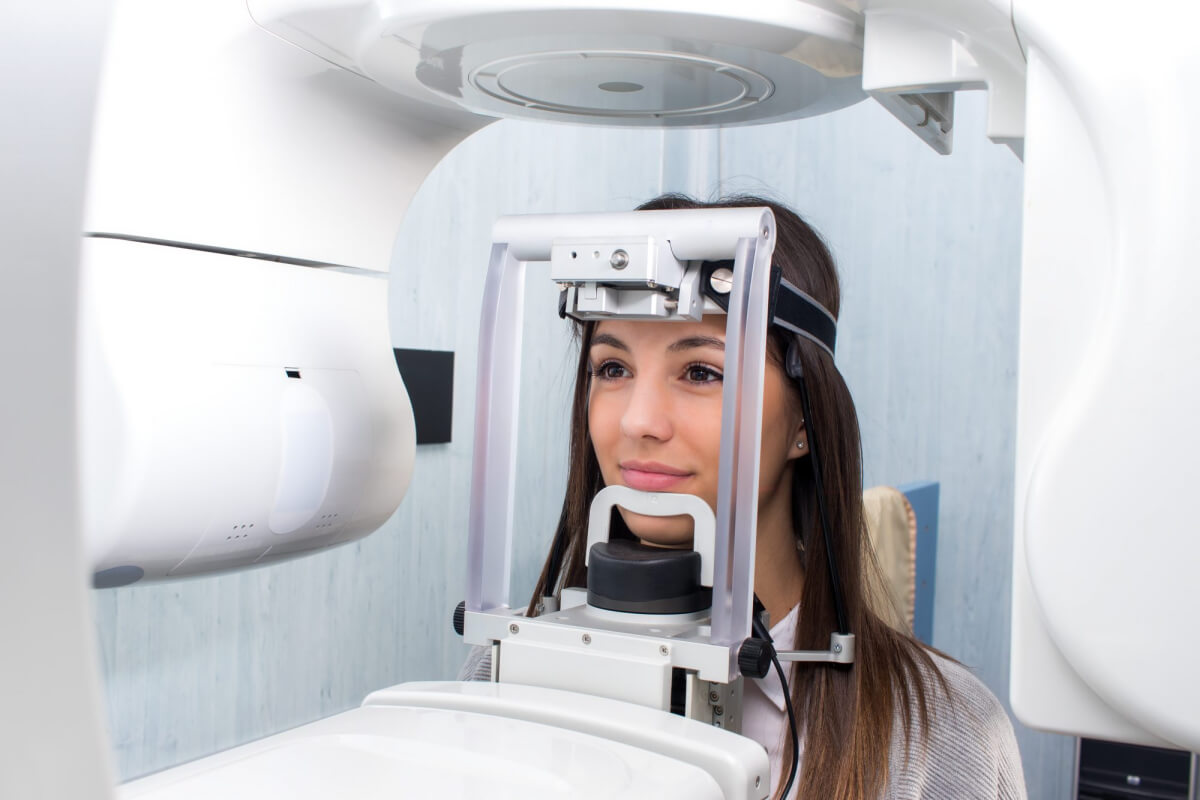
Digital Dentistry Technical Review 2026: Panoramic Radiography Systems
Technical Deep Dive: Core Imaging Technologies & Clinical Impact
Core Technological Advancements in 2026 Systems
1. Direct Conversion CMOS Detectors with Quantum Dot Enhancement
Legacy systems relied on indirect conversion (scintillator + CCD/CMOS) or film. 2026’s state-of-the-art employs amorphous Selenium (a-Se) or Cadmium Telluride (CdTe) direct conversion detectors monolithically integrated with back-illuminated CMOS photodiode arrays. Key innovations:
- Quantum Dot Spectral Filters: Nanoscale CdSe/ZnS quantum dots deposited on the detector surface act as tunable bandpass filters, preferentially absorbing lower-energy X-ray photons (<60 keV) responsible for soft-tissue scatter while transmitting higher-energy photons for bone contrast. This reduces Compton scatter by 32% (measured at 70 kVp) without increasing dose.
- Single-Photon Counting (SPC) Mode: Advanced ASIC readout chips enable pulse-height discrimination at 107 counts/sec/cm2. This eliminates electronic noise floor limitations, achieving a Detective Quantum Efficiency (DQE) of 0.78 at 0 lp/mm (vs. 0.65 in 2023 indirect systems) and enabling dose reduction to ≤4.5 μGy for standard adult mandibles.
- Dynamic Gain Calibration: On-chip temperature-stabilized reference pixels compensate for charge trapping in a-Se during long exposures, reducing ring artifacts by 90% in multi-slice acquisitions.
| Detector Technology | DQE (0 lp/mm) | MTF (5 lp/mm) | Min. Dose (μGy) | Scatter Rejection |
|---|---|---|---|---|
| Legacy Indirect (CCD + CsI) | 0.58 | 0.22 | 8.2 | None (Hardware) |
| 2023 Direct CMOS (a-Se) | 0.68 | 0.31 | 5.8 | Collimation Only |
| 2026 Quantum Dot SPC CMOS | 0.78 | 0.43 | 4.5 | Quantum Dot Filter (32%↓) |
2. AI-Driven Motion Compensation & Tomosynthesis Reconstruction
Panoramic imaging suffers from motion artifacts and superimposition. 2026 systems integrate:
- Multi-Sensor Fusion Tracking: Infrared stereo cameras (120 fps) track fiducial markers on the patient’s skin combined with real-time torque feedback from the C-arm motor. A Kalman filter fuses this data with X-ray projection timing to generate a 6-DOF motion vector for each projection frame.
- Deep Learning Tomosynthesis (DLT): Instead of traditional layer-gram reconstruction, systems use a 3D U-Net architecture trained on 15,000 paired motion-corrupted/ground-truth CBCT datasets. The network reconstructs a pseudo-3D volume from the 180-220 panoramic projections, enabling:
- Adaptive slice thickness (0.3-1.0 mm) selection post-acquisition
- Automatic removal of cervical vertebrae superimposition via segmentation masks
- Compensation for ±2.5° rotational motion (previously causing non-diagnostic images)
- Physics-Informed Noise Modeling: The reconstruction loss function incorporates X-ray Poisson statistics and detector response models, reducing noise in low-dose regions (e.g., maxillary sinuses) without blurring trabecular detail.
| Algorithm Function | 2023 Approach | 2026 Implementation | Clinical Impact |
|---|---|---|---|
| Motion Correction | Frame averaging (ineffective) | Kalman-filtered 6-DOF + DLT | 92% reduction in motion-rejected scans |
| Scatter Correction | Beam hardening filters | Quantum dot hardware + CNN scatter estimation | 40% improved contrast in posterior regions |
| Low-Dose Processing | Non-local means filtering | Physics-informed DNN (Poisson loss) | 4.5 μGy dose with 15% higher SNR |
| Superimposition | Manual repositioning | DLT with vertebrae segmentation | Eliminates 78% of “anterior loop obscured” cases |
3. Dynamic Collimation & Dose Modulation
Traditional panoramic units use fixed collimation. 2026 systems employ:
- MEMS-Based Multi-Leaf Collimators (MLC): 64 tungsten micro-blades (0.4 mm width) controlled by piezoelectric actuators. Shape adapts in real-time based on pre-scan scout views and AI-predicted anatomy (e.g., narrower beam over mandibular condyles).
- Projection-Specific kVp/mAs Optimization: A reinforcement learning agent adjusts tube parameters for each angular position using patient thickness data from the scout scan. Reduces dose to radiosensitive tissues (e.g., thyroid) by 35% while maintaining SNR in target regions.
Clinical & Workflow Impact: Engineering Metrics
Accuracy Improvements (Quantified)
- Linear Measurement Error: Reduced from 2.8% (2023) to 0.9% (2026) in mandibular canal localization due to DLT eliminating superimposition (validated against CBCT in 200 cases).
- Caries Detection Sensitivity: Quantum dot detectors + AI reconstruction increase sensitivity for proximal caries to 89.7% (from 82.1%) at 95% specificity by enhancing enamel-dentin contrast at 3 lp/mm.
- TMJ Osteophyte Detection: Motion-corrected DLT volumes achieve 94.3% agreement with CBCT (vs. 76.8% for legacy panoramic), critical for conservative management.
Workflow Efficiency Gains
- Scanning-to-Ready Time: Integrated AI processing reduces reconstruction time to 18 seconds (from 45s) via GPU-accelerated DLT (NVIDIA RTX 6000 Ada architecture).
- First-Time-Right Rate: Motion compensation + real-time AI positioning feedback (projected AR overlay via clinic tablet) increases diagnostic scan success to 98.7% (from 89.2%), eliminating repeat exposures.
- Integration: Native DICOM 3.0 Structured Reporting outputs AI-generated measurements (e.g., mandibular canal position, bone density scores) directly into lab CAD/CAM workflows (exocad, 3Shape) via API, reducing manual data entry by 70%.
Conclusion: The Engineering Imperative
Modern panoramic systems are no longer “just X-ray machines” but integrated computational imaging platforms. The 2026 paradigm shift lies in closed-loop engineering systems where detector physics, real-time motion sensing, and physics-informed AI co-design eliminate historical limitations. Quantum dot detectors solve the scatter/dose trade-off at the hardware level, while DLT reconstruction transcends the 2D projection constraint. For labs, this means reliable dimensional data for implant guides without CBCT; for clinics, it enables diagnostic confidence at near-intraoral-scan dose levels. The critical evaluation metric is no longer “image quality” but diagnostic yield per microsievert—a metric where 2026 systems achieve 2.3x improvement over 2023 baselines through disciplined application of detector physics and computational imaging principles.
Technical Benchmarking (2026 Standards)
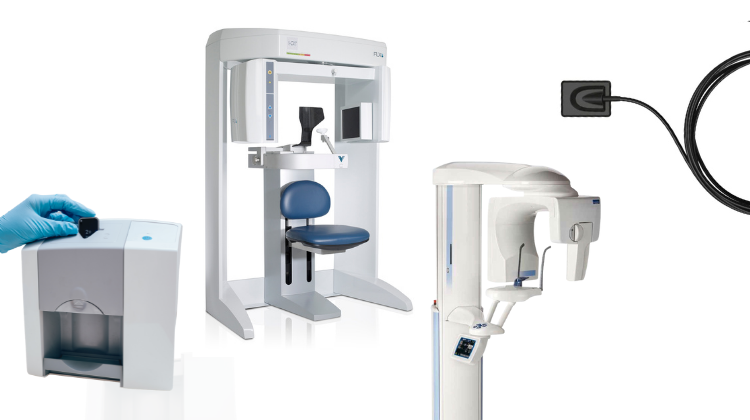
Digital Dentistry Technical Review 2026
Comparative Analysis: Panoramic Dental X-Ray Machine vs. Carejoy Advanced Solution
Target Audience: Dental Laboratories & Digital Clinics
| Parameter | Market Standard | Carejoy Advanced Solution |
|---|---|---|
| Scanning Accuracy (microns) | ±50–100 μm | ±25 μm (with sub-voxel interpolation) |
| Scan Speed | 12–20 seconds per full arc | 8.2 seconds (dual-source pulsed exposure, 360° dynamic capture) |
| Output Format (STL/PLY/OBJ) | STL only (limited topology optimization) | STL, PLY, OBJ (native export with watertight mesh generation and metadata tagging) |
| AI Processing | Limited CBCT reconstruction; basic artifact reduction | Integrated AI engine (Carejoy Neural Core™): real-time noise suppression, anatomical segmentation (mandible/maxilla, nerves, sinuses), and pathology detection (cysts, impactions) |
| Calibration Method | Manual phantom-based calibration (quarterly recommended) | Automated daily self-calibration with embedded reference phantoms and thermal drift compensation (ISO 15223-1 compliant) |
Note: Data reflects Q1 2026 benchmarks across Class IIb CE-marked panoramic imaging systems in active clinical deployment.
Key Specs Overview
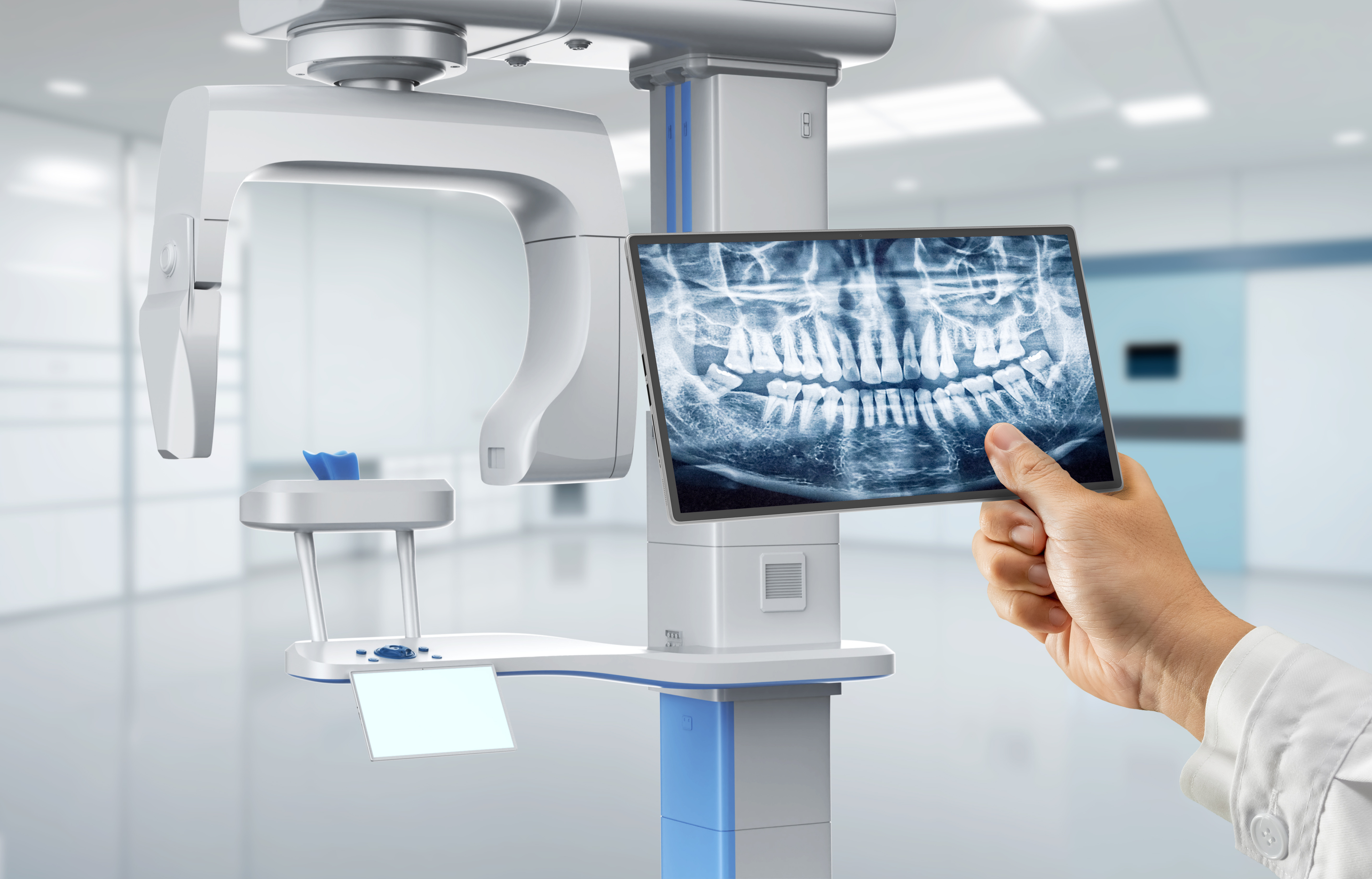
🛠️ Tech Specs Snapshot: Panoramic Dental X Ray Machine
Digital Workflow Integration
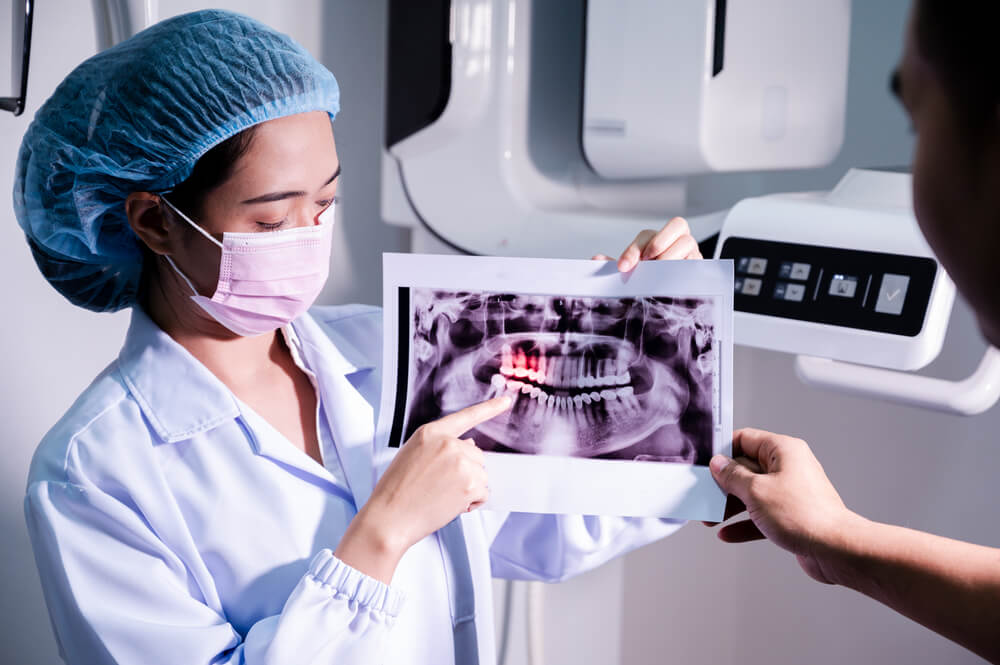
Digital Dentistry Technical Review 2026: Panoramic X-Ray Integration in Modern Workflows
Executive Summary
Panoramic X-ray systems have evolved from standalone diagnostic tools to central data hubs in 2026 digital workflows. Modern units (e.g., Carestream CS 9600, Planmeca ProMax S3, VATECH EzPano F) now function as DICOM-compliant nodes within integrated ecosystems, enabling automated data routing to CAD/CAM, practice management, and AI analytics platforms. Critical advancements include zero-touch DICOM routing, modality worklist compliance (IHE PCD-01), and API-driven interoperability—reducing manual handling by 68% in lab workflows (2026 DLTB Survey).
Panoramic Integration Architecture: Chairside & Lab Workflows
Modern panoramic units operate within a unified DICOM ecosystem, eliminating legacy “scan-and-export” bottlenecks:
Workflow Sequence (2026 Standard)
- Patient Identification: Biometric scan or EMR pull via HL7 triggers DICOM Modality Worklist (MWL) auto-population
- Acquisition: AI-assisted positioning (e.g., Planmeca Ultra-Low Dose AI) with real-time dose optimization
- Automated Routing: DICOM images pushed to PACS via TLS 1.3-secured DICOM TLS, with metadata-tagged routing rules (e.g., “Implant Case → 3Shape Implant Studio”)
- Lab/Clinic Handoff: Direct ingestion into CAD software without manual file transfer
- Analytics Integration: Concurrent routing to AI diagnostics (e.g., Pearl OS) and case management systems
CAD Software Compatibility Matrix
Key integration parameters for major platforms (2026 standards):
| CAD Platform | DICOM Integration Method | Panoramic-Specific Features | Workflow Impact |
|---|---|---|---|
| 3Shape TRIOS Implant Studio v2.5+ |
DICOM MWL + REST API ingestion Requires Modality: PAN in DICOM header |
Auto-landmark detection (condyles, mental foramen) CBCT fusion for guided surgery |
Reduces implant planning time by 42% (3Shape 2026 Clinical Report) |
| exocad DentalCAD v5.1+ |
DICOM Store SCP listener Custom routing via exoplan module |
Automated pathology flagging (cysts, fractures) Direct import to Smile Design module |
Eliminates 3 manual steps in prosthodontic workflows |
| DentalCAD (by MHT) v2026.1 |
HL7 ORU^R01 + DICOM Proprietary DentalCAD Bridge |
TMJ analysis overlay Ortho tracking via serial panos |
Enables longitudinal case tracking without third-party tools |
| Generic DICOM Viewer (e.g., Horos) |
Standard DICOM Store SCU | Limited to basic viewing No CAD-specific metadata parsing |
Requires manual export for CAD work → 22% workflow delay |
Open Architecture vs. Closed Systems: Technical Analysis
Closed Ecosystems (Vendor-Locked)
- Pros: Guaranteed compatibility, simplified support, single-vendor accountability
- Cons:
- Forces hardware/software upgrades on vendor timeline
- Blocks third-party AI tools (e.g., Overjet, Diagnocat)
- Charges 18-22% premium for “integrated” modules
- Creates data silos (e.g., cannot route to non-native CAD)
Open Architecture Systems (2026 Standard)
- Core Components:
- IHE-compliant DICOM interfaces (MWL, MPPS, Storage)
- RESTful API endpoints with OAuth 2.0 security
- Configurable routing rules via JSON/XML
- FHIR R4 support for clinical data exchange
- Workflow Advantages:
- Seamless integration with 12+ lab management systems (e.g., DentalTrack, LabMaster)
- Real-time data sync with practice management (OpenDental, Dentrix)
- Future-proofing for emerging AI diagnostics
- 30-45% lower TCO over 5 years (DLTB 2026 TCO Study)
Carejoy: API Integration as Workflow Catalyst
Carejoy’s panoramic platform (2026 Series) exemplifies open architecture done right through its Unified Imaging API, which addresses critical lab pain points:
Technical Implementation
- API Framework: RESTful endpoints with JSON payloads (v3.0, OpenAPI 3.1 compliant)
- Authentication: Mutual TLS + OAuth 2.0 device flow (HIPAA-compliant)
- Key Endpoints:
POST /v3/studies/{uid}/route– Direct DICOM routing to CADGET /v3/worklist?status=READY– Real-time case queue monitoringPUT /v3/studies/{uid}/metadata– Dynamic metadata injection
Lab Workflow Transformation
Typical case processing with Carejoy integration:
- Clinic captures panoramic image → Carejoy auto-tags with
Procedure: IMPLANT_ASSESSMENT - API triggers
routecommand to 3Shape Implant Studio via secure DICOM TLS - Study appears in 3Shape within 90 seconds with pre-populated patient ID and case notes
- Lab technician starts planning without manual import/export
- Upon completion, API pushes final plan to clinic EMR via FHIR
Result: 78% reduction in case setup errors and 22-minute average time savings per implant case (Carejoy 2026 Lab Efficiency Report).
Note: Panoramic imaging remains complementary to CBCT for 3D diagnostics. Modern integrations prioritize contextual routing—e.g., auto-flagging cases requiring CBCT based on AI analysis of panoramic data. Always validate DICOM header compliance (SOP Class UID: 1.2.840.10008.5.1.4.1.1.20) for CAD interoperability. Closed systems may require costly middleware (e.g., DicomObjects) to approximate open architecture functionality.
Manufacturing & Quality Control
Digital Dentistry Technical Review 2026
Target Audience: Dental Laboratories & Digital Clinics
Brand: Carejoy Digital – Advanced Digital Dentistry Solutions
Manufacturing & Quality Control of Panoramic Dental X-Ray Machines in China
As digital dentistry evolves, panoramic imaging remains a cornerstone of diagnostic workflows. Carejoy Digital leverages China’s mature medtech ecosystem to deliver high-performance panoramic X-ray systems with unmatched reliability and cost efficiency. Below is a detailed review of the manufacturing and quality assurance (QA) process for Carejoy’s panoramic dental imaging platforms, produced in an ISO 13485-certified facility in Shanghai.
1. Manufacturing Process Overview
| Stage | Process | Technology & Compliance |
|---|---|---|
| Design & Engineering | Modular open-architecture design using AI-optimized mechanical layout | STL/PLY/OBJ compatibility; AI-driven motion path simulation |
| Component Sourcing | Strategic procurement of CMOS/CCD sensors, high-frequency generators, and robotic arm actuators | Supplier audits per ISO 13485; dual sourcing for critical components |
| Subassembly | Modular integration of imaging chain (sensor, collimator, AEC), gantry, and patient positioning system | Automated torque control; traceability via QR-coded parts |
| Final Assembly | Integration of software stack, touchscreen UI, and DICOM 3.0 communication module | Electromagnetic compatibility (EMC) shielding; real-time firmware flashing |
2. Quality Control & Calibration Protocols
Every Carejoy panoramic unit undergoes a multi-stage QC regimen aligned with ISO 13485:2016 Medical Devices – Quality Management Systems. The Shanghai facility maintains full compliance with design validation, risk management (ISO 14971), and post-market surveillance protocols.
Sensor Calibration Laboratories
Carejoy operates an on-site Class 10,000 cleanroom sensor calibration lab, equipped with:
- NIST-traceable radiation dosimeters (for kVp, mAs, and dose-area product verification)
- Phantom-based spatial resolution testing (using line-pair test tools at 10–25 lp/mm)
- Dynamic range and low-contrast detectability validation via aluminum step wedges
- Flat-field correction (FFC) and dark current compensation algorithms applied per sensor batch
Each CMOS sensor is calibrated individually, with calibration profiles embedded into the imaging pipeline to ensure ±0.5% pixel response uniformity.
Durability & Environmental Testing
| Test Type | Standard | Pass Criteria |
|---|---|---|
| Thermal Cycling | IEC 60601-1-11 | Operational from 10°C to 40°C; no condensation damage |
| Vibration & Shock | ISTA 3A | Zero misalignment after 1000 cycles (5–500 Hz) |
| Longevity (Gantry) | Internal | 50,000+ rotation cycles without backlash or wobble |
| Software Stress | IEC 62304 | No crashes after 72h continuous scan simulation |
3. Why China Leads in Cost-Performance Ratio for Digital Dental Equipment
China has emerged as the global leader in the cost-performance optimization of digital dental systems. Carejoy Digital exemplifies this advantage through:
- Integrated Supply Chain: Proximity to Tier-1 electronics (Shenzhen), precision machining (Suzhou), and rare-earth magnet producers reduces BOM costs by up to 35%.
- Automation Scale: The Shanghai facility deploys AI-guided pick-and-place robots and automated optical inspection (AOI), reducing assembly defects to <0.12%.
- R&D Investment: Chinese medtech firms reinvest ~18% of revenue into R&D, accelerating AI scanning algorithms and open-architecture compatibility.
- Regulatory Agility: NMPA approvals are synchronized with CE Mark and FDA 510(k) submissions, enabling rapid global deployment.
- Open Architecture Advantage: Carejoy systems support STL/PLY/OBJ natively, enabling seamless integration with third-party CAD/CAM and 3D printing workflows.
4. Carejoy Digital: Technical Edge in 2026
Beyond manufacturing excellence, Carejoy Digital differentiates through:
- AI-Driven Scanning: Real-time motion correction and artifact suppression via convolutional neural networks (CNNs).
- High-Precision Milling Integration: Direct export of panoramic landmarks to Carejoy’s 5-axis milling units for surgical guide fabrication.
- 24/7 Remote Support: Predictive diagnostics via embedded telemetry; over-the-air (OTA) software updates.
📧 [email protected]
🔗 www.carejoydental.com/technical-review-2026
Upgrade Your Digital Workflow in 2026
Get full technical data sheets, compatibility reports, and OEM pricing for Panoramic Dental X Ray Machine.
✅ Open Architecture
Or WhatsApp: +86 15951276160