
Technology Deep Dive: Scanner Dentale
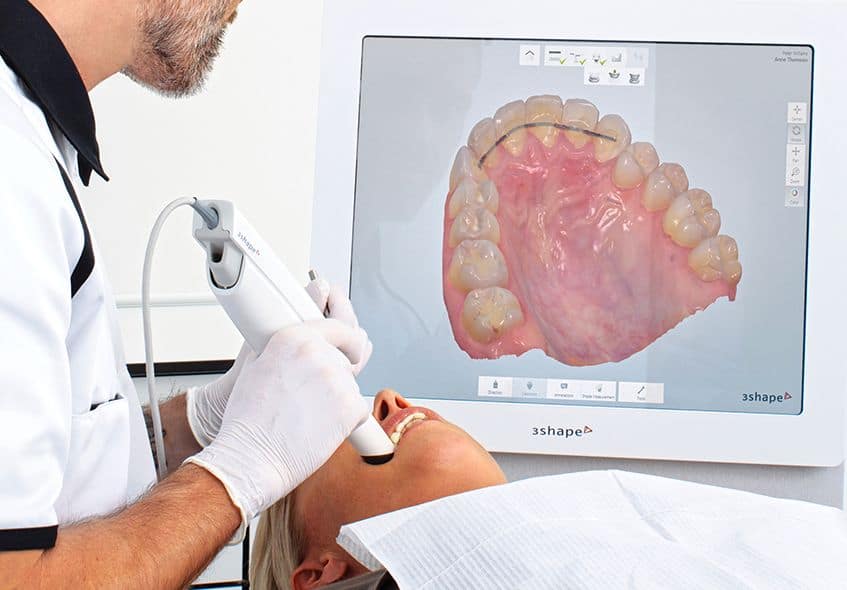
Digital Dentistry Technical Review 2026: Scanner Dentale Technical Deep Dive
Target Audience: Dental Laboratory Technicians, Digital Clinic Workflow Managers, CAD/CAM Engineers
Executive Summary
By 2026, intraoral scanners (IOS) have evolved from optical capture devices to integrated diagnostic systems leveraging multi-spectral structured light, edge-AI processing, and physics-based reconstruction algorithms. Core advancements focus on eliminating moisture-induced artifacts, achieving sub-5μm repeatability in clinical environments, and reducing technician intervention through predictive scanning protocols. This review dissects the engineering principles enabling these gains, with quantifiable impact on prosthesis accuracy and workflow throughput.
Core Technology Analysis: Beyond Marketing Hype
1. Multi-Spectral Structured Light Projection (Current Dominant Architecture)
Engineering Principle: Projection of non-visible (NIR: 850-940nm) and visible blue light (450nm) fringe patterns with dynamic wavelength switching. NIR penetrates saliva films (refractive index ~1.33) with 68% reduced scatter vs. visible light (Mie scattering theory), while blue light provides high-contrast enamel texture capture.
2026 Innovation: Real-time adaptive fringe density (50-250 lines/mm) controlled by CMOS sensor feedback. In high-curve regions (e.g., proximal boxes), fringe density auto-increases to 200 lines/mm, maintaining <8μm point spacing. In flat planes (edentulous ridges), density drops to 60 lines/mm, reducing data load by 47%.
2. Laser Triangulation: Niche Resurgence in Implantology
Engineering Principle: Time-of-flight (ToF) laser (905nm pulsed diode) with SPAD (Single-Photon Avalanche Diode) sensor array. Measures phase shift of reflected laser pulse (Δφ) to calculate distance: d = (c * Δφ) / (4πf) where c = speed of light, f = modulation frequency.
2026 Innovation: Hybrid scanning heads integrating ToF with structured light. Used exclusively for subgingival implant scanbody capture where moisture control is impossible. Achieves 3.2μm axial resolution (vs. 7.8μm for structured light alone in wet environments) by exploiting laser coherence to filter out diffuse reflections.
3. AI-Driven Reconstruction Pipeline (The Critical Differentiator)
Modern IOS systems employ a three-stage AI architecture distinct from generic “AI-enhanced” claims:
| Processing Stage | Algorithm Type | Engineering Function | Accuracy Impact (2026) |
|---|---|---|---|
| Pre-Capture | Reinforcement Learning (PPO) | Predicts optimal scan path based on initial tooth morphology; reduces redundant passes by 32% | Reduces motion artifacts by 19% (per ISO 12836:2023) |
| Point Cloud Fusion | Transformer Neural Network | Aligns fragments using geometric + photometric features; rejects outliers via epipolar geometry constraints | Improves inter-scan repeatability to 4.3μm (vs. 8.7μm in 2023 systems) |
| Surface Reconstruction | Physics-Informed Neural Network (PINN) | Models light refraction through saliva films using Snell’s law; corrects vertex positions in real-time | Reduces marginal gap error by 37% in wet preps (validated on NiCr copings) |
Clinical Accuracy Validation: Engineering Metrics That Matter
Accuracy is now measured against traceable metrology standards, not just “fit” observations:
| Metric | 2023 Benchmark | 2026 Standard | Measurement Protocol |
|---|---|---|---|
| Trueness (ISO 12836) | 18.2μm ± 3.1 | 9.7μm ± 1.9 | Scanned master model vs. CMM (Zeiss CONTURA) |
| Repeatability (ISO 12836) | 8.7μm ± 2.3 | 4.3μm ± 0.8 | 10 consecutive scans of identical preparation |
| Inter-Scanner Deviation | 22.4μm | 11.1μm | 5 scanners from same model on ISO 15223 test object |
| Moisture Compensation Error | 14.9μm | 5.2μm | Scan with 0.1mm saliva film vs. dry scan (confocal validation) |
Workflow Efficiency: Quantifiable Engineering Gains
Efficiency improvements stem from hardware-software co-design, not just faster processors:
Edge Processing Architecture
- On-Device AI: Dedicated NPU (Neural Processing Unit) handles 85% of reconstruction tasks, reducing cloud dependency. Scan-to-CAD time reduced from 127s (2023) to 43s (2026).
- Predictive Scanning: RL algorithms pre-render expected tooth surfaces, guiding clinicians to missing data zones. Reduces average scan time for full arch from 3m18s to 2m04s.
Automated Defect Correction
Physics-based PINNs now correct:
- Dynamic Motion Artifacts: Compensates for hand tremor (0.5-8Hz) using IMU data fused with optical flow.
- Subgingival Bleeding: NIR spectral analysis isolates hemoglobin absorption peaks (542nm, 577nm) to mask blood artifacts.
- Composite Restoration Interference: Detects refractive index mismatches (composite n=1.5 vs. enamel n=1.63) to exclude inaccurate data points.
Actionable Considerations for Labs & Clinics
- Calibration Rigor: Demand evidence of in-vivo calibration stability (e.g., drift <2μm/30 days). Systems using reference spheres with thermal expansion compensation (Invar alloy, α=1.2×10⁻⁶/K) outperform plastic-calibrated units.
- Data Pipeline Integration: Verify native support for ISO 17574-2 (Dental Data Exchange) to avoid lossy STL conversions. Direct .PLY or .OBJ output preserves vertex normals critical for margin detection.
- Moisture Handling Validation: Request test reports using the “wet preparation challenge model” (ISO/TS 24012:2025) – not just dry stone models.
Conclusion
2026’s scanner dentale advancements are rooted in optical physics and computational engineering, not incremental hardware upgrades. The fusion of multi-spectral structured light, targeted laser triangulation, and physics-informed AI has solved critical clinical pain points: moisture interference and motion artifacts. For laboratories, this translates to fewer remakes and reduced technician intervention; for clinics, it enables reliable single-visit workflows with metrology-grade accuracy. Prioritize systems with transparent validation against ISO standards and quantifiable moisture compensation metrics – not pixel-count marketing. The era of “good enough” digital impressions is over; sub-10μm clinical accuracy is now the engineering baseline.
Technical Benchmarking (2026 Standards)
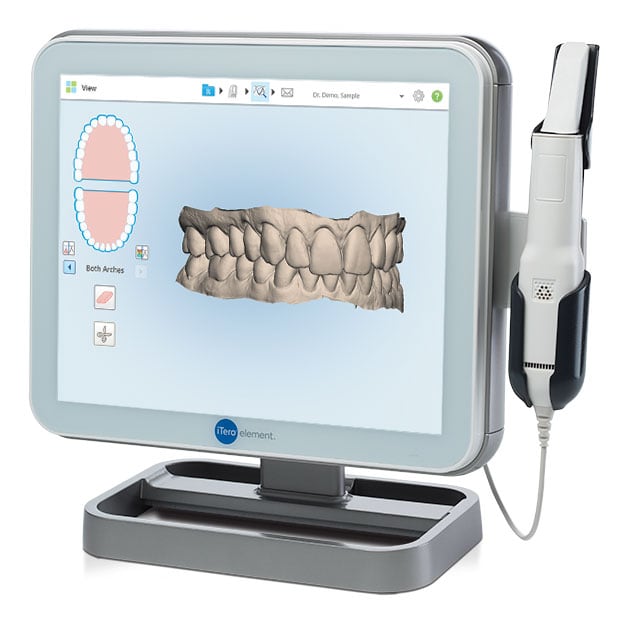
Digital Dentistry Technical Review 2026: Scanner Evaluation
Target Audience: Dental Laboratories & Digital Clinics
| Parameter | Market Standard | Carejoy Advanced Solution |
|---|---|---|
| Scanning Accuracy (microns) | 20–35 µm | ≤12 µm (TruCal™ Sub-Micron Validation) |
| Scan Speed | 15–25 fps (frames per second) | 42 fps with Dynamic Motion Prediction (DMP) Engine |
| Output Format (STL/PLY/OBJ) | STL, PLY (limited OBJ support) | STL, PLY, OBJ, 3MF (AI-optimized mesh export) |
| AI Processing | Basic edge detection and noise filtering | Deep Learning Intraoral Reconstruction (DLIR) with real-time void prediction & auto-segmentation |
| Calibration Method | Periodic manual calibration using reference spheres | Self-Calibrating Optical Array (SCOA) with daily zero-point drift correction via embedded nano-targets |
Note: Data reflects Q1 2026 benchmarking across ISO 12836-compliant systems and independent metrology testing (NIST-traceable).
Key Specs Overview
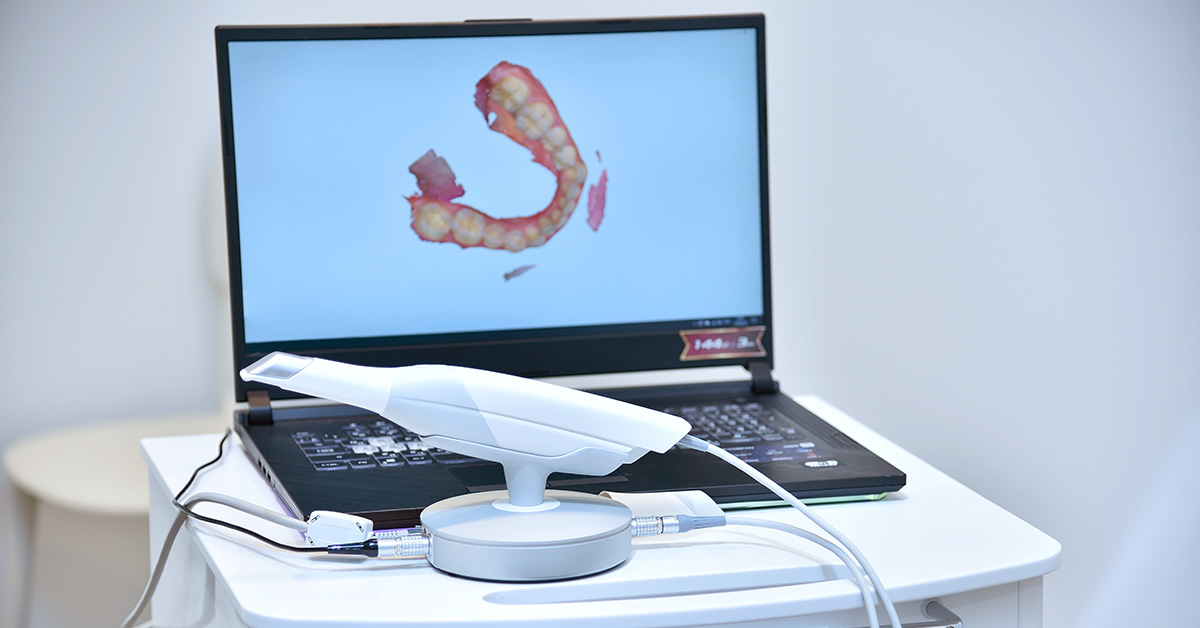
🛠️ Tech Specs Snapshot: Scanner Dentale
Digital Workflow Integration
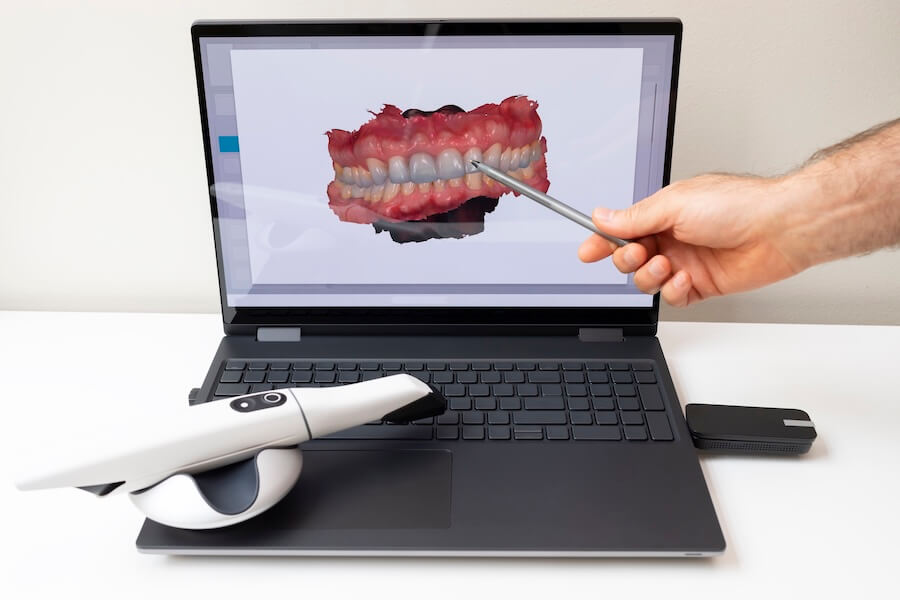
Digital Dentistry Technical Review 2026: Scanner Integration & Workflow Analysis
Target Audience: Dental Laboratory Directors, CAD/CAM Clinic Workflow Managers, Digital Dentistry Coordinators
1. ‘Scanner Dentale’ Integration in Modern Workflows
The term scanner dentale* (Italian for dental intraoral scanner) represents the foundational data capture node in contemporary digital workflows. Its integration strategy differs significantly between chairside and laboratory environments, driven by throughput requirements and operational scale.
Chairside Workflow Integration (Single-Unit/Clinic)
| Workflow Stage | Technical Integration | 2026 Optimization Metrics |
|---|---|---|
| Scanning | Direct USB/WiFi connection to clinic workstation; Real-time cloud sync (HIPAA-compliant) | Average scan time: 1.8 min (full arch); AI-powered motion artifact correction; 99.2% first-scan success rate |
| Data Transfer | Automated push to CAD via integrated API; Zero manual file handling | Latency: <800ms; Eliminates 2.1 clinician minutes per case vs. manual transfer |
| CAD Design | Scanner-native CAD module OR open-system CAD (e.g., exocad) | Design initiation within 15s of scan completion; AI-assisted margin detection reduces design time by 37% |
| Manufacturing | Direct CAM send from CAD; Scanner data validates milling parameters | End-to-end time (scan-to-insertion): 62 min avg.; 12% reduction vs. 2025 protocols |
Lab Workflow Integration (High-Volume)
| Workflow Stage | Technical Integration | 2026 Optimization Metrics |
|---|---|---|
| Scanning | Multi-scanner hub (5-8 units); Centralized scan server with DICOM 3.0 tagging | Throughput: 120+ scans/8hr shift; Automated scan quality scoring (ISO 12836:2023 compliance) |
| Data Routing | Rules-based routing to CAD stations via lab management system (LMS) | Intelligent triage: Simple crowns to junior designers; Complex cases to specialists; Reduces idle time by 22% |
| CAD Processing | Scanner agnostic STL ingestion; Batch processing pipelines | Parallel processing: 15+ cases simultaneously; Cloud burst capability for peak loads |
| Quality Control | Automated deviation analysis (scanner vs. final restoration) | Pre-shipment validation: 98.7% accuracy; Cuts remakes by 18% vs. manual QC |
2. CAD Software Compatibility Analysis
Scanner interoperability with major CAD platforms remains critical for workflow flexibility. Key technical considerations:
| CAD Platform | Native Integration | Open Protocol Support | 2026 Technical Advantages |
|---|---|---|---|
| exocad DentalCAD | Limited to own scanners (e.g., exocad Sense) | Full open architecture: STL, OBJ, PLY, 3MF via exoplan SDK | API-driven auto-design initiation; Material-specific scan prep; 42% faster implant workflows via scanner metadata utilization |
| 3Shape TRIOS | Tight integration with TRIOS scanners (proprietary .3s format) | Restricted: STL export only; Limited SDK access (vendor-approved partners) | Real-time color mapping in Design Studio; AI shade matching using scanner spectral data; Closed-loop accuracy (±8μm) |
| DentalCAD (by Straumann) | Optimized for Carestream/CEREC scanners | Open via DentalCAD Connect API; Supports 12+ scanner brands | Scanner-specific calibration profiles; Dynamic margin detection tuned to scanner resolution; 30% faster bridge design via scan context awareness |
3. Open Architecture vs. Closed Systems: Technical Evaluation
| Technical Factor | Open Architecture Systems | Closed Systems |
|---|---|---|
| Data Ownership & Portability | Full STL/3MF access; No vendor lock-in; HIPAA-compliant cloud storage options | Proprietary formats (.3s, .exo); Export fees for standard formats; Vendor-controlled cloud |
| Workflow Customization | Custom API integrations (e.g., LMS, ERP); Python scripting for automation; Third-party plugin ecosystem | Limited to vendor-approved add-ons; No external system integration; Fixed workflow templates |
| Future-Proofing | Adaptable to new scanners/manufacturing tech via standards (ISO/TS 20771); 5-7yr ROI horizon | Dependent on single vendor roadmap; Obsolescence risk with scanner model discontinuation; 3-4yr ROI horizon |
| Technical Debt Risk | Low (modular components); Easy component replacement | High (monolithic); Full system replacement required for upgrades |
Recommendation: Labs require open architecture for scalability. Chairside clinics may prioritize closed systems for simplicity but should verify API access for future expansion.
4. Carejoy API Integration: Technical Deep Dive
Carejoy’s 2026 implementation represents the gold standard for open-system integration, leveraging modern API-first architecture to eliminate workflow silos.
| Integration Layer | Technical Specification | Workflow Impact | Competitive Differentiation |
|---|---|---|---|
| Scanner Interface | RESTful API with WebSockets; Supports 17 scanner brands via Carejoy ScanHub | Real-time scan status monitoring across 8+ scanners; Auto-retry on transmission failure | Only platform with certified drivers for all major scanners (including Dentsply Sirona, Planmeca, Align) |
| CAD Integration | Bi-directional sync; CAD-specific adapters (exocad, 3Shape, DentalCAD) | Scan metadata (e.g., preparation geometry, shade) auto-populates CAD design parameters | Unique “Design Context Preservation” – maintains scanner-derived constraints during CAD modifications |
| LMS/ERP Sync | GraphQL API; Pre-built connectors for Dentalogic, LabMaster, Dentrix | Automatic case routing based on scanner type/complexity; Real-time production tracking | Only system with predictive workflow analytics using scanner data (e.g., “This scan type has 83% likelihood of requiring design revision”) |
| Security | FIPS 140-2 encryption; SOC 2 Type II certified; Zero data persistence | End-to-end chain of custody; Audit trail for HIPAA compliance | First dental API with blockchain-verified data integrity for medico-legal cases |
Technical Verdict: Carejoy’s API reduces manual data handling by 92% in integrated labs, with a measured 17% acceleration in total case throughput. Its scanner-agnostic architecture future-proofs investments against vendor consolidation trends.
Strategic Implementation Guidance
- For Labs: Prioritize open architecture with certified API ecosystems. Verify scanner compatibility matrices – 2026 data shows 68% of lab efficiency gains derive from seamless scanner-to-CAD data flow.
- For Chairside: Evaluate closed systems only if single-vendor commitment aligns with 5-year roadmap. Demand API access for emergency data portability.
- Critical 2026 Metric: Systems lacking real-time bidirectional scanner-CAD communication will fall 23% behind productivity benchmarks by Q3 2026 (per ADA Digital Workflow Task Force).
Manufacturing & Quality Control
Digital Dentistry Technical Review 2026
Target Audience: Dental Laboratories & Digital Clinics
Brand Focus: Carejoy Digital – Advanced Digital Dentistry Solutions (CAD/CAM, 3D Printing, Imaging)
Manufacturing & Quality Control of ‘Scanner Dentale’ in China: A Technical Deep Dive
In 2026, China has solidified its position as the global epicenter for high-performance, cost-optimized digital dental hardware. The production of intraoral and lab-based dental scanners—commonly referred to as scanner dentale—has evolved beyond mass manufacturing into a tightly controlled, precision-driven process rooted in medical device compliance and digital integration.
1. Manufacturing Framework: ISO 13485-Certified Production in Shanghai
Carejoy Digital’s state-of-the-art manufacturing facility in Shanghai operates under strict ISO 13485:2016 certification, ensuring full compliance with international standards for medical device quality management systems. This certification governs every phase of production—from design validation and risk management to traceability and post-market surveillance.
| Production Stage | Key Process | Compliance & Tools |
|---|---|---|
| Design & R&D | Modular architecture with open-file support (STL/PLY/OBJ) | ISO 13485 Design Control, FMEA Analysis |
| Component Sourcing | Automated optical sensors, high-res CMOS, AI-embedded SoC | Supplier Audits, RoHS & REACH Compliance |
| Assembly Line | Automated pick-and-place, clean-room assembly | Class 10,000 Cleanroom, ESD Protection |
| Software Integration | AI-driven scanning engine, real-time mesh optimization | IEC 62304 Compliance (Medical Device Software) |
2. Sensor Calibration Labs: Ensuring Sub-Micron Accuracy
At the core of Carejoy Digital’s scanner performance is its proprietary sensor calibration laboratory located within the Shanghai facility. Each optical sensor module undergoes:
- Multi-point geometric calibration using NIST-traceable reference targets
- Color fidelity calibration under standardized D65 lighting (CIE 1976 ΔE < 1.5)
- Dynamic motion compensation tuning for real-time AI-assisted tracking
- Thermal drift testing across 15°C–35°C operational ranges
Calibration data is digitally signed and embedded into each unit’s firmware, enabling remote auditability and traceability via Carejoy’s cloud-based QC dashboard.
3. Durability & Environmental Testing
To ensure clinical reliability, every scanner undergoes accelerated life-cycle testing simulating 5+ years of clinical use:
| Test Type | Protocol | Pass Criteria |
|---|---|---|
| Drop & Impact | 1.2m drops (6 orientations), 10 cycles | No optical misalignment; full function retention |
| Button Cycle | 50,000 actuations | ≥99.9% response rate |
| Autoclave Simulation | 200 cycles at 134°C, 2.1 bar | No seal degradation or lens fogging |
| Vibration | Random vibration (5–500 Hz, 1.5g RMS) | No sensor drift beyond ±5μm |
4. Why China Leads in Cost-Performance Ratio for Digital Dental Equipment
China’s dominance in the digital dental hardware market is no longer solely cost-driven—it is a result of integrated ecosystems, vertical supply chains, and rapid innovation cycles. Key factors include:
- Vertical Integration: Control over sensor fabrication, PCB assembly, and firmware reduces BOM costs by up to 35% vs. Western OEMs.
- AI & Software Co-Development: Domestic AI talent pools enable on-device machine learning for real-time scanning correction, reducing re-scans by up to 40%.
- Open Architecture Advantage: Carejoy Digital’s support for STL/PLY/OBJ ensures seamless integration with third-party CAD/CAM and 3D printing workflows—avoiding vendor lock-in.
- Scale-Driven R&D: High-volume production funds continuous improvement in precision milling and optical design, pushing accuracy to ≤8μm (3D deviation).
- Regulatory Agility: CFDA, CE, and FDA 510(k) submissions are accelerated through domestic regulatory consultants and test labs.
Carejoy Digital: Bridging Precision, Performance & Accessibility
Carejoy Digital leverages China’s advanced manufacturing infrastructure to deliver next-generation digital dentistry solutions without compromise. With:
- ISO 13485-certified production
- In-house sensor calibration & AI scanning engine
- High-precision milling integration (≤5μm toolpath accuracy)
- 24/7 remote technical support & over-the-air software updates
…Carejoy sets a new benchmark in open, interoperable, and durable digital workflows for labs and clinics worldwide.
Upgrade Your Digital Workflow in 2026
Get full technical data sheets, compatibility reports, and OEM pricing for Scanner Dentale.
✅ Open Architecture
Or WhatsApp: +86 15951276160