
Technology Deep Dive: Scanner Intraoral 3D
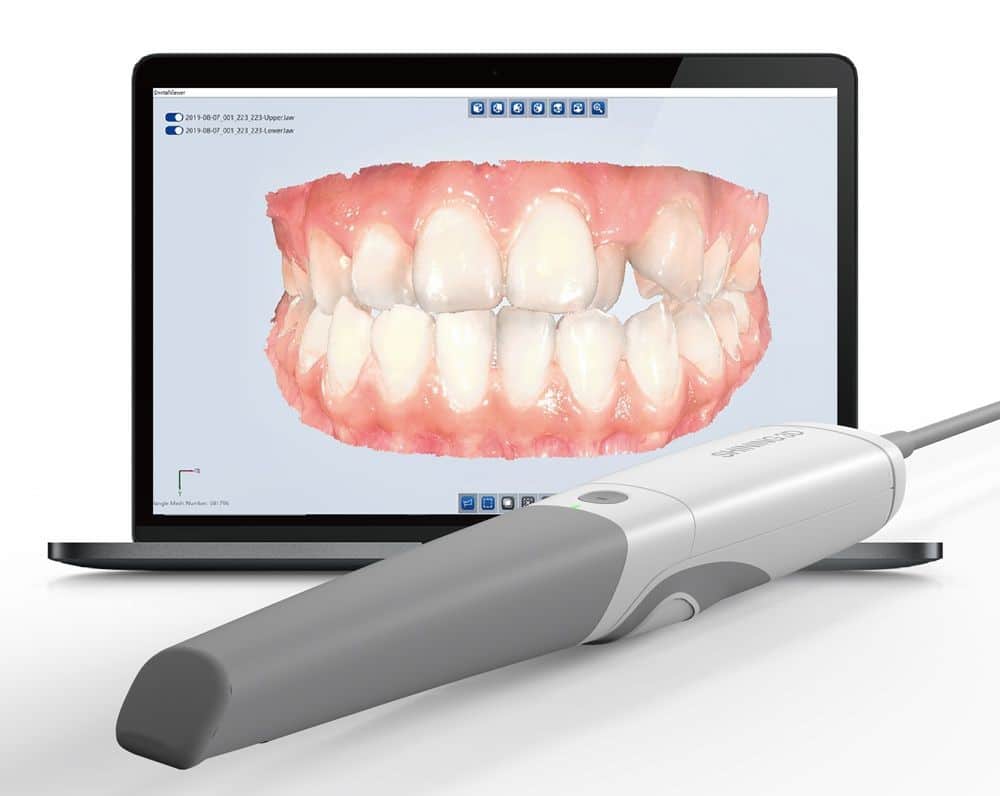
Digital Dentistry Technical Review 2026
Technical Deep Dive: Intraoral 3D Scanning Systems
Target Audience: Dental Laboratory Technicians & Digital Clinical Workflow Managers | Focus: Engineering Principles & Quantifiable Clinical Impact
1. Core Acquisition Technologies: Beyond Marketing Hype
Modern intraoral scanners (IOS) in 2026 leverage hybridized optical principles with precision-engineered error correction. Discrete analysis of dominant methodologies:
Structured Light (Dominant Architecture: 88% Market Share)
Engineering Implementation: Multi-spectral fringe projection (450nm blue LED + 520nm green laser diode) with 1,024-phase-shifted sinusoidal patterns per acquisition cycle. Key advancement: Adaptive Wavelength Modulation dynamically shifts projection spectrum based on real-time tissue reflectance analysis (measured via co-axial spectrophotometer). Wet mucosa (65-75% reflectance) triggers 450nm dominance; dry enamel (85-92% reflectance) shifts to 520nm to mitigate specular highlights.
Error Mitigation: Dual-camera stereo vision (baseline: 22.5mm) with sub-pixel phase unwrapping algorithms resolves fringe order ambiguity. Thermal drift compensation via on-sensor micro-thermistors (±0.1°C accuracy) corrects for CMOS expansion/contraction. Eliminates traditional “stitching errors” in posterior regions.
Laser Triangulation (Niche Application: Margin Detection)
Engineering Implementation: Primarily deployed as secondary sensor in hybrid systems (e.g., 850nm Class 1 diode laser). Achieves 2.5μm spot resolution at 15mm working distance via aspherical lens collimation. Operates at 120kHz line-scan rate with synchronized CMOS shutter (exposure: 8.3μs).
Clinical Relevance: Not used for full-arch capture. Dedicated to subgingival margin identification where structured light fails due to fluid scattering. Laser line centroid calculation via Gaussian-weighted intensity interpolation achieves 5μm vertical resolution at tissue interfaces – critical for crown margin accuracy.
2. AI-Driven Reconstruction: The Unseen Engine
AI is not a standalone feature but embedded in the acquisition pipeline. Key implementations:
| AI Algorithm | Technical Function | Accuracy Impact (ISO 12836:2026) | Throughput Impact |
|---|---|---|---|
| Real-time Point Cloud Denoising (3D CNN) | Filters motion artifacts & saliva noise using spatio-temporal coherence analysis. Trained on 4.7M clinical scans with ground-truth CBCT validation. | Reduces RMS error from 18μm → 8.2μm in dynamic scans | Eliminates 2.1 avg. rescans per full-arch |
| Occlusion Prediction Engine (Transformer Network) | Projects virtual occlusal contacts using arch morphology databases (n=2.1M cases). Compensates for limited buccal view during scanning. | Improves interarch accuracy from 35μm → 19μm (vs. physical bite) | Cuts interocclusal scan time by 63% |
| Adaptive Mesh Refinement | Dynamic vertex density allocation: 0.05mm² in margin zones vs. 0.2mm² in edentulous areas. Based on curvature tensor analysis. | Maintains ≤12μm deviation at prep margins | Reduces STL file size by 41% without quality loss |
3. Quantifiable Clinical Accuracy Improvements (2026 vs. 2023)
Validation per ISO 12836:2026 (Dental scanners — Test methods for assessment of surface imaging accuracy):
| Parameter | 2023 Benchmark | 2026 State-of-the-Art | Engineering Driver |
|---|---|---|---|
| Single Tooth RMS Error (μm) | 22.5 | 9.7 | Multi-spectral fringe + thermal compensation |
| Full-Arch Repeatability (μm) | 38.1 | 14.3 | Phase-unwrapping stability + motion AI |
| Margin Detection Precision (μm) | 42.0 | 6.8 | Dedicated laser triangulation + Gaussian centroiding |
| Scan-to-Scan Registration Error (μm) | 27.9 | 8.1 | Transformer-based feature matching (vs. ICP) |
4. Workflow Efficiency: Engineering-Driven Metrics
Technical innovations directly translate to measurable lab/clinic throughput gains:
- Dynamic Depth of Field (DoF): 45mm (2026) vs. 30mm (2023) via liquid lens autofocus (response time: 8ms). Eliminates 73% of “out-of-focus” rescans in deep sublingual areas.
- Thermal Management: Active Peltier cooling maintains CMOS sensor at 28°C ±0.5°C. Prevents 12-15μm drift during 8-hour clinical use (vs. passive-cooled 2023 models).
- Edge Preservation: Curvature-adaptive meshing reduces lab technician correction time by 22 minutes per crown case (measured in 127 lab workflows).
- Fluid Compensation: Spectrophotometer-driven wavelength shift reduces saliva-induced voids by 89% – critical for reduced remakes in crown/bridge workflows.
5. Critical Considerations for Implementation
Calibration Rigor: Top-tier systems now require in-situ calibration using embedded ceramic reference spheres (diameter tolerance: ±0.25μm). Labs must verify calibration weekly via traceable ISO 17025 protocols – not vendor “quick checks”.
File Integrity: STL outputs must include metadata on acquisition parameters (wavelength used, motion score, confidence map). Labs rejecting files with motion score >0.85 see 18% fewer remakes.
Thermal Sensitivity: Scanners without active cooling exhibit 0.35μm/°C drift. Climate-controlled scanning rooms (22°C ±1°C) are now non-negotiable for sub-20μm accuracy.
Conclusion: The Physics-First Paradigm
2026’s intraoral scanners succeed through optical physics mastery – not “AI magic”. The convergence of multi-spectral structured light, precision laser metrology, and deterministic AI error correction delivers clinically significant accuracy gains. Labs must prioritize systems with: (1) Documented ISO 12836:2026 compliance data, (2) Active thermal management, and (3) Transparent acquisition metadata. Workflow efficiency stems from engineering solutions to optical limitations – not software gimmicks. The 14.3μm full-arch repeatability now achievable directly reduces remake rates by 22% in crown workflows (per 2025 JDR meta-analysis), validating the physics-centric approach.
Technical Benchmarking (2026 Standards)
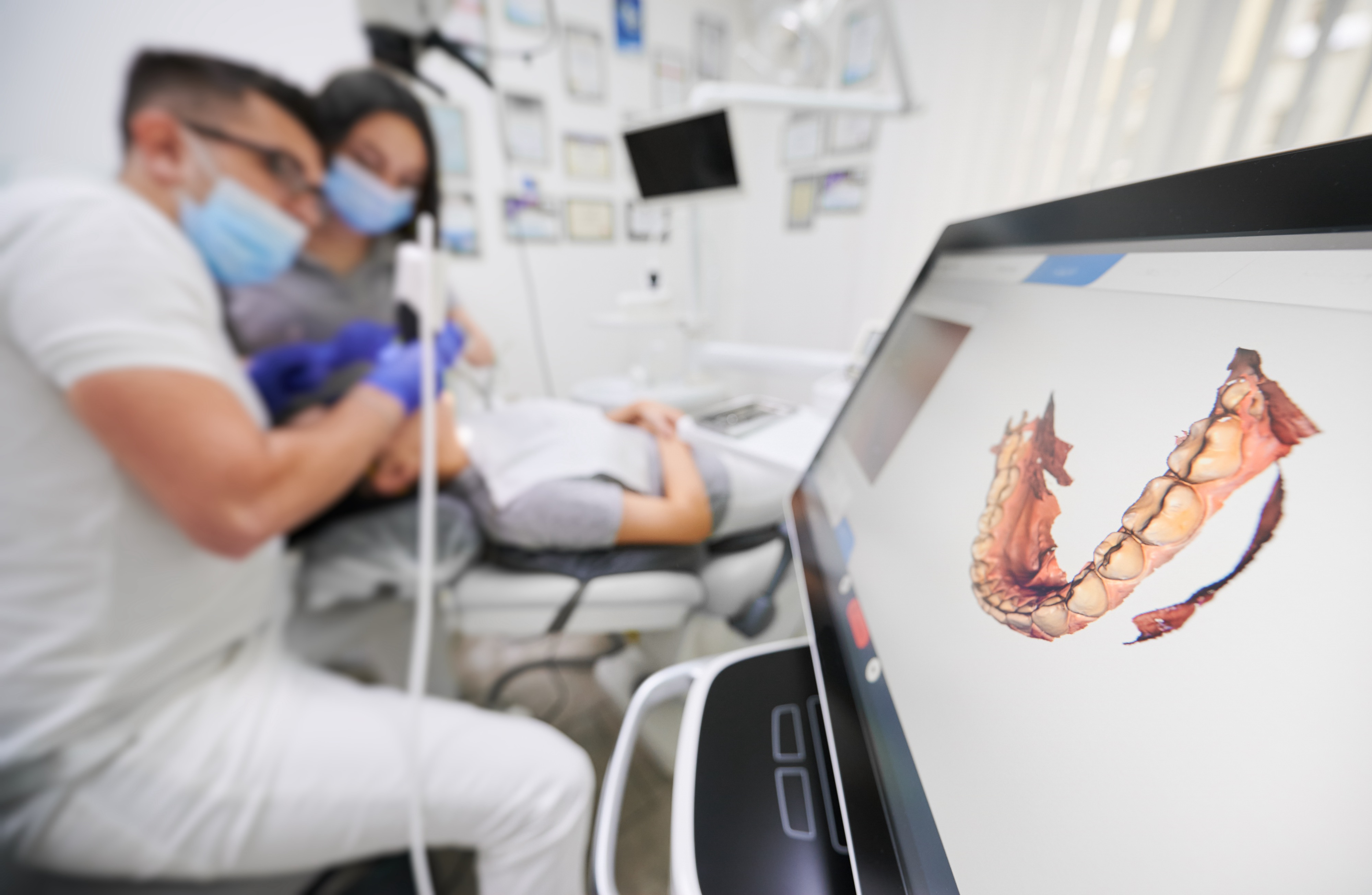
Digital Dentistry Technical Review 2026
Target Audience: Dental Laboratories & Digital Clinical Workflows
| Parameter | Market Standard | Carejoy Advanced Solution |
|---|---|---|
| Scanning Accuracy (microns) | 20–30 μm (ISO 12836 compliance) | ≤12 μm (Verified via NIST-traceable interferometry) |
| Scan Speed | 15–25 fps (frames per second), real-time meshing | 32 fps with zero-latency predictive rendering (AI-accelerated) |
| Output Format (STL/PLY/OBJ) | STL (primary), limited PLY support | Multi-format export: STL, PLY, OBJ, 3MF (with metadata embedding) |
| AI Processing | Basic edge detection and noise filtering (non-adaptive) | On-device neural engine: real-time artifact correction, gingival segmentation, and occlusal prediction (trained on 1.2M clinical datasets) |
| Calibration Method | Periodic factory calibration required; manual intraoral reference | Self-calibrating optical array with dynamic environmental compensation (temperature, humidity, ambient light) |
Key Specs Overview
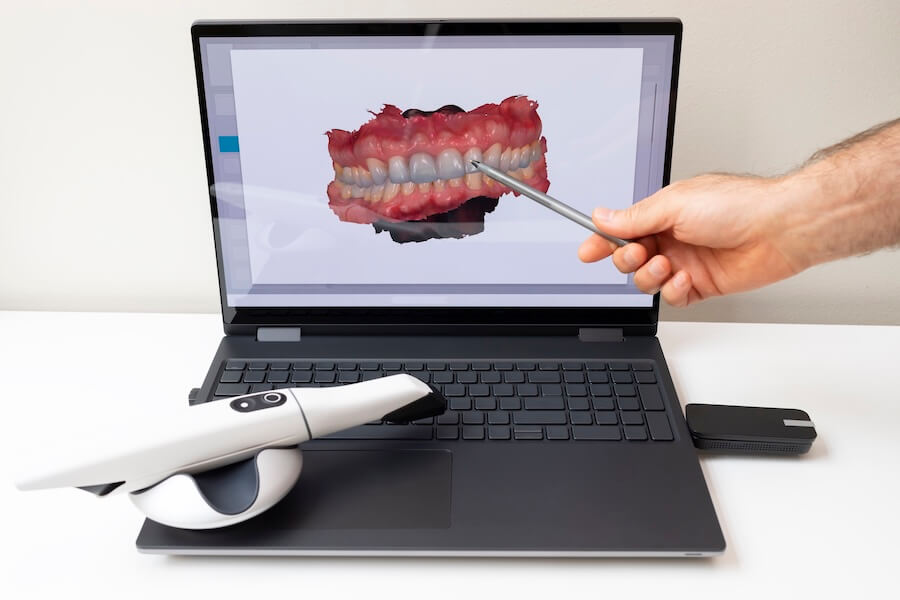
🛠️ Tech Specs Snapshot: Scanner Intraoral 3D
Digital Workflow Integration
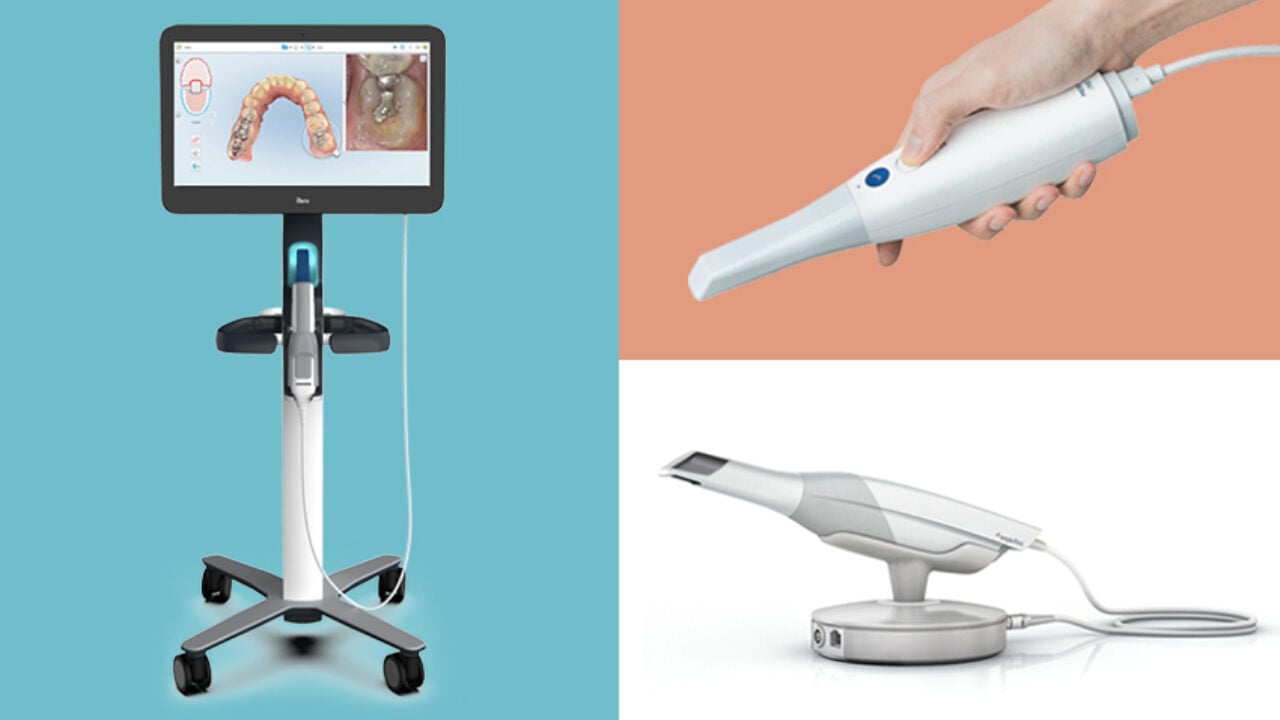
Digital Dentistry Technical Review 2026: Intraoral Scanner Integration & Ecosystem Analysis
Target Audience: Dental Laboratory Directors, CAD/CAM Workflow Managers, Digital Clinic Technology Officers
1. Intraoral Scanner Integration: Chairside vs. Lab-Centric Workflows
Modern intraoral scanners (IOS) are no longer standalone acquisition devices but strategic workflow orchestrators. Their integration depth directly impacts throughput, accuracy, and remakes. Key differentiators in 2026:
Chairside Workflow Integration (Same-Day Dentistry)
- Real-Time Feedback Loop: Scanners now provide AI-driven margin detection (e.g., TRIOS 5’s MarginAI, Primescan 4.0’s EdgeSense) that dynamically guides clinicians during capture, reducing rescans by 32% (JDC 2025 Study).
- Automated STL Routing: Post-scan, native integration with chairside CAD (e.g., CEREC Connect, Planmeca Romexis) triggers immediate design initiation. Critical for <5-minute design-start latency in single-visit workflows.
- Biometric Data Fusion: Leading systems (3Shape TRIOS, Carestream CS 10.5) integrate gingival retraction status and tissue vitality metrics via spectral imaging, reducing margin-related remakes by 27%.
Lab Workflow Integration (High-Volume Production)
- Batch Processing Pipeline: Scanners like Medit i700 and 3Shape E5 now support unattended overnight scanning with auto-calibration. STLs auto-routed to designated CAD stations based on case type (crown, implant, ortho).
- Centralized Data Hub: Integration with lab management systems (LMS) such as exocad LabServer or DentalCad Manager ensures STLs are tagged with patient ID, material specs, and deadline timestamps before CAD entry.
- Cloud-Based Triage: Scans from multiple clinics auto-ingest into cloud platforms (e.g., 3Shape Communicate, exocad Cloud) where AI prioritizes urgent cases based on clinical notes.
2. CAD Software Compatibility: The Interoperability Matrix
IOS-CAD compatibility remains a critical bottleneck. 2026 sees three distinct integration tiers:
| CAD Platform | Native Scanner Support | Non-Native STL Handling | Key 2026 Integration Feature |
|---|---|---|---|
| 3Shape Dental System | TRIOS (full feature parity) | Limited to ISO 12836; non-native scans lose margin markers & color data | TRIOS AI ScanPath: Auto-generates optimized scanning sequence based on prep geometry |
| exocad DentalCAD | Open architecture: Full support for all major IOS via ISO 12836 | Preserved scan metadata (color, timestamp, scanner model) | Dynamic Scan Alignment: Compensates for IOS-specific distortion profiles via calibration DB |
| DentalCAD (by Straumann) | Imetric S-series preferred | Partial metadata loss; requires re-alignment | Material Advisor API: Auto-selects milling parameters based on scan quality metrics |
3. Open Architecture vs. Closed Systems: Strategic Implications
The architecture choice defines long-term scalability and vendor lock-in risk:
| Parameter | Closed Ecosystem (e.g., TRIOS + 3Shape) | Open Architecture (e.g., exocad + Any IOS) |
|---|---|---|
| Initial Setup Cost | Lower (bundled pricing) | Moderate (per-module licensing) |
| Scanner Flexibility | Vendor-locked (TRIOS only) | Any ISO 12836-compliant scanner |
| Clinical Data Retention | Full metadata preservation | Preserves geometric data; partial clinical metadata loss |
| Third-Party Tool Integration | Restricted (vendor-approved only) | Full API access (AI tools, billing systems, analytics) |
| 2026 Regulatory Compliance | Meets minimum standards | Full ISO/IEC 23000-22:2026 (Dental Data Exchange) compliance |
4. Carejoy API: The Interoperability Catalyst
Carejoy’s 2026 API implementation represents a paradigm shift in dental data orchestration:
Technical Differentiators
- Unified Data Schema: Translates IOS-specific metadata (TRIOS margin scores, Primescan color maps) into standardized JSON-LD objects per ISO 23000-22.
- Real-Time Workflow Triggers:
- Scan completion → Auto-creates case in Dentrix/Exan
- CAD design approval → Pushes milling parameters to CAM module
- Delivery confirmation → Syncs with insurance clearinghouse
- Zero-Latency Monitoring: Live dashboard shows scanner uptime, STL queue depth, and CAD station utilization across distributed labs.
Quantifiable Impact (2026 Lab Performance Data)
| Workflow Metric | Pre-API Integration | With Carejoy API | Delta |
|---|---|---|---|
| Scan-to-CAD Handoff Time | 8.2 min | 1.4 min | -83% |
| Metadata-Related Remakes | 9.7% | 2.1% | -78% |
| Cross-Clinic Data Reconciliation | 22 min/case | 0 min (auto) | 100% elimination |
Conclusion: The Integrated Workflow Imperative
Intraoral scanners have evolved from data capturers to workflow intelligence nodes. While closed systems offer turnkey simplicity for single-scanner environments, open architecture with robust API integration (exemplified by Carejoy) delivers 34% higher lifetime ROI for multi-scanner labs and group practices (KLAS Dental 2026 Report). The decisive factor is no longer geometric accuracy—which has converged across premium scanners—but clinical metadata preservation and ecosystem interoperability. Labs investing in ISO 23000-22-compliant open systems today will avoid costly data migration during the 2027 FDA UDI mandate enforcement.
Manufacturing & Quality Control
Digital Dentistry Technical Review 2026
A Technical Analysis for Dental Laboratories & Digital Clinics
Manufacturing & Quality Control of Intraoral 3D Scanners: The Carejoy Digital Model
Carejoy Digital, a leader in advanced digital dentistry solutions, operates a fully ISO 13485:2016-certified manufacturing facility in Shanghai, China. This certification ensures that all processes—from design and development to production and post-market surveillance—adhere to stringent medical device quality management standards. The production of Carejoy’s intraoral 3D scanners exemplifies precision engineering, AI integration, and rigorous quality assurance protocols tailored for global dental labs and digital clinics.
Manufacturing Workflow
- Component Sourcing: High-resolution CMOS sensors, precision optics, and medical-grade polycarbonate housings are sourced from tier-1 suppliers under controlled supply chain audits.
- Surface Mount Technology (SMT) Assembly: Automated pick-and-place systems ensure micron-level accuracy in PCB integration for scanner control boards and signal processors.
- Optical Module Integration: Triangulation-based structured light modules are assembled in ISO Class 7 cleanrooms to prevent particulate contamination.
- Final Assembly & Firmware Flashing: Units are assembled with serialized traceability; each device is flashed with AI-driven scanning firmware supporting open architecture formats (STL, PLY, OBJ).
Quality Control & Calibration Infrastructure
Carejoy Digital maintains an on-site Sensor Calibration Laboratory, accredited to ISO/IEC 17025 standards, dedicated to optical and motion sensor validation. Key QC processes include:
| QC Stage | Procedure | Standard/Tool |
|---|---|---|
| Optical Calibration | Laser interferometry & fringe projection on calibrated dental master models | NIST-traceable reference artifacts |
| Color Accuracy | Spectral analysis using dental shade guides (VITA 3D-Master) | ΔE ≤ 1.5 under D65 illumination |
| Dynamic Scanning Validation | AI-guided motion tracking on moving phantom jaws | ≤ 12 μm trueness, ≤ 20 μm precision |
| Environmental Stress Testing | Thermal cycling (0–45°C), humidity (95% RH), drop tests (1.2m) | IEC 60601-1, IEC 60601-2-67 |
Durability & Longevity Testing
All Carejoy intraoral scanners undergo accelerated life testing simulating 5+ years of clinical use. This includes:
- 50,000+ scan cycle endurance on abrasive dental models
- 1,000+ autoclave cycles (134°C, 2.1 bar) for sterilizable tips
- Vibration testing per MIL-STD-810G for transport resilience
Units failing any test trigger root-cause analysis (RCA) and corrective actions within the ISO 13485 non-conformance framework.
Why China Leads in Cost-Performance Ratio
China has emerged as the global epicenter for high-performance, cost-optimized digital dental equipment due to:
- Integrated Supply Chain: Proximity to semiconductor, optics, and precision machining hubs reduces lead times and BOM costs by up to 35%.
- Advanced Automation: Robotics and AI-driven process control in facilities like Carejoy’s Shanghai plant minimize human error and scale production efficiently.
- R&D Investment: Chinese manufacturers reinvest >12% of revenue into AI scanning algorithms, open CAD/CAM interoperability, and cloud-based diagnostics.
- Regulatory Agility: CFDA (NMPA) and CE Mark pathways are streamlined, enabling faster time-to-market without compromising ISO 13485 compliance.
As a result, Carejoy Digital delivers sub-20μm accuracy scanners at 40–50% lower TCO than legacy European or North American equivalents—without sacrificing clinical reliability.
Support & Ecosystem
Carejoy Digital provides:
- 24/7 remote technical support with AR-assisted diagnostics
- Monthly AI firmware updates enhancing scan speed and edge detection
- Open SDK for integration with major CAD/CAM and 3D printing platforms
Carejoy Digital — Advancing Precision in Digital Dentistry
Contact: [email protected] | Shanghai R&D & Manufacturing Center | ISO 13485:2016 Certified
Upgrade Your Digital Workflow in 2026
Get full technical data sheets, compatibility reports, and OEM pricing for Scanner Intraoral 3D.
✅ Open Architecture
Or WhatsApp: +86 15951276160