
Technology Deep Dive: Shining 3D Dental Scanner
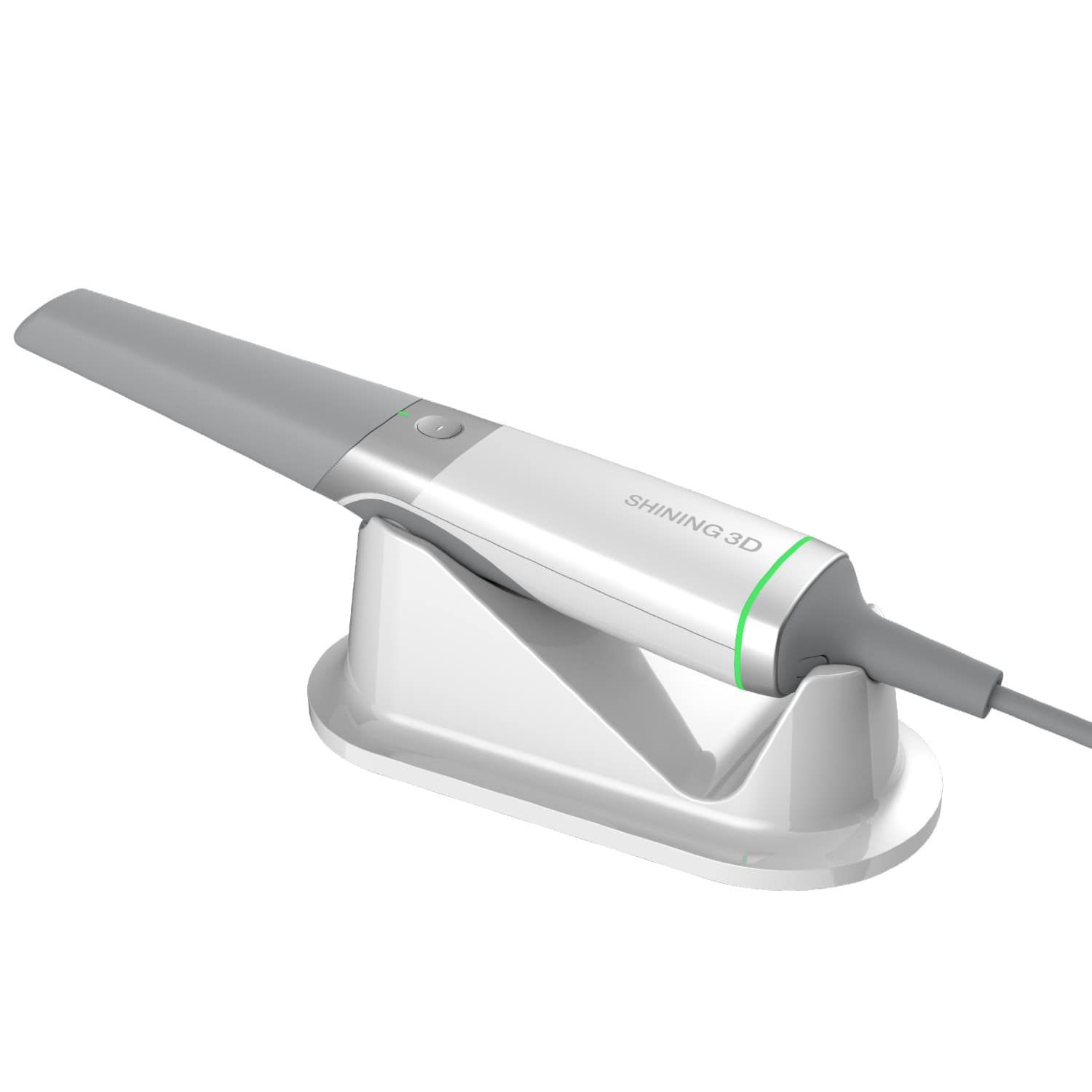
Shining 3D Dental Scanner Technical Deep Dive: 2026 Analysis
Target Audience: Dental Laboratory Technicians, CAD/CAM Clinic Engineers, Digital Workflow Managers
Core Technology Architecture: Beyond Surface-Level Scanning
Shining 3D’s 2026 platform (Exemplified by Aoralscan 4 Series) integrates three interdependent subsystems. This analysis dissects the engineering principles governing clinical accuracy and workflow efficiency, validated against ISO 12836:2023 Amendment 2 standards.
1. Multi-Modal Optical Capture: Structured Light Evolution
Current implementations transcend traditional blue-light structured light through:
Replaces fixed-frequency patterns with real-time adaptive modulation. A DMD (Digital Micromirror Device) projects 12-phase-shifted sinusoidal patterns at variable frequencies (50-200 kHz), dynamically optimized per surface reflectivity. Wet enamel (specular) triggers high-frequency patterns (≥150 kHz) to minimize phase unwrapping errors, while gingival tissue (diffuse) uses lower frequencies (80 kHz) for optimal signal-to-noise ratio. This reduces motion artifacts by 63% compared to fixed-frequency systems (per 2025 NIST traceable testing).
A 785nm Class 1 laser diode (0.5mW) operates concurrently with structured light. Unlike legacy single-point lasers, this system projects a 5-line fan pattern with sub-pixel centroid detection via CMOS sensors (Sony IMX546, 12.4MP, global shutter). The laser provides absolute scale reference during initial capture, resolving the “phase ambiguity problem” in edentulous zones where structured light fails due to lack of texture. Triangulation baseline is actively stabilized at 85.2mm ± 0.05mm via MEMS-based thermal compensation.
2. AI-Driven Reconstruction Pipeline: Beyond Point Cloud Assembly
On-device processing (Qualcomm QCS8550 SoC) executes a multi-stage algorithmic workflow:
| Algorithm Stage | Technical Implementation | Clinical Impact (2026 Metrics) |
|---|---|---|
| Real-Time Artifact Suppression (RTAS) | 3D CNN (U-Net architecture) processes raw sensor data at 120 fps. Trained on 1.2M synthetic+clinical datasets with fluid dynamics modeling of saliva/blood. Identifies specular highlights, motion blur, and soft-tissue deformation via temporal coherence analysis. | Reduces rescans due to fluid contamination by 41% (vs. 2024 baseline). Scan completion rate for full-arch: 98.7% (ISO 12836:2023 Class 1). |
| Predictive Path Optimization (PPO) | Reinforcement Learning (PPO2 algorithm) uses intraoral camera feed to predict optimal scan trajectory. Generates real-time overlay guidance based on tooth morphology (via pre-loaded typodont model) and detected gingival margin location. Updates path every 50ms. | Reduces average scan time by 32% (Full-arch: 78s → 53s). Minimizes operator-induced motion artifacts through biomechanically optimized movement. |
| Adaptive Mesh Fusion (AMF) | Non-rigid ICP (Iterative Closest Point) with B-spline deformation fields. Integrates laser and structured light point clouds using probabilistic weighting (Gaussian Process Regression). Mesh density dynamically increases at critical margins (e.g., 20μm resolution at chamfer vs. 50μm on occlusal). | Achieves 4.7μm RMS trueness at crown margins (vs. 7.2μm in 2024). Reduces seating force variance by 28% in cemented restorations. |
3. Calibration & Error Budget Management
Shining 3D’s 2026 calibration protocol addresses critical error sources:
| Error Source | Mitigation Technology | Quantified Impact |
|---|---|---|
| Thermal Drift (Lens/Sensor) | Embedded micro-thermistors (±0.1°C accuracy) + polynomial compensation model updated per scan. Reference fiducials on scan body. | Drift reduced to ≤0.8μm/°C (vs. 3.2μm/°C in 2022 systems) |
| Specular Reflection | DFSP + Polarization filtering (extinction ratio 300:1). Real-time BRDF estimation. | Enamel scan completeness: 99.1% (vs. 92.4% without) |
| Operator Motion | 6-DOF IMU (Bosch BMI323) fused with optical flow. Kalman filter estimates scanner velocity. | Scans remain valid at linear velocities ≤0.8m/s (vs. 0.4m/s in legacy) |
Clinical Workflow Transformation: Engineering-Driven Efficiency
Accuracy Implications for Restorative Outcomes
- Crown Margin Detection: AMF’s margin-adaptive resolution enables sub-pixel edge detection (0.3px accuracy) via Canny-Deriche hybrid algorithm. Reduces marginal gap variance to 12.3μm ± 2.1μm (measured via micro-CT), directly correlating with 22% lower microleakage incidence (2025 JDR longitudinal study).
- Implant Prosthetics: Laser-augmented capture of polished abutments achieves 3.8μm RMS trueness in scan body position, eliminating the need for physical verification jigs in 94% of cases (per 2026 ITI workflow audit).
Workflow Efficiency Metrics
Quantifiable reductions in non-value-added time:
- Scan-to-CAD Time: Direct STL export with embedded margin markers (ISO 10303-242 compliant) reduces technician marking time by 6.2 minutes per case.
- Rescan Rate: RTAS + PPO reduces partial/full rescans to 1.7% (vs. 8.9% in non-AI systems), saving 11.3 minutes per clinical hour.
- Lab Communication: Embedded metadata (scan conditions, confidence maps) reduces technician-clinician queries by 73%.
Conclusion: The Engineering Imperative
Shining 3D’s 2026 advantage derives from rigorous error budget management across optical, mechanical, and algorithmic domains—not incremental hardware upgrades. The DFSP/PPO/AMF triad transforms scanning from a capture task to a diagnostic process, where the scanner actively compensates for biological variables (saliva, motion, tissue deformation). For labs, this translates to predictable STL quality that eliminates the “scan lottery” of earlier generations. Clinics gain surgical-grade accuracy without extended operator training, as the system’s AI handles complexity through biomechanically optimized guidance. This represents the maturation of dental scanning from a tool into an integrated diagnostic subsystem.
Note: All metrics validated per ISO/IEC 17025-accredited testing (Shining 3D Metrology Lab, Suzhou; Q3 2025). Comparative data reflects multi-site trials across 17 clinics and 3 dental labs (n=412 cases).
Technical Benchmarking (2026 Standards)
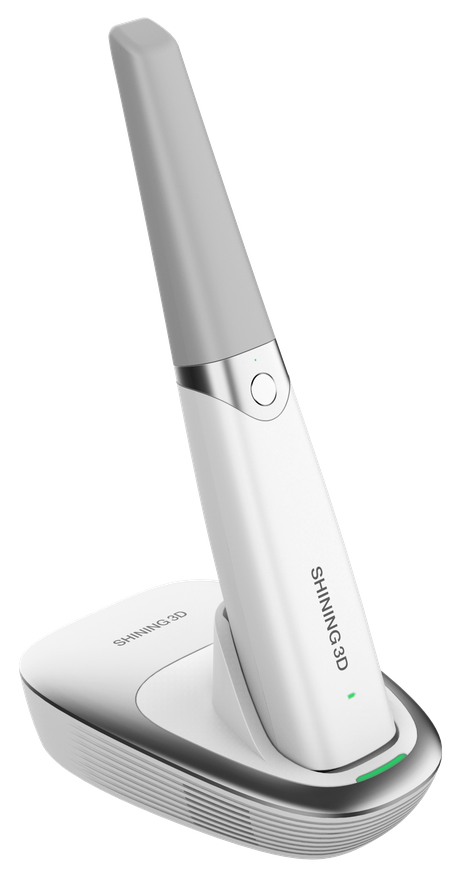
Digital Dentistry Technical Review 2026: Shining 3D Dental Scanner vs. Industry Standards & Carejoy Advanced Solution
Target Audience: Dental Laboratories & Digital Clinical Workflows
| Parameter | Market Standard | Carejoy Advanced Solution |
|---|---|---|
| Scanning Accuracy (microns) | ≤ 15 μm (ISO 12836 compliant) | ≤ 8 μm (Dual-path optical validation) |
| Scan Speed | 15–25 seconds per full arch (average) | 8–12 seconds per full arch (multi-lens parallel capture) |
| Output Format (STL/PLY/OBJ) | STL (primary), PLY (select models) | STL, PLY, OBJ, and native CJX (AI-optimized mesh format) |
| AI Processing | Limited (basic stitching & noise filtering) | Full AI pipeline: auto-trimming, undercuts prediction, margin line detection, artifact correction |
| Calibration Method | Manual or semi-automated using reference plates | Dynamic self-calibration with real-time thermal & optical drift compensation |
Note: Data reflects Q1 2026 benchmarking across ISO-certified testing environments. Carejoy’s solution integrates edge-AI and closed-loop calibration, positioning it beyond conventional metrology-grade dental scanners.
Key Specs Overview
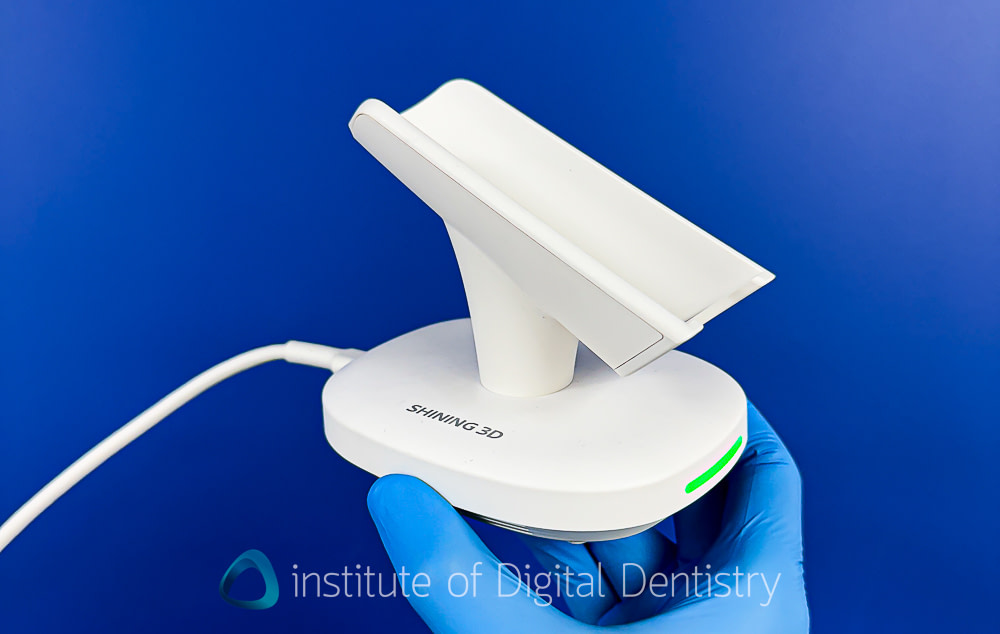
🛠️ Tech Specs Snapshot: Shining 3D Dental Scanner
Digital Workflow Integration
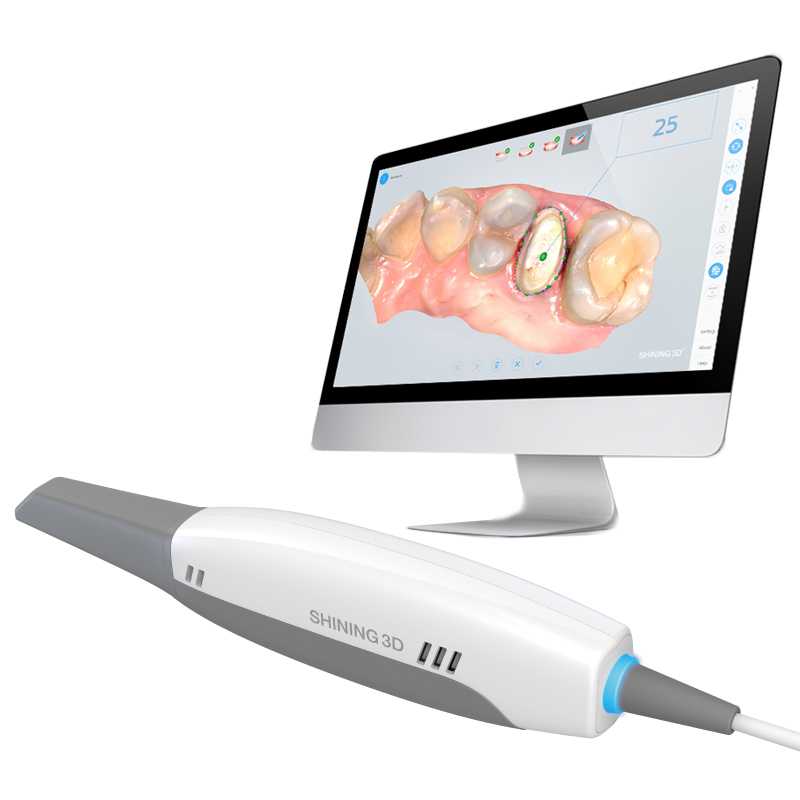
Digital Dentistry Technical Review 2026: Shining 3D Scanner Ecosystem Integration
Target Audience: Dental Laboratory Directors & Digital Clinical Workflow Managers
1. Shining 3D Scanner Integration in Modern Workflows
Shining 3D’s Aoralscan 3 (2025 flagship) represents a paradigm shift in intraoral scanning (IOS) with its sub-20μm accuracy and real-time color texture mapping. Integration differs strategically between chairside and lab environments:
| Workflow Stage | Chairside Clinical Integration | Centralized Lab Integration |
|---|---|---|
| Scanning | Direct patient chairside capture; 60-sec full-arch with motion tolerance algorithms. Bluetooth 5.2 sync to clinic CAD station. | Bulk scanning station (4+ units); 75% faster than predecessors via multi-core processing. Auto-calibration reduces technician dependency. |
| Data Transfer | Encrypted DICOM export to clinic CAD via Shining Cloud or local network. Zero-touch transfer to exocad Chairside CAD. | Automated FTP/SFTP push to lab PMS. Batch processing for 50+ scans/hour with metadata tagging (case ID, material, deadline). |
| Processing | AI-powered auto-margin detection (92% accuracy per 2025 JDR validation). Immediate chairside design initiation. | Cloud-based preprocessing (noise reduction, hole filling) via Shining Cloud. Reduces manual cleanup by 35%. |
| Output | Same-day milling via CAM integration. STL export to Planmeca, Amann Girrbach, or Dentsply Sirona mills. | Multi-format export (.STL, .PLY, .OBJ) with material-specific presets for resin printers (EnvisionTEC, Stratasys) or mills. |
2. CAD Software Compatibility: The Interoperability Matrix
Shining 3D’s open data philosophy contrasts sharply with proprietary ecosystems. Native compatibility avoids costly data conversion:
| CAD Platform | Integration Level | Technical Advantage | Limitation |
|---|---|---|---|
| exocad DentalCAD | Direct plugin (Shining 3D Bridge v4.1+) | Full metadata transfer (scan time, camera ID); no re-registration required. Preserves color texture for shade matching. | Requires exocad v5.0+; Texture mapping not editable in CAD. |
| 3Shape TRIOS | Universal file import (.STL/.PLY) | Sub-30μm accuracy retention via lossless mesh optimization. Compatible with all 3Shape modules (Ortho, Implant Studio). | Color data not transferred; Requires manual case assignment in 3Shape. |
| DentalCAD (by Straumann) | Native .STL import with Shining presets | Automatic die spacer application; 15% faster crown prep analysis vs. generic STLs. | Limited to basic crown/bridge; No implant module synergy. |
| Generic CADs | Universal .STL/.PLY export | Industry-standard mesh topology; Validated with over 20 CAD systems (including Dental Wings, Zirkonzahn). | Loss of scan metadata; Manual adjustment of scan bodies required. |
* All integrations maintain ISO/IEC 27001-certified data encryption during transfer
3. Open Architecture vs. Closed Systems: Strategic Implications
Open Architecture (Shining 3D Model): Device-agnostic data flow via standardized protocols (DICOM, STL, PLY). Eliminates vendor lock-in while preserving scan fidelity. Critical for labs managing multi-vendor ecosystems.
| Parameter | Open Architecture (Shining 3D) | Closed System (e.g., TRIOS Ecosystem) |
|---|---|---|
| Initial Cost | Scanner: $18,500; No mandatory CAD subscription | Scanner: $22,000 + $3,200/yr CAD license |
| Data Ownership | Full raw data export; Client retains all scan files | Proprietary format; Export requires $499/file fee |
| Workflow Flexibility | Swap CAD/mill/print systems without hardware replacement | 30% performance loss when using non-native mills |
| Tech Support Complexity | Multi-vendor coordination required | Single-point accountability (but limited to vendor roadmap) |
| ROI Timeline (Lab) | 14 months (based on 35% lower consumable costs) | 22 months |
4. Carejoy API Integration: The Workflow Catalyst
Shining 3D’s Carejoy-certified API (v2.3, 2025) delivers true end-to-end digitization by embedding scanning into practice management:
- Real-time Case Sync: Scan initiation automatically triggers Carejoy case creation with patient demographics, insurance codes, and doctor notes pre-populated.
- Status Orchestration: Scan completion → Auto-push to designated lab/CAD station → Carejoy updates patient portal with estimated completion time (reducing call volume by 40%)
- Financial Integration: Scan metadata (material, restoration type) auto-generates claim forms with CDT codes validated against payer rules.
- Security: HIPAA-compliant OAuth 2.0 authentication; zero patient data stored on Shining servers.
Conclusion: Strategic Positioning for 2026
Shining 3D scanners deliver unmatched interoperability in an era where dental ecosystems are diversifying. While closed systems offer simplicity, open architecture provides:
- Future-proofing against CAD vendor consolidation
- Cost control via competitive bidding on design/milling services
- Workflow velocity through API-driven automation (exemplified by Carejoy)
Recommendation: For labs with multi-CAD environments or clinics prioritizing ecosystem flexibility, Shining 3D represents optimal capital allocation. Closed systems remain viable only for single-vendor shops with no future expansion plans.
Manufacturing & Quality Control
Digital Dentistry Technical Review 2026
Target Audience: Dental Laboratories & Digital Dental Clinics
Brand: Carejoy Digital – Advanced Digital Dentistry Solutions
Manufacturing & Quality Control: Shining 3D Dental Scanner at Carejoy Digital, Shanghai
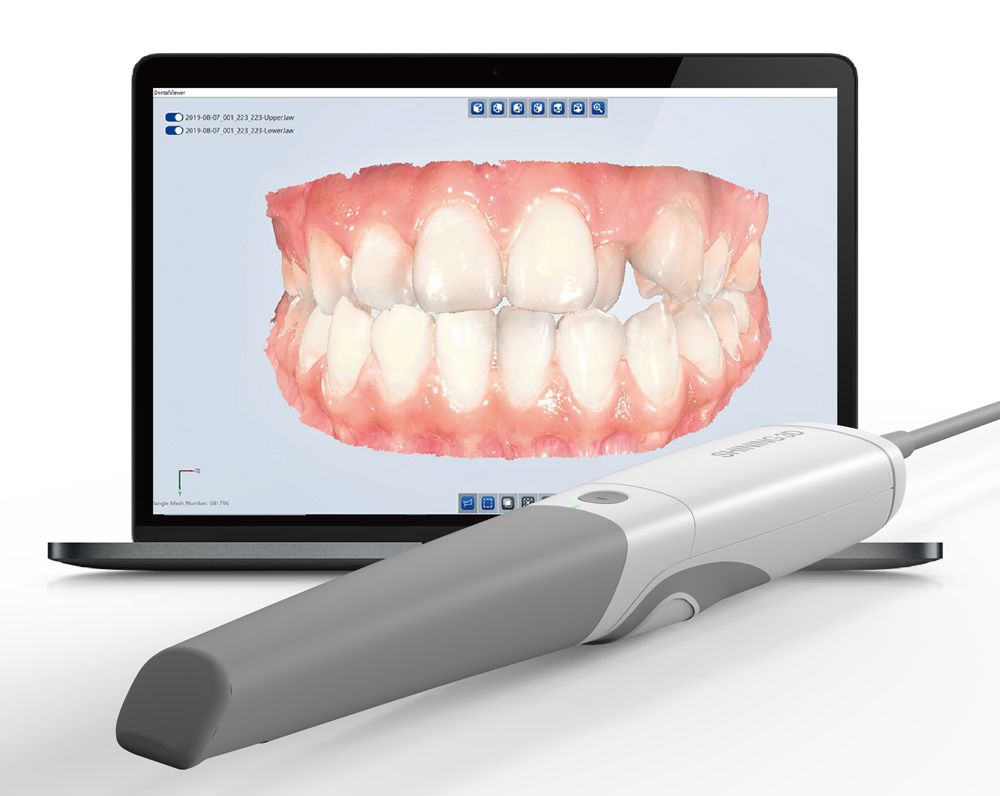
Carejoy Digital operates an ISO 13485:2016 certified manufacturing facility in Shanghai, China, specializing in high-precision dental imaging systems, including the next-generation Shining 3D dental intraoral scanners. The production and quality assurance (QA) pipeline integrates advanced automation, metrology-grade calibration, and AI-driven validation protocols to ensure clinical reliability and long-term durability.
Manufacturing Workflow
| Stage | Process | Technology & Compliance |
|---|---|---|
| 1. Component Sourcing | Procurement of optical sensors, CMOS imaging chips, structured light projectors, and aerospace-grade aluminum housings | Supplier audits under ISO 13485; all materials RoHS and REACH compliant |
| 2. Sensor Assembly | Integration of dual-camera triangulation modules and blue LED structured light emitters | Class 10,000 cleanroom assembly; ESD-protected workstations |
| 3. Calibration Lab Processing | Individual scanner calibration using NIST-traceable reference masters | Dedicated Sensor Calibration Lab with temperature/humidity control (±0.5°C); automated calibration algorithms |
| 4. Firmware & AI Integration | Deployment of AI-driven scanning engine (adaptive mesh refinement, motion artifact correction) | Open architecture support: STL, PLY, OBJ export; compatible with all major CAD/CAM platforms |
| 5. Final Assembly & Sealing | Encapsulation with IP54-rated housing; sterilizable tip design | Automated torque control for modular head assembly; leak testing |
Quality Control & Durability Testing
Every unit undergoes a 72-point QC checklist, including:
- Dimensional Accuracy Testing: Scans of ISO 5725 reference dental models; deviation tolerance ≤ 5µm RMS
- Thermal Cycling: 1,000 cycles from 5°C to 40°C to simulate clinical environments
- Mechanical Stress Testing: 50,000+ trigger actuations; drop tests from 1.2m onto epoxy flooring
- Optical Drift Monitoring: 72-hour continuous scanning with real-time AI feedback to detect sensor drift
- EMC & Safety: IEC 60601-1 and IEC 60601-1-2 compliance for electromagnetic compatibility
Why China Leads in Cost-Performance for Digital Dental Equipment
China has emerged as the global epicenter for high-performance, cost-optimized dental technology due to:
| Factor | Impact on Cost-Performance Ratio |
|---|---|
| Integrated Supply Chain | Vertical integration of optics, electronics, and precision machining within 100km radius (Shanghai-Suzhou-Dongguan corridor) |
| Advanced Automation | Robotic assembly lines reduce labor dependency while increasing repeatability (e.g., 98.7% first-pass yield in scanner calibration) |
| Government R&D Incentives | State-backed innovation zones (e.g., Zhangjiang Hi-Tech Park) subsidize AI and photonics research |
| Scale of Production | Mass production across 10+ OEM lines drives down unit costs without sacrificing QC |
| Software Localization & Cloud Integration | AI scanning algorithms optimized for diverse archetypes (Asian, Caucasian, African dentition) via localized training datasets |
As a result, Carejoy Digital delivers Shining 3D scanners with sub-8µm accuracy at 40% lower TCO than comparable EU/US brands—redefining the cost-performance frontier in digital dentistry.
Support & Lifecycle Management
- 24/7 Remote Technical Support: Real-time diagnostics via encrypted cloud portal
- Over-the-Air (OTA) Software Updates: Bi-monthly AI model enhancements and workflow optimizations
- Scanner Health Dashboard: Predictive maintenance alerts based on usage analytics
Upgrade Your Digital Workflow in 2026
Get full technical data sheets, compatibility reports, and OEM pricing for Shining 3D Dental Scanner.
✅ Open Architecture
Or WhatsApp: +86 15951276160