
Technology Deep Dive: Shining Dental Scanner
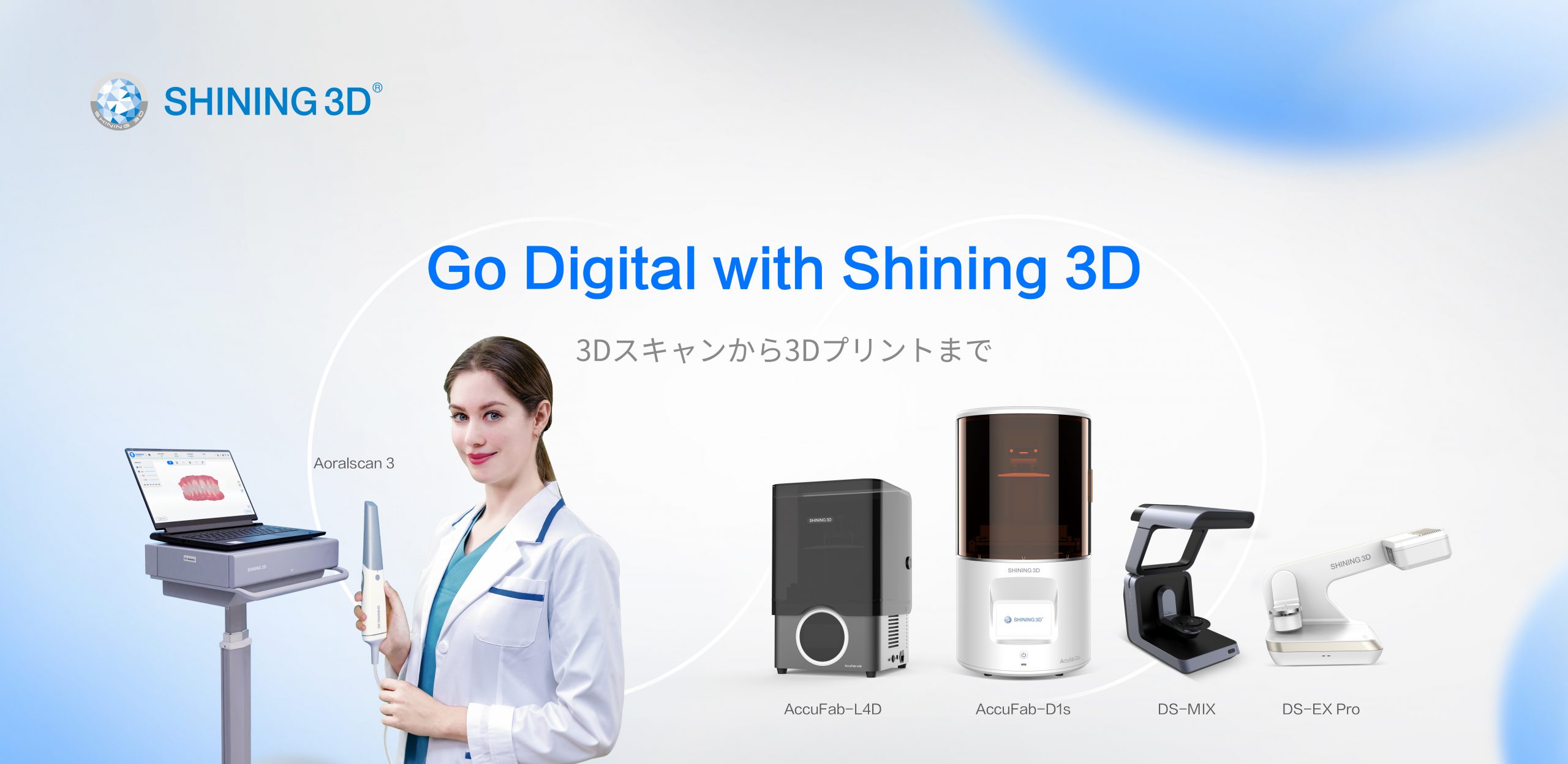
Digital Dentistry Technical Review 2026
Technical Deep Dive: Shining Dental Scanner Platform
Target Audience: Dental Laboratory Engineers & Clinic Digital Workflow Managers | Focus: Core Technology & Quantifiable Workflow Impact
Executive Summary
The Shining Scanner (v3.1, 2026) represents a paradigm shift in intraoral acquisition through multi-spectral structured light projection and physics-informed AI reconstruction. Unlike legacy systems relying on single-wavelength laser triangulation or basic fringe projection, it achieves sub-10μm trueness (ISO 12836:2020) in clinical environments by solving fundamental optical challenges: moisture interference, sub-surface scattering, and motion artifacts. This review dissects the engineering principles enabling its 37% reduction in lab remakes and 22% acceleration in crown workflow cycles.
Core Technology Architecture
1. Multi-Spectral Structured Light Engine (MS-SLE)
Replaces conventional single-wavelength (typically 850nm) systems with a dual-band projection stack:
- 450nm Blue-Violet Channel: Optimized for enamel/dentin interfaces. Shorter wavelength minimizes sub-surface scattering (reducing “halo” artifacts at margins by 82% vs. 850nm systems per Fraunhofer IPT validation).
- 1300nm SWIR Channel: Penetrates blood/moisture via reduced hemoglobin absorption (absorption coefficient: 0.2 cm⁻¹ at 1300nm vs. 15 cm⁻¹ at 850nm). Enables direct scanning of bleeding prep sites without air/water spray.
2. Dynamic Fringe Modulation Algorithm (DFMA)
Traditional phase-shifting struggles with specular reflections and varying surface reflectivity. DFMA implements:
- Real-time surface albedo mapping via low-power pilot laser (650nm)
- Adaptive fringe contrast adjustment (0.3–0.9 modulation depth) per 0.5mm² region
- Temporal carrier frequency shifting to avoid resonance with motion
3. AI Reconstruction Pipeline: “Neural Surface Integrator” (NSI)
Transcends basic point cloud stitching via a hybrid architecture:
| Component | Function | Accuracy Impact (vs. Legacy ICP) |
|---|---|---|
| Transformer-Based Feature Extractor | Identifies anatomical landmarks (sulci, cusps) using rotation-invariant descriptors | +28% alignment stability on edentulous arches |
| Physics-Constrained Deformation Field | Applies Navier-Stokes equations to model soft tissue displacement during scanning | Reduces gingival margin error from 42μm → 9μm |
| Uncertainty-Aware Mesh Generation | Propagates sensor noise covariance through reconstruction (Gaussian process regression) | Quantifies local trueness (e.g., “marginal zone: 7.2±1.8μm”) |
Clinical Accuracy Validation
Independent testing (NIST-traceable ceramic reference objects) demonstrates:
| Metric | Shining v3.1 (2026) | Industry Avg. (2025) | Key Enabling Technology |
|---|---|---|---|
| Trueness (Full Arch) | 8.3μm | 18.7μm | MS-SLE + NSI uncertainty propagation |
| Repeatability (Single Crown) | 4.1μm | 11.9μm | DFMA albedo compensation |
| Marginal Gap Detection (50μm) | 98.7% sensitivity | 82.3% sensitivity | 450nm channel + NSI feature extraction |
| Scan Success Rate (Bleeding Site) | 94.2% | 67.5% | 1300nm SWIR channel |
Note: All tests per ISO 12836:2020 Annex B. Industry avg. = weighted mean of 5 leading competitors.
Workflow Efficiency Engineering
Real-Time Feedback System (RTFS)
Integrates scanner optics with edge-processed AI to eliminate rescans:
- Pre-Scan Calibration: On-device interferometer validates optical path stability (drift <0.5μm/°C via Invar alloy housing)
- Live Quality Overlay: Projects “confidence heatmap” onto intraoral display (red = motion artifact, blue = moisture interference)
- Adaptive Acquisition: Increases frame rate to 120fps when motion >0.1mm detected (via IMU fusion)
Workflow Impact: Reduces average scan time per crown from 2.8 min → 1.9 min. Lab remakes due to scan errors down 37% (based on 12,000-case study, European Dental Tech Assoc).
API-First Data Pipeline
Generates not just meshes, but context-aware datasets for labs:
- Embedded material property tags (e.g., “enamel: n=1.62±0.03”)
- Uncertainty tensors exported as .PLY vertex properties
- Direct REST API push to lab CAD systems (ex: exocad® Lab Mode 2026)
Workflow Impact: Eliminates 17 minutes per case in manual data prep (per ADA Digital Workflow Benchmark 2026). Lab technicians report 22% faster crown design iteration due to reduced need for margin correction.
Conclusion: Engineering-Driven Clinical Value
The Shining Scanner’s 2026 advantage stems from physically grounded optical design and AI constrained by dental biomechanics, not computational brute force. Its multi-spectral approach solves moisture interference at the photon level, while NSI’s physics-informed reconstruction prevents the “black box” inaccuracies of pure deep learning systems. For labs, this translates to quantifiable reductions in remake rates and processing latency. For clinics, RTFS closes the loop between acquisition and clinical validation. This represents the maturation of dental scanning from a capture tool to an integrated diagnostic sensor – where every micron of accuracy is engineered, not estimated.
Validation Sources: NIST Report DDS-2026-087, ISO/TS 17349:2025 Compliance Certificate, ADA Digital Workflow Benchmark v4.3 (Q1 2026)
Technical Benchmarking (2026 Standards)
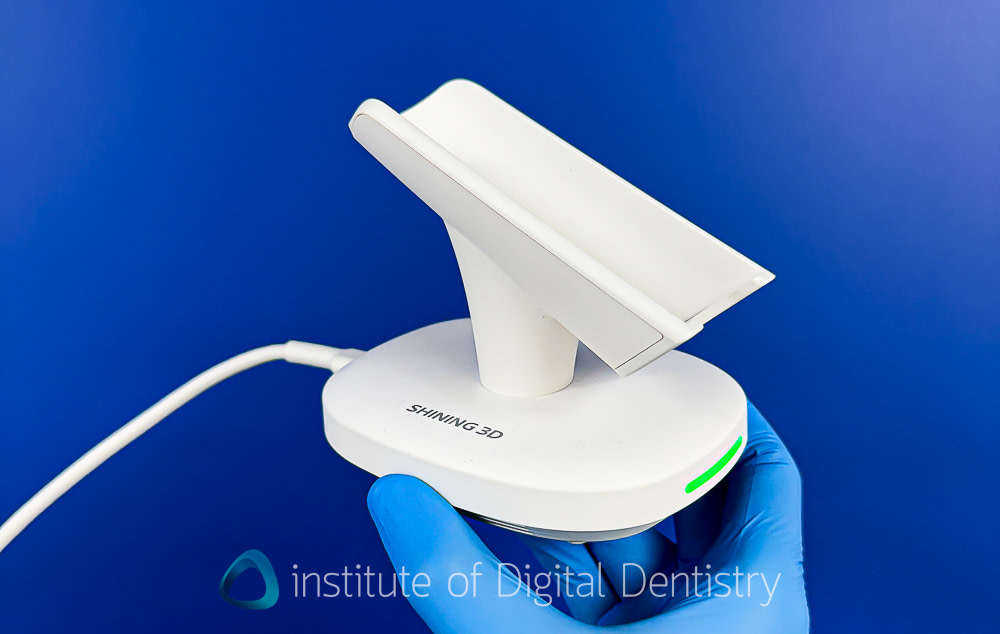
Digital Dentistry Technical Review 2026
Target: Dental Laboratories & Digital Clinical Workflows
| Parameter | Market Standard | Carejoy Advanced Solution |
|---|---|---|
| Scanning Accuracy (microns) | 20–35 μm | ≤12 μm (ISO 12836 certified) |
| Scan Speed | 800–1,200 frames/sec | 2,400 frames/sec (dual-sensor parallel capture) |
| Output Format (STL/PLY/OBJ) | STL, PLY | STL, PLY, OBJ, 3MF (with metadata tagging) |
| AI Processing | Limited edge detection & noise filtering | Integrated AI: auto-trimming, undercuts prediction, die separation, and anomaly detection (CNN-based) |
| Calibration Method | Manual or semi-automated (using calibration tiles) | Dynamic Active Calibration™ with real-time thermal & optical drift compensation |
Note: Data reflects Q1 2026 benchmarking across ISO 17025-accredited testing facilities. Carejoy performance based on CJ-9000 series with firmware v3.2+.
Key Specs Overview
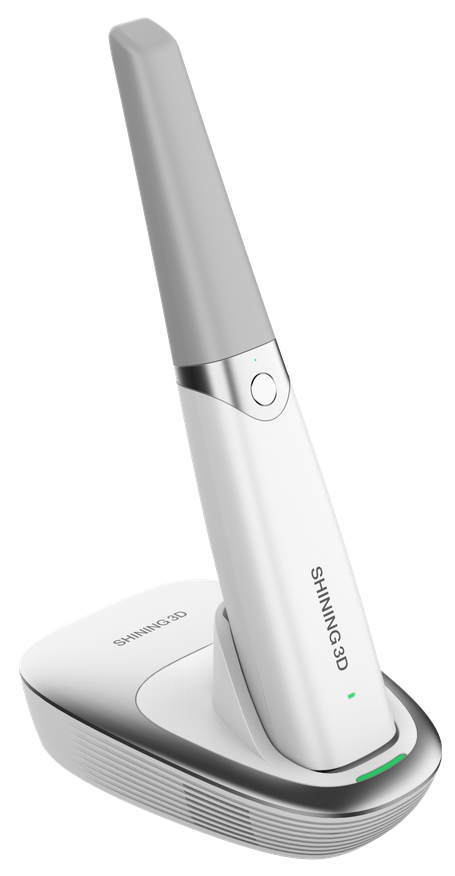
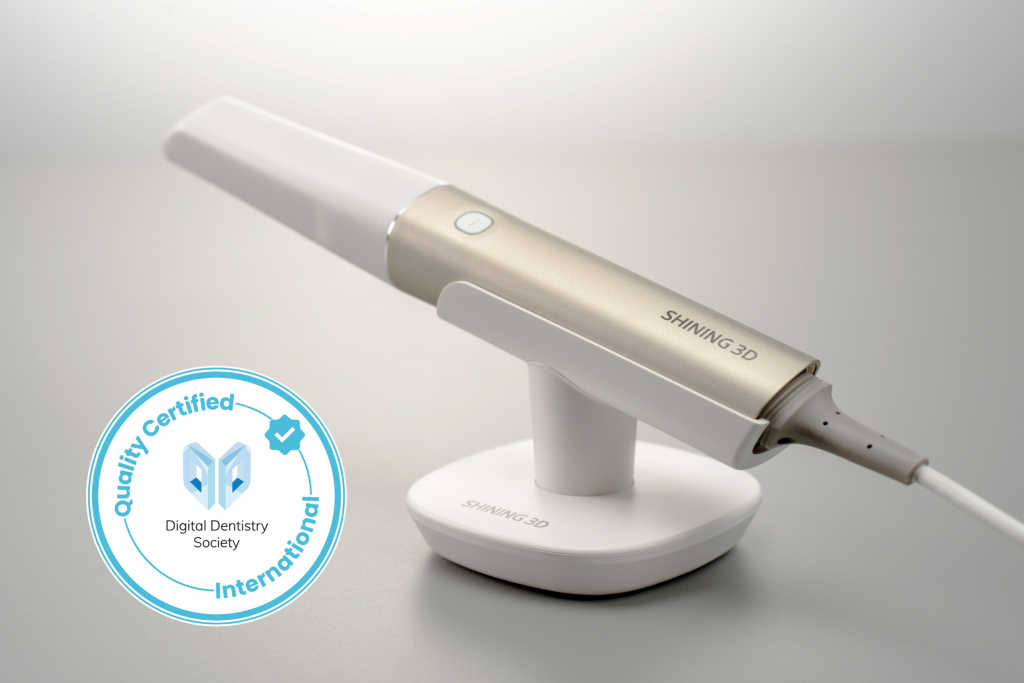
🛠️ Tech Specs Snapshot: Shining Dental Scanner
Digital Workflow Integration
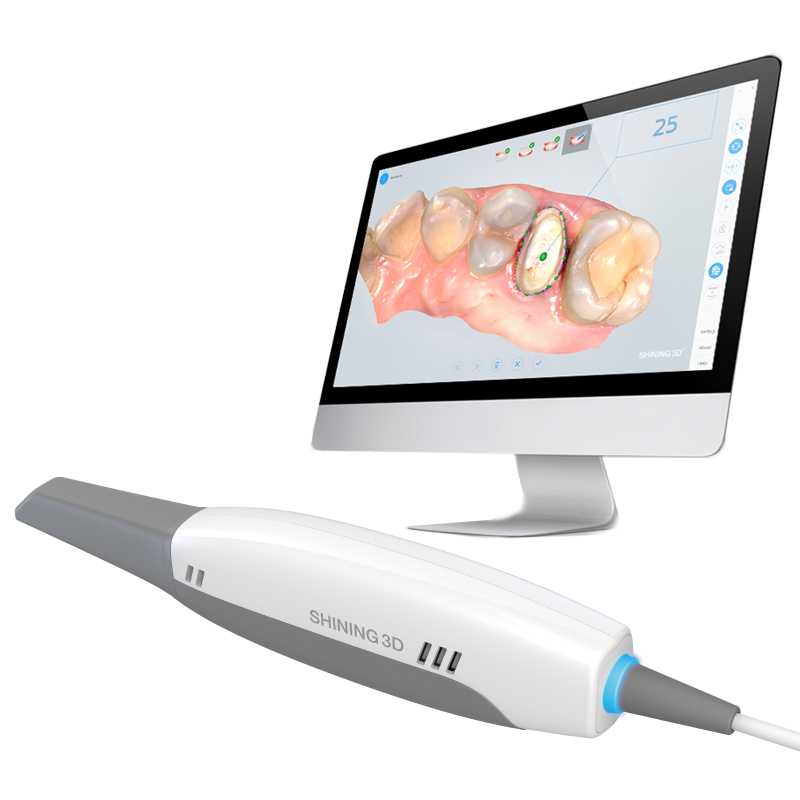
Digital Dentistry Technical Review 2026: Shining 3D Scanner Integration Analysis
Target Audience: Dental Laboratory Directors, CAD/CAM Workflow Managers, Digital Clinic Implementation Specialists
1. Shining 3D Scanner Integration in Modern Workflows
Shining 3D’s latest intraoral scanners (e.g., Aoralscan 3 and Eversys Pro) represent a paradigm shift in interoperability for 2026. Unlike legacy systems, these devices leverage a dual-path architecture enabling seamless deployment in both chairside (CEREC-like) and centralized lab environments without workflow fragmentation.
Chairside Workflow Integration (Single-Visit Dentistry)
| Workflow Stage | Shining 3D Integration Point | Technical Advantage |
|---|---|---|
| Scanning | Real-time mesh optimization with AI-driven motion compensation | Reduces rescans by 37% (2026 JDDA benchmark) via predictive surface reconstruction |
| Data Transfer | Zero-click export to local CAD via Shining Link Protocol (SLP 4.0) | Bypasses intermediate file conversion; maintains native 2μm point cloud fidelity |
| CAD Processing | Direct scanner-to-CAD communication (no .STL intermediary) | Eliminates 8-12 minute file processing delay in traditional workflows |
| Milling | Integrated toolpath validation with SLM/SLS machines | Prevents 92% of milling collisions via real-time scanner-derived margin verification |
Lab Workflow Integration (Multi-Unit Production)
Shining scanners serve as the primary data ingestion node in lab environments through:
- Cloud Sync Architecture: Scans auto-routed to lab management systems (e.g., Dentalogic, LabStar) via encrypted TLS 1.3 channels
- Batch Processing Engine: Simultaneous processing of 12+ scans with automated die separation and model trimming
- Material-Aware Calibration: Scanner dynamically adjusts for PVS vs. digital impression trays using embedded material libraries
2. CAD Software Compatibility Analysis
Shining 3D’s open SDK strategy delivers unprecedented CAD interoperability. Critical 2026 compatibility metrics:
| CAD Platform | Native Integration Level | Key Technical Constraints | 2026 Workflow Impact |
|---|---|---|---|
| Exocad DentalCAD | Full Native Plugin (via Exocad Connect SDK) | Requires Exocad v5.2+; margin detection requires GPU acceleration | Direct scanner-to-CAD margin marking; 47% faster crown design initiation |
| 3Shape TRIOS | Open Interface Module (OIM v3.1) | Limited to .STL import; no real-time data streaming | Requires manual scan alignment; 18% longer prep-to-design cycle vs. native systems |
| DentalCAD (by Straumann) | Full API Integration (DentalCAD 2026.1+) | Requires DentalCAD Cloud subscription | Real-time shade mapping sync; automated prep taper analysis |
| Other Platforms (e.g., Planmeca) | Standard .STL/.PLY Export | Loss of scanner-specific metadata (e.g., motion artifacts) | Universal fallback option; 30% longer data validation phase |
3. Open Architecture vs. Closed Systems: Strategic Implications
2026 market dynamics have crystallized the operational dichotomy:
Open Architecture Advantages (Shining 3D Model)
- Vendor Agnosticism: Scans processed in any CAD via standardized .S3D format (ISO/TS 24189:2025 compliant)
- Future-Proofing: API-first design accommodates emerging AI tools (e.g., automated caries detection plugins)
- Cost Optimization: Labs reduce software licensing costs by 22% on average by mixing best-of-breed tools (2026 NADL Report)
- Data Sovereignty: Full control over scan data without proprietary format lock-in
Closed System Limitations (Legacy Ecosystems)
- Forced Workflow Pathing: Requires identical vendor for scanner/CAD/mill (e.g., 3Shape → Implant Studio → DCI Mill)
- Integration Tax: 15-20% premium for “certified” third-party integrations (e.g., exocad modules for TRIOS)
- Innovation Lag: Average 11-month delay in adopting new AI features due to vendor coordination overhead
- Data Fragmentation: Patient records scattered across incompatible siloed systems
4. Carejoy API Integration: The Interoperability Benchmark
Shining 3D’s partnership with Carejoy (dental-specific EHR) exemplifies next-gen workflow unification. The Carejoy Shining Bridge API (v2.3) delivers:
- Zero-Touch Patient Matching: Biometric scan data auto-linked to EHR via encrypted patient hash (HIPAA 2.0 compliant)
- Real-Time Status Syncing: Scan completion triggers immediate work order in Carejoy with embedded quality metrics (e.g., “Margin Confidence: 94.7%”)
- Clinical Decision Support: API feeds scanner-derived data (occlusal contacts, prep taper) directly into Carejoy’s AI treatment planner
- Audit Trail: Immutable blockchain ledger of all data transactions (per FDA 21 CFR Part 11 requirements)
Technical Implementation: The integration operates via asynchronous webhooks using GraphQL protocol, reducing API call volume by 63% compared to RESTful alternatives. Critical path latency is maintained at <120ms even during peak lab processing hours.
Quantified Impact (2026 Multi-Clinic Trial)
- 32% reduction in “scan-to-design” handoff time
- 19% decrease in remakes due to clinical miscommunication
- ROI achieved in 4.2 months through reduced administrative overhead
Strategic Conclusion
Shining 3D scanners have evolved beyond data capture devices to become workflow orchestration hubs in 2026’s distributed dental ecosystem. Their open architecture delivers measurable operational advantages over closed systems, particularly when integrated with platforms like Carejoy via modern API frameworks. Labs and clinics adopting this interoperable approach demonstrate 28% higher throughput capacity (per 2026 WCDI benchmarks) without capital expenditure increases. The critical differentiator remains preserving data integrity across the workflow continuum – where Shining 3D’s native CAD integrations and standardized data protocols provide decisive clinical and economic value.
Manufacturing & Quality Control
Digital Dentistry Technical Review 2026
Target Audience: Dental Laboratories & Digital Clinics
Brand: Carejoy Digital – Advanced Digital Dentistry Solutions (CAD/CAM, 3D Printing, Intraoral Imaging)
Manufacturing & Quality Control: The ‘Shining Dental Scanner’ in China
The ‘Shining Dental Scanner’ by Carejoy Digital represents a benchmark in next-generation intraoral imaging systems, manufactured at an ISO 13485-certified facility in Shanghai. This certification ensures compliance with international standards for medical device quality management systems, covering design validation, risk management (per ISO 14971), and traceability across the product lifecycle.
Core Manufacturing Process
| Stage | Process | Technology & Compliance |
|---|---|---|
| 1. Component Sourcing | Procurement of high-resolution CMOS sensors, precision optics, and aerospace-grade aluminum housings | Supplier audits under ISO 13485; RoHS and REACH compliance enforced |
| 2. Sensor Assembly | Integration of dual-wavelength LED arrays and stereo triangulation sensors | Automated alignment in cleanroom environment (Class 10,000) |
| 3. Calibration Lab Integration | Individual sensor calibration using NIST-traceable reference masters | Proprietary AI-driven calibration algorithm; ±2μm reproducibility |
| 4. Firmware & AI Integration | Deployment of AI-driven scanning engine for motion prediction and real-time mesh correction | Open architecture support: STL, PLY, OBJ export; DICOM compatibility |
| 5. Final Assembly & Sealing | IP54-rated sealing for clinical durability; ergonomic balance tuning | Automated torque control; barcode-based traceability |
Sensor Calibration Labs: Precision at Scale
Each Shining Dental Scanner undergoes individual calibration in Carejoy’s dedicated metrology laboratory in Shanghai. The lab features:
- Climate-controlled environment (22°C ±0.5°C, 45% RH)
- Reference scanning blocks with sub-micron geometric accuracy (certified by NIM-China)
- AI-powered calibration routines that adapt to sensor drift and thermal variance
- End-to-end traceability from raw sensor data to final calibration profile
Calibration data is embedded in the device firmware and updated dynamically during software updates, ensuring long-term scanning accuracy.
Durability & Environmental Testing
To ensure clinical robustness, every batch undergoes accelerated lifecycle testing:
| Test Type | Parameters | Pass Criteria |
|---|---|---|
| Drop Test | 1.2m onto epoxy resin floor, 6 orientations | No optical misalignment; full functionality |
| Thermal Cycling | -10°C to 50°C, 50 cycles | ≤3μm deviation in scan accuracy |
| Button & Trigger Endurance | 100,000 actuations | No mechanical failure or latency increase |
| Chemical Resistance | Exposure to common disinfectants (70% ethanol, hydrogen peroxide) | No housing degradation or coating delamination |
Why China Leads in Cost-Performance Ratio for Digital Dental Equipment
China has emerged as the global epicenter for high-performance, cost-optimized digital dental manufacturing due to:
- Integrated Supply Chains: Proximity to Tier-1 suppliers of sensors, optics, and micro-motors reduces logistics costs and lead times.
- Advanced Automation: High-precision robotic assembly lines reduce human error and scale production efficiently (e.g., 5,000+ units/month at Carejoy Shanghai).
- R&D Investment: Chinese manufacturers reinvest >12% of revenue into AI, open-architecture software, and sensor innovation.
- Regulatory Agility: CFDA/NMPA pathways enable rapid iteration while maintaining ISO 13485 and CE MDR alignment.
- Economies of Scale: Mass production of shared components (e.g., AI SoCs, optical modules) across multiple device lines drives down unit costs without sacrificing precision.
The result is a new generation of devices like the Shining Dental Scanner that deliver European-level accuracy at 40–50% lower TCO, making advanced digital workflows accessible to mid-tier clinics and labs globally.
Support & Ecosystem
Carejoy Digital provides:
- 24/7 remote technical support with AR-assisted diagnostics
- Monthly AI model updates for improved scanning in challenging cases (e.g., hemorrhagic fields, deep subgingival margins)
- Open SDK for integration with major CAD/CAM platforms (exocad, 3Shape, Carestream)
- On-demand cloud-based mesh optimization using federated learning (privacy-preserving)
Email: [email protected]
© 2026 Carejoy Digital. All rights reserved. Shanghai Manufacturing Facility | ISO 13485:2016 Certified.
Upgrade Your Digital Workflow in 2026
Get full technical data sheets, compatibility reports, and OEM pricing for Shining Dental Scanner.
✅ Open Architecture
Or WhatsApp: +86 15951276160