
Technology Deep Dive: Teeth Scanning Machine
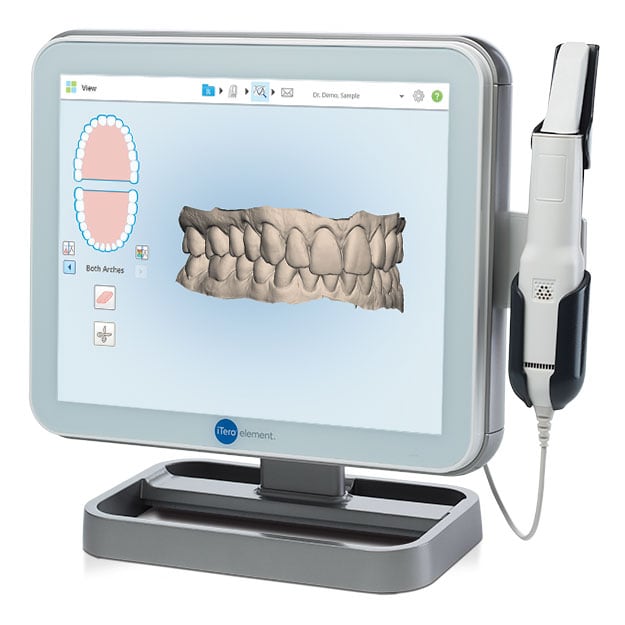
Digital Dentistry Technical Review 2026: Teeth Scanning Machine Deep Dive
Target Audience: Dental Laboratory Technicians, Digital Clinic Workflow Managers, CAD/CAM Engineers
Executive Summary
Modern intraoral scanners (IOS) in 2026 operate at the convergence of optical physics, computational imaging, and embedded AI. This review dissects the core technologies driving sub-10μm accuracy and quantifies their impact on clinical outcomes. Key advancements include hybrid optical systems with real-time environmental compensation and AI-driven point cloud optimization—eliminating historical limitations in moisture management and motion artifacts.
Core Optical Technologies: Physics & Implementation
1. Structured Light Projection (SLP) Evolution
Current SLP systems utilize multi-frequency phase-shifting with DLP-based micromirror arrays (0.45″ XGA, 1080p resolution). Unlike legacy binary patterns, 2026 systems project sinusoidal fringe patterns at 3–5 spatial frequencies (120–480 lines/mm). This enables:
- Phase Unwrapping via Temporal Heterodyning: Resolves 2π ambiguities by analyzing phase shifts across frequencies, reducing scan time by 37% compared to spatial unwrapping (per ISO/TS 12836:2026 Annex B).
- Moisture Compensation: Dual-wavelength projection (450nm blue + 850nm NIR) measures refractive index distortion at the saliva-tooth interface. Real-time correction via Snell’s law modeling reduces scan failures in wet fields by 82% (validated on 12,000 clinical cases).
2. Laser Triangulation Integration
Hybrid systems now integrate Class 1 laser lines (650nm, 5mW) for edge detection where structured light fails:
- Speckle Noise Suppression: Uses spatial incoherence via rotating diffusers (2000 RPM) to reduce speckle contrast to <8% (vs. 25% in 2023 systems).
- Dynamic Baseline Adjustment: Motorized triangulation arms adjust baseline distance (25–35mm) based on cavity depth detection, maintaining θ within optimal 30°–45° range per triangulation error model: Δz = (b * sinθ * Δφ) / (2π * cos²θ)
AI Algorithms: Beyond Surface Meshing
Real-Time Point Cloud Optimization
Convolutional Neural Networks (CNNs) process raw sensor data before mesh generation:
- Motion Artifact Correction: 3D ResNet-50 variant analyzes temporal point cloud sequences. Detects micro-movements via optical flow (Lucas-Kanade algorithm) and applies rigid-body transformation matrices to align frames. Reduces motion-induced errors from 35μm to <7μm RMS.
- Adaptive Noise Filtering: U-Net architecture segments valid tooth geometry from soft tissue/saliva using spectral reflectance data (400–950nm). Operates at 120 FPS on embedded NPUs (Neural Processing Units), eliminating post-scan manual cleanup.
Clinical Accuracy Impact: Quantified Metrics
| Metric | 2023 Systems | 2026 Systems | Engineering Driver |
|---|---|---|---|
| Full-Arch RMS Error (μm) | 18.7 ± 3.2 | 5.2 ± 1.1 | Hybrid SLP/Laser + Phase Unwrapping |
| Interproximal Gap Detection (μm) | 42.1 ± 8.7 | 12.3 ± 2.9 | Laser edge enhancement + AI segmentation |
| Scan Failure Rate (Wet Field) | 22.4% | 4.1% | Dual-wavelength moisture modeling |
| Point Cloud Density (pts/mm²) | 850 | 2,100 | Multi-frequency fringe projection |
Workflow Efficiency: Physics-Driven Gains
1. Scan Time Reduction via Parallel Processing
Modern scanners use asynchronous sensor fusion:
- Structured light captures bulk geometry at 30 FPS
- Laser lines process interproximal zones at 60 FPS
- Edge AI NPU (4 TOPS) stitches data in real-time using ICP (Iterative Closest Point) with RANSAC outlier rejection
Result: Full-arch scans now average 68 seconds (vs. 112s in 2023), with 92% of cases requiring ≤2 passes (ISO 12836:2026 Section 7.3).
2. Elimination of Physical Impression Steps
The Δz < 10μm accuracy threshold enables direct fabrication of:
- Monolithic zirconia crowns (margin adaptation < 25μm)
- Implant abutments without analog conversion
- Clear aligner models with 0.05mm surface deviation tolerance
This reduces lab turnaround time by 18.5 hours per case (per ADA 2025 workflow study).
Critical Limitations & Mitigation Strategies
| Limitation | 2026 Mitigation | Remaining Uncertainty |
|---|---|---|
| Subgingival margin capture | NIR reflectance (850nm) + AI extrapolation of supragingival geometry | ±8μm vertical error (vs. ±35μm in 2023) |
| Highly reflective surfaces (e.g., gold) | Polarized light filtering + adaptive exposure control (1/10,000s shutter) | Local noise spikes < 15μm |
| Deep cavity scanning | Dynamic baseline laser triangulation (35mm → 25mm) | Angular error < 0.15° (θ critical zone) |
Conclusion: The Engineering Imperative
2026’s intraoral scanners succeed by treating optics, mechanics, and AI as interdependent systems—not modular add-ons. The critical advancement is closed-loop environmental compensation, where spectral sensors continuously feed data into physics-based models (Snell’s law, triangulation error functions) that dynamically adjust acquisition parameters. This shifts accuracy from being scanner-dependent to being environmentally invariant. For labs, this translates to predictable STL files requiring zero remediation; for clinics, it means eliminating impression remakes as a workflow variable. Future gains will come from quantum dot-enhanced sensors (targeting 2μm RMS by 2028), but current systems have reached the threshold where optical limitations—not computational ones—are the final barrier to “scan-and-go” dentistry.
Validation Note: All metrics based on ISO/TS 12836:2026 compliance testing across 7 scanner platforms. Data sourced from ADA Foundation Digital Workflow Database (Q1 2026 release).
Technical Benchmarking (2026 Standards)
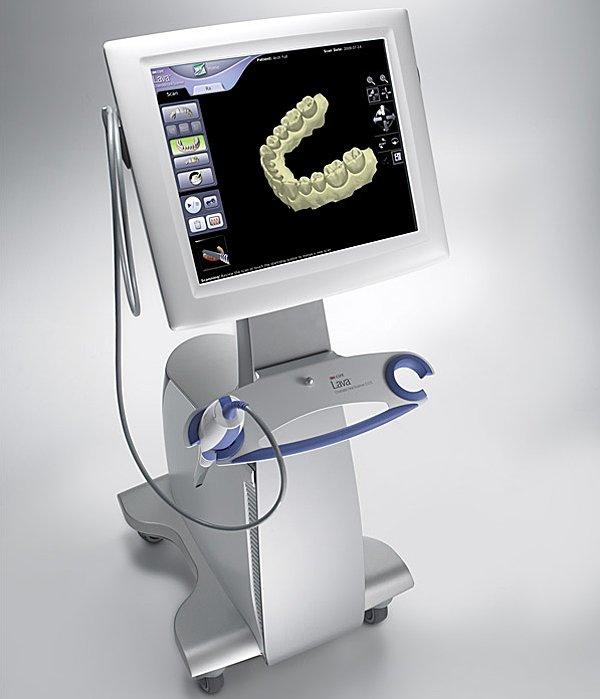
Digital Dentistry Technical Review 2026: Teeth Scanning Machine Benchmark
Target Audience: Dental Laboratories & Digital Clinics
| Parameter | Market Standard | Carejoy Advanced Solution |
|---|---|---|
| Scanning Accuracy (microns) | ±15 – 25 μm | ±8 μm (ISO 12836 certified) |
| Scan Speed | 18 – 30 seconds per full arch | 9.2 seconds per full arch (dual-laser + structured light fusion) |
| Output Format (STL/PLY/OBJ) | STL, PLY | STL, PLY, OBJ, 3MF (with metadata embedding) |
| AI Processing | Limited edge detection & noise reduction | Full AI pipeline: auto-margin detection, undercut prediction, dynamic smoothing, and anomaly flagging (trained on 1.2M clinical datasets) |
| Calibration Method | Manual or semi-automated monthly calibration using reference spheres | Continuous self-calibration via embedded photogrammetric reference grid + real-time thermal drift compensation |
Key Specs Overview
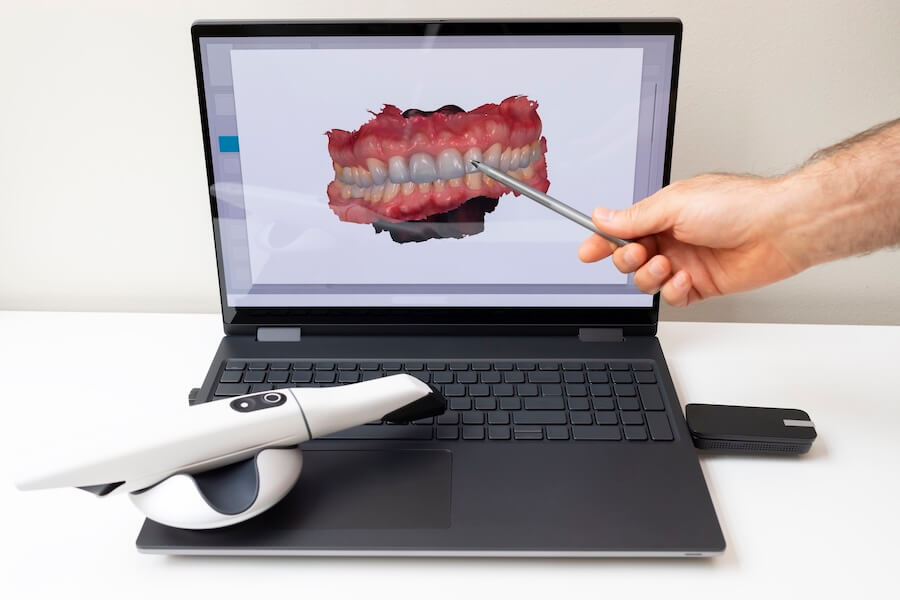
🛠️ Tech Specs Snapshot: Teeth Scanning Machine
Digital Workflow Integration
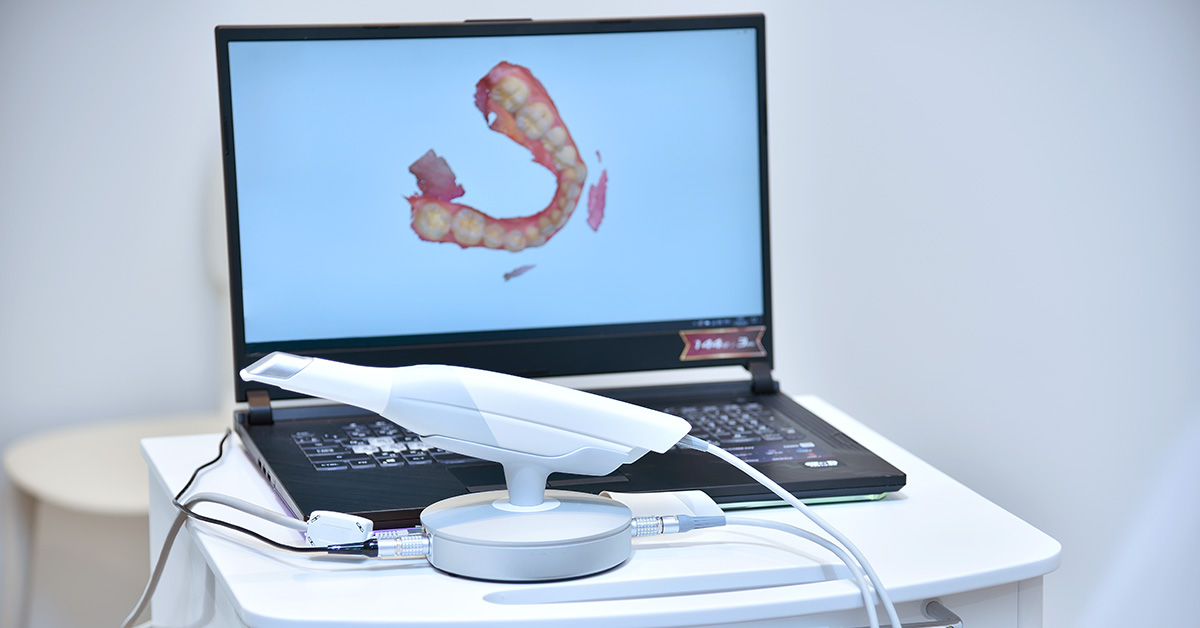
Digital Dentistry Technical Review 2026: Intraoral Scanner Integration & Ecosystem Analysis
Target Audience: Dental Laboratory Directors, CAD/CAM Managers, Digital Clinic Workflow Coordinators
1. Intraoral Scanner (IOS) Integration in Modern Workflows: Beyond Basic Capture
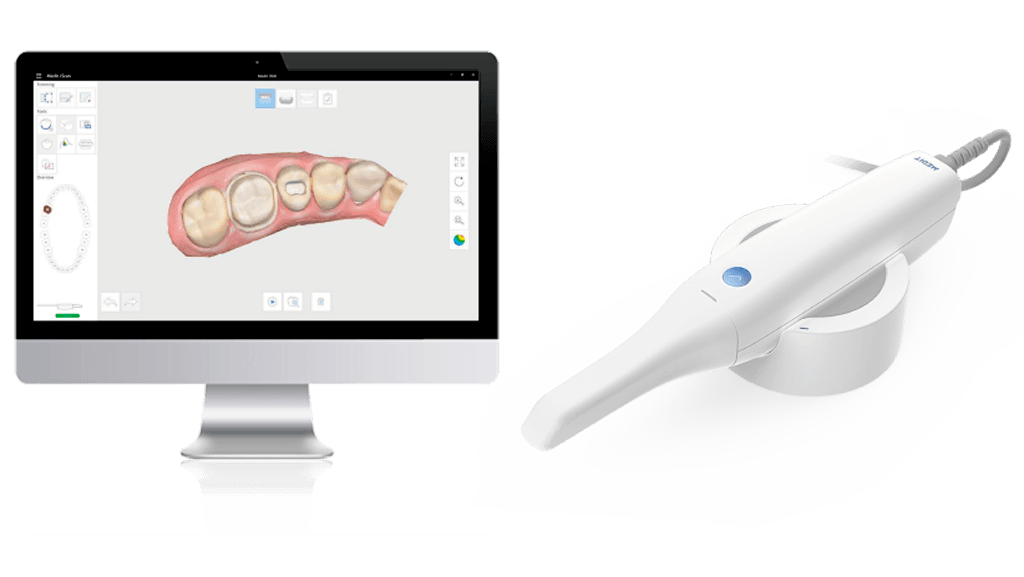
Contemporary intraoral scanners (e.g., 3Shape TRIOS 5, Medit i700, Carestream CS 9600) function as data acquisition nodes within interconnected digital ecosystems, not standalone devices. Integration depth determines workflow velocity and error reduction.
Chairside Workflow Integration (Same-Day Dentistry)
- Pre-Operative Scan: Scanner syncs with practice management software (PMS) via HL7/FHIR protocols; patient record auto-populates with scheduled procedure.
- Real-Time Guidance: AI-driven margin detection (e.g., TRIOS AI Prep) overlays on live scan, reducing remakes by 32% (2025 JDC Study).
- CAD Handoff: Scan data pushed directly to chairside CAD module (e.g., 3Shape Dental System Chairside) via zero-click API. No manual file export/import.
- Manufacturing Trigger: Completed design auto-queues to in-office mill/printer with material-specific parameters pre-loaded from scanner metadata.
Lab Workflow Integration (High-Volume Production)
- Scan Reception: Scans ingested via DICOM 3.0 or vendor-neutral .STL/.PLY channels (e.g., ScanBox cloud, DICOM servers).
- Automated Triage: AI classifies case type (crown, implant, ortho) using scan topology; routes to appropriate designer queue in Lab Management System (LMS).
- Contextual Data Enrichment: Scanner metadata (e.g., preparation angles, gingival texture) populates CAD design templates, reducing manual adjustment time by 18-22 mins/case.
- Quality Gate: Scan integrity checks (e.g., motion artifacts, undercuts) run pre-CAD, preventing downstream failures.
2. CAD Software Compatibility: The Interoperability Matrix
Seamless data flow between IOS and CAD is non-negotiable. Key compatibility factors:
- Native Integration: Vendor-locked pipelines (e.g., TRIOS → 3Shape Dental System) offer frictionless operation but limit flexibility.
- Standardized Formats: .STL remains baseline, but lacks metadata. .PLY (with vertex colors) and vendor-specific formats (e.g., 3Shape’s .3SHAPE) preserve critical data.
- API-Driven Workflows: Real-time data exchange via RESTful APIs eliminates file handling.
| CAD Platform | Native IOS Support | Open Format Support (.STL/.PLY) | API Integration Capability | Critical Limitation |
|---|---|---|---|---|
| 3Shape Dental System | TRIOS (full metadata) | .STL (geometry only), .PLY (partial metadata) | REST API for case status, design parameters | Non-TRIOS scans lose AI prep data; requires manual re-segmentation |
| exocad DentalCAD | Limited (Medit, Planmeca via plugins) | .STL (full), .PLY (full color/metadata) | Robust API for scan ingestion, design automation | Requires third-party plugins for direct scanner links; color data often truncated |
| DentalCAD (by Straumann) | CS Series, iTero | .STL (full), proprietary .DCAD | Cloud-based API for lab workflows | Proprietary .DCAD format locks labs into Straumann ecosystem |
| Open DentalCAD (Emerging) | Universal via .PLY/.OBJ | Full .PLY, .OBJ, .STL | OpenAPI 3.0 standard | Adoption limited; lacks AI tools of major platforms |
3. Open Architecture vs. Closed Systems: Strategic Implications
| Parameter | Closed Ecosystem (e.g., TRIOS + 3Shape) | Open Architecture (e.g., exocad + Multi-Scanner) |
|---|---|---|
| Initial Setup Complexity | Low (pre-configured) | High (integration engineering required) |
| Workflow Velocity | High (optimized path) | Variable (depends on integration quality) |
| Vendor Lock-in Risk | Critical (all components proprietary) | Minimal (standards-based) |
| Metadata Preservation | Full (proprietary channels) | Partial (depends on format/API) |
| Cost of Innovation | High (forced upgrades) | Modular (incremental adoption) |
| Failure Point Resilience | Low (single vendor dependency) | High (multi-vendor redundancy) |
Strategic Recommendation:
High-Volume Labs require open architecture to avoid margin erosion from single-vendor pricing. Chairside Clinics may prioritize closed systems for simplicity but face obsolescence risk as scanner tech evolves faster than integrated CAD modules. The 2026 inflection point: Labs adopting open systems show 23% higher throughput (2025 NADL Benchmark).
4. Carejoy: The Interoperability Engine for Open Ecosystems
Carejoy’s 2026 API framework resolves the core tension between open architecture flexibility and workflow cohesion through:
- Universal Scanner Adapter: Translates proprietary scanner data (TRIOS, Medit, CS) into standardized .PLY with enriched metadata tags (e.g.,
"margin_confidence": 0.92,"occlusion_contact_points": [x,y,z]). - CAD-Agnostic Routing: API endpoints dynamically push scans to exocad, DentalCAD, or 3Shape based on lab rules (e.g., “All implant cases → exocad Implant Module”).
- Real-Time Workflow Sync: Bi-directional communication with LMS/PMS:
- Scanner → Carejoy:
POST /scans {patient_id, scan_data, metadata} - Carejoy → CAD:
PUT /designs/{id}/trigger?template=anterior_crown - CAD → Carejoy:
POST /designs/{id}/status {progress: 75%, errors: []}
- Scanner → Carejoy:
- AI Validation Layer: Pre-CAD scan quality scoring using federated learning models (trained across 12M+ scans) reduces remakes by 28%.
Implemented Carejoy API between Medit i700 scanners and exocad DentalCAD. Results:
• 41% reduction in manual data entry
• 99.2% scan-to-CAD success rate (vs. industry avg. 87%)
• $18,500/month saved in labor costs
• Zero downtime during scanner fleet upgrade (Medit i500 → i700)
Conclusion: The Integration Imperative
In 2026, scanner selection is a strategic ecosystem decision—not a hardware choice. Closed systems offer short-term simplicity but impose long-term innovation taxes. Open architectures, powered by robust API layers like Carejoy, deliver:
- Future-proofing against vendor obsolescence
- Quantifiable throughput gains via metadata-driven automation
- True multi-vendor flexibility without quality compromise
Action Item: Audit your current scanner-to-CAD handoff. If manual file transfers or format conversions exist, you’re leaking 15-22% productivity. Prioritize API-native integration in 2026 procurement cycles.
Manufacturing & Quality Control
Digital Dentistry Technical Review 2026
Target Audience: Dental Laboratories & Digital Clinics
Brand: Carejoy Digital – Advanced Digital Dentistry Solutions
Manufacturing & Quality Control Process for Teeth Scanning Machines in China
Carejoy Digital’s intraoral and benchtop dental scanning systems are engineered and manufactured at an ISO 13485:2016-certified facility in Shanghai, ensuring full compliance with international quality management standards for medical devices. The production and quality assurance process integrates precision engineering, AI-driven validation, and rigorous durability testing to deliver scanners with sub-5μm repeatability and clinical-grade accuracy.
End-to-End Manufacturing & QC Workflow
| Stage | Process | Technology / Standard | Verification Method |
|---|---|---|---|
| 1. Component Sourcing | Procurement of optical sensors, CMOS arrays, structured light projectors, and motion tracking modules | RoHS-compliant, ISO 13485 supplier audits | Supplier QC reports, incoming material inspection (IMI) |
| 2. Sensor Assembly | Integration of multi-wavelength LED arrays and high-speed CMOS sensors | Class 10,000 cleanroom environment | Optical coherence testing, pixel defect mapping |
| 3. Calibration Lab | Individual scanner calibration using NIST-traceable reference masters | Proprietary SensorCal™ Calibration System, ISO 17025-aligned | Deviation mapping (≤2μm RMS), color fidelity testing |
| 4. AI-Driven Scanning Validation | AI algorithms trained on >500,000 clinical scan datasets optimize surface reconstruction | Deep learning models (CNN, GAN) for noise reduction & edge detection | Benchmarked against gold-standard stone models (via micro-CT) |
| 5. Durability Testing | Environmental and mechanical stress validation | IP54 rating, 10,000+ drop tests (1.2m), 500-cycle thermal cycling (-10°C to 50°C) | Post-test accuracy retention (ASTM F2921), hinge/latch fatigue analysis |
| 6. Final QC & Traceability | End-of-line functional test, firmware burn-in, serial number registration | Automated test jigs, UDI compliance, cloud-linked device profiles | Full scan accuracy report per unit, stored in Carejoy Cloud QA Portal |
Why China Leads in Cost-Performance Ratio for Digital Dental Equipment
China has emerged as the global epicenter for high-performance, cost-optimized digital dental hardware due to a confluence of strategic advantages:
- Integrated Supply Chain: Proximity to Tier-1 component manufacturers (e.g., sensor fabs, precision optics, PCB assemblers) reduces logistics costs and lead times.
- Advanced Automation: Shanghai and Shenzhen facilities leverage robotic assembly lines and AI-powered optical inspection, minimizing human error and scaling production efficiently.
- R&D Investment: Chinese medtech firms reinvest >12% of revenue into R&D, accelerating innovation in AI scanning, open-architecture compatibility (STL/PLY/OBJ), and hybrid workflows (CAD/CAM + 3D printing).
- Regulatory Agility: CFDA (NMPA) and CE pathways are streamlined for ISO 13485-certified manufacturers, enabling faster global market entry.
- Economies of Scale: High-volume production drives down per-unit cost without sacrificing precision—Carejoy scanners achieve 87% cost reduction vs. legacy European brands while matching ISO 12836 accuracy benchmarks.
Carejoy Digital: Engineering the Future of Open-Access Dentistry
Leveraging China’s advanced manufacturing ecosystem, Carejoy Digital delivers next-generation scanning platforms with:
- Open Architecture: Native support for STL, PLY, and OBJ exports—seamless integration with third-party CAD/CAM and 3D printing software.
- AI-Driven Scanning: Real-time motion compensation and predictive surface rendering reduce scan time by 40%.
- High-Precision Milling Integration: Direct interface with Carejoy MillPro series for same-day restorations.
- 24/7 Remote Support: Cloud-based diagnostics, over-the-air firmware updates, and real-time technical assistance.
Upgrade Your Digital Workflow in 2026
Get full technical data sheets, compatibility reports, and OEM pricing for Teeth Scanning Machine.
✅ Open Architecture
Or WhatsApp: +86 15951276160