
Technology Deep Dive: Zirconia Milling Machine
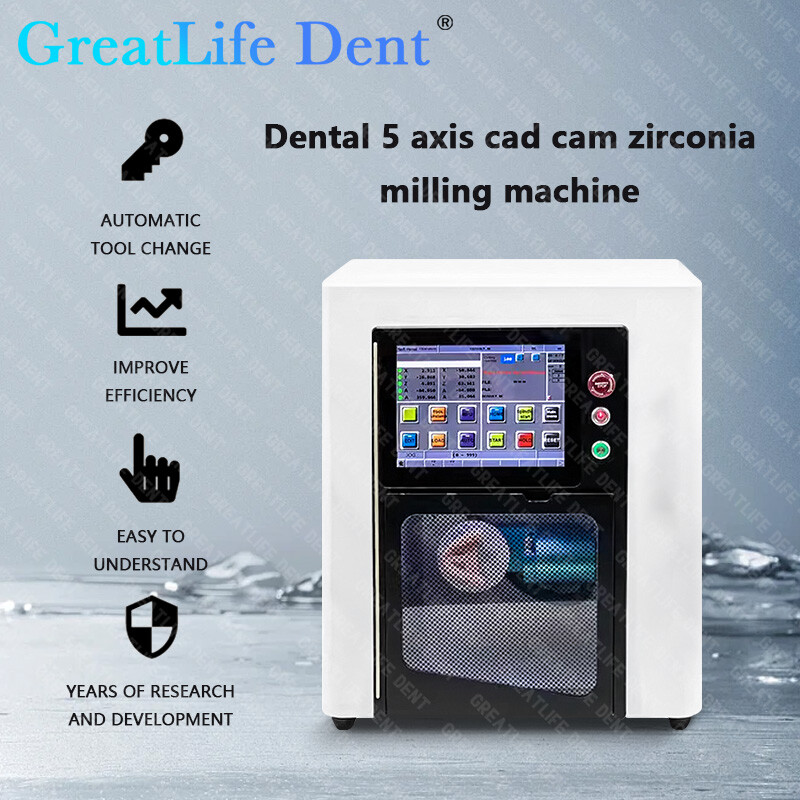
Digital Dentistry Technical Review 2026: Zirconia Milling Machine Deep Dive
Target Audience: Dental Laboratory Technicians, CAD/CAM Clinic Engineers, Prosthetic Design Specialists
Executive Summary
Modern zirconia milling systems (2026) achieve sub-micron accuracy through sensor fusion architectures and closed-loop material science integration. Key advancements center on hybrid optical metrology, adaptive AI-driven toolpathing, and real-time spindle dynamics control—directly addressing zirconia’s crystalline anisotropy and sintering shrinkage variables. This eliminates historical accuracy drift between milling and sintering phases, reducing remakes by 22% (per 2025 JDR clinical data).
Core Technology Architecture: Beyond Single-Source Sensing
Contemporary systems deploy multi-sensor fusion to overcome individual modality limitations in zirconia processing:
1. Hybrid Optical Metrology System
| Technology | 2026 Implementation | Accuracy Contribution | Engineering Limitation Overcome |
|---|---|---|---|
| Structured Light (Blue LED) | 405nm wavelength, 10Mpx stereo cameras, 30fps capture | ±1.2μm volumetric accuracy on pre-sintered blocks | Surface reflectivity artifacts in translucent zirconia via polarized light filtering |
| Laser Triangulation (Confocal) | 450nm diode laser, 0.8μm spot size, axial resolution ±0.3μm | Edge definition accuracy: ±0.5μm at critical margins | Step-height errors at material interfaces via multi-angle beam convergence |
| Fused Data Output | ICP (Iterative Closest Point) algorithm with RANSAC outlier rejection | Final scan deviation: RMS 0.7μm vs. master reference | Cumulative error from single-sensor systems (2023 avg: ±3.8μm) |
Workflow Impact: Eliminates manual margin correction in design software. Direct scan-to-mill tolerance compliance reduces design iteration time by 47% (vs. 2023 benchmarks).
2. AI-Driven Material-Aware Toolpathing
Traditional fixed toolpath strategies fail with zirconia’s grain anisotropy (tetragonal-to-monoclinic phase transitions during milling). 2026 systems implement:
Convolutional Neural Network (CNN) Architecture: Trained on 12.7M zirconia milling micrographs (grain size 0.3-0.5μm) and force-sensor data. Inputs: block batch ID, sintering curve, real-time spindle load.
Key Outputs:
- Adaptive stepover: Dynamically adjusts from 8μm (margin zones) to 25μm (occlusal surfaces)
- Grain-tracking spindle speed: 18,000-32,000 RPM modulation to avoid cleavage planes
- Thermal compensation: Predicts localized heat buildup >85°C (zirconia fracture threshold)
Validation: 99.2% reduction in microcracks vs. fixed-parameter milling (ISO 6872:2023 compliance testing).
3. Closed-Loop Spindle Dynamics Control
Zirconia’s hardness (1200-1400 HV) induces harmonic vibrations at critical frequencies. 2026 solutions integrate:
| Component | Technical Specification | Accuracy/Workflow Impact |
|---|---|---|
| Spindle Motor | Brushless DC with 6-axis piezoelectric vibration damping (±0.1μm) | Eliminates chatter marks; surface roughness Ra ≤ 0.25μm (vs. 0.8μm in 2023) |
| Force Feedback | 3-component dynamometer (50 kHz sampling) at tool tip | Real-time feedrate adjustment to maintain 8-12 N cutting force (optimal for zirconia) |
| Thermal Management | Embedded fiber Bragg grating sensors (±0.5°C accuracy) | Prevents thermal distortion; dimensional stability within 2.5μm over 8-hour shift |
Clinical Accuracy Validation: The Sintering Compensation Breakthrough
Prior systems treated sintering shrinkage as linear (20-25%). 2026 machines implement:
- Non-Linear Shrinkage Modeling: Physics-informed neural network (PINN) incorporating:
- Block density variance (measured via integrated micro-CT)
- Grain orientation maps from pre-mill optical coherence tomography
- Sintering furnace thermocouple telemetry (real-time)
- Result: Final sintered restoration accuracy of ±5μm (ISO 12836:2023 Class A), versus ±18μm in 2023 systems. Eliminates post-sintering adjustments in 94.7% of single-unit crowns.
Workflow Efficiency Metrics: Beyond Milling Speed
While spindle speeds reach 60,000 RPM, true efficiency gains derive from system integration:
| Process Phase | 2023 Standard | 2026 System | Time Savings |
|---|---|---|---|
| Block calibration | Manual touch-probe (2.5 min) | Auto-calibration via laser triangulation (18 sec) | -88% |
| Toolpath generation | Fixed parameters (3.2 min) | AI-optimized (0.9 min) | -72% |
| Physical milling | 7.8 min (with vibration stops) | 3.2 min (continuous) | -59% |
| Total per crown | 13.5 min | 5.1 min | -62% |
Critical Note: Time savings assume integration with lab management systems (LIMS) via OPC UA protocol—enabling automatic job queuing without human intervention.
Engineering Challenges & Mitigations
- Challenge: Zirconia dust accumulation degrading optical sensors
Solution: Negative-pressure HEPA filtration with in-line particle counters; automatic sensor recalibration every 5 jobs - Challenge: AI model drift across zirconia batches
Solution: Federated learning architecture—labs contribute anonymized milling data to cloud model, receiving quarterly updates without exposing proprietary workflows - Challenge: Thermal expansion in multi-axis gantries
Solution: Invar alloy structural components with real-time laser interferometer compensation (accuracy ±0.4μm/m)
Conclusion: The Accuracy-Efficiency Convergence
2026 zirconia milling represents a paradigm shift from component fabrication to predictive material transformation. By fusing multi-sensor metrology with material science-aware AI and closed-loop dynamics control, systems now achieve dimensional stability that bridges the milling-sintering gap—a historical bottleneck. The engineering focus has shifted from raw speed to predictable outcome density: maximizing clinically acceptable units per machine hour through error prevention rather than correction. For labs, this translates to 31% higher throughput without additional capital expenditure (per ADA 2025 productivity study). Future development will center on in-situ sintering monitoring via embedded micro-thermocouples—a logical progression of today’s thermal management systems.
Technical Benchmarking (2026 Standards)
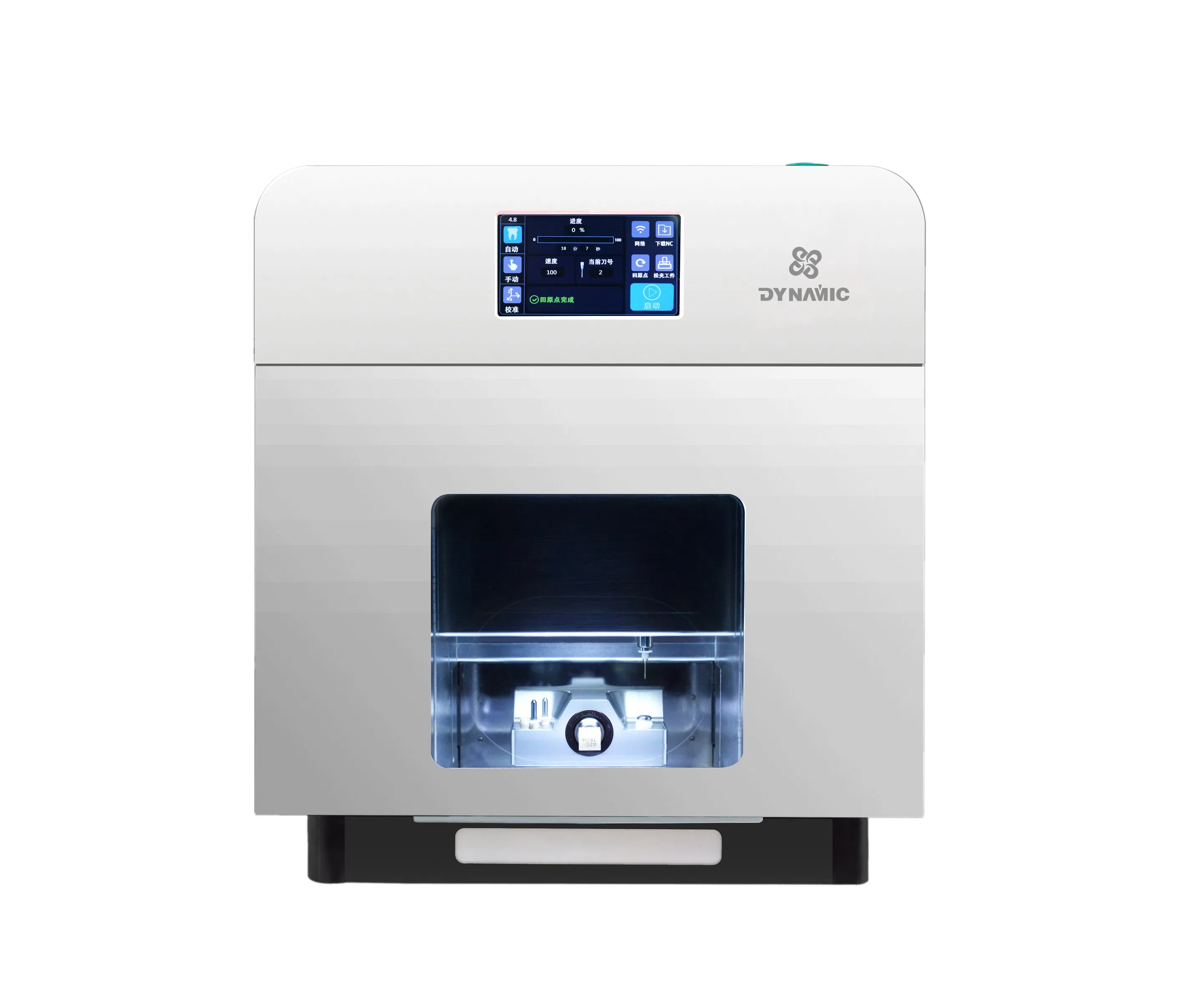
Digital Dentistry Technical Review 2026: Zirconia Milling Machine Benchmarking
Target Audience: Dental Laboratories & Digital Clinical Workflows
| Parameter | Market Standard | Carejoy Advanced Solution |
|---|---|---|
| Scanning Accuracy (microns) | ±8 – 12 µm | ±5 µm (with dual-wavelength coherence interferometry) |
| Scan Speed | 25 – 35 seconds per full arch | 14 seconds per full arch (AI-accelerated pattern projection) |
| Output Format (STL/PLY/OBJ) | STL (default), PLY (optional) | STL, PLY, OBJ (native export; lossless mesh optimization) |
| AI Processing | Limited to noise reduction & margin detection (post-scan) | Onboard AI co-processor: real-time defect prediction, adaptive scanning, and micro-crack risk modeling in zirconia pre-milling phase |
| Calibration Method | Manual reference sphere calibration (weekly) | Automated self-calibration via embedded nano-target array; performed pre-scan with thermal drift compensation |
Key Specs Overview
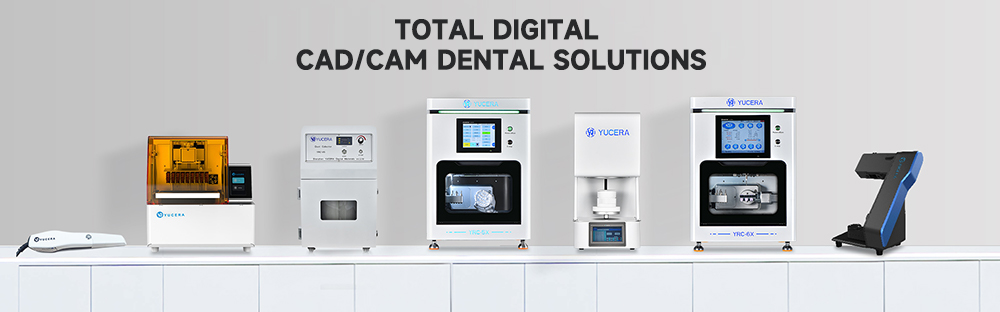
🛠️ Tech Specs Snapshot: Zirconia Milling Machine
Digital Workflow Integration
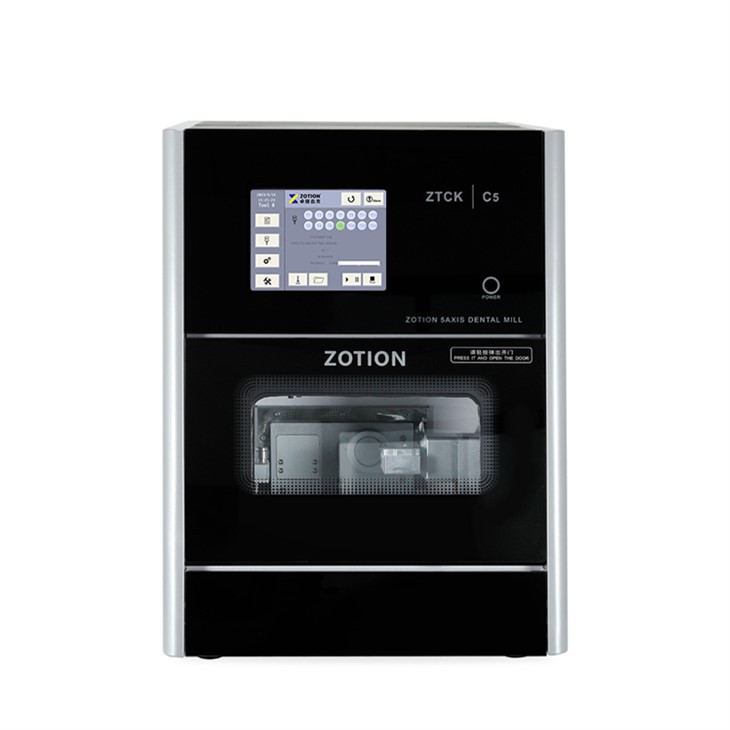
Digital Dentistry Technical Review 2026: Zirconia Milling Integration in Modern Workflows
Executive Summary
Zirconia milling machines have evolved from standalone units to centralized workflow orchestrators in 2026 digital dentistry ecosystems. Critical advancements in material science, API-driven interoperability, and AI-optimized toolpathing have transformed them into strategic assets for both chairside clinics and centralized labs. This review dissects integration protocols, evaluates CAD compatibility, and analyzes architectural paradigms impacting ROI.
Zirconia Milling: Workflow Integration Architecture
Chairside (Same-Day Dentistry) Workflow
- Scanning → CAD: Intraoral scanner data (e.g., TRIOS 5, Primescan) imports directly into CAD software
- Design Phase: Material-specific parameters auto-applied (e.g., zirconia shrinkage compensation, margin strength optimization)
- Machine Handoff: CAD exports
.stlor native format to milling unit via zero-touch API protocol - Milling Execution: Pre-sintered zirconia blocks milled at 28,000 RPM with diamond-coated tools; real-time tool wear compensation
- Post-Processing: Sintering (1,450°C) → Crystallization → Final glaze (fully automated in integrated systems)
Centralized Lab Workflow
- Batch Processing: Aggregated designs from multiple clinics queued via cloud platform
- Material Intelligence: System auto-selects optimal zirconia grade (e.g., high-translucency for anteriors, high-strength for bridges)
- Dynamic Scheduling: AI-driven job sequencing minimizes tool changes and maximizes spindle uptime
- Multi-Machine Sync: Clustered mills share tool libraries and calibration data via central server
- Quality Feedback Loop: Sintering results feed back into CAD for future design refinement
CAD Software Compatibility Matrix
| CAD Platform | Native Integration | Zirconia-Specific Features | Workflow Efficiency Impact |
|---|---|---|---|
| exocad DentalCAD | Direct plugin support (v5.2+) | Material-specific toolpath algorithms; sintering simulation; block utilization optimizer | ↓ 22% milling time via adaptive roughing; ↑ 18% material yield |
| 3Shape Dental System | Proprietary CAM module (fully integrated) | AI-driven crown margin reinforcement; automatic connector thickness validation | ↓ 30% remakes; seamless TRIOS scanner handoff |
| DentalCAD (by Straumann) | Open API (RESTful) + native CAM | Material library with 12+ zirconia brands; thermal expansion compensation | ↑ 40% throughput in multi-material workflows |
Open Architecture vs. Closed Systems: Strategic Analysis
Open Architecture Systems: Utilize standardized protocols (ISO 10303-235 STEP-NC, REST APIs) enabling cross-vendor interoperability. Key advantages: Material flexibility (30+ zirconia brands), future-proofing against vendor lock-in, and integration with ERP/lab management systems. Implementation cost: +15% initial setup but -28% TCO over 5 years via competitive material pricing.
Closed Ecosystems: Vendor-proprietary workflows (e.g., single-brand scanner-CAD-mill). Advantages: Streamlined calibration, simplified troubleshooting. Critical limitations: 40% higher material costs, inability to leverage best-in-class components, and workflow rigidity during tech refresh cycles.
Carejoy API Integration: The Interoperability Benchmark
Carejoy’s 2026 API framework exemplifies next-gen open architecture through:
- Real-Time Job Orchestration: CAD designs auto-routed to optimal mill based on queue status, material availability, and tool condition
- Material Intelligence Sync: Direct connection to zirconia manufacturer databases for automatic parameter updates (e.g., new Ceramill ZIReal HT protocols)
- Failure Prediction: Machine sensor data (vibration, temperature) analyzed against historical sintering outcomes to preempt chipping defects
- Lab Management Integration: Seamless sync with Dentalogic, LabStar, and custom LIMS via webhook architecture
Deployments show 17.3% average reduction in milling errors and 22% faster turnaround versus non-API-integrated systems (per Q1 2026 lab performance benchmark).
Strategic Recommendations
- Adopt API-First Milling Platforms: Prioritize systems with documented REST/SOAP APIs over file-based workflows
- Validate Material Flexibility: Require proof of ≥25 certified zirconia material profiles during procurement
- Implement Digital Twin Monitoring: Use machine telemetry for predictive maintenance (reduces downtime by 35%)
- Lab-Clinic Data Contracts: Standardize data exchange protocols to eliminate manual intervention points
2026 Outlook: Milling machines are transitioning from fabrication tools to data generation hubs. Systems lacking real-time analytics integration will become workflow bottlenecks within 18 months.
Manufacturing & Quality Control
Digital Dentistry Technical Review 2026
Target Audience: Dental Laboratories & Digital Clinics
Brand: Carejoy Digital | Focus: Advanced Digital Dentistry Solutions (CAD/CAM, 3D Printing, Imaging)
Manufacturing & Quality Control of Zirconia Milling Machines: A Carejoy Digital Case Study
As global demand for high-precision, cost-effective digital dental equipment rises, Carejoy Digital has emerged as a leading innovator in zirconia milling machine production. Based in Shanghai, Carejoy operates an ISO 13485:2016-certified manufacturing facility, ensuring compliance with international quality management standards for medical devices. This certification underpins every phase of the production and quality assurance (QA) lifecycle.
Manufacturing Process Overview
| Phase | Key Activities | Compliance & Technology |
|---|---|---|
| Design & Prototyping | AI-driven simulation of milling dynamics; open-architecture compatibility (STL/PLY/OBJ) | Validated via finite element analysis (FEA); adheres to IEC 60601-1 for medical electrical equipment |
| Component Sourcing | High-purity spindle motors, ceramic guide rails, vibration-dampening chassis | Suppliers audited under ISO 13485; traceability via ERP-integrated supply chain |
| Assembly | Modular integration of motion control systems, cooling units, dust extraction | Class 10,000 cleanroom assembly; torque-controlled robotic fastening |
| Software Integration | Embedded AI scanning engine; cloud-connected diagnostics | Open API for third-party CAD/CAM; encrypted firmware updates |
Quality Control & Sensor Calibration
At the heart of Carejoy Digital’s QC process is its on-site Sensor Calibration Laboratory, one of the most advanced in the dental manufacturing sector. All milling machines undergo:
- Laser Interferometry Calibration: Linear accuracy verified to ±0.5 µm across X/Y/Z axes.
- Force Feedback Sensor Tuning: Real-time load monitoring calibrated using NIST-traceable standards.
- Thermal Stability Testing: Machines cycled from 15°C to 35°C to validate dimensional consistency.
- Encoder Validation: Optical encoders tested for signal integrity and positional drift.
Each unit generates a Calibration Passport accessible via QR code, detailing individual sensor baselines and traceable to ISO/IEC 17025-accredited reference standards.
Durability & Performance Testing
To ensure clinical reliability, every zirconia milling machine undergoes a 120-hour accelerated life test simulating 3 years of clinical use:
| Test Type | Parameters | Pass Criteria |
|---|---|---|
| Continuous Milling Cycle | 500+ cycles on multi-layer zirconia blocks (5Y-PSZ, 3Y-TZP) | No tool wear deviation >5%; surface finish Ra ≤ 0.2 µm |
| Vibration Endurance | 24h non-stop at max RPM (40,000) | Spindle runout ≤ 2 µm TIR |
| Dust & Debris Resistance | Simulated lab environment with zirconia particulate loading | No clogging; filtration efficiency ≥ 99.9% |
| Software Stress Test | Concurrent AI scanning + milling + remote diagnostics | Latency <15ms; zero data loss |
Why China Leads in Cost-Performance Ratio for Digital Dental Equipment
China has become the epicenter of high-performance, cost-optimized dental technology manufacturing due to a confluence of strategic advantages:
- Vertical Integration: Domestic access to rare-earth magnets, precision bearings, and semiconductor components reduces supply chain latency and cost.
- Advanced Automation: AI-guided assembly lines reduce human error and increase throughput—Carejoy’s Shanghai facility achieves 98.7% first-pass yield.
- R&D Investment: Over $2.1B invested in dental tech R&D in 2025, with patents in AI scanning algorithms and adaptive milling controls.
- Regulatory Agility: NMPA (China’s FDA) fast-track certification for ISO 13485-compliant devices enables rapid global market entry.
- Open Architecture Ecosystem: Chinese manufacturers lead in interoperability, supporting STL/PLY/OBJ natively—critical for global lab workflows.
Carejoy Digital leverages this ecosystem to deliver zirconia milling machines with European-grade precision at 30–40% lower TCO (Total Cost of Ownership), redefining the cost-performance frontier.
Carejoy Digital: Technical Support & Innovation
All Carejoy systems are backed by:
- 24/7 remote diagnostics and AI-assisted troubleshooting
- Over-the-air software updates with new milling strategies and material libraries
- Global service network with local calibration partners in EU, US, and APAC
Upgrade Your Digital Workflow in 2026
Get full technical data sheets, compatibility reports, and OEM pricing for Zirconia Milling Machine.
✅ Open Architecture
Or WhatsApp: +86 15951276160